Hi friends! Let’s talk about a frustrating reality hitting doctor’s offices and patients right now. Imagine finally getting a clear plan for that knee surgery you need, only for a computer to say “no” in seconds. That’s the new normal, and it’s causing real harm. This guide is your behind-the-scenes look at why this is happening and, more importantly, your exact playbook to fight back and win.
We’re diving into the Pre-Auth Denial Loop, a systemic flaw where AI surgery claim denials are creating unnecessary barriers to care. By understanding the “why” and mastering the “how,” you can break the cycle.
The Silent Epidemic: When an Algorithm Says ‘No’ to Your Necessary Surgery
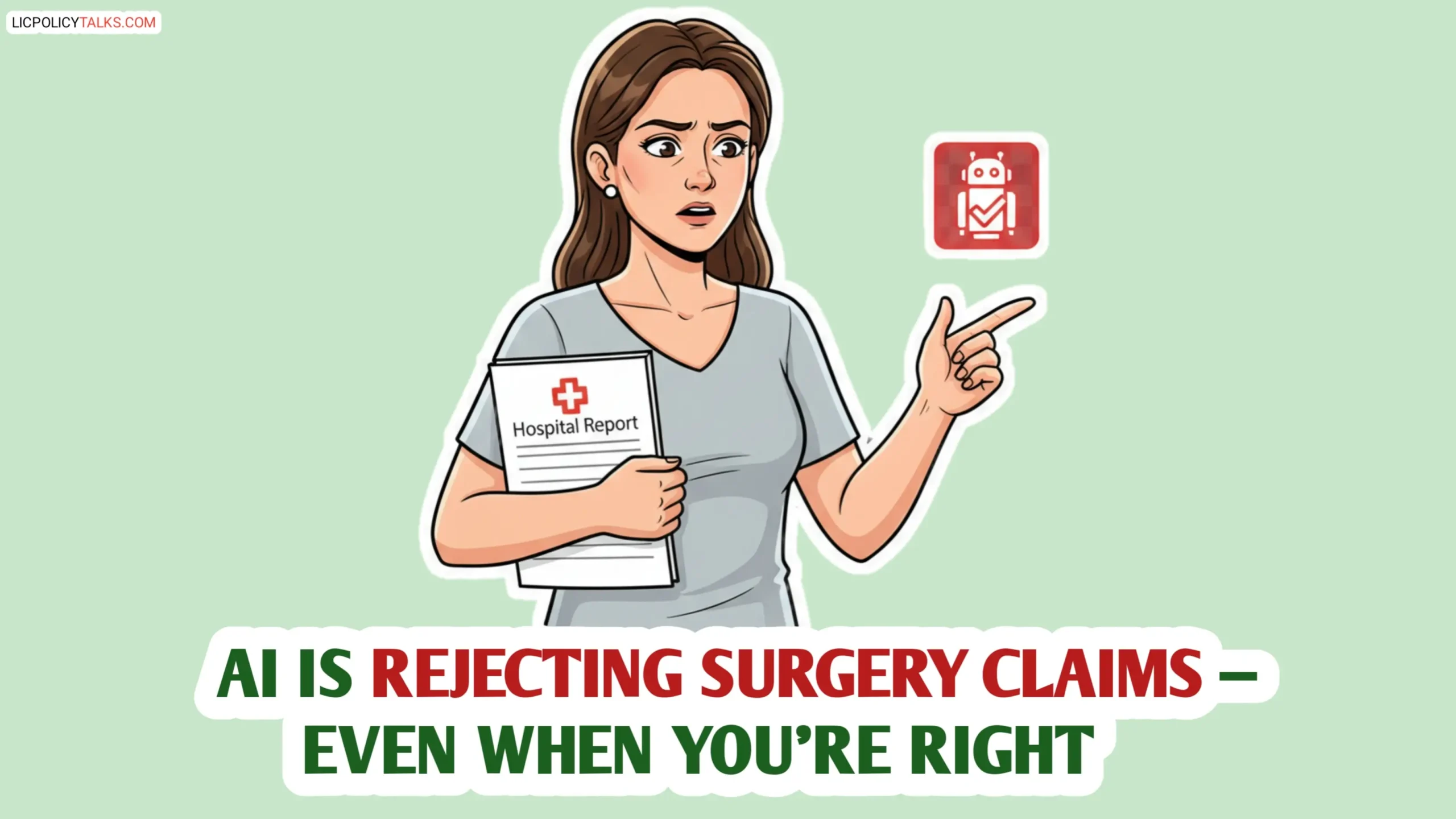
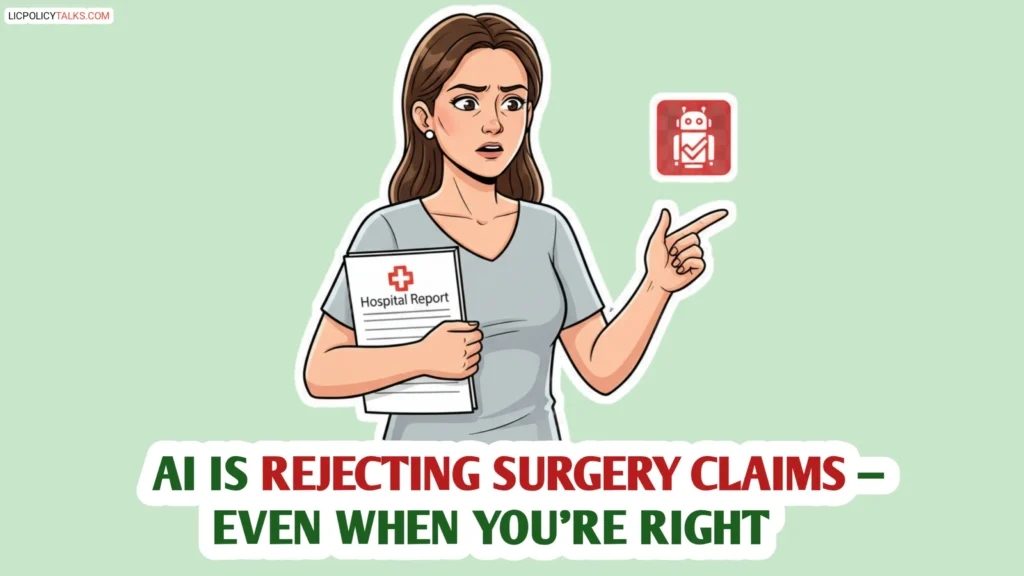
Picture this: A surgeon’s office submits a prior authorization for a knee replacement for a 65-year-old with severe osteoarthritis. The request is complete, the need is clear. Within minutes, an automated response pings back: “Denied. Not medically necessary.” No human eye has seen the MRI. No doctor has reviewed the patient’s history of failed physical therapy. An algorithm, trained on years of old data and rules, made a snap judgment.
Here’s the central paradox of modern healthcare: while surgical techniques and diagnostics become more advanced, the gatekeeping for these proven treatments is increasingly outsourced to error-prone, opaque algorithms. This isn’t a rare glitch; it’s a growing pattern. The shocking core stat emerging for 2026 is that up to 30% of AI-driven pre-authorization denials for surgeries are estimated to be incorrect or unjustified. This is the self-reinforcing “Pre-Auth Denial Loop.” This guide will decode how this loop works, why the AI fails, and provide you with a proven, step-by-step battle plan to fight back and get your valid claim approved.
The 2026 Denial Loop: It’s Not a Bug, It’s a (Problematic) Feature
The “loop” is a perfect descriptor. It’s a self-reinforcing cycle: an AI surgery claim denials triggers an automated denial; a rushed human reviewer, often overwhelmed by volume, rubber-stamps the AI’s decision; the patient and provider are left frustrated, facing delayed care and mounting administrative work to appeal. The driver is clear: insurers’ relentless push for cost containment and operational efficiency, leading to the widespread adoption of AI tools for prior authorization.
A March 2025 report detailed how this integration of AI is directly leading to a greater number of prior authorization problems, creating massive administrative burdens and delays. The system is designed for speed and cost-saving, not necessarily for optimal patient care. Compounding this is “algorithmic drift”—where the AI’s training data becomes outdated, missing new surgical techniques, updated clinical guidelines, or novel indications for existing procedures. The AI isn’t evil; it’s often just obsolete, making decisions based on a healthcare landscape that no longer exists.
The Vicious Cycle of the AI Denial Loop
The Black Box: How AI Decides to Deny Your Surgery (And Why It’s Often Wrong)
So, how does the algorithm decide? It’s often looking for simple, binary flags: a mismatch between CPT and ICD-10 codes, the absence of specific keywords in clinical notes (like “failed conservative therapy” or “severe pain limiting ADLs”), patient demographics that fall outside an expected range, or a lack of documented attempts at perceived “alternative therapies.” Its logic is rigid.
The common flaws are glaring. First, a profound lack of clinical context—the AI reads words but doesn’t understand the patient’s full story. Second, an over-reliance on outdated clinical guidelines. A 2023 investigation revealed Medicare Advantage plans were using predictive algorithms to cut off senior care based on such outdated models, a persistent systemic issue. Third, an inability to interpret the nuance in imaging or complex lab results. At its core, the AI is making a probabilistic guess based on patterns, not a clinical judgment. That “30% wrong” figure includes claims that are medically necessary by current standards, those tripped up by mere technicalities, and denials where newer, more effective procedures aren’t yet in the AI’s rulebook.
| Decision Factor | Human Reviewer (Strength) | AI System (Weakness) |
|---|---|---|
| Clinical Context | Can synthesize the full patient narrative, history, and subtle notes. | Reads for keywords only, misses nuance and individual circumstances. |
| Guideline Interpretation | Can apply guidelines judiciously, understanding exceptions and new evidence. | Rigidly applies rules; slow to update with new medical literature. |
| Patient History Nuance | Understands comorbidities, social determinants, and treatment response over time. | Sees data points in isolation, cannot connect longitudinal story. |
| Cost Considerations | (Ideally) not the primary factor in a pure medical necessity review. | Often programmed with cost-containment as a primary, hidden objective. |
Fighting AI surgery claim denials is part of a larger battle for coverage. Just as with advanced medications, you need to understand the system’s rules to advocate effectively.

The 5-Step Fight Plan: Breaking the Denial Loop in 2026
Here is your actionable core for pre-authorization appeals 2026. Winning requires precision, persistence, and a strict protocol. Let’s break the loop.
Step 1: The ‘AI-Proof’ Pre-Submission Audit (Before You Even Apply)
Your best weapon is preventing the denial. This means checking for absolute code specificity (is it the most accurate ICD-10 code?), attaching all supporting documentation (operative notes, imaging reports, physical therapy charts), and crucially, writing narrative notes with clear, unambiguous medical necessity language. Think like the AI: use the exact terminology from the insurer’s own clinical policy bulletins.
Step 2: Decoding the Denial – The First 24 Hours
When the denial hits, act fast but don’t panic. Your first job is forensic: read the EOB or denial letter for the exact reason cited. Is it “insufficient documentation of failure of conservative therapy” or “procedure not deemed medically necessary for this diagnosis”? Never assume you know the reason; the specific language is your target. The clock on your appeal starts now.
Step 3: Building the ‘Irrefutable’ Appeal File
Don’t just resubmit the same packet. You must build a fortress of evidence. This includes: 1) Peer-reviewed journal articles that support the procedure for your patient’s specific indication, 2) Detailed Letters of Medical Necessity from the surgeon and any referring doctors that directly counter the denial reason point-by-point, and 3) A powerful patient impact statement detailing how the condition affects daily life and work.
Step 4: The Human Escalation Pathway
Map your appeal chain strategically. The first-level appeal is often another automated check. The critical move is to immediately request a peer-to-peer review with a physician of the same specialty. This is your right. Insist on it. If that fails, your next step is a formal external review request through your state’s Department of Insurance, which forces an independent third-party assessment.
Systemic barriers require systemic understanding. Just as mental health coverage has hidden limits, surgical pre-auth involves navigating opaque algorithmic rules.

Step 5: Leveraging Regulations & Legal Pressure
Know your regulatory leverage. Mention your state’s prompt-pay laws. File a formal complaint with your state’s Department of Insurance (DOI), which monitors insurer behavior. For egregious, damaging denials, a letter from a healthcare attorney can sometimes prompt immediate re-evaluation. Litigation is a last resort, but the threat underscores the seriousness of your fight.
Beyond the Appeal: Fortifying Your Practice Against AI Denials
For medical practices, a reactive appeal strategy isn’t enough. You need long-term defenses. A February 2025 survey found most physicians are concerned that AI increases prior authorization problems, validating the need for these proactive steps. Consider investing in AI-audit tools for your billing company that scan submissions for common denial triggers before they’re sent.
Implement “denial analytics”—track every denial by reason, insurer, and suspected AI platform to identify patterns. Is a certain insurer always denying a specific code? Adjust your pre-submission documentation for that payer preemptively. Most importantly, train your clinical staff on “AI-aware documentation.” Surgeons and clinicians must learn to write notes that are both medically complete and algorithmically clear, using structured data and explicit language of necessity.
The Future of AI & Pre-Auth: Regulation, Transparency, or More Loops?
The trend for 2026-2027 points toward a clash. On one hand, we’ll likely see pushes for federal and state regulations (like NAIC model acts) demanding transparency for healthcare AI algorithms used in coverage decisions. On the other, the rise of “provider-facing AI” tools designed to predict and pre-empt denials before submission. The call to action is clear: document and report unfair denials to professional associations like the AMA or MGMA. Collective data builds the pressure for change. The loop can be broken, but it requires vigilance, shared knowledge, and unwavering advocacy at every level.
FAQs: ‘healthcare AI algorithms’
Q: If an AI denies my surgery, does that mean my insurance company’s human doctors also think it’s unnecessary?
Q: What’s the single most important document to include in my initial pre-auth request to avoid an AI denial?
Q: How long do I typically have to appeal a pre-authorization denial in 2026?
Q: Can I sue my insurance company for a wrongful AI denial?
Q: Are some insurance companies or specific AI platforms known for higher wrongful denial rates?
Reclaiming Clinical Judgment: Your Blueprint for 2026
Let’s recap the two non-negotiable truths. First, the Pre-Auth Denial Loop is a structural failure of the system, not a reflection of your patient’s need or your clinical skill. Second, victory comes from a meticulous, multi-layered appeal strategy that forces a genuine human clinical review. Those 30% wrongly denied claims represent a massive, solvable burden of wasted time and delayed healing.
Armed with this knowledge, you are not just fighting a single claim. You’re pushing back against a flawed, automated gatekeeping system. Every successful appeal is a data point proving the need for transparency and humanity in the insurance approval process. Keep this blueprint handy, stay persistent, and reclaim the clinical judgment that belongs at the heart of care.