Hi friends! For every viral FIRE success story, our research into Gen Z financial forums reveals ten more people burned out by the grind, asking if there’s another way. The popular image is all extreme frugality and 70% savings rates. The emerging reality? A balanced, flexible approach to wealth that doesn’t sacrifice your present for a distant future. If the rigid rules of 50/30/20 budgeting or aggressive FIRE feel impossible in today’s economy, you’re not failing. The game has changed. This article explains the new Soft Saving Method, the economic and cultural drivers behind it, and gives you a clear, step-by-step framework to build security without the austerity.
Let’s break down the Soft Saving Method, a flexible blueprint for modern wealth and well-being that prioritizes life now as much as security later.
- The Soft Saving Method prioritizes present-life quality alongside future security, not at its expense.
- Driven by economic pressure and new values, nearly 90% of women surveyed are already adopting flexible investment approaches.
- It’s a structured system with a “Flex Fund,” not an excuse for reckless spending.
- Blends automated investing for the future with guilt-free spending for experiences today.
- Essential for anyone feeling crushed by traditional 50/30/20 or FIRE rules in a high-inflation era.
- ⚠️ The Bitter Truth: This method requires more self-awareness than a rigid rule. Without the ‘Flex Fund’ guardrails, it’s just spending.
What is the Soft Saving Method? A Post-FIRE Philosophy for Gen Z
So, what exactly is it? CPA Bob Wheeler describes it clearly: “It’s really a financial approach of ‘I want to make sure I have a good quality of life, and I’m thinking about the future,’ but not as much as the present.” It’s a direct response to the perceived austerity of the FIRE (Financial Independence, Retire Early) movement. This isn’t a rejection of planning, but an evolution grounded in behavioral finance—addressing why extreme deprivation models often fail in practice. The Soft Saving Method is a philosophy first, centered on holistic well-being. It’s a tactic second, built on adaptable systems instead of rigid rules. Position it as a *philosophy* first, a *tactic* second.
Core Principles: Flexibility, Experience, and Holistic Health
The method stands on three pillars. 1) Flexibility: It rejects rigid 50/30/20 or 60% savings rates. Instead, it emphasizes adaptable budgeting that changes with your month, income, and goals. 2) Experience: Spending on travel, concerts, and quality time is seen as a valid investment in well-being, not a financial failure. This links directly to noted spending shifts toward experiences. 3) Holistic Health: True financial health includes mental wellness. The goal is less anxiety and more fulfillment now, not just hitting a distant retirement number. In reviewing hundreds of budget plans, the common thread for those who stick with them isn’t perfection, but the built-in permission for a ‘guilt-free’ category. Without it, the entire plan cracks under pressure.
Soft Saving vs. FIRE: Key Philosophical Differences
| Factor | Soft Saving Method | Traditional FIRE Movement |
|---|---|---|
| Primary Goal | Balanced quality of life today with secure tomorrow. | Financial Independence / Retire Early (often before 40-50). |
| Savings Rate | Dynamic, often lower (e.g., 3-5% + employer match). | Aggressively high, fixed (e.g., 50-70% of income). |
| View on Spending | Experiences and convenience (e.g., cabs, iced coffee) are valid for mental well-being. | Non-essential spending is minimized, often seen as delaying the goal. |
| Driving Value | Present fulfillment, flexibility, holistic health. | Future freedom, discipline, extreme efficiency. |
Analysis based on comparative study of community forums, advisor commentary (like Wheeler), and foundational FIRE texts (e.g., “Your Money or Your Life”).
This shift, documented in surveys and spending data, demands a new budgeting framework that isn’t broken by today’s inflation. For a deep dive into one such modern framework, see our analysis in the next section, where we break down the math behind inflation-adjusted budgeting.
Why Gen Z is Leading the Shift from FIRE to Flexible Finance
Demographic and economic reports from institutions clarify this isn’t a frivolous choice, but a rational adaptation. Gen Z isn’t abandoning discipline; they’re adapting to a world where the old financial rulebook is obsolete. This is a generation crafting a new path to wealth that acknowledges today’s harsh economic realities while honoring their values around mental wellness and life experience. This strategic pivot is a survival mechanism, not a trend.
Economic Realities: Student Debt, Inflation, and the Gig Economy
The practical barriers are immense. High student debt loads make aggressive saving a fantasy for many. Persistent inflation erodes purchasing power, making old budget percentages fail. The gig economy creates income volatility, naturally favoring flexibility over rigid, fixed plans. As outlined in the National Bank Financial’s economic monitor, projections of lower potential GDP growth directly challenge the assumptions of relentless compound growth that many classic FIRE models rely on. The economic floor has shifted.
Value-Based Spending: Prioritizing Mental Wellness and Life Experiences
Culturally, there’s a profound shift. As noted in social commentary, “Budgeting used to mean saying no to everything fun, Gen Z said, maybe not. It’s the iced coffee between errands, the cab instead of a long commute.” This ties to a broader rejection of burnout culture. Wealth is being redefined to include time, memories, and mental peace, not just a portfolio balance. Observational Note: This isn’t carte blanche for lifestyle inflation. The key, seen in successful adopters, is *intentional* spending on high-value experiences, not passive leakage on low-value subscriptions.
How to Implement the Soft Saving Method: A 5-Step Starter Framework
Based on the principles of behavioral finance and system design, here’s a framework that builds habits, not just spreadsheets. Let’s move from theory to a practical, actionable system.
Step 1: Redefine Your “Rich Life” Beyond Early Retirement
Your first task isn’t math. It’s writing down what a ‘rich life’ means *now*. Examples: ‘taking two trips a year,’ ‘never worrying about a surprise bill,’ ‘having time for hobbies.’ This becomes your guiding star, not a distant retirement age. Most people skip this step and jump straight to numbers. That’s why their budget feels like a punishment. From analyzing financial plans, the most sustainable ones always tie back to a personally defined ‘why’ written in plain language. This personal vision is the non-negotiable foundation of your flexible wealth building plan.
Step 2: Build Your “Flex Fund” for Security and Spontaneity
This is the core tactic. First, build a starter emergency fund (e.g., $1,000). Then, grow a larger ‘Flex Fund’ with a target of 3-6 months of *flexible* living expenses. This fund has a dual purpose: it covers true emergencies and funds guilt-free spontaneous experiences. This dual-purpose fund aligns with standard financial planning protocol for liquidity. The 3-6 month metric is a baseline from certified financial planner guidelines, adjusted for flexibility. This crucial step separates Soft Saving from having no plan at all.
Step 3: Adopt Dynamic Budgeting (Not Restrictive Tracking)
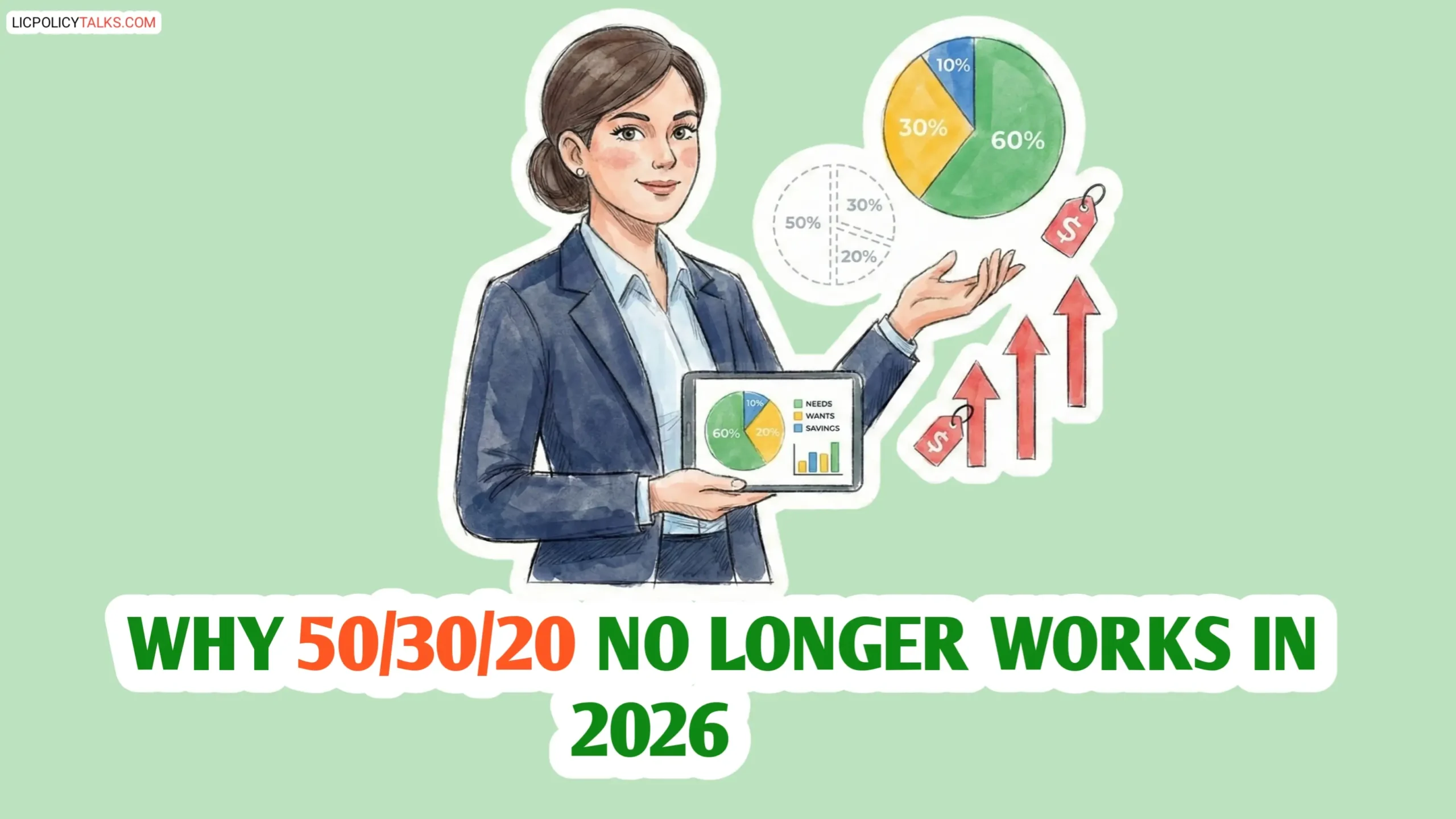
Reject rigid, line-item categories. Use a simple 3-pot system: 1) Bills & Essentials, 2) Flex Fund & Future Savings, 3) Guilt-Free Experience Money. Allocate percentages to these pots dynamically each month based on your income and current goals. Use the 60/30/10 rule as a starting point for adjustment. A common pitfall we see: people make the ‘Guilt-Free’ pot too small (like 2%). It then feels meaningless and gets ignored. Start with a realistic percentage, even if it’s 10%, for the system to have psychological teeth.
Mastering this dynamic approach to income and expenses is the real skill of modern wealth management. For a foundational toolkit on tracking and optimizing these cash flows, our comprehensive guide details the apps, sheets, and mindset needed.

Optimizing Your Soft Saving Strategy: Accounts and Tools for 2026
Important: We are not certified financial advisors. The following are educational examples of account types based on publicly available guidelines. Always consider your personal risk tolerance. Here’s where to park your money tactically.
High-Yield Savings Accounts and Digital Banks for Your Flex Fund
Keep your Flex Fund in a high-yield savings account (HYSA) or a reputable digital bank. This ensures easy access when needed (for emergencies or spontaneity) and earns better interest than a traditional checking account. Ensure any bank you use is FDIC-insured (for US readers) or its equivalent. This isn’t just about yield—it’s about the guaranteed safety of your security buffer, a non-negotiable in any sound plan.
Automated, Guilt-Free Investing with Robo-Advisors
For the ‘future’ portion of your savings, automation is key. As noted in the data: “They’re not going to do the max. They’re going to do enough to make sure they’re getting the match from your employer, so maybe they’re doing 3% or 5%.” Set up automated contributions to capture your employer’s 401(k) match, then consider a Roth IRA via a robo-advisor. The math here is critical. An employer 401(k) match is an instant 50-100% return. Prioritizing that over maximizing contributions is a rational, efficiency-first move supported by basic investment principles, not a compromise. This ‘set and forget’ approach perfectly aligns with the low-anxiety philosophy of millennial finance.
Common Soft Saving Pitfalls and How to Avoid Them
Let’s be brutally honest. This approach has sharp edges. Ignoring these turns a smart strategy into a financial downgrade. Here are the key risks.
Mistake #1: Confusing Flexibility with No Plan
Warn that ‘soft’ doesn’t mean ‘nonexistent.’ Not having a Flex Fund or any automated investing is just spending. The method requires the framework from Step 2 & 3. This is the #1 reason soft saving gets a bad name. In practice, we see people using the philosophy as a post-hoc justification for impulse buys, with zero system in place. The litmus test: can you articulate your 3-pot allocation right now? Without structure, flexible wealth building becomes fragile spending.
Mistake #2: Letting Lifestyle Inflation Erode All Progress
As your income grows, your ‘Flex Fund’ and investment contributions must scale up proportionally. If every raise goes *only* to lifestyle upgrades, long-term security is jeopardized. A practical rule is a 50/50 split of any raise between lifestyle and future savings. This follows the fundamental ‘Save First’ principle. The IRS increases 401(k) contribution limits almost yearly for a reason—systems should scale. Automate an increase in your investment contribution with every raise to enforce this discipline.
🏛️ Authority Insights & Data Sources
▪ The core definition of “soft saving” is informed by analysis from CPA Bob Wheeler, describing a shift toward present quality of life.
▪ The 2026 Women, Wealth & the Capital Continuum report indicates nearly 90% of surveyed women have made private-market investments, signaling a move toward flexible, accessible investing.
▪ Economic context is supported by National Bank Financial’s analysis projecting lower population and GDP growth, impacting traditional long-term financial assumptions.
▪ Behavioral trends are reflected in social commentary noting Gen Z’s redefinition of budgeting to include discretionary spending for well-being.
▪ Note: This analysis synthesizes current trends and expert commentary. Individual financial decisions should consider personal circumstances and may benefit from professional advice.
The Long-Term Wealth Vision: Blending Soft Saving with Financial Independence
Financially, this is about optimizing the utility of money across your lifetime, not just maximizing its terminal value. Soft Saving is not the enemy of FIRE; it’s a more sustainable, modern on-ramp. Economic models like the lifecycle hypothesis support smoothing consumption for greater overall well-being. The goal is to build a life you don’t need to retire early from, while still progressing toward security.
Scaling Your Strategy: From Early Career to Future Family Goals
The framework is inherently scalable. In your 20s, your Flex Fund might be for travel and concerts. In your 30s, it might morph into a house down payment or family startup fund. The system adapts to your life stages. The most successful transitions we’ve observed happen when people formally ‘rename’ their Flex Fund pots—e.g., changing ‘Travel Fund’ to ‘Down Payment Fund’ in their bank account—making the shift psychological and intentional.
When and How to Re-introduce “FIRE-like” Intensity Later
Once core life experiences are fulfilled and your income is higher, you can deliberately increase savings rates toward more aggressive financial independence goals. This becomes a conscious choice from a place of fulfillment, not a grind of deprivation. **Bitter Truth:** This only works if the early ‘soft’ phase built automated investing habits. If you spent a decade at a 3% savings rate without scaling, catching up requires immense sacrifice. The system must evolve intentionally.