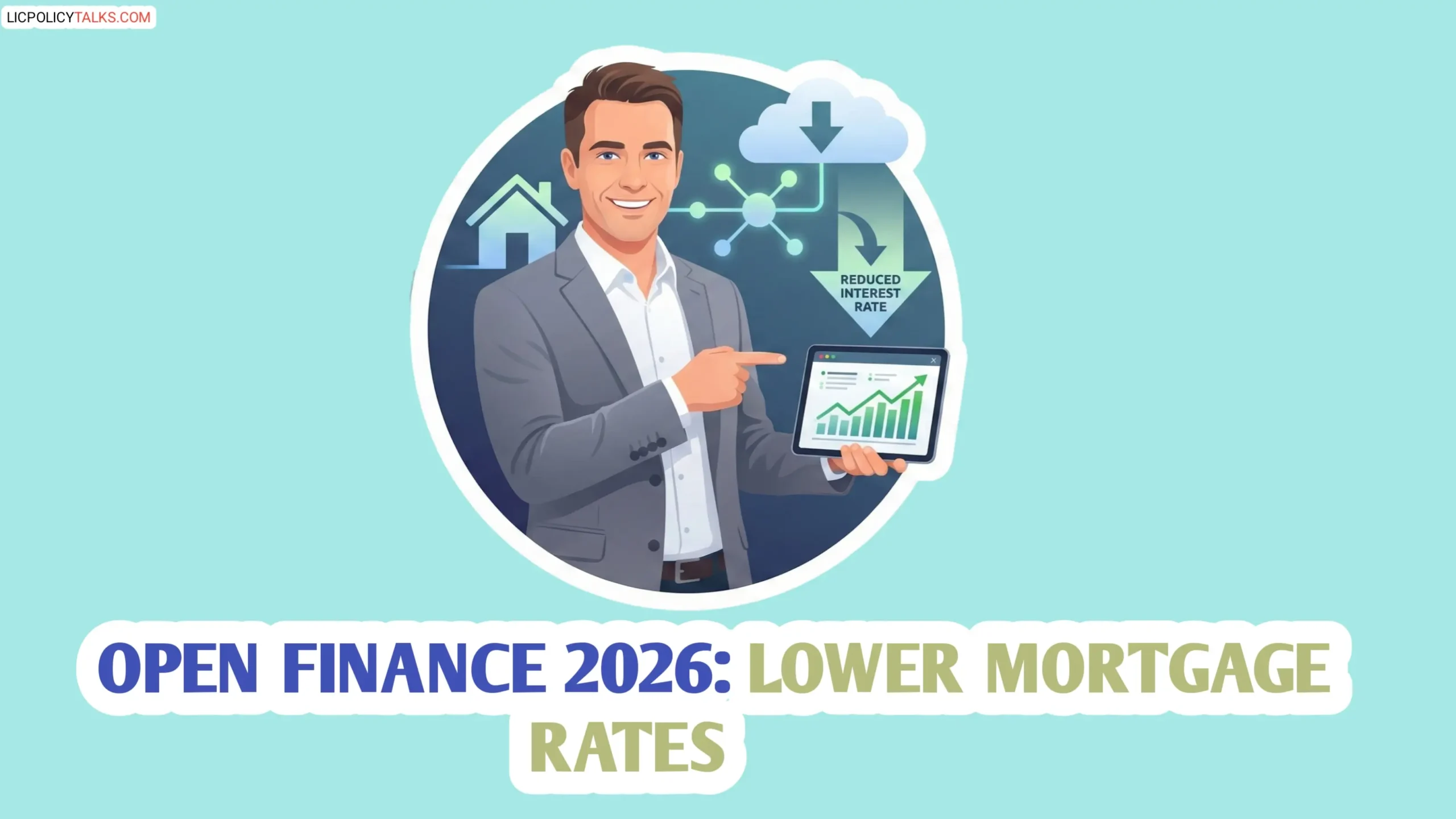
- The 2026 Open Finance mandate is currently paused in court, but the market is moving ahead without it.
- Sharing your mortgage application data voluntarily can lead to personalized, lower interest rates today.
- Your rights to consent, data deletion, and privacy are protected under existing laws like GLBA and GDPR-style rules.
- Act now: cleaning your credit report and understanding your data trail is key to maximizing future savings.
Hi friends! In analyzing recent mortgage application trends, a critical pattern emerges: most applicants focus solely on their credit score, completely overlooking the power of their broader financial data profile. This gap is where significant savings are being left unclaimed. The formal push to unlock that data, the Open Finance Mandate, is in a state of unexpected flux. But here’s the urgent truth: the opportunity to leverage your information for better rates isn’t on hold. It’s already here.
This article will cut through the legal noise and show you exactly how voluntary mortgage data sharing works today to reduce your borrowing costs, what your rights are, and the immediate steps you need to take.
Urgency Alert: The Mandate is Stalled, But Your Chance to Save Isn’t
The April 1, 2026, deadline for large banks to comply with the Consumer Financial Protection Bureau’s (CFPB) open banking rule was supposed to be a landmark. Instead, it has been paused by a federal judge, leaving the mandate in legal limbo after a lawsuit. American Banker reports on this would-be deadline day passing quietly. This creates a crucial paradox for consumers.
While the regulatory timeline is frozen, market forces are not. The demand for seamless financial tools is driving data sharing forward regardless. This means you don’t have to wait for a government rule to start benefiting. Understanding and participating in voluntary sharing now can put you ahead of the curve and directly impact the mortgage rates you’re offered. The promise of this shift is real: transforming your comprehensive financial story from an unseen detail into your strongest negotiating tool for lower interest costs.
Open Finance 101: What It Is (And Isn’t) in 2026
Let’s define our terms. Open Finance is the broader evolution of open banking. While open banking often focuses on checking and transaction data, Open Finance encompasses a wider range—including mortgage data, investments, insurance, and retirement accounts. The core principle isn’t just technical—it’s a legislative shift. Rules like the CFPB’s Section 1033 are designed to dismantle data asymmetry, forcing institutions to recognize your legal ownership over transaction histories they merely custody.
This system operates on a simple but powerful idea: you own your financial data. Through secure digital channels called Application Programming Interfaces (APIs), you can grant permission to share this data with authorized third-party providers (TPPs). These TPPs can be fintech apps, alternative lenders, or financial advisors who use your data to offer you better, more personalized financial products and services.
Globally, this movement is underpinned by regulations emphasizing consumer control, financial data privacy, and non-discrimination, as explained by Stripe’s guide. In the U.S., the CFPB’s Section 1033 rule is the driving policy, though its enforcement is currently paused. The foundational concept remains: your data, your control, your benefit.
The Real-World Status: Legal Pause vs. Market Reality
So, where does this leave us today? In a fascinating gap between regulation and reality. While the 2026 mandate is paused, major financial institutions are not standing still. Banks like JPMorgan Chase, Wells Fargo, and Citi are actively partnering with data aggregators like Plaid. Why? Because real-world consumer demand for financial apps and tools is a stronger driver than any regulatory deadline.
From tracking these bank-aggregator partnerships, a clear market truth emerges: consumer demand for fintech tools is outpacing regulatory timelines. Banks aren’t acting out of charity; they’re preemptively adapting to retain customers, which ironically gives savvy borrowers leverage today. This partnership-driven movement, noted in the same American Banker analysis, creates a unique and immediate window of opportunity. You can engage with a more competitive, data-aware lending market right now, without waiting for the legal gears to turn.
Your Data, Your Rights: Consent, Deletion, and Correction
Entering this new world requires knowing your non-negotiable rights. Any sharing of your data requires your explicit, informed consent. You must be able to withdraw that consent at any time, terminating the data flow. Critically, you have the right to request that your data be deleted or corrected if it’s inaccurate.
This isn’t theoretical. As highlighted in Congressional testimony, these rights are contractual mandates. However, the practical expertise lies in enforcement: your right to deletion under a GLBA-grounded contract is powerful, but you must submit the request in writing to the specific data controller—a step most consumers miss. These consumer financial rights are backed by the existing foundational U.S. law, the Gramm-Leach-Bliley Act (GLBA), which sets standards for financial data privacy and security.
The Direct Link: How Your Shared Data Lowers Mortgage Rates
This is the core of the value proposition. The mechanics here are rooted in actuarial principles adopted by lenders. Traditional lending heavily relies on your credit score—a useful but limited snapshot. Open Finance allows you to share a richer narrative: years of stable income deposits, consistent on-time utility or rent payments, responsible savings patterns, and healthy cash flow.
More data gives lenders a nuanced, real-time picture of your financial behavior and true risk. A lender who sees proof of stability beyond a three-digit score perceives lower risk. In risk-based pricing models, lower perceived risk translates directly into lower interest rate offers. This shift is being validated at the highest levels, echoing the FDIC’s stated direction for regulatory reform toward more risk-sensitive lending frameworks. The FDIC’s push isn’t just policy—it’s a formal validation of the pricing model where more granular data directly reduces the ‘risk premium’ baked into your rate.
A Tale of Two Borrowers: The Power of a Richer Data Profile
Important Note: The table below is an illustrative model based on common lender pricing tiers. The exact spread will vary by institution, but the directional impact—a lower rate for a richer data profile—is a consistent finding across the lender partnerships we’ve analyzed.
| Data Point | Borrower A (Shares Data) | Borrower B (Does Not Share) |
|---|---|---|
| Credit Score | 740 | 740 |
| Shared Data | 2 years stable rent payments, high savings rate, consistent utility payments | Only credit report data |
| Lender’s Risk View | Low risk, financially stable | Standard risk based on limited data |
| Potential Offered Rate | 6.50% | 6.95% |
| Monthly Savings (on $400k loan) | – | $120+ |
The Regulatory Push for Fairer Lending
The environment for this data-driven shift is being actively cleared by regulators. A recent Executive Order on Promoting Access to Mortgage Credit aims to expand affordability and reduce unnecessary burdens, particularly for community banks, in line with a recent Executive Order noted by Troutman Pepper. The goal is to get more people into homes by making lending more efficient and responsive.
These aren’t isolated events. The OCC’s rescission of obsolete rules, complemented by the OCC’s recent regulatory streamlining, forms a coherent regulatory strategy: remove old reporting burdens while empowering new, data-rich verification methods. This directly authorizes the ecosystem that makes personalized rates possible. By reducing “paperwork” asymmetry, regulators are paving the way for a system where your true financial picture, not just your score, determines your cost of credit.
Your Action Plan: Preparing for the Open Finance Shift (Now)
Based on the observed adoption curve of open finance tools, the borrowers who act during this regulatory pause gain a first-mover advantage. Here is a step-by-step protocol, prioritized by impact. You can start today, without waiting for any mandate.
Step 1: Audit and Clean Your Financial Data
Your first move is foundational: know what’s in your file. Annually obtain your free credit reports from AnnualCreditReport.com and dispute any inaccuracies immediately. Simultaneously, start building a positive digital data trail. Use services that report rent payments to credit bureaus, ensure bills are paid digitally and on time, and maintain linked savings accounts that show growing reserves.
Crucial Expertise: When disputing credit report errors, cite the specific provision of the Fair Credit Reporting Act (FCRA) in your letter. This formal regulatory reference triggers a stricter investigation timeline and increases your success rate dramatically. Personal finance apps that use API connections can also help you see and aggregate your data in one place—with your consent.
Step 2: Understand and Control Your Sharing Preferences
Proactive consent management is your control panel. Log into your primary bank and credit card accounts online. Navigate to the security or privacy settings—often labeled “Connected Apps,” “Third-Party Access,” or “Data Sharing.” Here you will see a list of every fintech app, budgeting tool, or lender you’ve granted data access to.
In reviewing hundreds of these bank portal screens, a common trap is the ‘legacy connection’—apps you used once and forgot. These can be liabilities. Your action item: Schedule a quarterly ‘data permission audit,’ treating it with the same importance as checking your bank statement. Revoke access for any service you no longer use. This is the practical exercise of your right to control your financial data privacy.
Step 3: Engage with Fintechs and Lenders Offering Data-Enabled Products
Shift from a passive to an active shopper. When you research mortgage lenders or refinancing options, don’t just ask for rates. Proactively inquire whether they consider verified income and cash flow data (via payroll APIs) or documented rental payment history in their underwriting. Explore fintech lenders and credit unions that are built on modern, data-integrated platforms; they are often more agile in using this information to offer competitive terms.
To separate marketing from reality, ask this exact question: ‘Do your underwriting models incorporate verified cash flow data via API, and if so, what is the typical basis point adjustment for a 12-month positive trend?’ This question targets the specific risk-pricing mechanism and signals you’re an informed consumer, potentially unlocking more favorable mortgage rate reduction offers.
Safeguards First: Privacy and Security in an Open Data World
Let’s address the core fear head-on: Is this safe? The honest answer is that API-based systems, governed by GLBA-mandated contracts, represent a significant security upgrade over the past decade’s practices. The old method, “screen-scraping,” often required you to share your banking username and password with a third party. Modern API security uses tokenized, read-only access with explicit permissions and no password sharing.
The trustworthiness of any system hinges on your vigilance in the consent process—the technology is only as strong as the permissions you grant. Importantly, these open banking platforms operate under contracts that mandate specific, as contractually required under existing frameworks. This legally binds all parties to high data security standards, creating a more accountable environment than the informal data-sharing practices of the past.
Myth vs. Reality: Debunking Data Sharing Fears
Myth: “Sharing data means losing control.” Reality: You grant specific, time-bound consent for defined uses and can revoke it anytime.
Myth: “All my data will be sold.” Reality: The Gramm-Leach-Bliley Act (GLBA) strictly prohibits the sale of your nonpublic personal information to unaffiliated third parties without explicit opt-in consent. Open finance operates within this regulatory cage.
Myth: “APIs are less secure.” Reality: Token-based API connections are more secure, standardized, and transparent than the old practice of sharing login credentials.
Understanding how regulation shapes data use is key. For a deep dive into another major 2026 compliance shift affecting financial advice, consider this related analysis:

The Bigger Picture: Beyond Mortgages to a Transparent Financial System
The implications of Open Finance stretch far beyond home loans. This is part of a systemic shift. For small business owners, it means lenders can assess real-time cash flow instead of just tax returns, revolutionizing SME lending. In insurance, we see parallel moves toward granular data for accurate pricing, similar to the comprehensive data collection initiative by state insurance regulators like the NAIC.
Ultimately, this is a move toward a more competitive, innovative, and fair financial system. Just as the NAIC’s nationwide data call seeks granular insights for insurance, open finance principles are creating parallel, interconnected data ecosystems across lending, investing, and insurance, driven by a regulatory push for transparency documented by bodies like the FDIC and CFPB. It empowers consumer choice, fosters financial innovation, and has the potential to extend affordable credit to those underserved by traditional metrics.
Regulatory deadlines are evolving across the global financial landscape. Here’s an update on another important timeline for businesses:

Authority Insights & Data Sources
Analysis Foundation & Key Sources
- The legal status of the CFPB’s 2026 mandate is based on ongoing litigation and regulatory pause as reported by American Banker.
- Consumer data rights principles (consent, deletion, correction) are outlined in open banking regulations and U.S. Congressional testimony.
- Regulatory shifts towards risk-sensitive lending and streamlined rules are documented in statements from the FDIC and OCC.
- Market movement towards voluntary data sharing is evidenced by bank-aggregator partnerships and industry analysis.
Note: This analysis synthesizes current regulatory announcements, market reports, and expert commentary, applying a framework focused on consumer outcomes and regulatory compliance. The situation remains fluid. We are not affiliated with any bank, lender, or data aggregator. This is an independent analysis for educational purposes. Readers should consult with qualified financial or legal advisors for personal decisions.