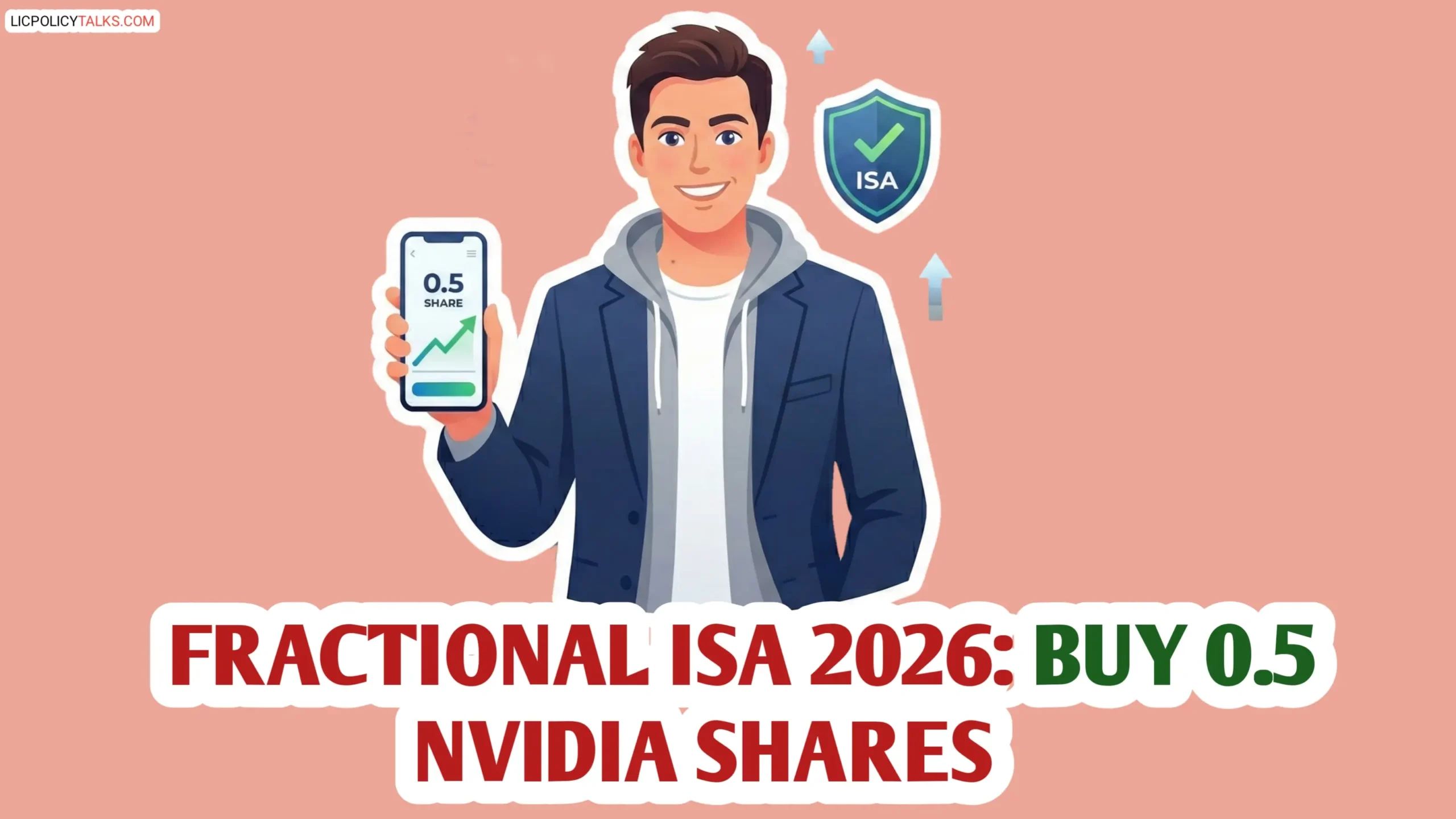
Hi friends! Have you ever looked at the share price of a company like Nvidia, Amazon, or Berkshire Hathaway and felt completely priced out? You’re not alone. The dream of owning a piece of these world-beating businesses can feel out of reach when a single share costs hundreds or even thousands of pounds. But what if I told you a massive rule change is coming in 2026 that will smash that barrier? Get ready for the era of the Fractional ISA.
This complete guide will walk you through everything. We’ll explain what fractional shares are, why allowing them inside your tax-free wrapper is a game-changer for UK investing, and give you a clear action plan so you’re ready to buy that 0.5 slice of Nvidia as soon as the gates open.
Fractional Shares 101: What They Are & How They Work (Even Without an ISA)
Let’s start with the basics. Imagine a bar of gold. You don’t need to buy the whole, massive bar to own some gold, right? You can buy a gram, or even a sliver. Fractional shares work exactly the same way. They are simply slices or pieces of a single company share. This concept, often called share splitting by platforms, lets you invest any amount of money you want into a company, not just the full price of one whole share.
Here’s how it works in practice: If Nvidia shares are trading at £1,000 each, you could invest £500 and own 0.5 (or half) of a share. You now have a proportional economic stake in the company. If Nvidia pays a dividend of £10 per share, you would receive £5 (0.5 x £10). It’s that straightforward. This isn’t futuristic tech—it’s already available today in General Investment Accounts (GIAs) on many popular UK investment apps. As Investopedia explains, it’s a tool that democratizes investing.
The core benefit is pure accessibility: it completely removes the high share price barrier that locks many everyday investors out of the world’s best companies. Unlike traditional ‘whole share’ investing, where your investment amount is dictated by the share price, fractional investing lets you decide the pound amount first. This subtle shift is what makes the upcoming ISA change so powerful.
The 2026 Game-Changer: Why Fractional Shares *Inside* an ISA is Revolutionary
Now, here’s the crucial bit. While fractional trading exists today, it’s generally not permitted within the strict rules of a Stocks and Shares ISA. Your tax-free wrapper has, until now, been a whole-share-only zone. The 2026 change, stemming from the government’s ‘ISA Flexibility‘ consultation in the 2024 Spring Budget, is set to blow that door wide open. This move, as outlined in the consultation outcome, aims to modernise the ISA to attract a new generation of investors.
Precision Portfolio Building
Say goodbye to leftover cash sitting idle. With fractional ISA rules 2026, you can use every single pound of your £20,000 annual allowance. No more having £87.50 left over because you can’t afford another whole share. You can deploy that entire sum with surgical precision.
Democratising Blue-Chip Investments
This is the big one. It opens the doors to legendary stocks like Nvidia, Amazon, or Alphabet for the average ISA investor. You no longer need £1,000+ for a single share. You can start with £50 or £100, getting your foot in the door of these giants within your tax-efficient investing haven.
Enhanced Diversification
With a limited capital pool, buying whole shares might limit you to 5-10 companies. Fractions let you own a slice of 15, 20, or even 30 different companies with the same money. This spreads your risk and can create a much more resilient portfolio.
Compound Growth on Steroids
The ability to reinvest tiny dividend fractions from multiple companies to buy more fractions, all completely tax-free, supercharges the magic of compounding. Those pennies and pounds from dividends can automatically buy more slivers of stock, constantly growing your stake without any tax drag.
The Power of Precision: Allocating a £20,000 ISA Allowance
Your 2026 Action Plan: How to Buy 0.5 Shares of Nvidia in Your ISA
While we’re waiting for the final rules and platform rollouts, you can prepare now. Here’s your future-proof, step-by-step guide to buying that first fractional share in your ISA.
Step 1: Choose a Platform That Supports Fractional ISAs
Not all ISA providers will offer this feature from day one. Keep an eye on announcements from major investing apps and online platforms. If you’re with a traditional broker, check their communications. Many newer “fintech” platforms that already offer fractional trading in GIAs are likely to be early adopters.
Step 2: Ensure You Have an Active Stocks & Shares ISA
You need the right type of account. Make sure you have a Stocks and Shares ISA (not just a Cash ISA) opened and that you have some of your current year’s £20,000 allowance available to use.
Step 3: Locate the ‘Fractional Share’ or ‘Invest by Amount’ Function
Once the feature goes live, look for a button that says “Buy Fractions,” “Trade by Amount,” or similar. It will likely be right next to the standard “Buy Shares” button on the stock’s page. The interface will ask you for a pound amount, not a share number.
Step 4: Enter Your Order (e.g., £500 for ~0.5 Shares of Nvidia)
This is the exciting part. Instead of selecting “1 share,” you’ll type in the amount you want to invest, say £500. The platform will automatically calculate how many shares (or fraction of a share) that buys you at the current price. (For example, if Nvidia is at £1,000 per share, £500 buys you 0.5 shares).
Step 5: Review & Hold for Tax-Free Growth
Confirm the order. Once executed, that fractional holding of Nvidia will sit snugly inside your ISA wrapper. From that moment on, all capital growth and dividends from that 0.5 share are protected from UK Capital Gains Tax and Income Tax.
Pro Tip: When buying fractions of volatile stocks, consider using a “limit order.” This lets you set the maximum price you’re willing to pay per share, giving you more control over your entry point.
Platforms, Costs, and Fine Print: What to Watch For
| Platform Name | Fractional ISA Availability (Est.) | Min. Fractional Investment | FX Fee for US Stocks | Custody/Platform Fee |
|---|---|---|---|---|
| Platform A (App-based) | Q2 2026 | £1 | 0.45% | 0.25% p.a. |
| Platform B (Traditional Broker) | Q4 2026 | £10 | 0.50% + £5 trade fee | £10 per month |
| Platform C (Investment Bank) | TBC / 2027 | £50 | Included in spread | 0.15% p.a. |
Trading and FX Fees
Watch out for costs. Some platforms may charge a trading fee on fractional orders, or offer worse foreign exchange (FX) rates for US stocks like Nvidia. A 0.5% FX fee on a £100 investment is only 50p, but it’s a higher percentage drag on small amounts.
Stamp Duty Reserve Tax (SDRT)
This still applies. Buying shares (even fractions) of UK-listed companies incurs a 0.5% Stamp Duty. It’s usually added automatically by your platform, so you don’t need to do anything, but it’s a cost to be aware of.
Dividend Handling
What happens if your 0.1 share of a company pays a 5p dividend? Good platforms will credit these tiny amounts to your account, often allowing auto-reinvestment. Check your provider’s policy on micro-dividends.
Transferring Fractional ISAs
This is a key logistical point: transferring an ISA containing fractional shares might be tricky. Not all providers accept in-specie transfers of fractions. You may need to sell them to cash before transferring, which could trigger a taxable event if done outside the ISA wrapper. Always check transfer rules first.
The Risks & Limitations: A Reality Check on Fractional ISA Investing
You Don’t Get a ‘Share Certificate’ or Voting Rights
When you buy a fraction, you own an economic interest in the asset, not the legal title to a specific, numbered share. This means you typically don’t get voting rights at shareholder meetings. Honestly, for most retail investors, this is how it works with whole shares too—your shares are held in a nominee account by the broker.
Platform Risk is Concentrated
Your fractional holding is a contractual claim against the platform or broker. If they go bust, you’re a creditor. This makes it non-negotiable to use a platform protected by the Financial Services Compensation Scheme (FSCS) up to £85,000.
The Illusion of Over-Diversification
It’s possible to spread your £20,000 allowance too thin across 50 different stocks. This can create a “diworsified” portfolio that’s complicated to track and where no single holding can meaningfully impact your overall growth. Have a strategy, don’t just collect fractions like stamps.
Liquidity and Selling
Selling is as easy as buying—you sell your fractional slice back to the market at the prevailing price. The core investment risk, however, remains identical: whether you own 1 share or 0.001 shares of Nvidia, if the price falls 20%, your investment loses 20% of its value.
Beyond Nvidia: Building Your Ultimate Fractional ISA Portfolio
Think bigger than one stock. The real power of a Fractional ISA is crafting a beautifully balanced, global portfolio entirely within your tax-free wrapper. Here’s a blueprint for portfolio diversification using slices:
Sample Fractional “Pie” Allocation
Consider a core-satellite approach. Use a big slice (40-50%) for low-cost, fractional ETFs like Vanguard’s All-World ETF (VWRL) for instant global diversification. Then, build thematic “satellite” slices: a “Mega-Tech” slice with Nvidia, Microsoft, and Apple; a “Dividend Aristocrat” slice with reliable payers; and a smaller “Speculative Growth” slice for higher-risk ideas. As MoneySavingExpert’s ISA guide emphasises, the ISA’s tax-free status makes it the perfect home for long-term, income-generating investments.
Finally, embrace pound-cost averaging. Set up a monthly investment of £200 into your ISA. With fractions, that £200 can automatically buy precise amounts of all the slices in your portfolio plan, smoothing out market volatility over time.
FAQs: ‘stock market investing’
Q: Is the 2026 fractional ISA rule change definitely happening?
Q: Can I transfer existing whole shares in my ISA into fractional shares?
Q: Will all stocks be available to buy as fractions?
Q: Are there any tax disadvantages to fractional shares in an ISA?
Q: What if my ISA provider doesn’t offer fractional shares by 2026?
Conclusion
So, there you have it. The journey from being locked out by high share prices to precisely building a world-class, tax-free portfolio is on the horizon. The 2026 Fractional ISA changes offer a powerful combo: unprecedented access to top-tier companies and the full might of the UK’s best tax-free wrapper.
Your action list is simple: 1) Stay informed on the final HM Treasury rules, 2) Review your current ISA provider’s 2026 roadmap, and 3) Start dreaming up your target fractional portfolio. This is about taking control and investing smarter. The future of UK investing is fractional, precise, and incredibly exciting. Get ready for it.

Sanya Deshmukh leads the Global Desk at Policy Pulse. She covers macroeconomic shifts across the
USA, UK, Canada, and Germany—translating global policy changes, central bank decisions, and
cross-border taxation into clear and practical insights. Her writing helps readers understand how
world events and global markets shape their personal financial decisions.