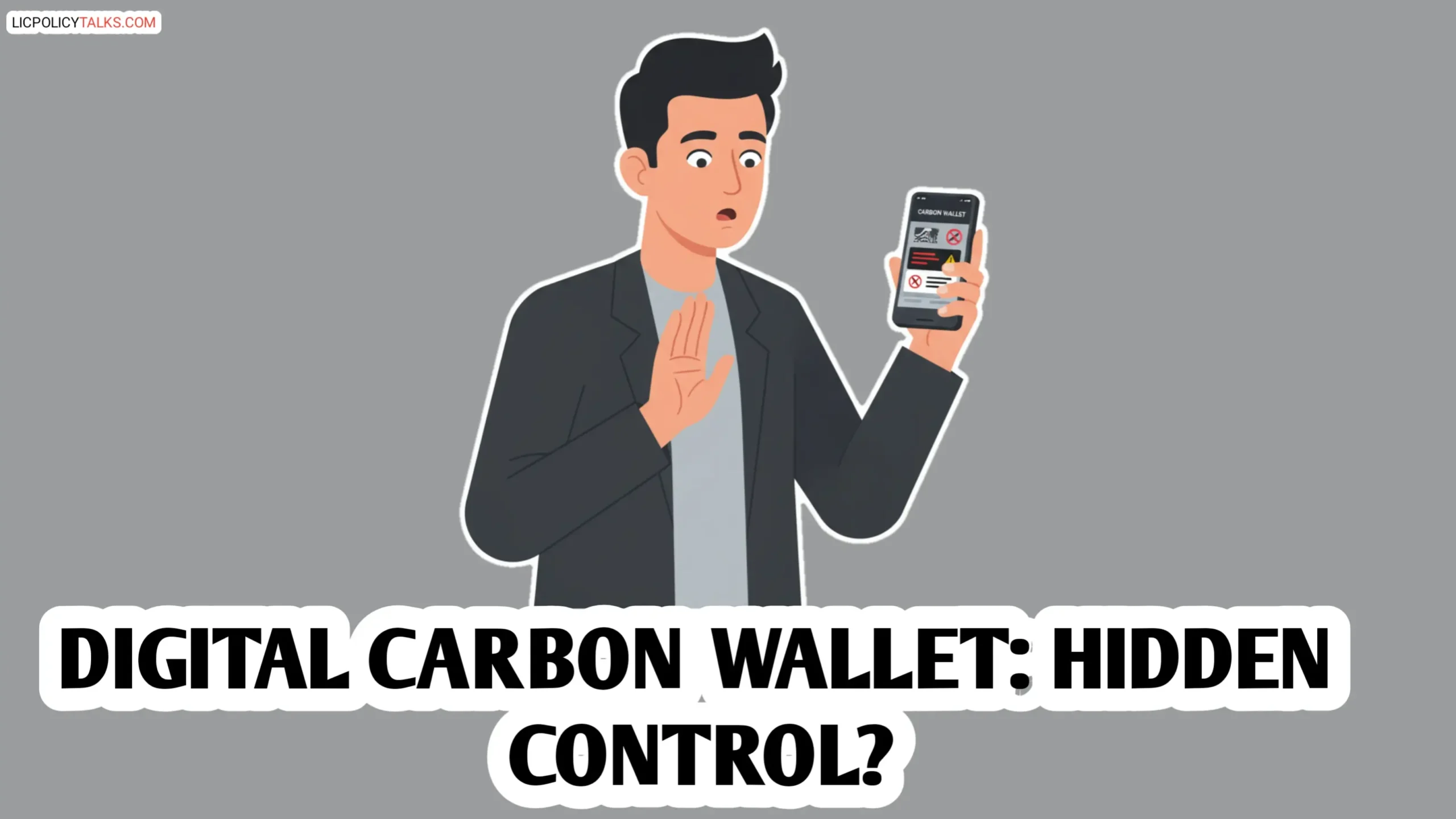
- A Digital Carbon Wallet is a proposed regulatory tool, not a physical wallet, that would track and limit personal or corporate CO2 emissions linked to financial transactions.
- Major US and EU banks are running pilot programs to integrate CO2 data into transaction feeds, anticipating 2026-2027 policy shifts.
- The driving force isn’t just sustainability; it’s risk management for upcoming ‘carbon cap’ regulations and a new frontier for green financial products.
- Consumers could see ‘CO2 spending’ alerts and limits on high-emission purchases, similar to credit limits, within 3-5 years.
- The first major international policy summit on this transition is scheduled for April 2026, signaling accelerated governmental focus.
Look, forget the images of a sleek metal cardholder. The ‘Digital Carbon Wallet’ that has bank R&D departments buzzing isn’t something you’ll buy on Amazon. It’s a backend regulatory framework in the making. And the ‘shocking truth’ isn’t about surveillance—it’s about why conservative financial institutions are suddenly pouring resources into it. They see a liability, and an opportunity, bigger than most realize.
What It Actually Is: Demystifying the Jargon
Think of it as a ‘Carbon Budget Manager’ embedded in your financial life. Every transaction—filling your gas tank, booking a flight, paying an electricity bill—has an estimated carbon footprint. A Digital Carbon Wallet aggregates this in real-time, tracking it against a hypothetical personal, corporate, or national ‘allowance.’ The wallet itself is the digital ledger and rule engine that facilitates this tracking and, crucially, the enforcement of limits. This is fundamentally different from a physical RFID-blocking wallet or a digital payment app like Samsung Wallet; it’s a layer of carbon accounting applied on top of the financial system.
The 2026 Catalyst: More Than Just Bankers’ Guilt
So why 2026? The momentum is policy-led, not market-led. Following COP30, a concrete timeline for integrating climate obligations into financial law is taking shape. Critically, the governments of Colombia and the Netherlands announced they would co-host the First International Conference on Transitioning Away from Fossil Fuels in April 2026. This isn’t another talk shop; it’s a signal for tangible policy architecture, where mechanisms like carbon accounting at the transaction level will be formally debated. Banks are preparing for the regulatory aftershocks.
The Bank’s Playbook: Risk, Compliance, and New Revenue
1. Pre-empting ‘Carbon Cap’ Compliance
If governments impose personal or corporate carbon caps, banks will be the enforcement choke-point. By building the tracking infrastructure now, they avoid a chaotic, costly scramble later. It’s a defensive investment.
2. The Green Product Goldmine
This data unlocks hyper-targeted products: ‘Low-Carbon Mortgages’ for efficient homes, ‘Carbon-Saver’ loans with rates tied to footprint, and ESG-indexed investment portfolios. The wallet becomes the proof mechanism.
3. The Liability Shield
Imagine financing a fleet of gas-guzzlers right before a carbon tax hits. Banks face ‘transition risk.’ Detailed carbon data helps them price this risk accurately and avoid stranded assets on their books.

What a CO2 Spending Limit Feels Like: A Scenario
It’s 2028. You’re booking a last-minute flight. At checkout, your bank app pings: ‘Warning: This purchase (0.8 tCO2e) will exceed your monthly travel carbon budget. Proceed? Options: 1) Use 200 Carbon Credits from your wallet (balance: 150), 2) Apply for a one-time limit increase (fee applies), 3) Cancel.’ The limit isn’t on your money, but on the emissions your spending enables.
▪ The timeline reference to the First International Conference on Transitioning Away from Fossil Fuels in April 2026 is sourced from official communications noted in the Amnesty International annual report, indicating high-level multilateral policy momentum. ▪ Regulatory frameworks are being explored by bodies including the U.S. SEC (for climate disclosures), the ECB (for banking risk), and the Network for Greening the Financial System (NGFS), which models carbon price scenarios used in bank stress tests. ▪ Bank pilot programs are reported in financial innovation circles from institutions like ING, BBVA, and a consortium of major US banks, though specifics remain under non-disclosure agreements (NDAs). ▪ Note: This analysis projects forward based on current policy trajectories and technological pilots. Specific implementation rules, carbon calculation methodologies, and personal allowance levels remain undefined and subject to future political and regulatory processes.
The Major Hurdles (It’s Not Just Tech)
The Data Nightmare
Accurately assigning a carbon value to every transaction is a monumental task. Is the fuel from a renewable supplier? Was the product shipped by sea or air? Current estimates are crude. This inaccuracy is the biggest barrier to fair implementation.
Privacy vs. Planetary Benefit
This is the elephant in the room. A detailed carbon footprint reveals intimate life details: diet, travel habits, health choices. The governance model for this data—who sees it, how it’s used—is completely unresolved.
Global Inequity
A uniform personal carbon limit applied globally would be profoundly unfair. The system would need to be progress-based, creating immense complexity. Banks are likely to start with corporate and high-net-worth individual portfolios.
Strategic Takeaways: For Professionals & the Curious
Forget whether it’s ‘good’ or ‘bad’ for a moment. See it strategically. For fintechs: the API market for carbon calculation engines will explode. For sustainability officers: your data will soon need to integrate with financial ledgers. For investors: watch companies building the carbon accounting middleware. For everyone else: your financial and environmental identities are on a collision course. Your spending data is about to get a carbon tag.
FAQs: ‘carbon footprint banking’
Q: Could my bank deny a loan or transaction based on my carbon footprint?
Q: How would a Digital Carbon Wallet work with international purchases?
Q: Is this different from buying voluntary carbon offsets today?
Q: Which banks are most advanced in testing this, and how can I tell?
Q: What’s the single biggest factor that could delay or kill this idea?
The ‘Digital Carbon Wallet’ won’t arrive with a big launch. It will seep in. First as an opt-in dashboard for your investments. Then as a footnote in your mortgage application. Finally, as a quiet parameter in the system that approves or suggests your next purchase. Banks are testing it because they see this seepage as inevitable. The question is no longer if, but how—and who gets to design the rules.