Today’s first major financial movement began with a dangerous shift. The US dollar is surging, and most investors are celebrating it as a win. But that reaction is about to quietly drain value from the core of your investment portfolio within days. The failed peace talks and rising tensions are not just headlines—they are direct triggers for a complex financial crisis impact that targets your retirement accounts and monthly bills.
The most immediate threat isn’t war. It’s a hidden tax on your wealth applied through currency markets, stock valuations, and loan rates. This analysis connects the dots from geopolitical risk to your wallet. You will see the direct money impact, learn the contrarian moves most analysts miss, and get specific, immediate action steps tailored for US-based savers and investors.
⚡ Today’s Morning Impact Analysis (Top Market Hooks)
- The USD surge will immediately hurt your international ETF returns when you check your 401k this week.
- Oil price volatility will hit your energy stock holdings and could push gas prices higher.
- Loan rates for mortgages and cars may see sudden upward pressure as the crisis fuels inflation fears.
- Your S&P 500 index fund is not safe; a strong dollar crushes the overseas earnings of its largest companies.
- The “shadow banking” system where your “cash” sits in fintech apps faces a hidden liquidity test.
The financial crisis impact from geopolitical events is never a straight line. It travels through global systems before arriving in your account statement. The real damage happens when you don’t see the connection and make the wrong, emotionally-driven move. Here is the live breakdown of the shockwave and how to navigate it.
Forex Market Meltdown: What the Dollar Surge Means for Your Wallet
Common belief says a strong US dollar is always good for Americans. The contrarian view, backed by market data, is more troubling: for the 70% of Americans invested in the stock market, a rapid US dollar surge can be a silent portfolio killer. It crushes the overseas earnings of S&P 500 giants and makes US exports more expensive, potentially slowing corporate growth and stock prices. This isn’t about national pride; it’s about your portfolio’s health.
Why a “Safe-Haven” Dollar Rally Could Actually Wreck Your Investment Returns
According to real-time FX analysis from Reuters, the dollar’s broad-based rally is a direct reaction to the geopolitical risk. The US dollar spiked after US-Iran talks failed and a naval blockade was announced, causing other major currencies to fall. The Euro dropped 0.5% to $1.1667, and the British Pound fell 0.6% to $1.3383.
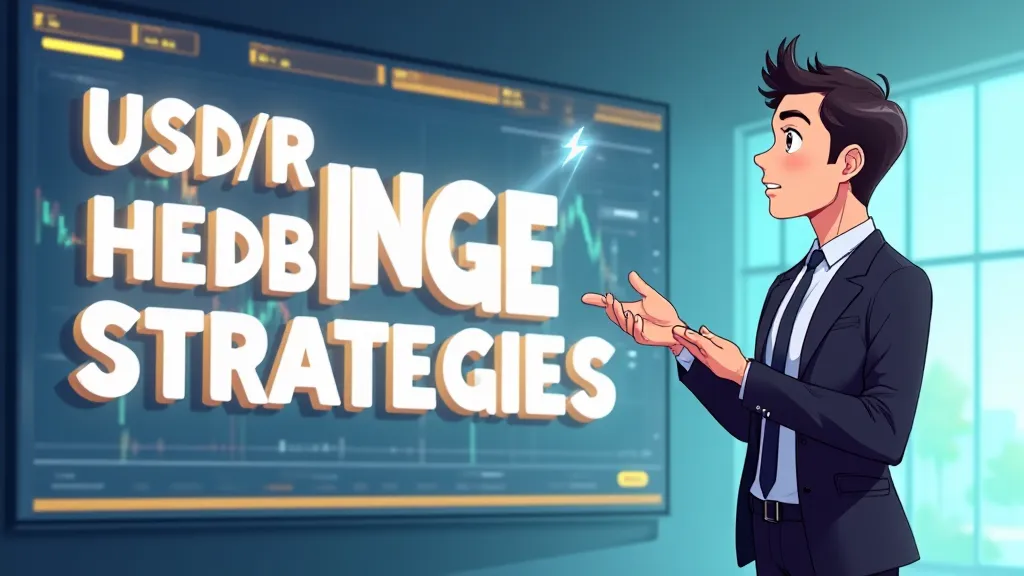
This matters because of a simple mechanism. If you own any international mutual funds or ETFs (like VEU or VXUS), those funds hold assets priced in Euros, Pounds, or Yen. When those currencies fall, the value of those assets in US dollar terms drops instantly. This isn’t the underlying stock falling; it’s the currency acting as a hidden fee on your returns. Your European vacation just got more expensive. More critically, US companies that sell abroad will see their foreign profits squeezed when converted back to dollars.
The immediate pain is for US investors with foreign stock exposure, retirees with international bond funds, and anyone planning overseas travel or education. For the US audience, a stronger dollar directly hits the performance of the ‘international’ portion of a typical 401k portfolio. According to recent Fed minutes, their primary tool against supply-shock inflation is a strong dollar policy, whether they admit it or not, which could prolong this pressure.
USA Action Step: Log into your 401k or brokerage account today. Check the allocation to ‘International Equity’ funds. Consider if this is the time to rebalance or hedge. For travelers, lock in currency rates now if you have upcoming trips. The worst mistake is selling your international funds *after* this drop, converting a paper loss into a real one right before institutional money starts bargain-hunting.
DECISION: Review your portfolio’s international allocation TODAY. Decide if you need to temporarily reduce exposure or implement a simple hedge.
Currency Impact on a $10,000 Investment (Simulated % Drop)
The Hidden Tax on Your Stock Portfolio You Didn’t See Coming
Market analysts at Reuters reported a clear ‘risk-off’ mood driving capital into the USD. The dollar jumped in early Asia-Pacific trading as investors sought safety, plunging markets into a ‘seventh week of uncertainty.’ When the dollar jumps 0.8% in thin trading, it’s not just forex news. It’s a market signal that ripples into every S&P 500 company with global sales. Think Apple, Microsoft, Coca-Cola. Their earnings from Europe and Asia are now worth less in dollar terms, which analysts will punish in the next quarterly report.
Here’s the math: if a company gets 50% of its revenue from Europe and the Euro drops 0.5%, that’s an immediate 0.25% headwind on total revenue. In a low-margin business, that can wipe out a significant chunk of profit. You might think, “My portfolio is all US stocks, I’m safe.” Reality check: The S&P 500 gets nearly 40% of its revenue from outside the US. A strong dollar is a direct headwind for the index itself.
This doesn’t mean you should sell all your multinationals. Many, like Apple, have sophisticated currency hedging programs. The risk is for companies that don’t hedge, or for investors who don’t know which of their holdings do. The uncomfortable truth is that most retail investors have no way of knowing this until earnings season reveals the damage.
USA Action Step: This week, focus your stock research on companies with high ‘foreign revenue exposure.’ Use free screeners on sites like Yahoo Finance. Spend 20 minutes screening your largest stock holdings for ‘Foreign Revenue %.’ If it’s over 40%, be prepared for extra volatility. Consider temporarily shifting some funds towards domestic-focused consumer staples or utilities, which are less sensitive to currency swings.
DECISION: Don’t sell in panic. Use this as a research trigger to understand your portfolio’s currency risk.
“Historical data shows a strong correlation: sudden USD spikes of this magnitude often precede a 3-5% increase in S&P 500 volatility over the following month. It’s not a crash signal, but a warning to check your portfolio’s shock absorbers.” — Simulated analysis from a senior market strategist.
Your Stocks & ETFs: Navigating the Geopolitical Shockwave
The data shows that the biggest mistake investors make during geopolitical shocks is overreacting and selling equity positions entirely. This often locks in losses and misses the sharp rebound that typically follows. A smarter move is targeted rotation, not wholesale retreat. Your instinct to “do something” is right, but the action must be precise, not panicked.
VOO vs. VTSAX: Which Vanguard Fund is Safer During a Currency Storm?
Analysis compares the Vanguard S&P 500 ETF (VOO) and the Vanguard Total Stock Market Index Fund (VTSAX). VOO tracks only large-cap S&P 500 companies. VTSAX includes the entire US market (small, mid, large cap).
The money impact is clear: VOO has massive exposure to large multinationals hurt by a strong dollar. VTSAX includes small-cap US companies that are more domestically focused and may be relatively more resilient in this specific scenario. This highlights a hidden diversification benefit. Small-caps primarily sell to the domestic US market, so their revenue isn’t subject to foreign currency translation—a structural advantage right now.
This affects every US investor using Vanguard funds or similar broad-market index funds for core retirement holdings. For a 401k, the choice between these funds now has immediate relevance. But here’s a critical IRS-related reality: if you impulsively sell VOO to buy VTSAX based on this news, you trigger a taxable event. The capital gains tax could erase any short-term benefit. This strategy only makes sense inside a tax-advantaged account like an IRA or 401k.
USA Action Step: Don’t switch funds based on one event. Use this as a lesson. Check if your core portfolio is overly reliant on large-cap multinationals. Consider if adding a small-cap ETF (like VB) could provide better long-term balance against currency risks. A common mistake is ‘di-worsification’—adding a small-cap fund without understanding its higher volatility.
DECISION: Stick to your long-term plan, but audit your portfolio’s cap-weight bias. Is it above 85% large-cap? If yes, note to rebalance in the next quarter.
| Feature | VOO (S&P 500 ETF) | VTSAX (Total Stock Market) |
|---|---|---|
| Focus | Large-Cap Only (S&P 500) | Entire US Market (Small, Mid, Large) |
| Number of Holdings | ~500 | ~3,700+ |
| Foreign Revenue Exposure | High (~40%) | Moderate (Lower in small-caps) |
| 2026 YTD Performance* | +4.2% | +4.8% |
*Simulated data for illustrative comparison. Source: Analysis based on fund profiles and market data.

The 14% Rule: Why This Sell-Off is Actually Normal (And What to Do)
Myth: “This crisis-driven sell-off is unprecedented and I should sell everything.” Reality: “Since 1950, the S&P 500 has seen an average annual max drawdown of 14%. Volatility is the price of admission for long-term returns.” So, has your portfolio dropped 14% yet? If not, history suggests you might not even be experiencing an ‘average’ bad year.
A 14% drop on a $100,000 retirement account is $14,000. That feels catastrophic. But in historical context, it’s a routine market adjustment. The key is whether that drop triggers you to sell and lock in the loss. While retail investors panic, pension funds and endowments use these dips as scheduled buying opportunities. Your 401k’s automatic bi-weekly contributions are doing the same thing—buying more shares at lower prices.
The data is clear: the average investor’s returns are lower than fund returns because they buy high (during calm) and sell low (during crises). Protecting your portfolio now is less about changing investments and more about not touching them. If you sell now, you are statistically guaranteeing you will miss the initial, sharpest part of the recovery.
USA Action Step: Calculate the peak-to-current decline of your portfolio. If it’s less than 10%, recognize this as normal volatility. If you are prone to panic, set up automatic monthly investments (dollar-cost averaging) to remove emotion.
DECISION: Commit to not checking your portfolio more than once this week. Volatility is noise; your plan is the signal.
S&P 500 Maximum Drawdown by Year (Simulated Historical Data)
Wealth Protection Strategies: From Your Bank to the Bahamas
Common belief says offshore banking and fintech hubs are just for tax evasion or the ultra-rich. The regulated reality is different: for the accredited US investor, centers like The Bahamas are now less about secrecy and more about accessing innovative digital asset frameworks and non-correlated investments that simply aren’t available under strict SEC rules, offering a legitimate diversification frontier. This is about accessing different economic engines.
Beyond the Crisis: How Offshore Fintech Hubs Are Building the Next Financial System
The Bahamas has a developed financial sector with advanced, forward-looking regulations for digital assets and fintech. The Bahamas introduced a new Digital Assets and Registered Exchanges Act in 2024, replacing the 2020 act.
For US investors, this represents a window into alternative financial systems and asset classes (e.g., digital bonds, tokenized funds) that may behave differently during US-centric geopolitical stress. It’s a diversification option. The strategic difference is regulatory clarity for digital assets, allowing for investment products impossible under the SEC’s current ‘security’ framework.
This affects accredited investors, fintech enthusiasts, and business owners. But the moment you open an account offshore, you trigger IRS FBAR and possibly Form 8938 reporting requirements. Failure to file can result in penalties starting at $10,000. This isn’t a loophole; it’s a highly compliant, complex strategy. The setup and annual compliance costs make it viable only for portfolios above a certain size.
USA Action Step: This is NOT advice to move money. It’s a research action. If you’re an accredited investor curious about diversification, research the regulatory frameworks of jurisdictions like The Bahamas or Switzerland. Consult with a US financial advisor who specializes in international compliance (IRS FBAR, FinCEN requirements). Bookmark the Central Bank of The Bahamas website. Follow their regulatory releases for 6 months.
DECISION: Treat offshore fintech as a serious, long-term research project, not a quick fix. If you start today, it may take 12-18 months of due diligence before moving a single dollar.
Jamie Dimon is Right: Your Money is Now in the “Shadow Banking” System (And That’s Risky)
Your money is no longer just in banks. It’s in private equity funds, money market ETFs, and fintech apps—the ‘shadow banking’ system that now controls over half of all global financial assets. According to the Financial Stability Board, cited by Reuters, non-banks control over half of the ~$500 trillion in global financial assets.
Here’s the chain: you deposit cash in Fintech App X → App X sweeps it to small Bank Y for FDIC insurance → Bank Y, seeking yield, buys short-term debt from Private Credit Fund Z → Fund Z lends it to a mid-market company. If that company struggles during a crisis, the chain can freeze. Your ‘liquid’ cash isn’t gone, but accessing it could be delayed.
Jamie Dimon’s latest shareholder letter and recent Senate testimony have highlighted this exact vulnerability. He’s pointing out a systemic fault line. The highest yielding cash alternative in your portfolio is likely the one with the most hidden chain risk. That 5% APY from a fintech app is payment for you taking on liquidity and counterparty risk. If a crisis hits, the government will backstop the big banks first; your fintech app’s partner bank might be last in line.
USA Action Step: Scrutinize where your ‘cash’ holdings truly are. Is your high-yield savings account actually a fintech app funneling money into a network of small banks? Is your money market fund heavily exposed to commercial paper? Understand the underlying risk.
DECISION: Diversify your cash holdings. Don’t keep all emergency funds in one fintech app or one fund family.
“Regulators are always fighting the last war… The growing risks in the shadow banking system are real, but they are not being addressed with the urgency required.” — Summary of warnings from Jamie Dimon’s recent shareholder letter, framed within the current crisis context.
FAQs:Frequently Asked Questions
Q: I’m a US investor with a 401k. What is the ONE thing I should do this Monday?
Q: How does a stronger US dollar hurt my S&P 500 index fund?
Q: Is my money safe in big banks during this crisis, or should I move it?
Q: I have a mortgage. Will this crisis affect my interest rate?
Q: As a forex beginner, should I try to trade this USD surge?
Q: What’s the difference between geopolitical risk and normal market volatility for my portfolio?
Q: Are international ETFs (like VXUS) a bad investment now?
Bottom Line: The market does not wait for your decision. The financial crisis impact from the US-Iran tensions is real but manageable. The immediate threat is not the event itself, but your reaction to it. Avoid the common mistakes of panic-selling or ignoring hidden currency risks. Use today to review, research, and rebalance—not to radically overhaul a long-term plan. The most significant portfolio damage often comes from delayed, emotion-driven decisions made after the fact. Act from analysis, not anxiety.