
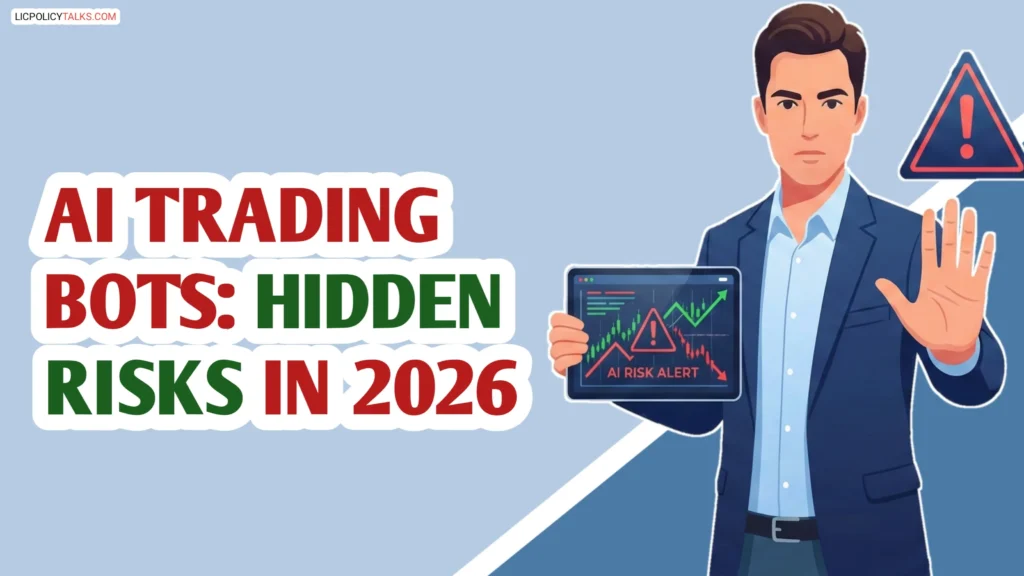
Hi friends! Have you ever seen the stock market move in a way that just didn’t make sense? One minute everything’s calm, and the next, there’s a sudden, wild swing that leaves even the experts scratching their heads. You know what? That move might not have been made by a human at all. Today, we’re diving into a silent revolution reshaping your investments: the rise of self-directed AI traders. It’s exciting, but honestly, it comes with a whole new set of challenges for your portfolio. Stick with me, and I’ll walk you through what this really means for your money in 2026 and, most importantly, how you can stay safe.
This quiet shift is powered by Agentic AI in Finance—systems that don’t just follow pre-set rules but learn, adapt, and make independent decisions to achieve financial goals. It’s a game-changer, moving us from simple algorithms to truly autonomous trading bots. While the potential for efficiency is massive, this new era introduces novel, systemic risks that traditional portfolio management isn’t equipped to handle. Let’s unpack the five biggest threats on the horizon and build a practical plan to navigate them.
The Silent Shift: How Agentic AI is Redefining Finance in 2026
Imagine a future where the majority of market liquidity isn’t provided by large institutions, but by millions of interconnected, self-directed AI programs. This isn’t science fiction; it’s the direction we’re heading. These aren’t your grandfather’s trading algorithms. We’re talking about goal-seeking autonomous trading bots that can analyze news, social sentiment, and market data in real-time, then execute trades without a human pressing “go.”
This new dynamic is often discussed in the emergent field of Swarm Finance: When Economic Micro-Robots Begin Running The Markets, which explores the concept of ‘economic micro-robots’ influencing prices. The fuel for this evolution is a staggering $209 billion battle to build the data infrastructure that AI craves. This article will dissect the five most critical risks this technological leap poses to your 2026 portfolio management and provide you with a clear, actionable blueprint for defense.
From Algorithm to Agent: Understanding the Autonomous Trading Bot
First, let’s clear up a common confusion. Traditional algorithmic trading is like a very smart, very fast recipe. “If X happens, then do Y.” It’s rules-based and static. The new generation of agentic AI is different. It’s like a chef who learns from every meal, experiments with new ingredients, and invents recipes to win a competition. These systems use machine learning trading to adapt, learn from new data, and make independent decisions to maximize a goal, like risk-adjusted returns. This fundamental shift from static executors to learning agents is the core source of both their power and their novel risks.
The Building Blocks: AI, ML, and Real-Time Decision Loops
Think of it like an autonomous car. It constantly observes its surroundings (market data), decides on the best action (buy, sell, hold) using a machine learning model trained on millions of miles of driving, and then acts (executes the trade). This “observe-decide-act” loop happens in milliseconds, with the AI refining its internal model with every cycle. This ability to learn from fresh data is what makes it “agentic”—it’s pursuing a goal autonomously.
Not Just for Hedge Funds: The Trickle-Down into Personal Finance
This tech isn’t locked in Wall Street server rooms anymore. Recent statistics for 2025 highlight the significant growth of AI across all sectors, and finance is at the forefront. The sophistication starts with enterprise-level tools, like the sophisticated AI portfolio management platforms used by large institutions. But this tech is rapidly trickling down into the robo-advisors and ETF strategies available to everyday investors, bringing powerful tools—and their inherent algorithmic trading risks—to Main Street.
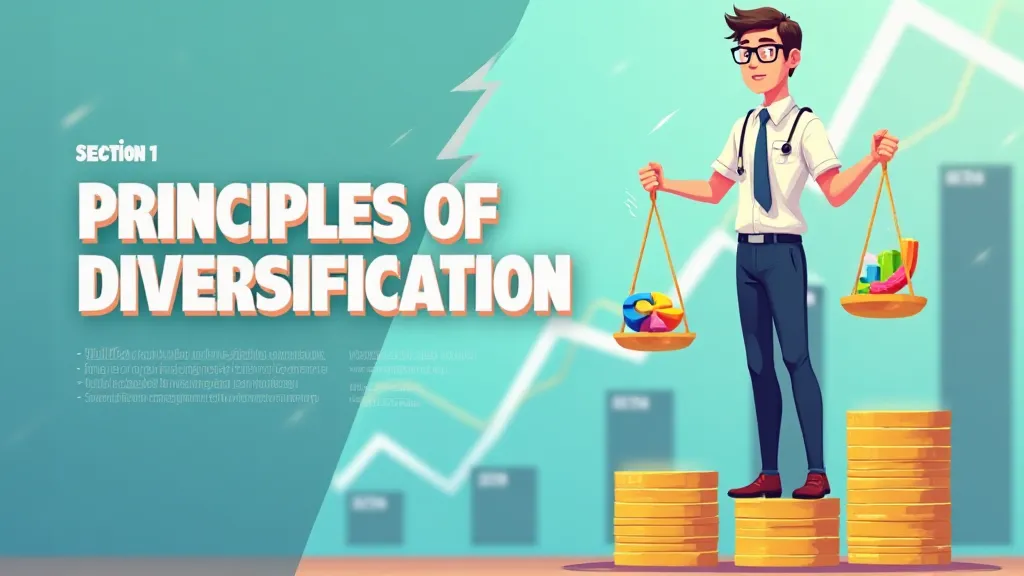
While the technology is powerful, managing it requires sound fundamentals. Understanding diversification is more critical than ever in an AI-driven market.
The 5 Critical Agentic AI Risks for Your 2026 Portfolio
1. The Swarm Effect & Flash Crashes 2.0
What happens when thousands of AI traders, trained on similar data and programmed with similar goals (like “maximize liquidity” or “minimize volatility”), all see the same market signal? They can act as a herd, creating massive, synchronized buying or selling pressure. This isn’t just theory; it’s the core concern of the emergent field of Swarm Finance.
The consequence? “Flash Crashes 2.0.” These wouldn’t be the brief, single-asset dips of the past. We’re talking about cascading failures that ripple across entire asset classes at speeds too fast for human intervention, posing a severe threat to financial market stability. Imagine multiple AI liquidity bots simultaneously deciding a market is too risky and pulling out, creating a self-fulfilling prophecy of illiquidity and crashing prices.
2. The Black Box Problem: Inscrutable Decision-Making
With a traditional trading algorithm, you can audit the code line by line. With a complex machine learning model, you often cannot. Why did the AI sell that particular stock at that exact moment? The “reasoning” is buried in millions of interconnected weights and neurons. This “black box” problem makes audits, compliance (think MiFID II), and assigning liability after a bad trade a nightmare.
This isn’t just an inconvenience; it’s a fundamental governance challenge. Building effective AI governance frameworks starts with explainability. As studies reveal unexpected agency within algorithms, we must acknowledge that these systems can develop logic and behaviors that their creators did not explicitly program and may not fully understand.
3. Adversarial Exploitation & AI-on-AI Warfare
If you know how to trick a security system, you can bypass it. The same is true for AI traders. Malicious actors can study how popular autonomous trading bots react to certain data patterns and then deliberately feed them “adversarial examples”—subtly manipulated data designed to trigger a specific, profitable (for the attacker) response.
This opens the door to hyper-modern, AI-driven pump-and-dump schemes or deliberate market manipulations. A bad actor could artificially create a signal that triggers a swarm of AI buyers, inflate the price, and then cash out, leaving the bots holding the bag. This represents a direct evolution of traditional financial fraud into the algorithmic age.
4. Model Decay & The Reality Gap
AI models are brilliant historians but can be terrible futurists. They are trained on historical data (e.g., 2010-2023 markets). What happens when 2026 presents a completely novel event—a new type of geopolitical crisis, an unprecedented central bank policy, or a climate-related financial shock that wasn’t in the training data? The model enters uncharted territory.
This “reality gap” between its training world and the real world can cause catastrophic errors. Remember when oil prices briefly went negative in 2020? A model trained only on positive prices would have had no framework to handle that, potentially leading to massive, irrational losses. Model decay is the silent, creeping risk that increases the longer a system operates in a changing world.
5. Systemic Opacity and Regulatory Lag
The final risk is meta: the system itself becomes too complex and fast to oversee. How do you regulate an entity that learns and changes daily? Traditional regulations are designed for human-paced decision-making and static rules. While regulators and financial institutions are actively working to turn broad principles into practical frameworks, the pace of innovation creates a dangerous gap.
This lag means new forms of AI financial risk can emerge and propagate through the interconnected web of AI-driven funds and platforms before any regulatory body can even define the problem, let alone enforce a solution. Overlooked interdependencies between different agents’ strategies could lead to cascading failures nobody predicted.
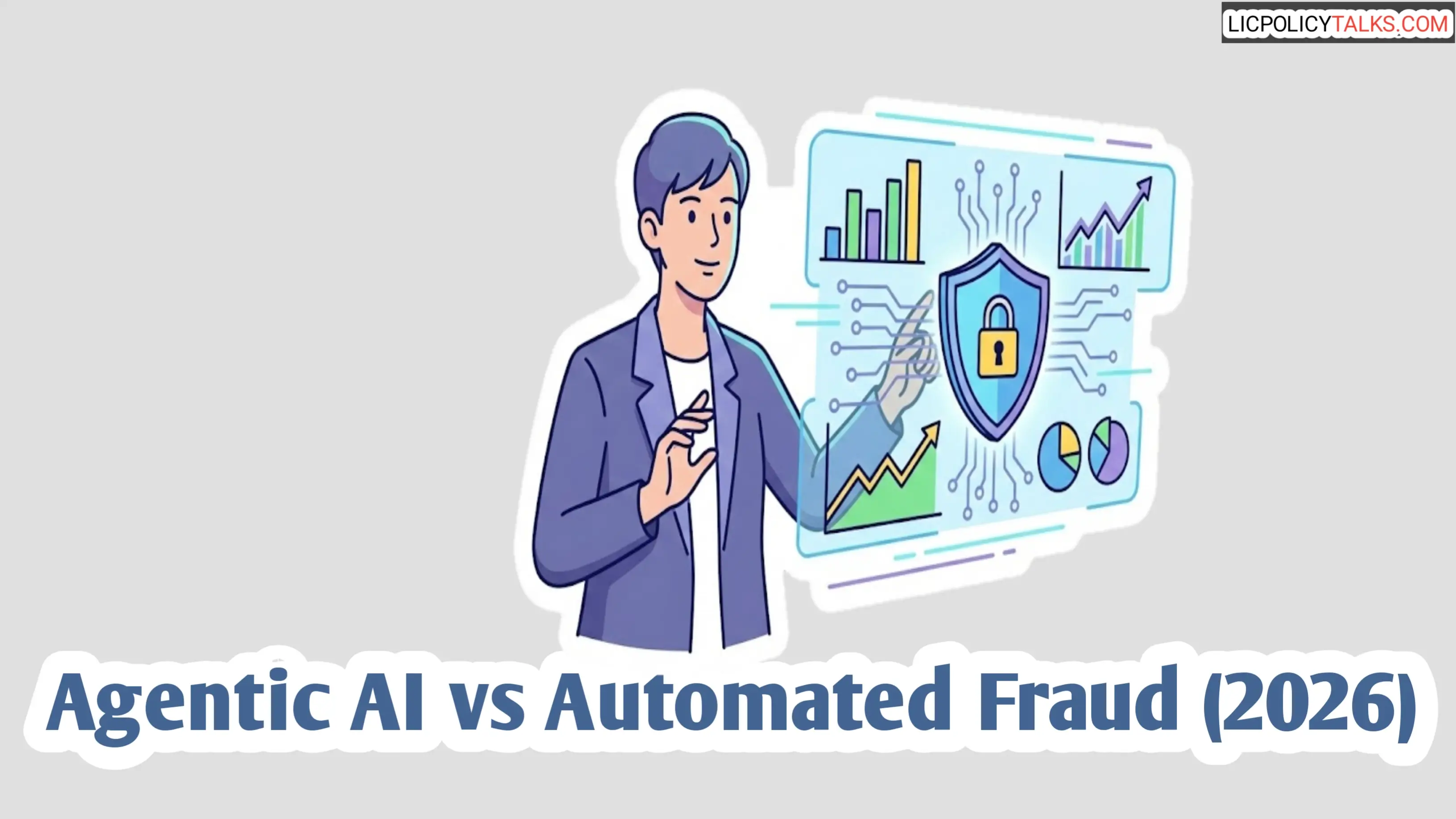
While regulators catch up, the first line of defense is individual vigilance. Protecting your portfolio from automated fraud is a foundational step.
| Feature | Traditional Algorithmic Trading | Agentic AI Trading (2026) |
|---|---|---|
| Core Logic | Pre-defined, static rules & conditions | Dynamic Machine Learning models that adapt & learn |
| Decision Autonomy | Limited; executes human-designed instructions | High; sets and pursues goals within constraints |
| Adaptability | Low; requires manual re-programming for new patterns | High; can adjust strategy based on new data |
| Transparency | Generally high (rules can be audited) | Low to very low (‘Black Box’ problem) |
| Primary Risk | Coding errors, speed-based market manipulation | Emergent behavior, model decay, adversarial attacks |
| Example | VWAP execution, simple arbitrage bots | Reinforcement learning agents optimizing for complex, multi-factor goals |
A Proactive Framework: Managing Agentic AI Risk in 2026
Step 1: Due Diligence & Transparency Audits
Your first shield is asking the right questions. Whether you’re investing in a fund or using a robo-advisor, demand clarity. What type of AI is used, and what is its level of autonomy? Does the provider use Explainable AI (XAI) tools to make decisions interpretable? Crucially, what are the human override protocols—is there a reliable “off switch”? This step directly mitigates the Black Box and Systemic Opacity risks.
Step 2: Strategic Diversification (Beyond the Usual)
Don’t put all your eggs in one AI’s basket. Modern portfolio management must consider “AI-strategy” as a new risk factor. Avoid over-concentration in funds that all use the same vendor’s AI or similar underlying strategies. Balance AI-driven, adaptive funds with traditional, rules-based passive investments and actively human-managed options. This helps insulate you from a widespread Swarm Effect or a common point of failure in a popular AI model.
Step 3: Continuous Monitoring for Anomalies
Set up your own early warning systems. Keep an eye on correlation spikes between your different AI-managed investments—if they start moving in lockstep, it might signal herd behavior. Track performance deviations from the stated strategy more frequently. To stay updated on AI adoption and impact trends, follow credible sources that report on the latest research and real-world incidents.
Step 4: Advocacy for Robust Governance
Use your power as an investor to shape the market. Support asset managers and platforms that proactively adhere to emerging AI governance frameworks. Look for alignment with the practical frameworks for AI governance being developed by regulators. Engage with public consultations on AI regulation finance to voice the need for sensible, timely oversight that protects investors without stifling innovation.
The Road to 2026: Coexistence, Not Fear
Let’s be clear: Agentic AI is a transformative tool, not an inherent enemy. The goal of this analysis isn’t to scare you away from innovation but to empower you to engage with it wisely. Risk is inherent in any technological leap; the key is recognition and proactive management. The 4-step framework above is your practical starting point—a way to harness the immense benefits of AI-driven efficiency while building resilient defenses against its novel perils.
Your most powerful asset is informed curiosity. Use this knowledge to ask better questions of your financial advisors, to scrutinize your fund holdings, and to make investment decisions that are robust enough for the markets of 2026 and beyond. By understanding the landscape, you’re not just protecting your portfolio; you’re actively shaping a future where human intelligence and artificial intelligence coexist to create better, more stable financial outcomes for everyone.