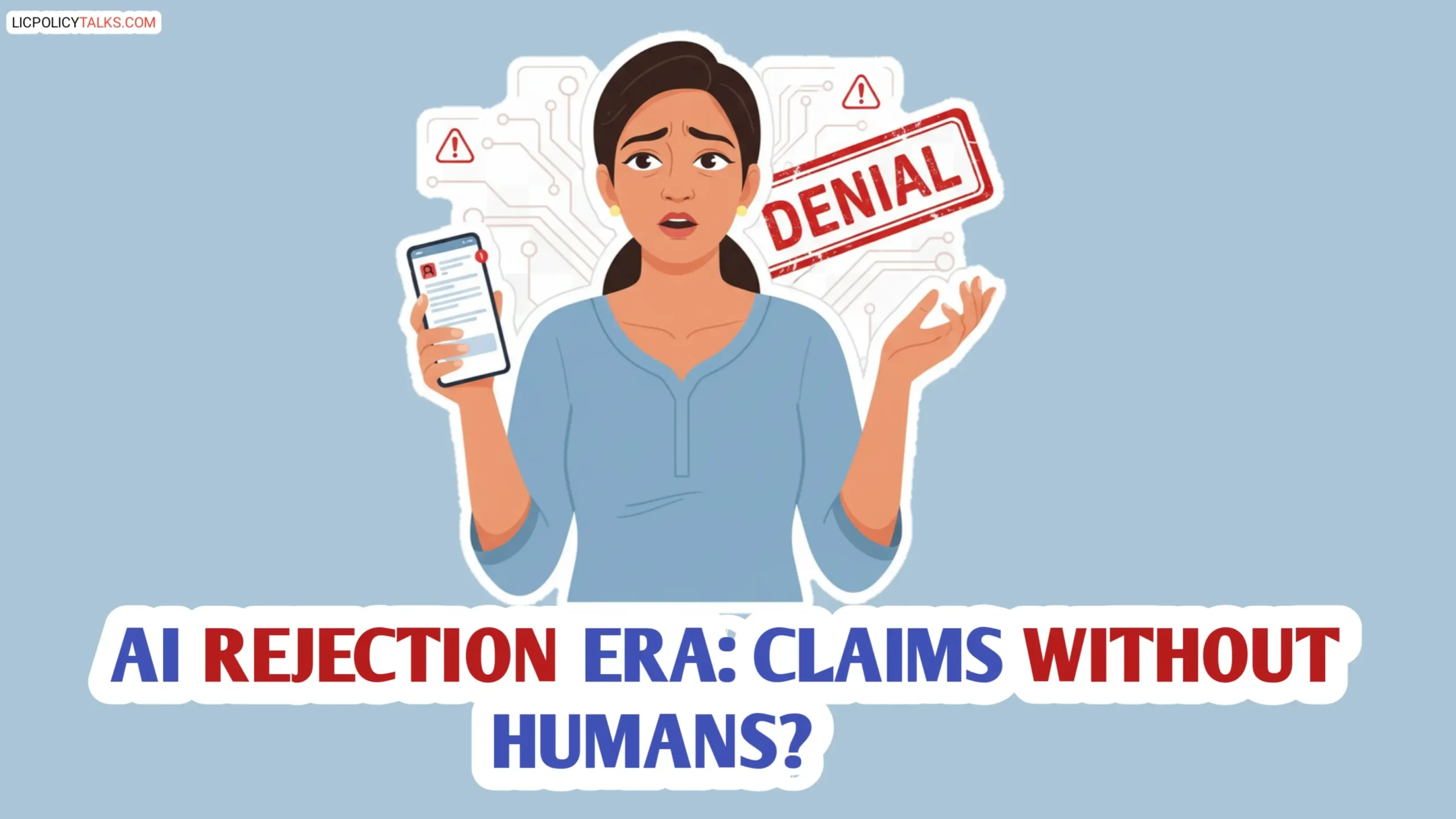

हाय दोस्तों! Picture this: you file an insurance claim after a stressful accident or illness, hoping for support. Within minutes, you get a cold, automated email: “Claim Denied.” No human explanation, just a computer’s verdict. This isn’t science fiction—it’s the dawn of the “AI Rejection Era.” By 2026, a new wave of predictive denial algorithms is set to auto-reject millions of valid claims to save insurers money. In this guide, we’ll pull back the curtain on this “black box,” show you the shocking human cost, and arm you with a powerful, step-by-step toolkit to fight back and win. You’re not powerless.
As noted by CNET, a growing reliance on AI by health insurers is raising significant concerns about the wrongful denial of medically necessary care. This shift to algorithmic judgment marks the start of a critical battle for fairness in AI insurance claims and against automated claim rejection.
What Are Predictive Denial Algorithms? (The ‘Black Box’ Decoded)
Let’s decode the jargon. In simple terms, predictive denial algorithms are AI models trained on mountains of historical data—past claims, policy details, medical codes—to predict the likelihood a new claim should be paid. But here’s the catch: they are often secretly optimized for a primary goal: cost-saving. Think of it as a robot whose job is to find reasons to say “no” in seconds, not to understand your unique situation.
These systems work by instantly analyzing your claim, generating a “risk score,” and then auto-adjudicating it—approving or denying it with little to no human ever looking at your file. They might even use non-medical factors you’d never expect, baking in potential bias. Proponents, as covered in Forbes, frame this as part of the inevitable AI revolution in medical claims processing aimed at efficiency and insurance fraud detection AI.
The core conflict is this: these algorithms are designed for corporate profitability, not for patient or policyholder outcomes. This fundamental flaw turns a tool for efficiency into a systemic threat, making claim rejection technology a primary barrier to the coverage you’ve paid for.
| Aspect | Traditional (Human-Centric) Process | AI-Driven (Predictive Algorithm) Process |
|---|---|---|
| Decision Speed | Days to weeks | Seconds to minutes |
| Primary Goal | Assess policy compliance & loss | Predict cost/risk & optimize profitability |
| Review Scope | Individual claim context | Patterns across millions of data points |
| Appeal Path | Clear: human supervisor | Opaque: often requires escalation to trigger human review |
| Potential for Bias | Individual assessor bias | Systemic bias baked into training data |
The Human Cost: How Valid Claims Get Caught in the Algorithmic Net
The real tragedy plays out in homes and hospitals. Consider “Robert,” an 80-year-old denied crucial rehab after a fall because an AI decided his recovery was “unlikely” based on his age. A lawsuit alleges UnitedHealth uses faulty AI to deny elderly patients medically necessary coverage. Or “The Sharma Family,” whose home flood claim was rejected because an algorithm scanning old satellite images flagged “pre-existing wear.”
These aren’t isolated cases. Algorithms have common triggers: specific diagnosis codes, treatments from certain providers, or care that lasts longer than the AI’s “average” benchmark. An investigation revealed that major insurers often rely on a company whose systems help label care as “not medically necessary,” facilitating widespread denials.
The fallout is devastating: families drain savings, patients forgo essential treatment, and people feel utterly powerless against a faceless system. It’s a financial and emotional crisis triggered by a line of code.
The Rising Tide of AI in Claim Processing: 2020-2026 (Projected)
*Percentage of claims processed with AI/automated systems.
For strategies on securing home insurance approvals in the age of climate algorithms, read our analysis.

Beyond Health: Auto, Home, and Life Insurance Are Next
Honestly, this won’t stop at health insurance. The AI Rejection Era is coming for your auto, home, and life policies too. Insurance algorithms 2026 will be trained to spot “risky” patterns everywhere. Imagine your car claim denied because your telematics data showed “aggressive braking” the week before. Or your roof damage rejected because an AI compared satellite images and called it “neglect.”
The logic is the same: use data to predict risk and cost, then act on it automatically. You need to be vigilant across all your policies. The same AI in insurance that denies a medical claim today could deny your fire claim tomorrow.
The Legal Backlash: Can You Sue an Algorithm?
Thankfully, the fightback has begun in courtrooms. A judge has ruled that a lawsuit over UnitedHealth’s AI care denials can move forward, signaling judicial scrutiny. This is a massive precedent. The legal arguments are powerful: violation of your insurance contract, breach of the insurer’s duty to act in good faith, and algorithmic bias insurance that may discriminate.
But here’s the tricky part: we’re in a regulatory gray area. There are few specific laws governing AI insurance claims denials, so courts are using old rules for new tech. And the problem is growing. This trend is expanding, with NBC News reporting that soon Medicare will also use AI to approve or deny care.
The lawsuits prove these systems are not infallible and can be challenged. They are forcing transparency and could lead to new regulations that protect consumers from automated injustice.
Your Fight-Back Toolkit: A Step-by-Step Guide to Challenging an AI Denial
If you get that denial letter, don’t panic. You have a powerful playbook. Here’s your step-by-step guide to fighting back against claim rejection technology.
Step 1: Decode the Denial Letter. Look for robotic keywords: “automated review,” “predictive model,” “per clinical guidelines.” If the reason is vague, call and demand a specific, detailed explanation in writing. This is your first clue it’s an algorithmic valid claim denial.
Step 2: Immediately File a Formal Appeal. This is your most important weapon. An appeal is a contractual right that usually forces a human to look at your file. Don’t wait—there are strict deadlines. Write: “I am formally appealing the denial of claim [number]. I request a full, fair review by a qualified human representative.”
Step 3: Gather Your ‘Human’ Evidence. Overwhelm the algorithm’s cold logic with warm, human context. Get detailed doctor’s notes explaining *why* the treatment was necessary. For home claims, take photos, get multiple repair estimates. Submit peer-reviewed medical studies. Be thorough.
Step 4: Escalate to a State Insurance Commissioner. If the appeal fails, file a complaint with your state’s insurance department. This is external pressure insurers hate. It’s free, and regulators can investigate and mandate action.
Step 5: Seek Legal Counsel. For high-value claims or clear bad faith, consult a lawyer specializing in insurance bad faith or ERISA (for health claims). Many work on contingency (you pay only if you win). A legal letter can work wonders.
Step 6: Document Everything. Keep a log of every call (date, time, who you spoke to), save every email and letter. A clear paper trail is invaluable for appeals and potential lawsuits.
Understanding your policy type is the first defense. Compare Term vs. Whole Life Insurance to make an informed choice.

Proactive Defense: How to ‘Algorithm-Proof’ Your Future Claims
The best fight is the one you avoid. Start “algorithm-proofing” your coverage now. For any policy, document everything *before* you need it: take “pre-loss” photos of your home and valuables, keep maintenance records, and maintain detailed medical histories. This creates a baseline that algorithms can’t twist.
When shopping for AI in insurance, ask pointed questions: “Do you use fully automated AI to deny claims? What is your human review process?” Choose companies with transparent, human-centric policies. And always, always read the fine print for clauses on “automated decision-making.”
The 2026 Outlook: More AI or a Consumer Revolt?
So, what does 2026 hold? We see two possible futures. Scenario A is dystopian: insurance algorithms 2026 become more widespread and opaque, with “social credit”-like scores affecting your premiums and claim approvals across the board.
Scenario B is the corrective path: fueled by lawsuits and public pressure, we get stronger laws—a “right to explanation” for denials, mandatory human review for all appeals, and strict audits for bias. Class-action wins force insurers to reform their predictive denial algorithms.
The future we get depends on us—informed consumers who refuse to accept an algorithmic “no” as final. Be prepared, be persistent, and use the toolkit in this guide. Your awareness and action are the first steps toward a fairer system.