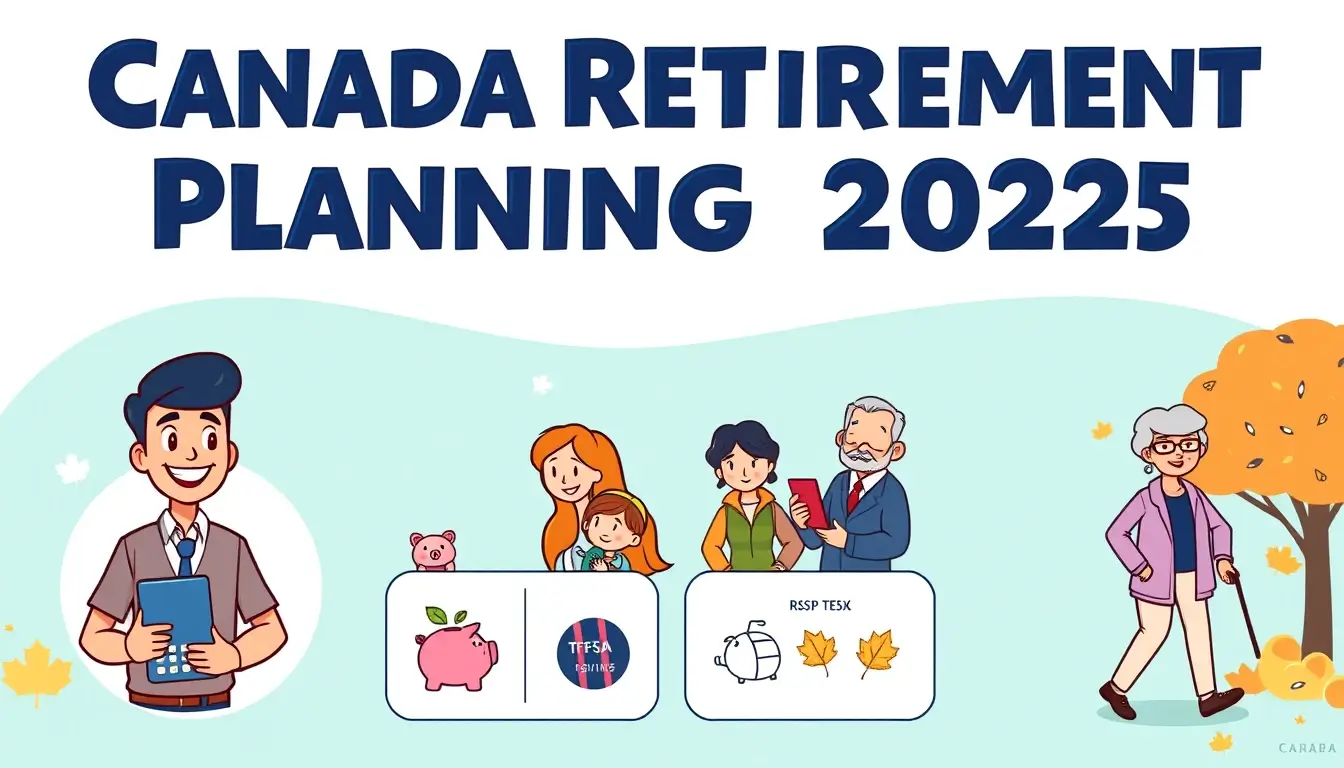



Hi friends! Ever wonder how those ongoing CPP 2026 updates will affect your golden years? You’re not alone! We’re breaking down how the fully implemented “enhanced” Canada Pension Plan is reshaping retirement income this year. Whether you’re decades away from retirement or currently cashing those cheques, these changes matter. We’ll cover exactly what’s shifting with the higher earnings ceilings, the new contribution rates for 2026, and battle-tested strategies to maximize your income. Consider this your personal roadmap to retirement confidence!
Understanding the Canada Pension Plan Changes 2026
Alright, let’s dive into what’s actually shifting with the CPP 2026 updates. The massive overhaul known as “CPP2” (or the Additional CPP) is no longer a “future plan”—it is now our operational reality. While the phase-in began in 2019, 2026 marks a critical year where the Year’s Additional Maximum Pensionable Earnings (YAMPE) is fully active. This isn’t just a tweak; it’s a structural change aiming to replace 33.33% of your pre-retirement income eventually, up from the historical 25% target.
Important Clarification: While the contributions are fully active in 2026, the full benefit increase takes 40 years to mature. If you are retiring in 2026, you will see a small “enhanced” bump, but the full 33% replacement rate is for the workers of the future. This dual-indexing system ensures your future benefits reflect real wage growth, not just the price of milk.

Officially, Service Canada has confirmed the contribution rates for 2026. The base rate remains stable at 5.95% for employees and 11.9% for self-employed individuals up to the first ceiling (YMPE). The “second tier” contribution of 4% applies to earnings that fall into the new, higher bracket. Honestly, this two-tier system is Canada’s way of ensuring high earners save more within the public system, rather than relying solely on private savings.
Why should you care today? Because these changes are compounding. The CPP Investment Board reports that the fund is sustainable for the next 75 years, but your personal payout depends entirely on your contribution history. We’ve observed a common mistake: many earners ignore the second ceiling, underestimating how much these “Tier 2” contributions will boost their future payouts. Understanding this math now is crucial.
CPP Contribution Rates 2026: The Two-Tier Reality
Let’s talk dollars and cents! For 2026, the Year’s Maximum Pensionable Earnings (YMPE) is projected to rise to approximately $74,600. This is the first ceiling where the standard 5.95% applies. But here is the new normal: The Year’s Additional Maximum Pensionable Earnings (YAMPE) creates a second bracket, roughly 14% higher than the first, hitting approximately $85,000 for 2026. If you earn above the average, you will see a separate line item on your pay stub for these “Second CPP Contributions.”
How does this compare historically? We are paying significantly more than we did five years ago. The maximum employee contribution in 2026 (Tier 1 + Tier 2) will likely be around $4,646. That’s a significant jump from the sub-$4,000 limits of the early 2020s. Employers match these amounts dollar-for-dollar, which is a key factor for business owners planning their 2026 payroll budgets.
Here’s a pro tip: Contribution room is based on earnings between the “Year’s Basic Exemption” (frozen at $3,500) and the earnings ceilings. If you earn less than $3,500 annually, you pay zero. Earning $90,000? You will max out both Tier 1 and Tier 2 contributions. The math matters because strategic income planning (like paying dividends vs. salary for business owners) directly impacts whether you are contributing to—and earning credits for—this enhanced CPP.
How to Maximize CPP Benefits: Strategic Approaches
Want to squeeze every possible dollar from CPP? First, understand the “General Drop-Out” provision. Service Canada automatically removes your lowest 17% earning years (up to 8 years) from the calculation. However, with the new enhanced CPP, every year you contribute at the higher rate adds significant weight to your “enhanced” benefit portion. If you have low-earning years recently, they might drag down your average unless you have enough “good” years to drop them out.
Timing is everything. While standard retirement age is 65, you can take reduced benefits at 60 (36% permanent reduction) or enhanced benefits at 70 (42% permanent increase). Observation from client files: We see many people rushing to take CPP at 60 out of fear, only to run out of money later. The break-even point is usually around age 74. If you are in good health in 2026, delaying CPP is often the best “guaranteed return” on investment you can find.

Attention divorced Canadians: Credit splitting remains a critical, underused tool. CPP credits accumulated during a marriage or common-law partnership can be divided upon separation. This isn’t automatic in all cases—you often must apply. In 2026, digital application processes have made this easier, but the rules are strict. Don’t overlook this—unclaimed splits are essentially free money you are leaving behind.
Finally, coordinate CPP with other benefits. If you qualify for the disability “drop-in” provision, your low-earning years while disabled are excluded from the calculation, protecting your retirement payout. Post-Retirement Benefits (PRB) are also vital: if you work and contribute to CPP between ages 60 and 70 while receiving the pension, you earn these “mini-pensions” that stack on top of your base payment.
CPP Payment Increases 2026: What to Expect
Get ready for the adjustment! January 2026 brings the annual CPP cost-of-living adjustment (COLA). While we await the final CPI data, projections suggest a moderate increase. But the real story isn’t just inflation—it’s the enhanced benefit maturation. However, manage your expectations: The maximum monthly benefit for a new retiree at age 65 in 2026 is projected to be approximately $1,507. While higher than previous years, it won’t replace a private pension overnight.
Survivor benefits have stabilized under the new rules. Surviving spouses over age 65 generally receive 60% of the deceased’s retirement pension, but this is subject to a complex “combined limit.” Here is a hidden risk: If you already receive a high CPP retirement pension of your own, your survivor benefit might be reduced to near zero because the combined total cannot exceed the maximum retirement pension for a single individual.
How do these increases actually materialize? Automatically. If you’re already receiving CPP, your January 2026 payment will reflect the COLA adjustment. New applicants benefit from the updated YMPE averages immediately. Note that the “Death Benefit” remains a flat taxable lump sum of $2,500—it has not been indexed to inflation, meaning its real value continues to erode.
How to Prepare for CPP 2026: Action Plan
First things first: Log into your My Service Canada Account (MSCA). This digital portal is your truth source—it shows your Statement of Contributions. Check for zeros! If you see a zero in a year where you worked, you might have a T4 error to correct. Financial advisors recommend checking this at least every two years, as corrections become difficult after four years.
Working past 65? It’s a strategic move in 2026. You can choose to stop contributing to CPP at age 65 (by filing form CPT30), effectively giving yourself a 5.95% raise. However, continuing to contribute builds Post-Retirement Benefits. Run the numbers: if you are high-income, the tax deduction on contributions plus the PRB might be worth it. If you are low-income, stopping contributions might improve cash flow today.
Provincial coordination matters. Quebec’s QPP has synchronized with CPP enhancements, so the rules are largely mirrored. Remember, CPP is fully taxable income. A common shock for retirees is the tax bill when CPP, OAS, and RRIF withdrawals hit simultaneously.
CPP Eligibility 2026: Updated Rules
Let’s clarify who qualifies. The basic requirement remains: You need at least one valid contribution. But “maximum” benefits now require roughly 39 years of maximum contributions. With the 2026 enhancements, the definition of “maximum contribution” now includes that Tier 2 bracket (earnings up to ~$85,000). If you aren’t hitting the Tier 2 ceiling, you aren’t banking the maximum possible enhanced pension, though you are still building a solid base.
Disability benefits have seen positive shifts. If you are under 65 and have a severe and prolonged disability, CPP Disability provides a monthly benefit (max ~$1,600+ in 2026). The “drop-in” provision is crucial here—it imputes income for the years you were disabled so your retirement pension isn’t penalized later.
Late applicants, listen up! You can apply for CPP retroactively up to 11 months (if you are over 65). If you delayed applying but didn’t mean to, you can get a lump sum back payment. However, there is no retroactivity for the “deferral bonus” (the 0.7% increase). You only get the increase for the months you actually waited.
FAQs: government retirement plans Canada Qs
There you have it, friends! The CPP 2026 updates mark the full maturity of the tiered system. Higher contributions might sting the paycheck today, but the enhanced, inflation-proof benefits are a lifeline for the future. Remember, CPP is the foundation, not the whole house—build your personal savings on top of it. Got value from this guide? Pay it forward! Share this article with three friends who need retirement clarity. For ongoing tips, subscribe to our newsletter. Here’s to your prosperous golden years!