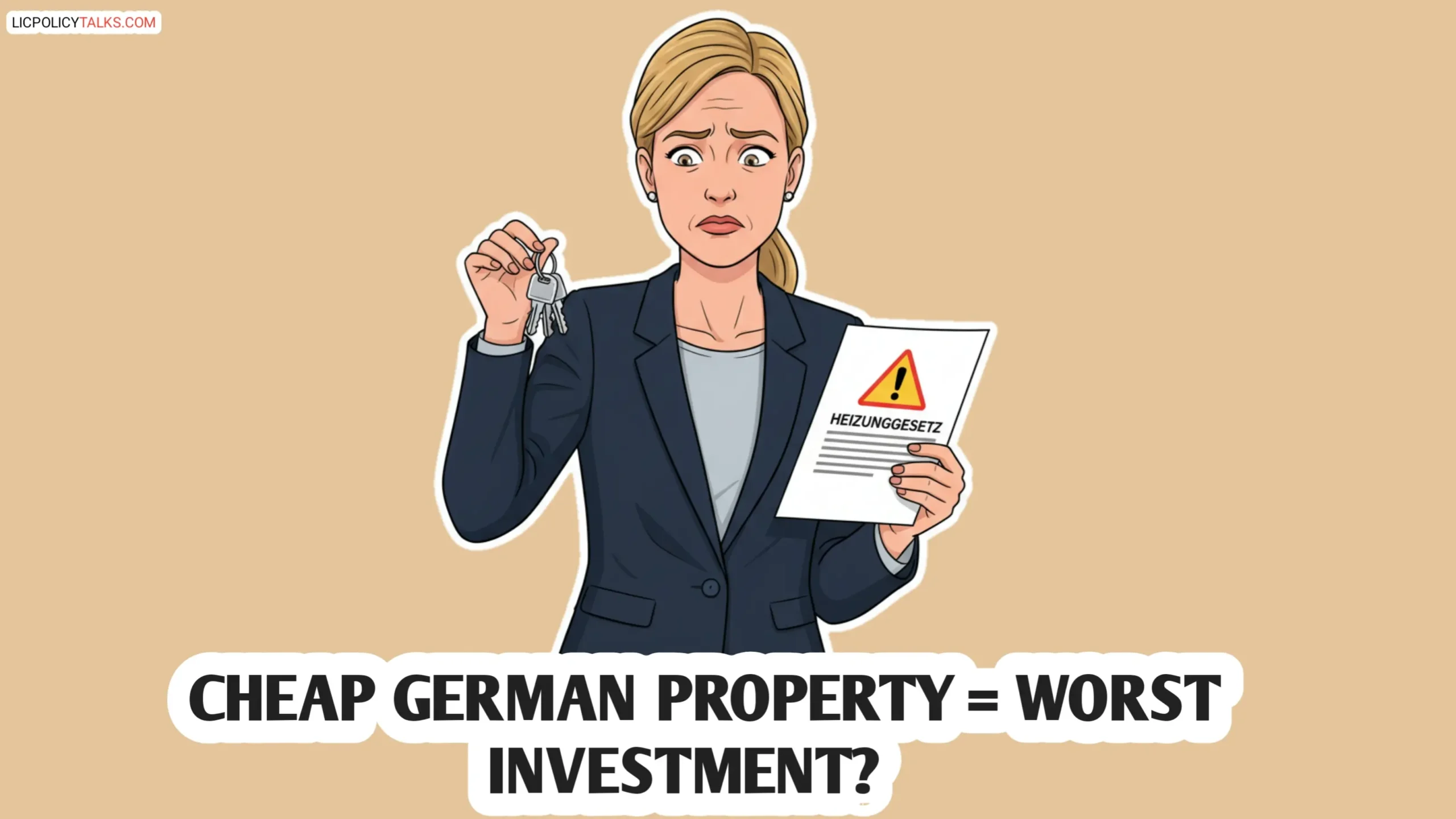

हाय दोस्तों! Picture this: you’ve found a beautiful, spacious apartment in a charming German city. The price? An absolute steal compared to what you’d pay back home. You’re about to celebrate your genius investment… until a local lawyer slides a report across the table. It estimates a mandatory €120,000 renovation to comply with a new law. Suddenly, that “steal” feels like a trap. This scenario is becoming terrifyingly common. Today, we’re digging into why Germany’s updated Heating Law is the single biggest risk to property investors and how to avoid financial disaster.
This isn’t a distant future problem; the 2024 and 2026 deadlines are on the horizon, creating a systemic risk that could spark a wave of insolvencies among unprepared buyers and landlords. The old rules for evaluating German real estate are obsolete. We’ll break down the law, the shocking costs, and give you a concrete checklist to protect your capital.
Beyond the Listing Price: The Ticking Time Bomb in German Buildings
For decades, property value was about location, square meters, and charm. Today, a new metric trumps them all: energy efficiency. And in Germany, it’s not just a nice-to-have; it’s a legal mandate with severe financial consequences for non-compliance. Understanding this shift is the first step to avoiding ruin.
The GEG (Heating Law) 2026 Deadline: What It *Actually* Means for Owners
The GEG (Gebäudeenergiegesetz) is Germany’s core law for decarbonizing its building stock. The critical update for investors kicks in from 2026. Essentially, when an existing building is sold or undergoes a major renovation, it must be brought up to much stricter energy efficiency standards. The era of buying a property and deferring upgrades indefinitely is over.
The key is the Energy Performance Certificate (EPC), rating buildings from A+ (highly efficient) to H (energy sieve). A staggering portion of Germany’s housing stock is in the danger zone. According to the German Energy Agency (dena), roughly 65% of residential buildings fall into efficiency classes E, F, or G. Buying a property with a ‘G’ rating now is like buying a car that will fail its next major inspection—you’re legally on the hook for the repair, and in this case, the repair bill can exceed the purchase price.
The 2026 deadline isn’t a blanket date for all buildings, but a trigger point. If you buy an inefficient building after that date, the clock starts ticking to plan and execute the renovation. The legal obligation is clear, and the costs, as we’ll see, are monumental. (Source for building stock data: German Energy Agency (dena) monitoring reports).
Jargon Buster: Sanierungszwang, Primary Energy Demand, and Why They Affect Your Wallet
Key Terms Decoded
Sanierungszwang: This translates to “renovation obligation.” It’s the legal compulsion to upgrade your building to meet the new GEG standards. It’s not a suggestion; it’s a mandate enforced by law.
Primary Energy Demand: This is the total amount of energy needed to heat, cool, and run your building, including the energy lost in production and transport. The new law sets strict maximum limits for this number. Hitting that target requires specific, expensive work like facade insulation, triple-glazed windows, and a heat pump system.
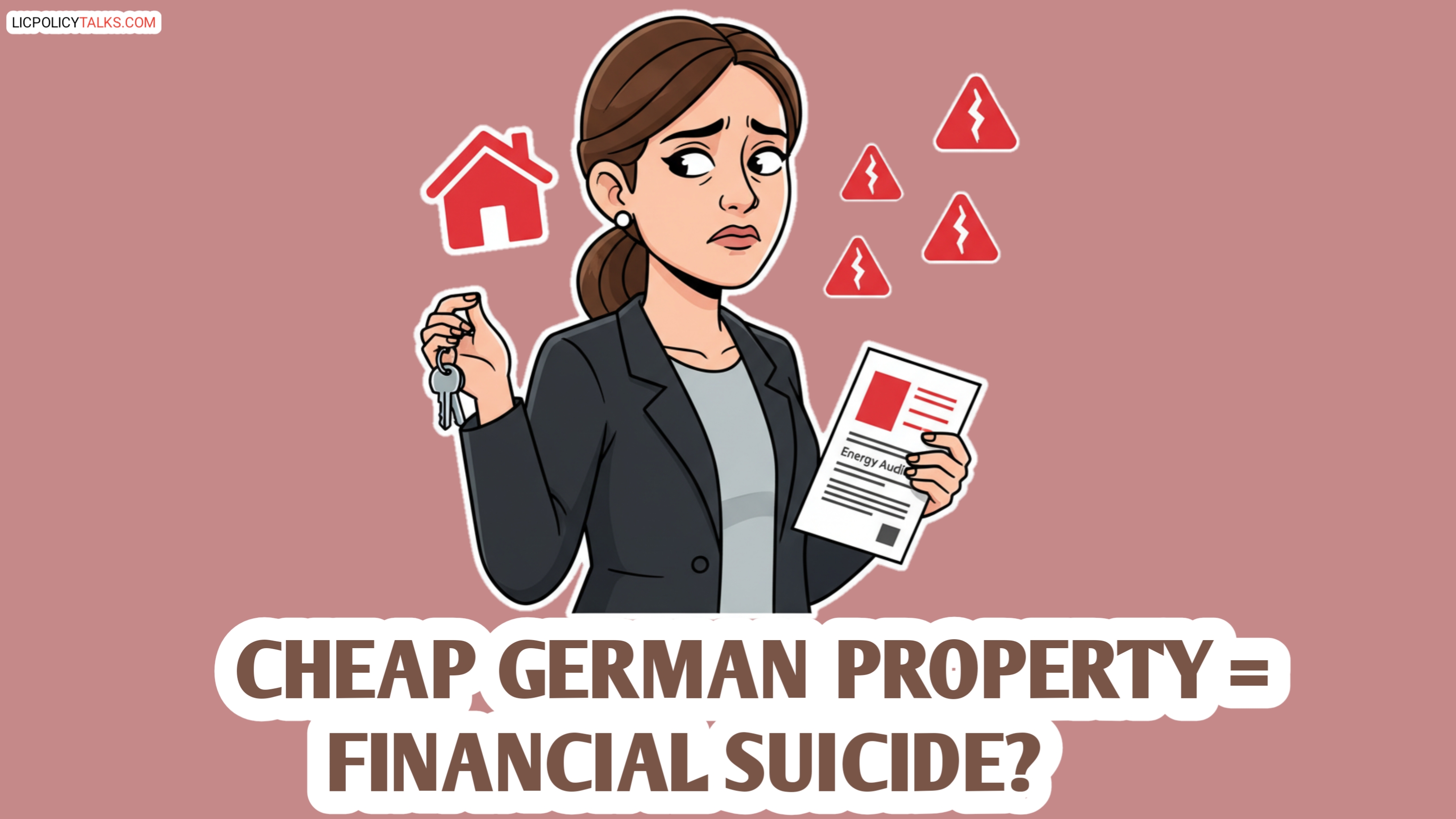
The Domino Effect: From Renovation Bills to Insolvency Notices
The obligation is one thing; the financial impact is another. For many, the cost of compliance won’t just be an inconvenience—it will be ruinous. This is where a personal financial warning becomes a potential systemic crisis in the Germany housing market.
The True Cost of Compliance: A Breakdown That Will Shock You
Let’s talk numbers. A full “Tiefensanierung” (deep retrofit) for a typical 120sqm apartment in a pre-1990 building is not a minor refurbishment. Realistic total costs range from €80,000 to well over €150,000. A breakdown from construction cost experts looks like this: External wall insulation (€20,000-€40,000), roof insulation (€10,000-€20,000), new triple-glazed windows (€15,000-€25,000), a modern air-to-water heat pump system (€25,000-€40,000), and a controlled ventilation system (€8,000-€15,000).
Now, contrast that with the “cheap” purchase price. You might buy that apartment for €250,000, thinking you got a deal. But with a €110,000 renovation liability, your real total investment balloons to €360,000. The “hidden” mandatory cost can be 40-60% of the purchase price, instantly wiping out any perceived discount. Furthermore, securing a bank loan for this renovation is not automatic and often comes with higher interest rates than the primary mortgage, squeezing cash flow.
The Hidden Cost of a ‘Cheap’ €250,000 Property
Visualizing the mandatory additional cost that turns a bargain into a burden.
Why Landlords and Small Developers Are Facing a Perfect Storm
This isn’t just a problem for owner-occupiers. Small-scale landlords and developers are particularly vulnerable. The math is brutal: rental income from an old building might cover a basic mortgage, but it cannot service an additional €1,500+ monthly loan payment for the renovation. This creates an immediate cash flow crisis.
Compounding this is the “value trap.” Even after spending €100,000, the property’s market value in a secondary location may only increase by €80,000, resulting in a net loss. If financing falls through or costs overrun, owners face forced selling at a loss. This precise pressure is why insolvency experts are warning of a rise in insolvencies among real estate holding companies (GmbHs). The situation is even more complex in multi-owner buildings where getting unanimous agreement on分摊ing six-figure costs can be impossible, leading to legal gridlock and devaluation for all. (Source for insolvency trends: Reports from Creditreform, a major German credit agency).
Your Due Diligence Checklist: How to Spot a Liability Posing as an Opportunity
Not all German real estate is toxic. The key is forensic, energy-focused due diligence. You must now investigate a property’s thermal performance with the same rigor you’d check its foundation. Here is your defensive checklist.
| Checkpoint | What to Look For | Red Flag |
|---|---|---|
| Energy Certificate (EPC) | Rating ‘B’ or higher. Detailed consumption data. | Rating ‘E’, ‘F’, or ‘G’. Vague or missing data. |
| Seller Disclosure | Written plan & cost estimates for 2026 compliance. | “We don’t know yet” or refusal to provide details. |
| Building Age & Type | Post-1995 construction, already renovated. | Pre-1978, single-glaze windows, no facade insulation. |
| Financing Pre-approval | Bank agrees in principle to fund purchase AND renovation. | Bank only approves mortgage for current state value. |
| Local Market Dynamics | Strong rental demand, rising prices in area. | Stagnant or declining market, high vacancy rates. |
Your single most powerful tool is a professional energy audit, which goes far beyond the basic EPC. It will provide a roadmap and a realistic cost estimate for compliance. Make commissioning one a non-negotiable condition of sale. Then, run the brutal new math: Purchase Price + Worst-Case Renovation Cost + Financing Costs. If the numbers don’t work, walk away. Finally, hire a lawyer who specializes in building and GEG law to review everything.

The Path Forward: Investing in German Real Estate Without the Guesswork
While the risks are severe, the crisis also creates clear opportunities for the informed investor. The key is to shift your focus from “cheap” to “compliant.” The new safe havens in property investment are properties where the energy question is already solved.
Prioritize these profiles: 1) New builds (Neubau) certified to KfW Efficiency House 40 or 55 standards—they are future-proof. 2) Properties comprehensively renovated within the last 10 years, with full documentation of the work done. 3) The golden ticket: a property where the current seller has already executed and paid for the GEG-mandated renovation. Yes, the purchase price will be higher, but it’s a known quantity versus a six-figure mystery box.
You can also look beyond direct ownership. The renovation wave itself creates investment opportunities in companies that benefit—think heat pump manufacturers, insulation producers, or specialized construction firms. Investing in these sectors via stocks or funds is a way to gain exposure to the trend without taking on direct real estate risk. The era of buying German real estate based on square-meter price alone is over. The 2026 law has made energy due diligence the single most important factor. The “cheap” assets are the most expensive traps, while premium, efficient properties are the new safe havens.