
Hi friends! Let’s be honest, watching the DAX industrials bounce around lately has been a bit of a rollercoaster, hasn’t it? One minute there’s talk of a rebound, the next, headlines like ‘DAX Slips Below 24,100’ flash across the screen. It’s enough to make any investor feel cautious. But what if I told you that behind this short-term noise, a clear and powerful economic story for 2026 is taking shape? This story points to a specific, tangible investment opportunity if you know where to look. In this guide, we’ll cut through the complexity. We’re going to decode the official Germany GDP Forecast 2026, connect the dots directly to the stock market, and outline a clear strategy for what could be a fantastic buying window for Germany’s industrial champions.
The consensus is building: after a period of stagnation, Germany’s economy is projected to stage a meaningful rebound in 2026. This forecast isn’t just a number on a page; it’s a signal that could unlock significant value in a specific part of the market. The core question we’re answering today is simple: Does this emerging economic recovery translate into a real, actionable chance to invest in German industrial giants at an attractive price?
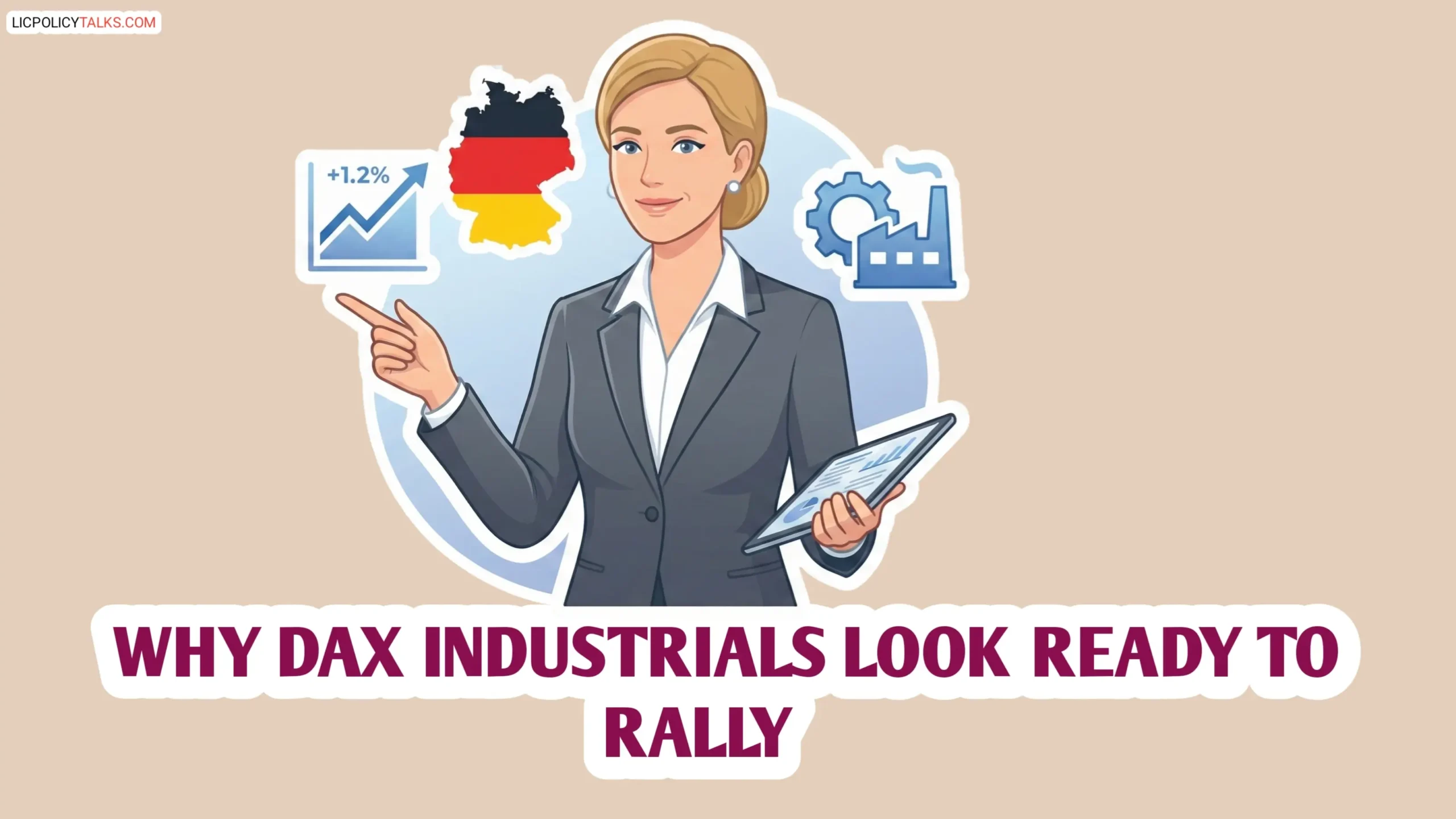
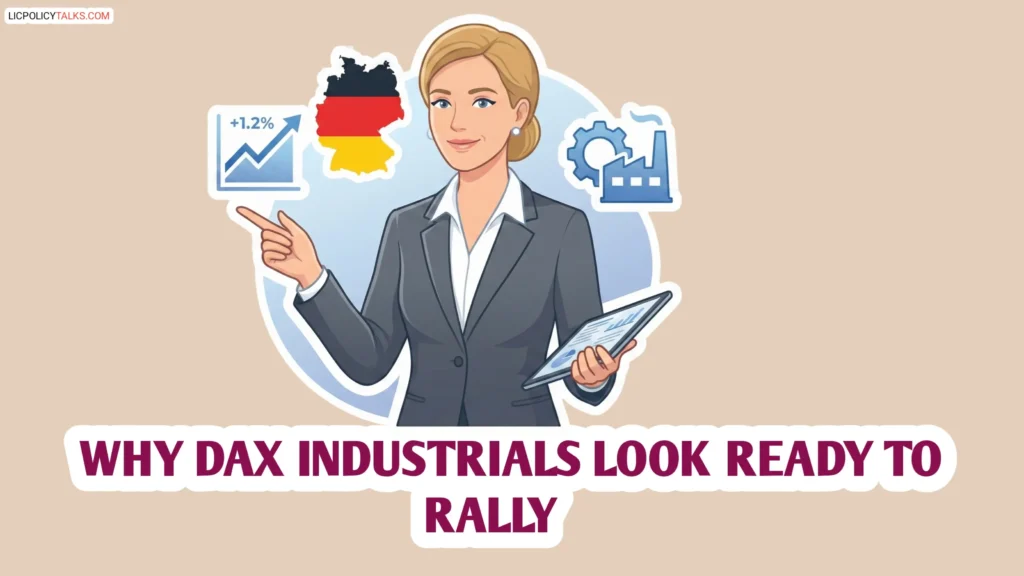
Germany’s 2026 Economic Rebound: Decoding the 1.2% GDP Forecast
So, what’s all the fuss about a 1.2% growth forecast? For a powerhouse like Germany, this figure represents a meaningful pivot. To appreciate it, you have to look at the recent past. 2023 was a year of effective stagnation, with growth hovering around zero or even dipping slightly negative in some quarters. The years 2024 and 2025 are generally seen as a bridge—a period of slow, grinding recovery as the economy works through high energy costs and adjusts to a new global trade environment.
The 2026 forecast of 1.2% marks the point where economists believe these headwinds will finally ease enough for a clear acceleration. For a mature, export-driven economy like Germany’s, a sustained growth rate above 1% is a strong signal of health and forward momentum. It suggests that the underlying engines of the economy—manufacturing, business investment, and consumer spending—are firing in sync again.
It’s crucial to frame this forecast within the real world, which is full of surprises. As noted in a recent analysis of potential surprises that could impact the global economy in 2026, any forecast operates within a landscape of uncertainty. This 1.2% projection is based on a set of reasonable assumptions about inflation, geopolitics, and policy—but it’s a baseline from which both positive and negative surprises can deviate.
Germany’s GDP Growth Trajectory
Economic Rebound Forecast (2023 – 2026E)
Key Drivers Powering the 2026 Recovery
This projected German economy 2026 turnaround isn’t happening in a vacuum. It’s being fueled by several powerful macroeconomic shifts that are expected to converge.
First, and perhaps most importantly, is the anticipated easing of inflation and the subsequent shift in central bank policy. Markets are widely expecting the European Central Bank (ECB) and the U.S. Federal Reserve to have completed their rate-hiking cycles and begun cutting interest rates by then. As highlighted in a year-end review of non-US stock markets, the prospect of rate cuts has already been a major tailwind for global equities. Lower borrowing costs make it cheaper for businesses to invest and for consumers to finance big purchases, directly stimulating the economy.
Second, we expect a synchronized rebound in global trade and industrial demand. As the world’s largest economies stabilize, demand for Germany’s high-quality capital goods, machinery, and automotive products should pick up. Third, domestic factors are lining up. The resolution of the energy price shock is allowing industries to plan with more certainty, and significant fiscal stimulus is being directed into critical areas like defense, digital infrastructure, and the green transition.
From Macro to Micro: Why DAX Industrials Are the Prime Beneficiary
Okay, so the economy is projected to grow. Great. But why should your portfolio care? Here’s the simple truth: not all stocks benefit equally from an economic recovery. DAX industrials and industrial sector stocks are historically among the biggest winners. Think of companies like Siemens (capital goods), Volkswagen (automotive), and BASF (chemicals). Their fortunes are tied directly to the business cycle.
The magic ingredient is something called “operational leverage.” These companies have high fixed costs—factories, machinery, R&D teams. When the economy is weak and sales are low, these fixed costs eat deeply into profits. But when demand picks up and revenue rises by even a small percentage, those same fixed costs get spread over a much larger sales base. The result? Profits can grow two or three times faster than revenue. This leverage effect is why industrial stocks often outperform during the early stages of an economic recovery.
The Direct Link: How GDP Growth Fuels DAX Industrials
Let’s trace the money. A higher GDP number isn’t an abstract concept; it flows directly into the order books of Germany’s industrial champions through a few clear channels:
- Business Investment (Capex): When businesses are confident about the future, they invest. They build new factories, upgrade machinery, and automate processes. This means direct orders for industrial engineering and capital goods companies.
- Consumer & Business Confidence: Rising confidence leads to more car purchases, commercial vehicle orders, and demand for industrial components. The entire automotive supply chain, from tire makers to luxury car manufacturers, feels the boost.
- Stronger Global Demand: Germany is an export powerhouse. A healthier global economy means more countries buying German-made industrial equipment, chemicals, and high-tech products.
This growth is further amplified by specific government spending priorities, particularly in defense and green infrastructure, which are creating dedicated investment tails for certain industrial sub-sectors.

Top DAX Industrial Sectors Primed for the Rebound
Not all industrials are created equal. Some sub-sectors are positioned to capture more of the 2026 growth than others. Here’s a breakdown of the key areas to watch.
| Sector | 2026 Growth Lever | Key DAX Examples | Risk Consideration |
|---|---|---|---|
| Industrial Engineering & Capital Goods | Direct beneficiary of rising global business investment (capex) and automation trends. | Siemens (SIE), Linde (LIN) | High exposure to a global slowdown; long project cycles. |
| Automotive & Suppliers | Rebound in consumer/business auto demand; EV transition and premium positioning. | Volkswagen (VOW3), Mercedes-Benz Group (MBG) | Intense competition, supply chain disruptions, regulatory costs. |
| Electrical Equipment & Digitalization | Critical for energy transition (grids, renewables) and factory digitization (Industry 4.0). | Siemens Energy (ENR), Infineon (IFX) | Technology shifts, project execution risks, cyclical semiconductor demand. |
| Chemical-Industrial Hybrids | Early-cycle play; demand from construction, autos, and consumer goods. | BASF (BAS), Covestro (1COV) | Volatile input (energy) costs, Chinese competition, environmental regulations. |
The Strategic Window: Timing Your Entry into DAX Stocks
Understanding the “why” is only half the battle. The other half is the “when.” This is where investment strategy and stock market timing come into play. You know the old saying: “The market climbs a wall of worry.” Right now, there’s plenty of worry to go around, which can actually create opportunity.
Stock markets are forward-looking discounting machines. They don’t wait for the good news to be printed in the official GDP report for Q1 2026. They start pricing in the recovery months, even a year, in advance. The current period of uncertainty and flat-to-negative sentiment may be offering a more attractive entry point before the broader narrative fully shifts to optimism. The goal isn’t to catch the absolute bottom, but to build a position during a phase where the long-term fundamentals are improving but short-term sentiment is still cautious.
Is Now the Right Time? Analyzing Market Sentiment
Let’s look at the recent data. The DAX has been under clear pressure, trading cautiously as investors parse every word from the Fed and ECB. For instance, as reported, the index recently slipped below the 24,100 level ahead of a key Fed decision. This follows a period where DAX futures traded flat, caught between hopes for rate cuts and strong economic data.
This isn’t a red flag—it’s context. This volatility, partly driven by AI-sector rotations and central bank watchfulness, is creating pockets of value. For disciplined, long-term investors, this can be an ideal environment to start building or adding to positions in high-quality DAX industrials, using strategies like dollar-cost averaging to smooth out entry points.

A Balanced Investment Approach: Core and Satellite
So, what’s a practical investment strategy? I’m a fan of the “Core and Satellite” approach, especially for a thematic play like this.
Your Core holding should be your stable, low-cost foundation. This could be a broad DAX ETF (like the iShares Core DAX UCITS ETF) or a basket of two or three large-cap industrial blue-chips like Siemens and Linde. This gives you diversified exposure to the entire German economic recovery.
Your Satellite portion is for targeted, higher-conviction (and higher-risk) bets. This is where you might allocate a smaller percentage to specific sub-sectors you believe will outperform, like electrical equipment for the energy transition, or to mid-cap industrials that could see explosive growth as the cycle turns. Remember, navigating near-term volatility is easier if you use dollar-cost averaging—investing a fixed amount regularly—rather than trying to time a single lump-sum investment perfectly.
Navigating the Risks: What Could Derail the 2026 Outlook?
No investment thesis is complete without a sober look at the risks. Being optimistic about 2026 doesn’t mean being blind. Let’s discuss what could go wrong.
First, geopolitical shocks remain a persistent threat. Any major escalation in existing conflicts or new tensions that disrupt European stability or global trade routes would immediately impact Germany’s export-dependent model. Second, the global economy could slow more sharply than expected, particularly if the U.S. enters a recession, crushing demand for German goods.
Third, inflation could prove stickier than forecasted. If central banks are forced to delay or reverse rate cuts, the expected boost to investment and consumption would fade. Finally, Germany faces well-known structural issues: bureaucratic hurdles, a demographic decline, and the ongoing costly transition to a green economy. These are long-term challenges that could dampen the pace of any recovery.
This landscape of diverging possibilities is what analysts are calling a “multidimensional polarization” for 2026—where outcomes for countries, sectors, and assets could vary wildly based on which risks materialize.
The Broader Canvas: Germany in the European Context
It’s also helpful to zoom out. Germany’s projected rebound doesn’t exist in a vacuum; it’s a key piece of the European market outlook. A stronger German economy is typically a rising tide that lifts many boats in the Eurozone, benefiting suppliers and trading partners across the continent.
However, as the “multidimensional polarization” theme suggests, recovery will be uneven. Germany’s industrial-heavy economy might rebound while consumer-driven economies in Southern Europe follow a different path. For investors, this means a selective, sector-focused approach within Europe may be more rewarding than a blanket bet on the region.
Conclusion: Positioning Your Portfolio for the German Renaissance
Let’s bring it all together. The projected 1.2% Germany GDP Forecast 2026 is more than a statistic; it’s the marker of a meaningful economic turnaround. History and fundamentals tell us that DAX industrials are uniquely positioned to capture and amplify this growth due to their operational leverage and cyclical nature.
The current window of market hesitancy, reflected in a volatile DAX, may offer a strategic opportunity to position for this recovery before it becomes the consensus narrative. By adopting a balanced investment strategy—a core of broad exposure complemented by targeted satellite bets—you can aim to participate in Germany’s economic renaissance while managing the inherent risks. The key is informed, patient, and long-term positioning.