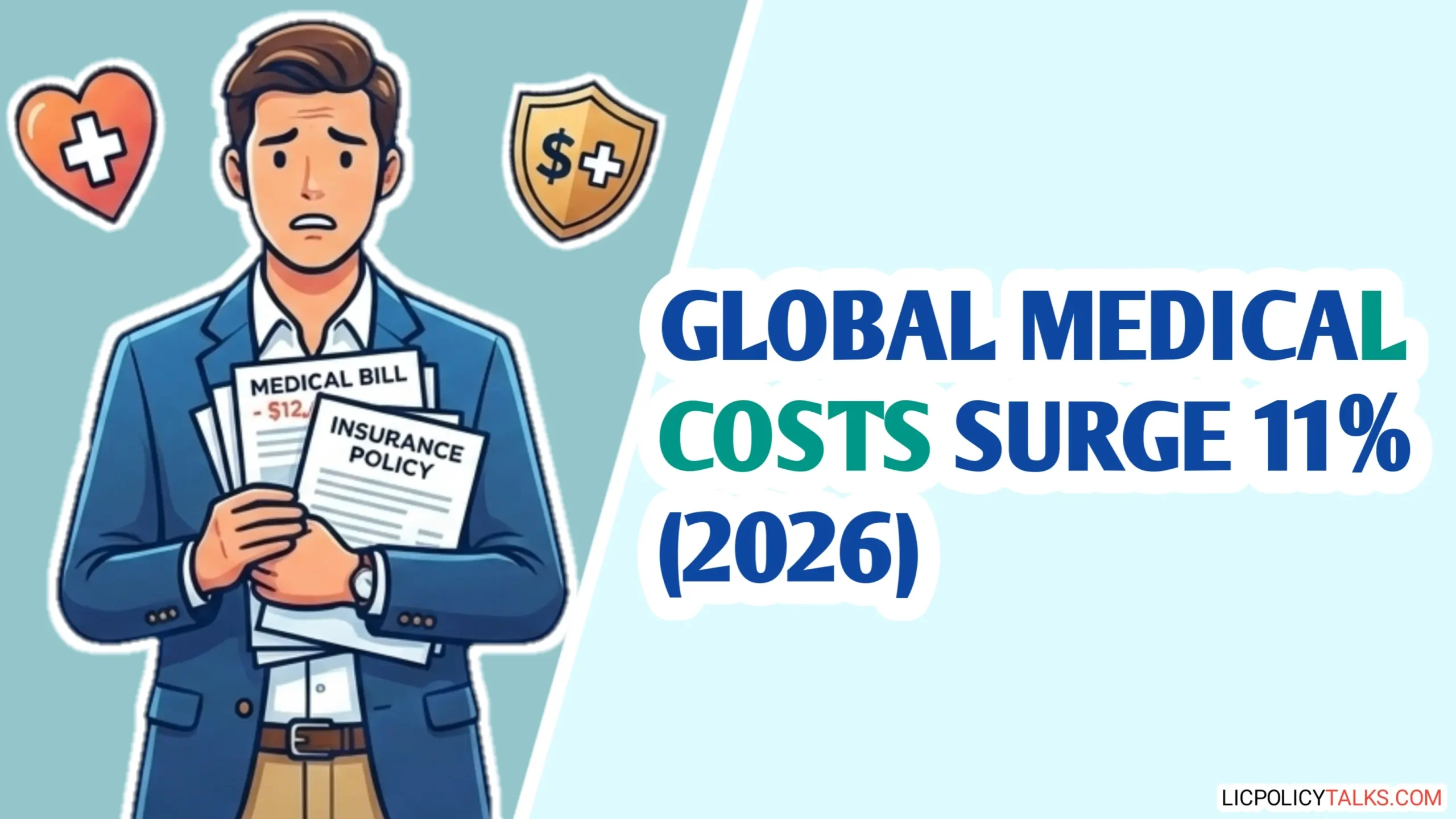

- Expat health insurance premiums are projected to rise by nearly 11% globally in 2026, far outpacing general inflation.
- Singapore’s medical cost inflation is hitting a record 16.9%, while Dubai premiums reflect high base costs of $5-8k annually.
- This surge is driven by advanced medical technology, rising demand in Asia-Pacific, and regional healthcare market dynamics.
- Expats must immediately review coverage, consider higher deductibles, and compare international insurers to mitigate the financial shock.
Hi friends! If you’re an expat in Singapore or Dubai, open your latest insurance renewal notice. That number you see is part of a global medical inflation 2026 shockwave. Across the world, expatriate insurance premiums are on track for a near double-digit surge. This isn’t a vague forecast. Analysis points to a projected increase of nearly 10% for 2026. For families and individuals, this translates directly into thousands more in annual costs, putting a severe strain on expat finances.
The situation is particularly acute in key hubs. In Singapore, the crisis is even more pronounced, with medical cost inflation set to hit record 16.9%. This perfect storm of rising expat health insurance premiums and soaring rising medical expenses demands an immediate, strategic response. This article is your guide. We’ll break down the three core drivers behind this surge, provide a clear cost comparison between Singapore and Dubai, and give you a concrete action plan to shield your finances.
Why Your Premium is Skyrocketing: The 3 Core Drivers of 2026’s Medical Inflation
1. The Technology Trap: Cutting-Edge Care at a Premium Price
The drive for better health outcomes has a direct cost. New treatments, advanced diagnostics, robotic surgery, and personalized gene therapies are incredible. But their research, development, and implementation are expensive. Medical cost inflation is fueled by this constant technological advancement. Insurers, in turn, must account for these costs. They actuarially model the adoption rate and expense of new tech and bake it into future premium calculations for all policyholders. This pass-through mechanism is a primary engine of the healthcare inflation rate. In policy reviews, we consistently see new line items for these technologies that simply didn’t exist or weren’t covered a few years ago.
2. Demand Shock in High-Growth Regions
Look at the Asia-Pacific region. Economic growth is rapid, creating a larger middle class with higher expectations for healthcare quality and access. This isn’t just anecdotal. Significant infrastructure investment, partly funded by sovereign borrowing, is expanding public health capacity. For instance, Asia-Pacific governments will borrow a collective US$5 trillion in 2026. This growth indirectly shifts demand curves. As public systems invest, expectations rise, and more pressure is placed on the private healthcare sector that expats typically use. More demand, coupled with limited immediate supply of top-tier facilities and specialists, equals significant upward price pressure on rising medical expenses.
3. Regional Market Dynamics: A Tale of Two Systems
Singapore healthcare costs and Dubai health insurance markets don’t operate in a vacuum. Their unique structures heavily influence local inflation. Singapore’s system is a blend of world-class private hospitals and efficient public ones, with guidelines from the Ministry of Health (MOH) influencing private fees. Dubai operates under a Dubai Health Authority (DHA) mandatory insurance scheme, setting minimum coverage rules that create a market floor. These regulatory frameworks shape how costs are born and passed on, setting the stage for the specific inflationary pressures expats face in each location.
🏛️ Authority Insights & Data Sources
▪ Global medical inflation projections are based on analysis of insurer trend reports and economic forecasts from international consultancies.
▪ Singapore’s 16.9% medical cost inflation figure for 2026 is reported by The Straits Times, citing data from the Life Insurance Association, Singapore.
▪ Regional economic data impacting healthcare demand is sourced from S&P Global’s sovereign debt and credit condition reports.
▪ Note: Premium increases vary by insurer, age, and individual medical history. These figures represent market-wide trends.
Singapore vs. Dubai: A 2026 Cost Breakdown for Expats
Singapore’s Perfect Storm: High Standards, Record Inflation
Singapore presents a unique challenge. The standard of care in private hospitals like Mount Elizabeth or Gleneagles is exceptionally high, but the bills are equally staggering. An aging local population adds sustained pressure on the entire system. Now, layer on the projected 16.9% medical inflation—a record high. The baseline is already steep: average health insurance costs in Singapore for 2025 are around 8,800 SGD. With 16.9% inflation, that figure is set to jump sharply. Furthermore, wait times in the public system can push those who can afford it towards private care, intensifying demand in that already expensive segment. Expat health insurance premiums here are directly tied to the cost of private hospital fees and the rapid adoption of the latest medical technology. The truth is, while efficient, the private healthcare track for expats in Singapore is among the most expensive globally, making comprehensive insurance non-negotiable.
Dubai’s Mandatory Coverage Model: Stability with a Premium Price Tag
Dubai’s approach is different. The Dubai Health Authority (DHA) mandates health insurance for all residents. This creates a stable, regulated market with a clear price floor set by the Essential Benefits Plan (EBP). The model ensures basic coverage for everyone but means Dubai health insurance is a fixed cost of residence. For a comprehensive plan that grants access to premium facilities like the American Hospital or Mediclinic, expats can expect annual costs in the range of USD 5,000 to 8,000 or more. While the international health insurance inflation rate may align with the global ~11% trend, the high base cost is the main issue. Competition among insurers exists, but it often focuses on the quality of the hospital network and service speed rather than a race to the bottom on price, as operational costs in these premium facilities remain high.
| Factor | Singapore (2026 Outlook) | Dubai (2026 Outlook) |
|---|---|---|
| Medical Cost Inflation | Projected at 16.9% (record high) | Aligned with global trend (~11%), but high base cost |
| Expat Premium Range (Annual) | ~SGD 8,800 and rising sharply | ~USD 5,000 – 8,000+ for comprehensive cover |
| Primary Cost Driver | Private hospital fees, advanced technology adoption | Mandatory insurance model, premium facility costs |
| Key Concern for Expats | Affordability of private care amid soaring inflation | Adequacy of mandatory basic plans vs. need for top-up |
This comparison is based on aggregated market data. Your specific quote will depend on age, health, family size, and chosen insurer. Always read the policy wording.
Understanding these regional differences is key, but so is grasping the broader global insurance trends shaping your options.

Action Plan: How to Shield Your Finances from the 11% Hike
Conduct a Policy Health Check Now (Not Later)
Don’t wait for renewal. Pull out your policy document. Your first defense is knowledge. Scrutinize the coverage limits, especially for critical illnesses—a sum that seemed ample five years ago may now cover only half a treatment regimen. Check the room and board caps: are they aligned with current private hospital rates? Review out-patient benefits, geographical coverage, and sub-limits. Cross-reference the ‘Schedule of Benefits’ with current hospital bill benchmarks for common procedures in your city. The core question: Is this plan still sufficient in the face of 16.9% medical cost inflation? This audit is the foundation of all other expatriate insurance trends.
The Strategic Use of Deductibles to Lower Premiums
One of the most effective levers you have is the voluntary deductible. Opting for a higher deductible (the amount you pay before insurance kicks in) can significantly reduce your annual health insurance premiums. For example, increasing your deductible from $500 to $2,000 might lower your premium by 15-25%. Do the math: calculate the break-even point—how many claim-free years it takes to save the difference you’d pay out-of-pocket. The bitter truth: This strategy is best for those with a robust emergency fund. If a $5,000 deductible would cause financial strain, it’s not the right tool for you. But if you can afford the higher upfront risk, it’s a smart way to combat premium increases 2026.
Shop Around with New Benchmarks in Mind
Loyalty rarely pays in a high-inflation insurance market. Get new quotes with the 11-17% inflation reality as your new benchmark. Compare not just price, but the network of hospitals, the insurer’s claim settlement ratio, and, crucially, the policy exclusions. Also, check the financial strength ratings (e.g., from AM Best) of the insurer. If you have employer-provided cover, scrutinize it for gaps—group plans often have low outpatient limits or exclude family members’ pre-existing conditions. During renewal negotiations, mentioning a competitive quote from a reputable insurer can sometimes trigger a retention offer from your current provider. This proactive comparison is essential in the global health insurance market.
While reviewing your health cover, it’s also critical to understand how life insurance policies are adapting to new risks, which could impact your overall financial safety net.

Long-Term Mindset: Future-Proofing Your Expat Health Coverage
Build a Medical Inflation Buffer into Your Financial Plan
Accept that expatriate insurance trends show health insurance is a cost that will consistently outpace general inflation. Proactive financial planning is key. Use a simple formula: If your premium is $X, plan for it to grow at 1.5x to 2x the general inflation rate in your budget forecasts for the next five years. Allocate a specific, growing portion of your annual savings or income to cover these expected increases. Admit the limitation: this is a defensive, non-negotiable cost center for catastrophic risk mitigation, not an investment for returns.
Consider the Portability of Your Policy
If there’s any chance you might move countries again, this is crucial. A truly portable international health insurance policy allows you to keep the same terms and conditions globally. Contrast this with cheaper local plans, which are often non-portable. Expats who bought local plans often face new medical underwriting, exclusions, and waiting periods when they relocate, potentially losing coverage for pre-existing conditions. Clarify the contractual term: ‘Portability’ usually means keeping your existing policy, not transferring to a new insurer without checks.
Stay Informed on Regulatory Changes
Rules evolve. Dubai health insurance minimums under the DHA or fee guidelines in Singapore healthcare can change, directly affecting your costs and coverage requirements. Make it a habit to periodically check the official sources: the Dubai Health Authority (DHA) and Singapore’s Ministry of Health (MOH) websites. For broader travel and residency context, monitor advisory pages like the Singapore Ministry of Foreign Affairs. Consider related risks; geopolitical shifts can impact travel insurance, which is part of comprehensive planning. This article provides general guidance. For legal or specific regulatory advice pertaining to your residency status, consult a licensed advisor in your jurisdiction.
FAQs: Your Pressing Questions on Medical Inflation Answered
FAQs: ‘rising medical expenses’
Q: Is the 11% premium hike a guarantee for every expat in Singapore and Dubai?
Q: Should I switch from an international plan to a cheaper local Singapore or Dubai plan to save money?
Q: My employer provides health insurance. Is that enough, or do I need a top-up?
Q: How often should I review my health insurance plan in this high-inflation environment?
Q: Beyond insurance, what else can I do to manage my healthcare costs as an expat?
The core message is clear: global medical inflation 2026 is a structural reality, not a temporary blip. Expats in Singapore and Dubai are on the front lines of this financial challenge. You can take control. The path is to review your current coverage with a critical eye, adjust your strategy using tools like deductibles, compare the market with new benchmarks, and plan long-term by building an inflation buffer. By taking these informed steps, you secure not just your health, but your financial stability in an uncertain cost landscape. Our goal is to equip you with the analysis and framework to make confident decisions with your broker or financial advisor.