
Hi friends! Let’s talk about a problem you might not see coming until it’s too late. Imagine opening your health insurance renewal notice and seeing a forecast for your premium to jump by 40% or more, just because you had a birthday. For many expats and global citizens approaching 60, this isn’t a nightmare scenario—it’s the reality of international health insurance age band pricing. But there’s a way out. In this guide, we’ll break down exactly why 2026 is a critical year, explain the “age band explosion,” and give you a clear, step-by-step action plan to lock in stable pricing and protect your retirement budget.
Navigating the world of international health insurance age band changes is confusing, but understanding the shift from community-rated to age-banded pricing is the key to avoiding a financial shock. Your age shouldn’t dictate an unpredictable healthcare budget, especially when you’re planning for a secure retirement abroad.
The 60-Year-Old Cliff: Your Looming Premium Shock
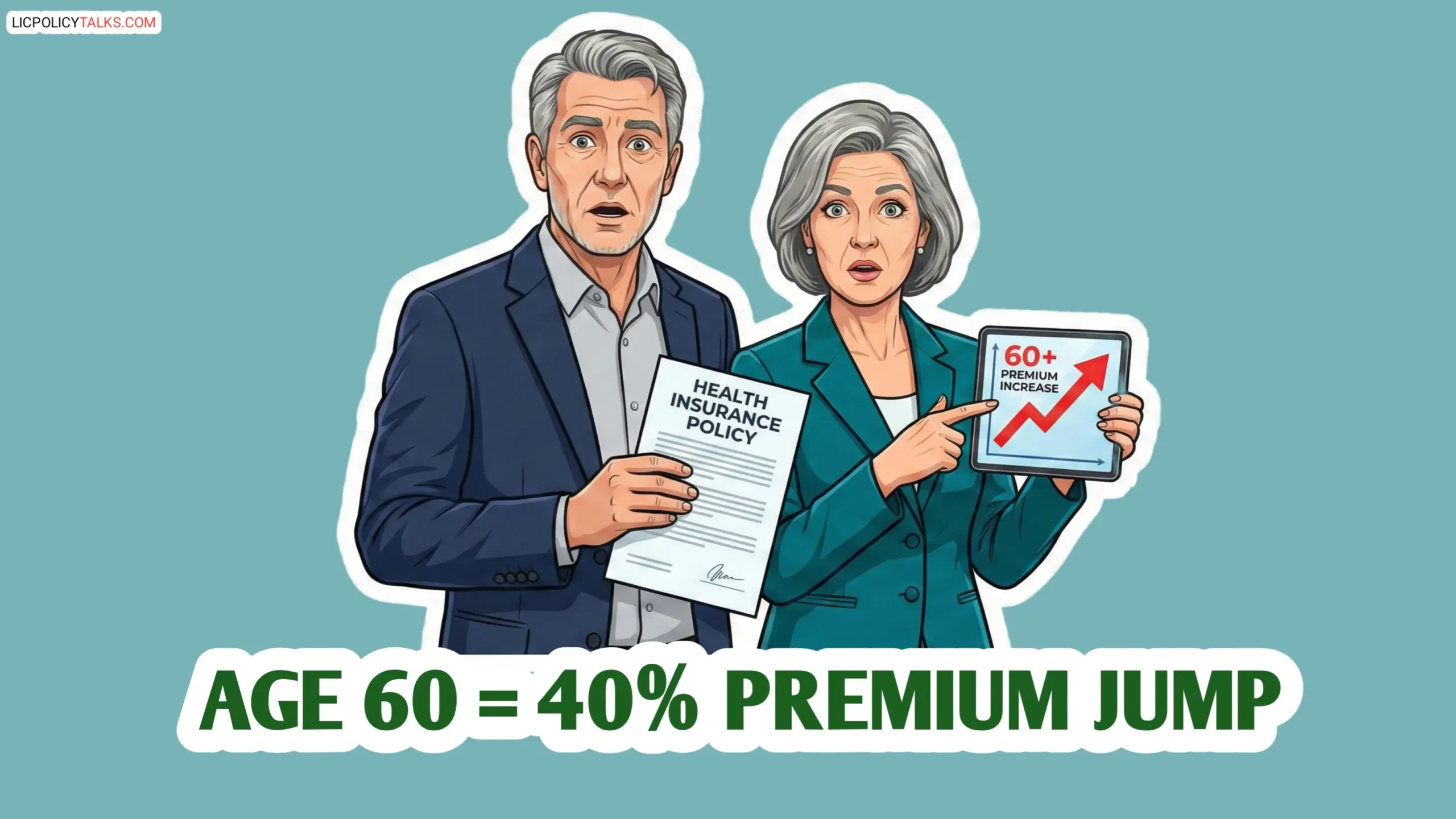
Picture this: Sarah, a healthy 58-year-old expat in Spain, opens her annual policy renewal. For years, her premiums have crept up with inflation. This year, however, a new line item catches her eye: a “Projected Age Band Adjustment.” Her premium is forecast to leap by over 40% when she turns 60. This isn’t a mistake; it’s the “premium cliff” built into her plan’s design.
This scenario pits two pricing models against each other: age-banded pricing versus community rating. Recent trends in international health insurance reveal a significant shift towards age-banded pricing structures, which directly impacts premiums for expatriates and global citizens. The core promise of this article is to demystify the looming 2026 ‘age band explosion’ and provide you with a clear, actionable escape plan.
Demystifying the Engine: How Age Bands Really Work
First, what is an “age band”? To insurers, it’s a risk-pricing bracket, like 55-59 or 60-64. Your premium isn’t based solely on you; it’s calculated on the collective expected medical costs of *everyone* in that five-year bracket.
Here’s the actuarial logic: people aged 60-64 statistically file more and costlier claims than those 55-59. When you cross that threshold, you’re no longer sharing risk with the “younger” group; you’re pooled with a higher-risk cohort. This risk-based model contrasts sharply with community rated pricing, where premiums are averaged across a broader group. Think of it like car insurance: moving from a “young driver” category into the “high-risk driver” bracket triggers a steep, non-negotiable rate hike.
The key pain point is this: the cost increase isn’t a smooth, gentle slope—it’s a sudden step-up, a financial cliff you fall off on your birthday. This mechanism is why securing medical insurance for seniors abroad requires careful strategy, not just a quick price comparison.

Community Rated Pricing: The ‘Holy Grail’ for Long-Term Stability
The Power of the Pool
So, what’s the alternative? Community rated pricing (or pooled pricing). Here, your premium is based on the average claims experience of a large, mixed-age group—think 25-year-olds to 75-year-olds all in one pool. Your personal aging has minimal direct impact on your cost.
The core benefit is long-term predictability. Your increases are gradual, tied to overall medical inflation and the pool’s performance, not your birthday. Understanding this mechanism—the stark difference between risk-based age bands and pooled community ratings—is key to navigating the complex market. This stability is the “holy grail” for pre-retirement health planning and budgeting for a secure future with global health coverage.
The Catch: It’s Disappearing (And Hard to Get Into)
Here’s the problem: true community-rated plans are becoming rare. Why? They’re less profitable for insurers in an aging global population. It’s more lucrative to segment customers into narrow risk bands. Nowadays, these stable pools are often only available to large corporate groups or exist as closed “legacy” products you can’t join.
This brings us to the 2026 problem. The few remaining broad community pools are themselves targets for re-segmentation. Insurers are looking at these large, mixed groups and seeing an opportunity to split them into more profitable, age-based segments. The window to get into—or stay in—a stable pool is closing fast.
2026: The ‘Age Band Explosion’ and Why It’s Your Tipping Point
Narrower Bands, Sharper Jumps
A critical development is the anticipated “age band explosion 2026,” where insurers are expected to introduce new, narrower age brackets, particularly affecting those approaching retirement. The “explosion” refers to insurers splitting broad bands (e.g., 50-65) into narrower ones (50-54, 55-59, 60-64, 65-69).
The impact is brutal: you’ll hit a premium cliff more frequently. Instead of a big jump every 10 years, you could face a significant adjustment every 5 years. The health premium increase at 60 becomes even more pronounced because you’re entering a new, narrowly defined “high-risk” band with a much steeper associated cost.
Visualizing the Shock: Age Band vs. Community Rating Over Time
Let’s make this abstract concept concrete. The chart below models two cost trajectories from age 50 to 70. The red line shows the volatile path of age-banded pricing, while the blue line shows the stable path of community rating.
The Cost Trajectory
Age-Banded vs. Community Rated: Premiums from Age 50-70
Your Action Plan: How to Lock in Pricing Before the 2026 Deadline
Strategy 1: The Pre-60 Secure Lock
Target audience: Those aged 50-58. Your mission is to actively seek a plan with community-rated or ‘guaranteed renewable’ terms NOW. The key question to ask any insurer or broker is: “Is this premium based on my attained age at entry, or will I automatically move into new, higher-cost age bands on future birthdays?”
Proactive pre-retirement health planning, including locking in policies earlier in life, is becoming essential to mitigate future premium hikes. Your goal is to get underwritten and accepted into a stable pricing pool before the 2026 restructuring makes it impossible. This is your single most powerful move for how to avoid premium hikes.
Strategy 2: The Legacy Pool Audit (And Escape)
Target audience: Those already in an old plan, fearing a ‘loyalty trap’. Your first action is a full audit. Dig out your policy wording. Is it truly community-rated, or are you in an aging banded pool that’s getting more expensive each year?
Be warned: some old “community” pools are shrinking as healthy members leave, causing premiums for those left behind to skyrocket—a dangerous cycle known as a legacy pool death spiral, is explained in depth here. If you’re caught in this, explore porting to a new, stable group plan if you can find one. Staying put out of loyalty could be your most expensive mistake.

Strategy 3: The Hybrid & Geographic Workaround
For those who can’t find pure community rating, all is not lost. Option A: Consider high-deductible plans to dramatically lower the base premium, effectively self-insuring for smaller, predictable costs. Option B: Geographic flexibility can help. Some regions or insurer types (like certain non-profit insurers) are more likely to offer pooled pricing structures for expat health insurance.
Option C: Explore corporate affiliation. Even part-time consulting work or joining a large professional association can sometimes grant access to their group global health coverage plan, which may be community-rated. Get creative—your financial stability depends on it.
Side-by-Side: Age-Banded vs. Community Rated at a Glance
When you’re making a decision, it helps to see the differences side-by-side. Use this table as your quick-reference guide to understand what each model means for your wallet over the long term.
| Feature | Age-Banded Pricing | Community Rated Pricing |
|---|---|---|
| Basis of Premium | Your specific age bracket’s risk | Average risk of the entire insured pool |
| Cost Predictability | Low – sharp jumps at band transitions | High – gradual, inflation-linked increases |
| Impact of Aging | High direct impact (40%+ jumps possible) | Minimal direct impact |
| Best For | Short-term, younger expats | Long-term planners, pre-retirees |
| Availability Post-2026 | Becoming the default, with narrower bands | Increasingly rare, may require proactive locking |
FAQs: ‘how to avoid premium hikes’
Q: Is the 40% premium increase at age 60 guaranteed to happen to me?
Q: Can I switch to a community-rated plan after I’ve already turned 60?
Q: What’s the single most important question to ask my insurer about my plan?
Q: Are there any downsides to community-rated pricing?
Q: If 2026 is the problem year, how soon do I need to act?
The Bottom Line: Don’t Let a Calendar Date Dictate Your Health Budget
The changes coming in 2026 represent a fundamental structural shift in how international health insurance is priced, not just another inflation adjustment. It’s a move designed to segment risk more precisely—and charge for it accordingly.
Taking informed, proactive action in the next 12-24 months is arguably the most powerful step you can take for your financial security in retirement. Your first step isn’t to panic. It’s to pull out your current policy this month and review its pricing structure. Knowledge is your only defense against the premium cliff.