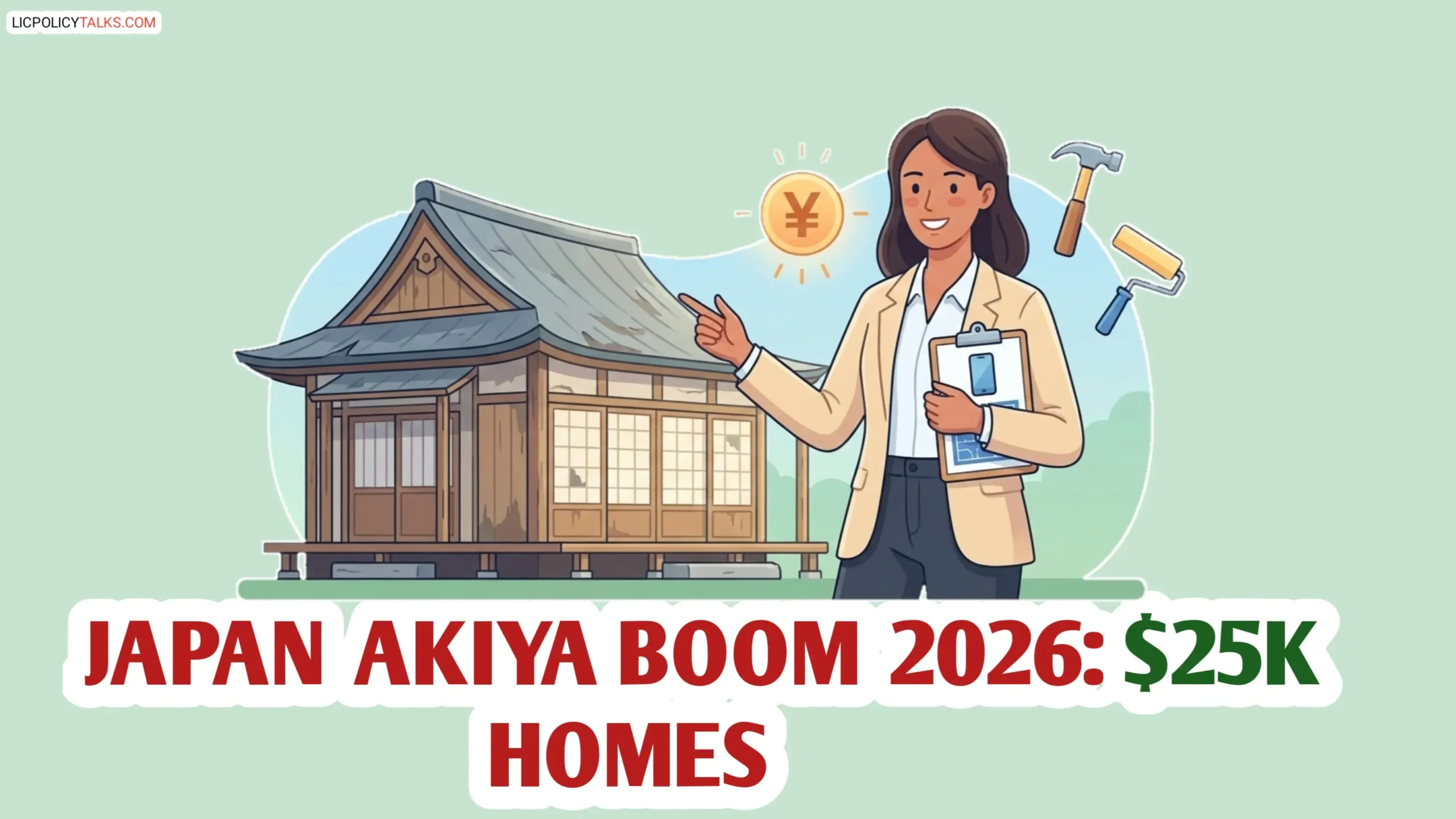

Hi friends! Have you ever dreamt of owning a beautiful, traditional Japanese house for less than the price of a family car? It sounds like a fantasy, but it’s the very real promise at the heart of what’s being called the Akiya Boom. But here’s the thing – this isn’t just a simple property hack. It’s a complex story of opportunity, deep cultural shifts, and real social tension. By 2026, a perfect storm of awareness, listings, and potential new government incentives could make this trend explode. But as foreign buyers rush in, reports are already highlighting a dark side: this boom is creating a sense of displacement and resentment among Japanese residents. This isn’t a sales pitch; it’s your honest, balanced guide to navigating the Akiya Boom 2026, covering the true process, costs, subsidies, and the ethical considerations every savvy buyer needs to know.
So, let’s pull back the curtain. This guide will walk you through everything from understanding why these abandoned homes Japan exist, to the speculative new Japan renovation subsidy landscape, all the way to the unspoken truths about community life. Whether you’re an investor, expat, or digital nomad, you’ll finish this read with your eyes wide open.
Understanding the Akiya: Why Japan Has Millions of $25,000 Homes
First things first, let’s define our term. An “Akiya” (空き家) isn’t just any old empty house. It’s a legally registered vacant or abandoned dwelling. Think of it as a property that has officially entered a state of limbo. The root causes are a poignant reflection of modern Japan: a super-aged society, massive rural-to-urban migration over decades, and inheritance laws that often leave properties unclaimed as families dwindle or heirs can’t be found.
The scale is almost hard to grasp. Japan has approximately nine million empty homes, a staggering figure documented by international observers. This isn’t just a countryside issue; it’s in suburbs and cities too. For local governments, this creates a huge dilemma. Japan’s property tax system actually makes holding onto a dilapidated Akiya a financial burden for municipalities, which inherit the liability. Their solution? Creating “Akiya Banks” – online and local listings – to offload these properties to anyone willing to take them on, often for shockingly low prices.
But that irresistible price tag is a direct reflection of significant liabilities: severe decay, locations in towns facing steep population decline, and potential legal entanglements with distant heirs. You’re not just buying a cheap house; you’re often buying a major project in a community that might be struggling to survive. Understanding this is the first step in Japanese real estate 2026.
The 2026 Renovation Subsidy: What Foreign Buyers Need to Know
Right now, the subsidy landscape is a patchwork. Many towns offer local municipal grants called jūtaku kōfukin to encourage renovation and occupation. Some foreigners successfully use these, but the amounts and rules vary wildly from one village to the next. You might get 30% of costs capped at $15,000 in one town, and nothing in the next.
This is where the 2026 forecast gets interesting. With the vacant home crisis not improving, there is growing political and economic pressure on the national government to act. By 2026, we could see a push for a more unified, national-level incentive program to tackle the problem more effectively and encourage foreign capital and residency in depopulating areas. While purely speculative, such a program might cover a higher percentage of renovation costs (think 50-70%), with requirements like long-term residency plans and the use of local contractors.
The smart move is to factor potential future subsidies into your budget cautiously, but never, ever rely on them for your project to be viable. The real key is building a genuine relationship with the local municipal office (yakuba). They are your best source of current information and future opportunities.
Potential 2026 Subsidy Scope (Illustrative)
Hypothetical % of renovation costs potentially covered.
Data is speculative and for illustrative comparison only.
The Step-by-Step Guide to Buying Your Akiya (2026 Edition)
Finding the Right Property
Your journey starts with the hunt. Primary sources are the municipal Akiya bank websites, though they’re often only in Japanese. This is where a bilingual real estate agent who specializes in Akiya becomes invaluable. They can access these lists, interpret the cryptic listings, and even make direct outreach to depopulating towns on your behalf. Be very wary of any listing that seems “too good to be true” – it usually is, hiding major structural flaws or legal issues.
Honestly, patience is key. You might be looking for a needle in a haystack: a structurally sound property in a location you love, with a willing seller. Don’t rush this stage; it’s the foundation of everything.

Due Diligence is Everything
This is the most critical phase. Never, ever skip a professional structural inspection. You’re looking for rot, termite damage, and outdated earthquake resistance. You must verify land rights – is it freehold (jikoyūchi) or leasehold? Check meticulously for any back taxes, utility liens, or hidden debts attached to the property. Understanding local zoning laws is also crucial, especially if you dream of running a B&B or cafe.
Think of due diligence as an insurance policy. The few thousand dollars it costs can save you from a financial nightmare of endless repairs or legal battles.
The Purchase Process
Once you find “the one,” the process follows a standard Japanese real estate transaction, guided by your agent. You’ll make a formal offer, sign a detailed sales agreement, and then hire a judicial scrivener (shihō shoshi) to handle the legal transfer of title at the Legal Affairs Bureau. Your agent will coordinate all of this. The good news? For a cash purchase of a cheap Akiya, the sale can often be faster than a standard market transaction because the seller (often the town) is highly motivated.
It’s a bureaucratic process, but it’s well-defined. Having a good agent makes it feel seamless.
Financing for Foreigners
Let’s be real: most buy cheap property Japan deals under $100,000 are all-cash transactions. Japanese banks are notoriously cautious about lending for foreigner property Japan purchases, especially for dilapidated homes in the countryside. If you need funds for a major renovation, your options are typically bringing capital from home, or exploring specialized loans from institutions like the Japan Finance Corporation, which can be a complex path. Plan your finances with the assumption that you’ll need liquid funds.
This is a key difference from buying a move-in-ready home in a city. Your financial planning needs to account for the full purchase and renovation cost upfront.
| Factor | Akiya Purchase | Standard Purchase |
|---|---|---|
| Typical Price Point | Very Low ($25K – $100K) | Market Rate |
| Condition | As-Is, Often Needs Full Renovation | Move-in Ready |
| Agent Role | Crucial for due diligence & translation | Standard Facilitator |
| Financing | Primarily Cash | Mortgages Available |
| Speed of Sale | Can be Faster (motivated seller) | Standard Timeline |
The Unspoken Truth: Community Resentment and Your Role as a Foreign Buyer
Now, let’s talk about the elephant in the room. The dream of a cheap rural Japan home has a significant social impact. Recent reports confirm that foreign Akiya purchases are “creating a sense of displacement and resentment among Japanese residents.” Imagine being a local who has watched their town shrink for decades, struggling with a lack of services, only to see outsiders snap up houses for pennies on the dollar.
The perspective is understandable. It can feel like a form of cultural or economic gentrification. This trend has been significantly led by Australians, who have been at the forefront of this market, as chronicled in reports on foreign buyers. But their activity, and that of others, highlights the core tension: are foreign buyers extracting value or contributing to the community’s future?
The path forward isn’t avoidance, but intentional integration. This means hiring local contractors for your renovation, even if it costs a bit more. It means participating in community events (like the local matsuri festival), shopping at the neighborhood stores, and making a genuine effort to learn basic Japanese. It’s about moving from being a gentrifying force to a welcomed neighbor who is invested in the town’s revival.

Is an Akiya Right for You? A Realistic Pros & Cons Checklist for 2026
So, friend, is this for you? Let’s break it down. For the right person – an investor, expat, or digital nomad with a sense of adventure – the pros are magnetic: unbelievable affordability, deep cultural immersion, the potential to create significant value from almost nothing, and the feel-good factor of helping to solve a national crisis. The possible upside of future subsidies is just the cherry on top.
But the cons are equally heavy. You must be prepared for high, unpredictable renovation costs and timelines. The location often means challenges with reliable high-speed internet, access to specialized healthcare, and potential social isolation. You’ll navigate complex bureaucracy, a volatile resale market, and those community integration hurdles we just discussed.
Ask yourself this: Are you looking for a turn-key home or a multi-year passion project? Can you handle managing a renovation from afar? Is your goal a personal retreat, a rental income stream, or a future flip? My final verdict? An Akiya is not a passive investment. It’s a lifestyle project that demands deep commitment, cultural sensitivity, and a high tolerance for risk. If that excites you, read on.
FAQs: ‘rural Japan homes’
Q: As a foreigner with no residency status, can I legally buy an Akiya in Japan?
Q: How do I apply for the new renovation subsidy in 2026?
Q: What are the biggest hidden costs besides renovation?
Q: Can I rent out my renovated Akiya on Airbnb?
Q: How can I avoid being seen as a ‘foreign outsider’ and build good community relations?
The Final Word: Navigating the Akiya Boom with Eyes Wide Open
So, there you have it. The journey from the alluring dream of a $25,000 home to the complex reality of purchase, renovation, and becoming part of a community. The Akiya Boom 2026 represents a potential inflection point—more interest, more listings, and possibly smarter government policies. But with that comes a greater need for responsibility.
If you choose to proceed, do so not just as a buyer, but as a potential steward. You’re not just acquiring real estate; you’re becoming a caretaker of a piece of Japan’s cultural and architectural heritage. The true cost of an Akiya isn’t just measured in yen, but in the commitment to understand, respect, and authentically become part of a community. Go in with your eyes wide open, and you might just find more than a house—you might find a home.