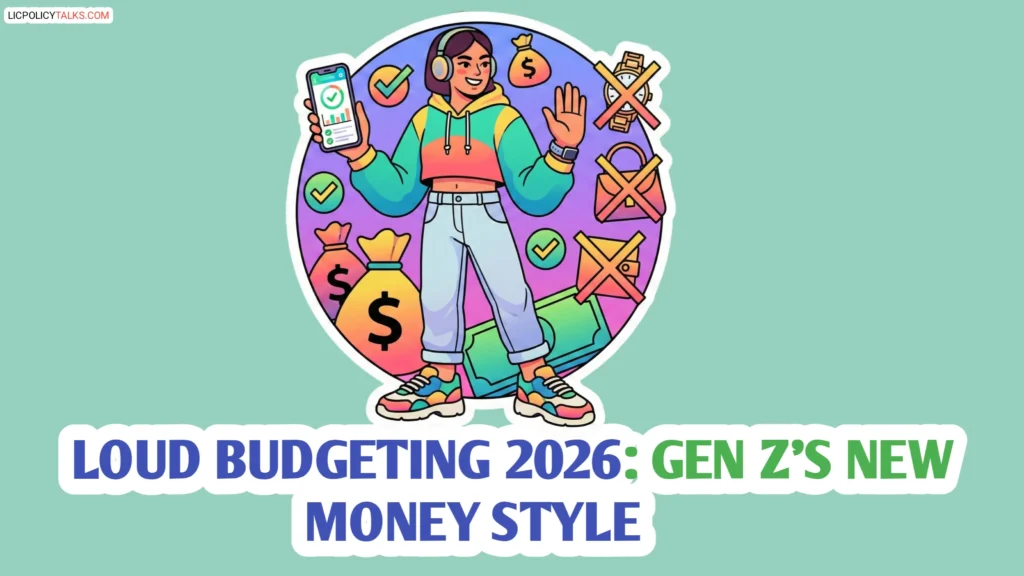
हाय दोस्तों! Picture this: you’re at a fancy, minimalist café, the kind where the coffee costs more than your lunch. Everyone around you seems effortlessly wealthy in their quiet, logo-less clothes. You feel the pressure to order the avocado toast you can’t really afford, just to fit in. Now, flip the script. Imagine saying to your friend, “You know what? I’m saving up for a big trip next year, so I’m gonna skip the fancy brunch and just grab a coffee. Wanna join me for a walk instead?” That relief, that honesty—that’s the heart of the seismic shift we’re talking about. Forget whispering about money; it’s time to get loud.
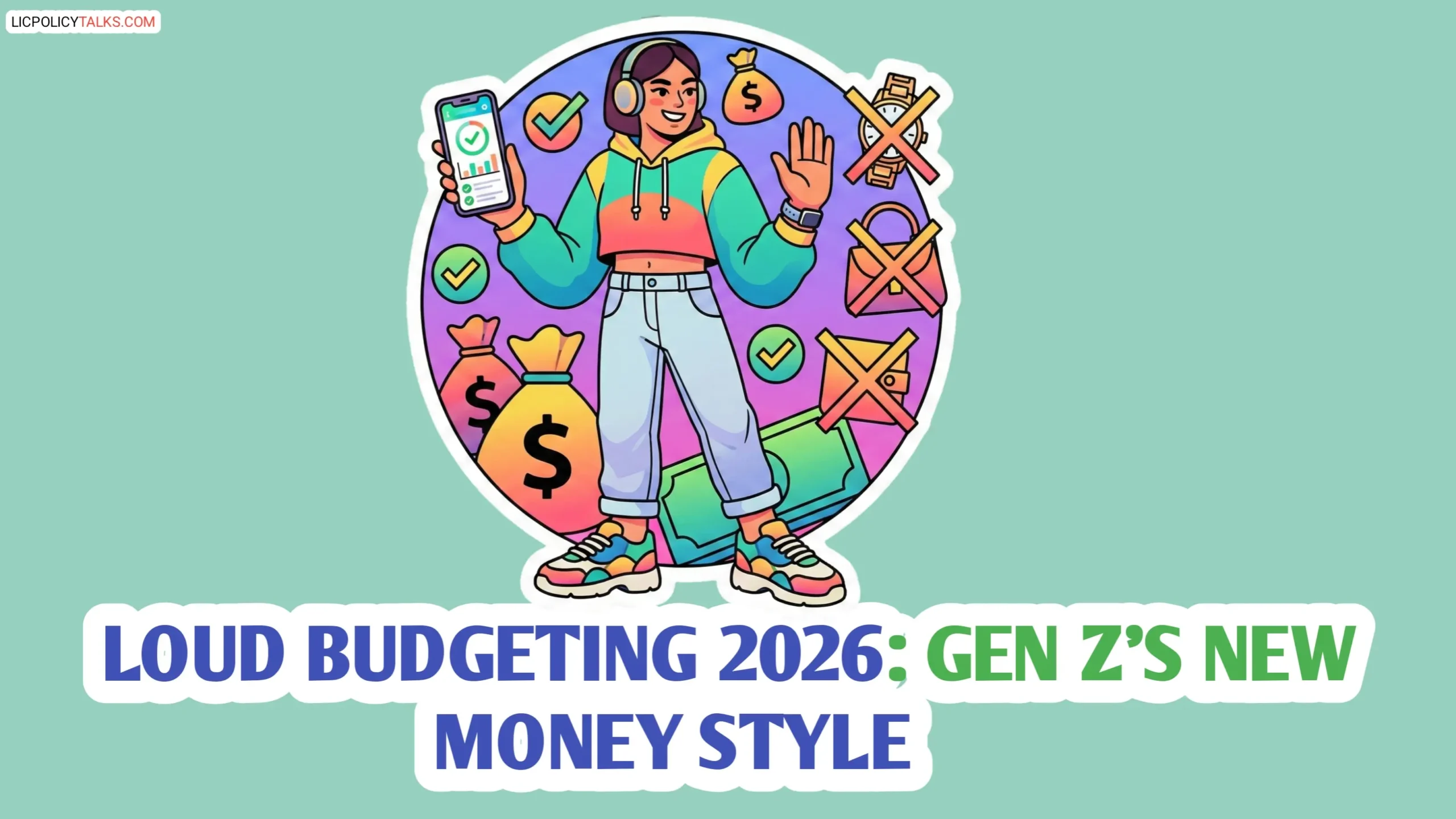
Gen Z is leading a massive cultural pivot from discreet consumption to vocal financial intentionality. This isn’t just a budgeting trend 2026; it’s a full-blown philosophy born on TikTok and evolving into a sustainable way to manage Gen Z spending and well-being. We’re here to break down why Loud Budgeting is the antithesis of quiet luxury, why it’s sticking around, and exactly how you can practice it with confidence.
The Quiet Before the Storm: A Primer on Quiet Luxury
To understand the rebellion, we must first understand the regime. The quiet luxury trend was all about understated, exorbitantly expensive, logo-less goods—think high-quality cashmere, impeccably tailored trousers, and discreet watches. Its appeal was exclusivity; it signaled old-money sophistication to a knowing in-group. You weren’t buying a brand, you were buying an aura.
But this aesthetic came with a hidden, often brutal, cost: the relentless financial strain of maintaining the illusion. It created a silent pressure to perform wealth, leading to what I call the ‘Shame-to-Shame’ Cycle. You feel the shame of not having enough, so you quietly go into debt to buy the status-markers that help you avoid the shame of appearing less affluent. It’s a exhausting loop of anxiety, perfectly designed to keep you spending in silence.
This cycle is the bedrock of the anti-consumerism sentiment fueling the new wave. Loud Budgeting arrives as the direct, liberating antidote to this very pressure.
Enter Loud Budgeting: The Antithesis Goes Viral
So, what is it? Loud Budgeting is the proactive, vocal, and often social practice of declaring your financial boundaries and priorities. It’s not about having no money; it’s about directing your money with purpose and saying so out loud. Recent analysis of social trend data shows this strategy gained explosive prominence in 2024, transforming frugality from a private limitation into a shared, social identity on platforms like TikTok. It’s a direct rejection of the pressure to consume lavishly and in silence.
Its power lies in a few core principles:
- Transparency as Armor: By being open about your limits, you deflect social spending pressure before it even builds. “I’m on a tight budget this month” becomes a shield, not a secret.
- Intentionality Over Invisibility: Spending is aligned with your true values (like travel or debt freedom) and is done openly, not hidden like a guilty pleasure.
- Community, Not Competition: It builds solidarity around shared financial goals. You find your “money team” who cheers your savings, not side-eyes your lack of new purchases.
- Reframing ‘No’ as Empowerment: A declined invitation isn’t a failure; it’s a strategic choice for a bigger goal, and it’s something to be celebrated.
This move towards radical financial transparency and public budgeting marks a fundamental rewrite of the social media finance rulebook.
| Aspect | Quiet Luxury (The Old Guard) | Loud Budgeting (The New Wave) |
|---|---|---|
| Core Goal | Signal wealth discreetly to a select few. | Achieve financial goals openly, with support. |
| Mindset | Scarcity & Secrecy (‘Look rich at all costs’). | Abundance & Transparency (‘My goals are my wealth’). |
| Social Dynamic | Exclusive, judgmental, based on perception. | Inclusive, supportive, based on reality. |
| Primary Emotion | Anxiety (fear of being ‘found out’). | Empowerment (control over narrative). |
| View on ‘No’ | A failure to be hidden. | A strategic choice to be celebrated. |
Why Gen Z is the Vanguard: More Than a Trend
This isn’t just a trend because Gen Z is good at TikTok. It’s a perfect storm of socio-economic reality and digital-native psychology. First, the economics: crippling student debt, inflation, and impossible housing costs have made the traditional path to “quiet wealth” seem like a fairy tale or an irresponsible pursuit.
The Rise of Loud Budgeting: From Viral Trend to Mainstream Mindset
Estimated adoption rate among Gen Z/Millennial finance communities. (Source: Analysis of social trend data)
Loud Budgeting evolves from a niche concept to a foundational money philosophy.
Second, their values: authenticity, community, and creation are paramount. For a generation that turns life into content, their financial journey becomes a shareable, relatable part of their identity. This pairs with a sharp rejection of performative consumption—they see through marketing and value ethics and experiences over empty status symbols.
Ultimately, it’s a mental health play: they recognize financial stress as a huge anxiety trigger, and Loud Budgeting is a practical tool for well-being. And it’s not one-size-fits-all. Meet the Loud Budgeting Personas: The Goal-Getter (saving for a down payment), The Debt-Destroyer (attacking student loans), and The Experience-Funder (skipping daily lattes for a yearly festival). Your “loud” reason is uniquely yours.

Your 2026 Playbook: How to Practice Loud Budgeting (Without the Awkwardness)
Step 1: Audit Your ‘Quiet Luxury’ Traps.
Spend a week noticing your spending. Where do you feel pressure? Is it the expensive gym you never use, the trendy restaurants, or upgrading your tech too often? Identify where money leaves your account to impress others or soothe social anxiety, not to bring you joy.
Step 2: Define Your ‘Loud’ Financial Goal.
Make it positive, specific, and empowering. “I’m not going out” is a bummer. “I’m loudly funding my 2026 backpacking trip through Southeast Asia!” is a mission. This goal is your “why” that makes saying “no” feel like a “yes” to something bigger.
Step 3: Craft Your Go-To Phrases.
Arm yourself with simple, graceful scripts. Try: “That’s not in my fun budget this month, but I’d love to have a potluck at my place instead!” or “I’m on a big savings mission right now, so I’m sitting this one out—but text me all the pics!”
Step 4: Choose Your Platform (If Any).
Your stage, your rules. Start in a private group chat with close friends. Maybe post a savings milestone on your Instagram Close Friends story. Or simply practice in real-life conversations. The “loud” part is about vocalizing your intention, not necessarily broadcasting it to the world.
Step 5: Celebrate the Wins & Normalize the ‘Nos’.
This is the most crucial step for building a positive money mindset. Shared a DIY dinner instead of ordering takeout? That’s a win! Saved $50 by skipping a night out? Celebrate it! By sharing the small victories, you make the process joyful and show others it’s okay to opt out.

The Future is Loud: Beyond 2026
Loud Budgeting is more than a 2026 fad; it’s the leading edge of a lasting cultural shift. We’ll see its influence everywhere: in marketing (brands highlighting value and sustainability over pure prestige), in workplace financial wellness programs, and most importantly, in how families and friends talk about money without shame.
The bigger picture is a move toward Value-Aligned Spending—a world where our finances openly reflect our personal ethics, goals, and well-being. Your first step? Easy. Have one “loud” conversation about money this week. Tell a friend a financial goal. It’s in that honest moment that the future gets a little brighter, and a lot louder.