
हाय दोस्तों! Let’s talk about a financial curveball that could be heading straight for your retirement plans in 2026. It’s not a new law you’ll see on the news, but a quiet, automatic change that might end up costing you thousands. If you’re a middle-class retiree counting on your government pension, you need to know about this. Today, we’re going to break down this so-called “stealth tax,” show you exactly how it works, and—most importantly—give you a solid game plan to protect your hard-earned money. Sound good? Let’s dive in.
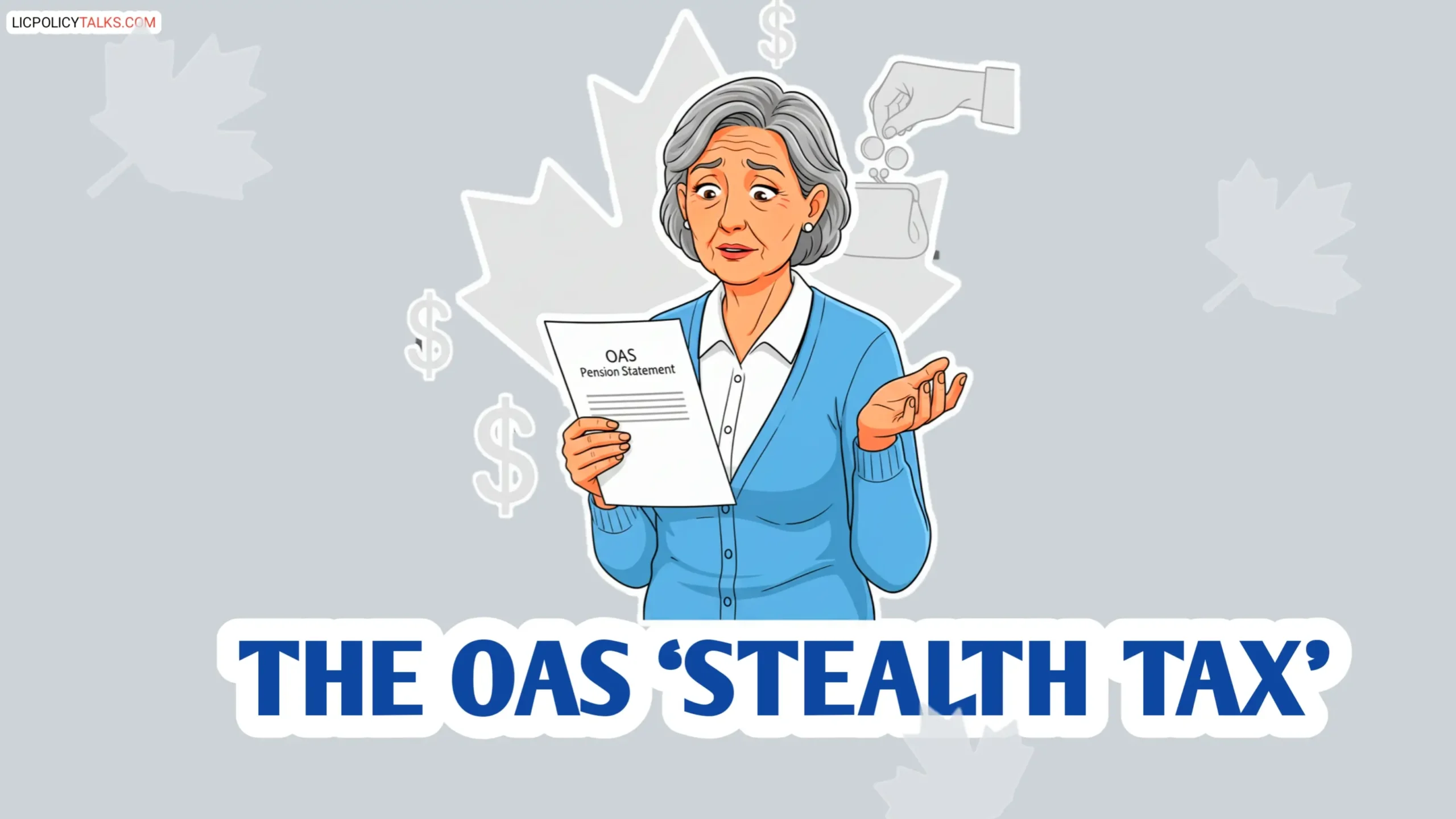
Picture this: it’s 2026, you’re enjoying a comfortable retirement you carefully saved for, and then you get a tax bill for an unexpected $5,000. This isn’t a random penalty; it’s the result of the upcoming 2026 OAS Stealth Tax 2026 adjustment. This isn’t a new tax law being passed, but a hidden mechanism in the Old Age Security program that automatically lowers the income bar for the “clawback.” Think of it like a trapdoor that’s about to open under more people’s feet. Unlike a visible tax hike everyone debates, this change happens automatically and quietly, which is exactly why experts are calling it a stealth tax. By the end of this guide, you’ll understand the mechanism, see its real-dollar impact with clear examples, and have a defensive playbook to fight back.
Demystifying the Clawback: How Your OAS Gets ‘Taken Back’
First things first, let’s get clear on what we’re dealing with. The Old Age Security clawback, officially called the OAS recovery tax, isn’t a deduction that comes off your monthly cheque. Instead, it’s a repayment you calculate once a year when you file your taxes. If your income is over a certain limit, you have to pay back a portion of the OAS you received.
How does it work? It’s a simple but impactful formula. For the 2024 tax year, if your net income goes over $90,997, you must repay 15% of every dollar you earn above that line. This continues until you’ve repaid the full value of your annual OAS pension. The formula looks like this:
So, what counts as “net income”? We’re talking about Line 23400 on your tax return. This includes almost all your income: Canada Pension Plan (CPP) benefits, withdrawals from your RRIF or RRSP, company pension payments, investment income (like interest or dividends), rental income, and even money from part-time work. As recent analysis reveals, “the clawback mechanism, officially known as the OAS recovery tax, requires seniors to repay 15 cents for every dollar of income above the annual threshold, which for the 2024 tax year is set at $90,997.” Understanding this OAS repayment threshold is the first critical step to seeing how the 2026 change becomes a problem.
The 2026 Trigger: Why This Adjustment Is a Game-Changer
Alright, so we know how the clawback works today. The big shift happens in 2026. Every year, the income threshold where the clawback starts is adjusted for inflation, measured by the Consumer Price Index (CPI). Because we’ve had some years of high inflation, the 2026 adjustment will be a significant jump.
Here’s the critical flaw that turns this routine adjustment into a “stealth tax.” While the clawback threshold is tied to CPI, Canada’s federal income tax brackets are indexed to average wage growth, which historically rises faster than inflation. This creates a structural bias against retirees. As wages (and therefore tax brackets) go up faster than the clawback threshold, more and more people get caught in the clawback net, even if their real purchasing power hasn’t increased much. This indexing disparity is the silent engine driving the “stealth tax,” disproportionately impacting retirees on fixed incomes.
As experts point out, “This change starkly contrasts with the treatment of other federal tax brackets, which are indexed to the higher average wage growth, thereby disproportionately impacting retirees relying on fixed incomes.” Let’s visualize this growing gap to make it crystal clear.
The Indexing Gap: Why the Net Tightens
(Indexed to CPI)
(Cost of Living)
(Wage Growth)
Insight: Because the OAS threshold grows slower (CPI) than tax brackets or wages, more seniors “drift” into the clawback zone over time.
Your $5,000 Problem: Calculating the Real Impact on Retirees
Let’s move from theory to your bank account. What does this actually mean for you? “Experts warn that a single retiree… could face a clawback of up to $5,000 annually…” That’s not a hypothetical. For middle-class retirees with pensions, RRIFs, and some investments, this is a very real risk. The table below shows how the clawback hits different profiles.
| Retiree Profile | Net Income (Est.) | Clawback Amount | Effective ‘Tax’ on Extra Income |
|---|---|---|---|
| Single retiree, RRIF + CPP + part-time work | $95,000 | ~$600 | +15% |
| Couple (one OAS), with modest investment income | $105,000 | ~$2,100 | +15% |
| The Target Case: Single retiree with pension | $125,000 | ~$5,100 | +15% |
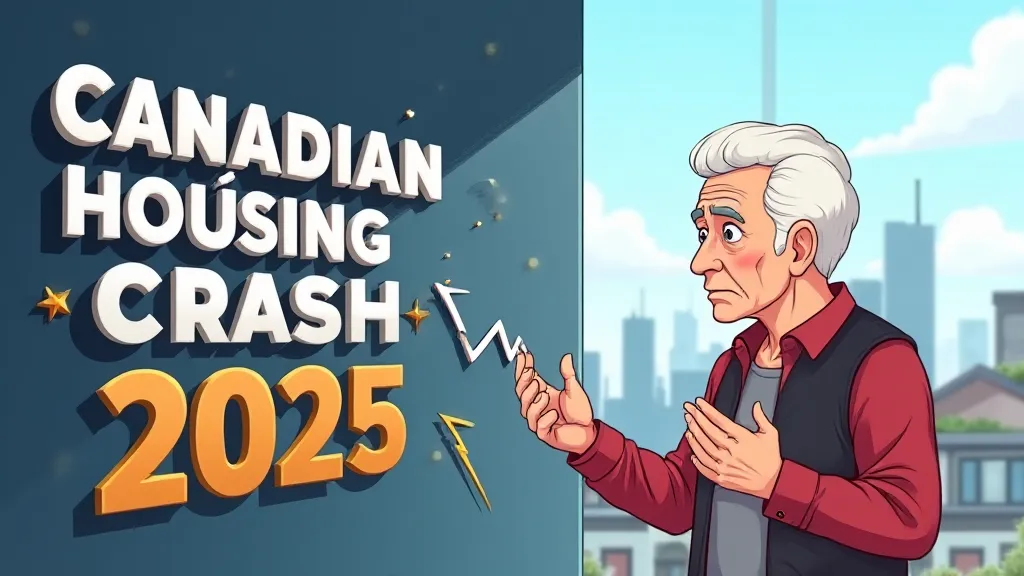
The real sting is in the marginal tax rate. That extra 15% clawback is applied on top of your regular income tax. So, if you’re already in a 35% tax bracket, earning an extra $1,000 could mean paying $350 in regular tax plus $150 from the clawback. Your effective tax rate on that money just jumped to 50%. That’s a punishing hit on your middle-class retiree benefits and a harsh form of retirement income tax. This clawback is one of several converging pressures on retirement security. For a look at another major risk, check out the analysis below.
The Defense Playbook: 7 Strategies to Shield Your OAS
Now for the good news: you are not powerless. This is about proactive planning, not panic. As noted by planners, “Financial planners are urging affected individuals to proactively engage in retirement income planning, exploring strategies like income splitting and careful RRIF withdrawals…” With smart seniors financial planning, you can potentially minimize or even avoid the clawback altogether. Here is your defense playbook. (A quick but crucial note: these are general strategies. Please consult with a qualified financial advisor for a plan tailored to you.)
1. Strategic RRIF Withdrawals: You don’t have to take the minimum. Plan withdrawals to smooth your income over multiple years, aiming to stay below the clawback threshold when possible.
2. Income Splitting (Pension & RRIF): If you have a spouse, split eligible pension income and RRIF payments to allocate more to the lower-income spouse, reducing the primary earner’s net income.
3. Timing of Capital Gains: Be strategic about selling investments. Realize capital gains in years when your other income is lower, like before OAS starts or after an income dip.
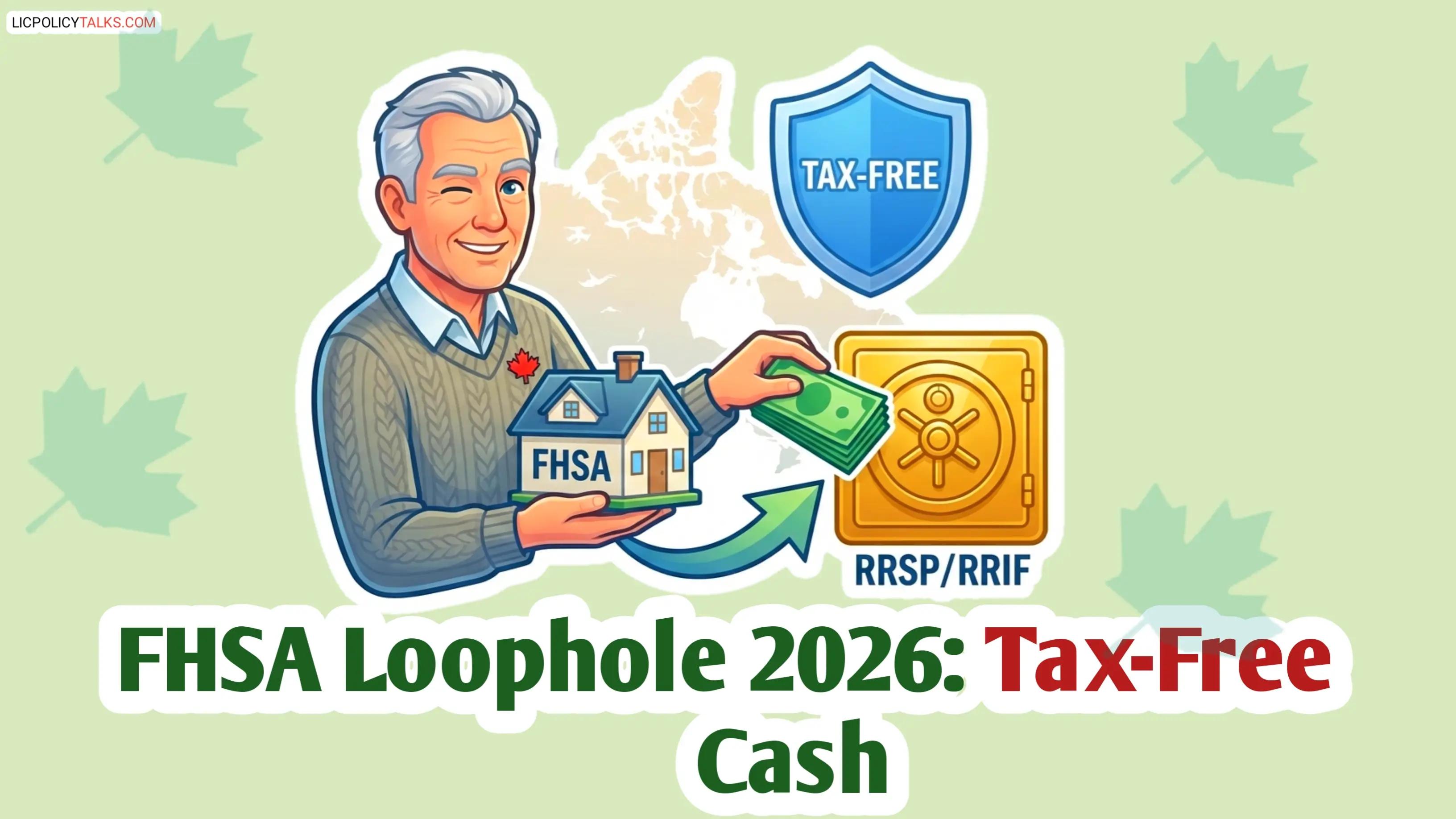
4. Utilizing TFSAs: This is your secret weapon. Draw retirement income from your Tax-Free Savings Account first. TFSA withdrawals do not count toward your net income, so they are invisible to the clawback. Speaking of tax-free shelters, the FHSA presents a unique and often overlooked opportunity, even for retirees under specific conditions.
5. Charitable Donations & Medical Expenses: Cluster larger charitable donations or claim significant medical expenses in a single tax year. These deductions can lower your net income and potentially push you below the clawback threshold.
6. Considering GIS Eligibility: For lower-income seniors, remember the clawback doesn’t affect the Guaranteed Income Supplement (GIS). If you’re close to GIS levels, different planning applies.
7. Life Insurance as an Estate Planning Tool: An advanced strategy. Proceeds from a life insurance policy are generally tax-free to your beneficiaries and don’t form part of your estate’s taxable income, helping preserve wealth.
FAQs: ‘seniors financial planning’
Q: Is the OAS clawback going away in 2026?
Q: Does the clawback apply to my spouse’s income if I’m the one receiving OAS?
Q: If my income is $10,000 above the threshold, do I lose all my OAS?
Q: Can I give back my OAS to avoid the clawback calculation?
Q: Are there any proposals to fix this unfair indexing?
So, here’s the bottom line. The 2026 adjustment to the OAS clawback is a real, quantifiable threat, not just theory. It’s a result of a system that uses slower-indexing thresholds for seniors’ benefits than for working Canadians’ taxes. But the key takeaway isn’t to panic. It’s to get proactive.
Your move now is straightforward. First, sit down and project what your net income might look like in 2026. Second, review the defense strategies we outlined and see which might fit your situation. Third, and most importantly, schedule a meeting with a qualified financial planner who deeply understands retirement income intricacies. This is about taking control of your retirement narrative, even when faced with opaque policy mechanics. You’ve got this.