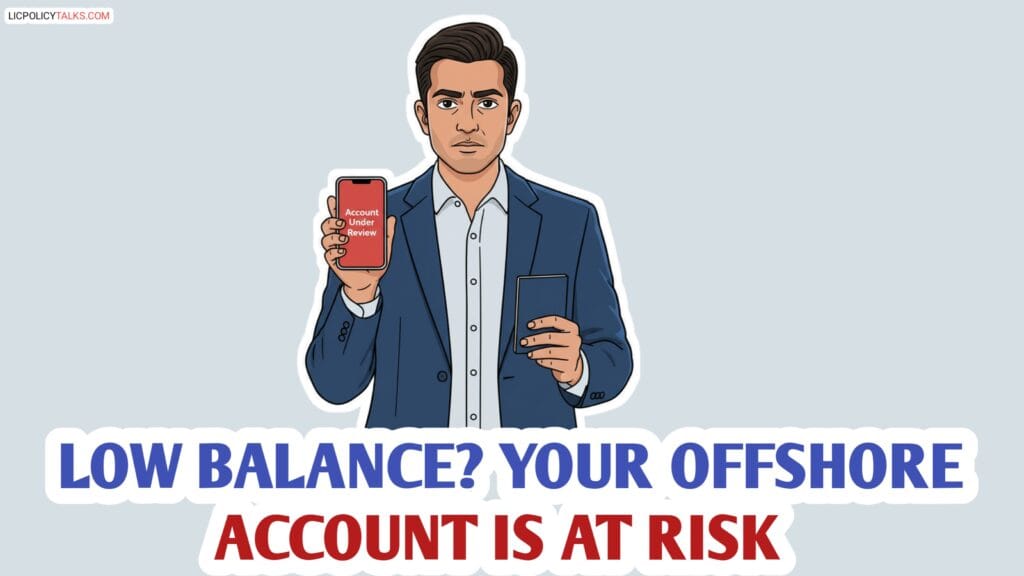
Hi friends! Let’s be honest – if you’re an expat, digital nomad, or retiree living abroad, you’ve probably heard the horror stories. Maybe you’ve even lived it: the cold, impersonal email from your bank titled “Notification of Account Closure.” Your heart sinks. It feels personal, like a rejection. But I’m here to tell you it’s not you. There’s a systemic wave sweeping across the world of international finance, and it’s accelerating toward a 2026 deadline. This article is your decoder ring. We’ll cut through the jargon, expose the real reasons behind this purge, and—most importantly—give you a concrete, step-by-step plan to protect your financial lifeline.
A systemic “purge” of low-balance expat accounts is accelerating, driven by a banking trend called “de-risking.” If you’re wondering why offshore banks closing accounts has become a common headline, you’re in the right place. We’ll explain the “why” and arm you with the “how to protect” in plain English.
The 2026 Purge Decoded: It’s Not You, It’s ‘De-Risking’
The core reason banks are cutting clients isn’t personal; it’s a cold, calculated business move called “de-risking.” Imagine you own a farm. You have one massive field that produces 90% of your crops and a dozen tiny, scattered plots that need just as much watering, weeding, and attention but yield almost nothing. What would you do? You’d stop tending the tiny plots to focus on the big field. For global banks, your $5,000 or $10,000 savings account is that tiny, unprofitable plot. The cost of “maintaining” it now far exceeds any revenue it generates.
What Banks Mean by ‘Too Expensive to Keep’
Let’s break down the cost-to-serve model. For every client, a bank must perform “Know Your Customer” (KYC) checks, monitor transactions for money laundering, and, crucially, comply with international reporting rules like FATCA and CRS. Each of these steps requires manual review by compliance officers, legal teams, and expensive software.
The Foreign Account Tax Compliance Act (FATCA) is a primary cost driver. Enacted by the US, it forces foreign banks to identify all their “U.S. persons” and report details of their accounts to the IRS. The complexity is staggering, and the penalties for getting it wrong are severe—a 30% withholding tax on the bank’s U.S.-source income. For a bank, the administrative nightmare and financial risk of maintaining a low-balance account for a low balance expats simply isn’t worth the few dollars in fees.
The 2026 Deadline: Why This Timeline Matters
So why is this wave hitting a peak as we approach 2026? Banks aren’t just reacting to today’s costs; they’re preparing for tomorrow’s regulatory storm. The Common Reporting Standard (CRS) is being adopted more widely, and new global tax rules like the OECD’s Pillar Two are coming into force.
Banks are pre-emptively cleaning their books of unprofitable, high-hassle clients before these even stricter compliance burdens land. This is part of a wider regulatory shift, including the upcoming Pillar Two rules for offshore entities.

The Profitability Squeeze (2024-2026)
Insight: The red portion (Cost) is rapidly consuming the chart, while revenue (Grey) shrinks proportionally, creating a massive net loss shown in the center.
The Regulatory Storm: FATCA, CRS, and the $10,000 Trap
De-risking is fueled by two powerful engines: FATCA (U.S.-driven) and CRS (global), which have created a worldwide reporting net that makes small accounts a compliance nightmare. These aren’t just acronyms; they’re the root cause of what experts call “expat financial exclusion.” They force banks to investigate where your money comes from, where it goes, and report it to tax authorities automatically.
FATCA & CRS: The Global Reporting Net Tightens
In simple terms: FATCA hunts for U.S. tax evaders worldwide, while CRS promotes global tax transparency among over 100 countries. Together, they mean your bank must perform due diligence, classify your tax residency, and file reports—often on accounts with very low balances. This creates immense, non-negotiable administrative work.
For U.S. persons, this is especially critical. You must report foreign accounts to the IRS via the FBAR if the aggregate value exceeds $10,000 at any time in the year, and possibly via Form 8938 with your tax return. The penalties for non-compliance are severe. This isn’t optional; it’s mandatory under FATCA CRS regulations. For a detailed guide on these obligations, refer to this resource on official IRS guidance.
The FBAR’s $10,000 Myth and Your Risk Profile
Here’s a crucial misunderstanding: the $10,000 FBAR threshold isn’t per account; it’s the aggregate total of all your foreign financial accounts. So if you have $4,000 in a Wise account, $3,500 in a foreign brokerage, and $3,000 in a local savings account abroad, you’ve hit $10,500 and must file. For the bank, even triggering this check for a low balance expats client makes you a “high-compliance, low-reward” customer.
Banks also profile risk based on nationality and profession. Being a citizen of a country on an international watchlist or working in a cash-intensive business (like crypto trading) can unfairly flag you as high-risk. This profiling accelerates the offshore banking purge as banks seek to minimize perceived regulatory risk across the board.
| Aspect | FATCA (US) | CRS (Global) |
|---|---|---|
| Primary Goal | Find US tax evaders | Global tax transparency |
| Targets | US persons worldwide | Tax residents of participating countries |
| Reporting Threshold | $10,000 (aggregate) | Varies, often lower (~$0) |
| Penalty for Banks | 30% withholding on US income | Sanctions & reputational damage |
A quick-reference guide to the regulations reshaping offshore banking.
Fortifying Your Financial Footprint: A Proactive Protection Plan
Knowledge is power, but action is security. Your goal is to transform from a “high-risk, low-reward” client into a “low-risk, high-value” one in the bank’s eyes. This shift requires a deliberate strategy, not luck. Let’s walk through a practical, three-step plan to secure your international banking access.
Step 1: Become a ‘Low-Risk, High-Value’ Client
First, consolidate your scattered funds. Instead of having $3,000 in three different banks, combine them into one $9,000 account. A higher per-account balance makes you more attractive. Next, ensure your KYC documentation is flawless and up-to-date: a current passport, proof of address, and a clear explanation of your income source (e.g., freelance contracts, pension statements).
Use your account actively. A dormant account is a prime candidate for closure. Set up a small, regular direct deposit or make a few transactions monthly. This shows the account is alive, generates some fee revenue, and that you’re engaged. Proactively managing your profile is the best defense against an expat bank account closure notice.
Step 2: Explore the New World of Alternatives
Don’t put all your eggs in one traditional banking basket. The modern financial world offers new solutions tailored for global lives. 1) Neo-banks/EMIs (like Revolut, Wise, or Payoneer): They are digital-first, often have lower overhead, and are designed for cross-border transactions. However, they may not offer full banking services like loans and aren’t always covered by deposit insurance.
2) Regional banks in friendly jurisdictions: Consider banks in places like Georgia, Uruguay, or Mauritius that are still actively seeking international clients and may have a more pragmatic approach to compliance for alternative banking for expats. 3) Specialist expat banks: Some institutions still cater specifically to expatriates, though they often require higher minimum balances.
For a deep dive on how neobanks compare to traditional hubs like Cayman or Dubai, explore this analysis.

Step 3: The Compliance Pre-Check (DIY Audit)
Take a weekend to conduct your own financial health audit. This pre-emptive move can save you from nasty surprises. First, list every single foreign financial account you have—checking, savings, investment, even pension funds if held abroad. Add up their highest balances over the last year. Does it cross the $10,000 aggregate threshold?
Second, log into each bank’s online portal. Ensure your tax identification number (TIN) and current residential address are 100% correct. Third, confirm your self-declared tax residency status with the bank is accurate. Finally, if you’re a U.S. person, double-check that you are correctly filing FBARs and Form 8938. Getting this right makes you a compliant, low-hassle client.
Your 2026 Action Plan: Timeline and Next Steps
Let’s distill everything into a clear, time-bound action plan. The key is to start now; 2026 is not a distant future event, but a deadline banks are already preparing for. Proactivity is your greatest asset in this changing landscape.
Immediate (Next 30 days): Conduct the DIY audit from Step 3. Gather your most recent bank statements, passport, and proof of address. Understand your aggregate balance and reporting obligations.
Short-term (By Q3 2025): Research and open one alternative banking relationship (e.g., a neobank or regional bank) as a backup. Begin consolidating scattered funds into your primary account to boost its balance.
Ongoing: Maintain impeccable records, use your accounts actively, and set up a Google Alert for terms like “FATCA update” or “CRS” to stay informed. If your situation is complex (e.g., you own a foreign company), consider consulting a cross-border tax advisor.
FAQs: ‘FATCA CRS regulations’
Q: Is my account definitely going to be closed if I have less than $50,000?
Q: Can I just ignore an account closure notice and keep the money there?
Q: Are digital banks (like Wise or Revolut) a safe long-term alternative for expats?
Q: I’m a non-US expat. Does FATCA still affect me and my bank?
Q: If my account is closed, how long do I have to transfer my funds, and what are the tax implications?
Conclusion
So, friends, if you take one thing away, let it be this: the great offshore banking purge is a structural issue, not a personal failure on your part. The global financial system is becoming more transparent and, ironically, more exclusive. But within this challenge lies a powerful opportunity. By understanding the “why” — de-risking 2026, FATCA, CRS — and taking proactive, deliberate steps to solidify your financial footprint, you’re not just reacting to change. You’re taking definitive control of your international financial life. Start your audit today, explore your options, and move forward with confidence. Your financial stability abroad is worth protecting.