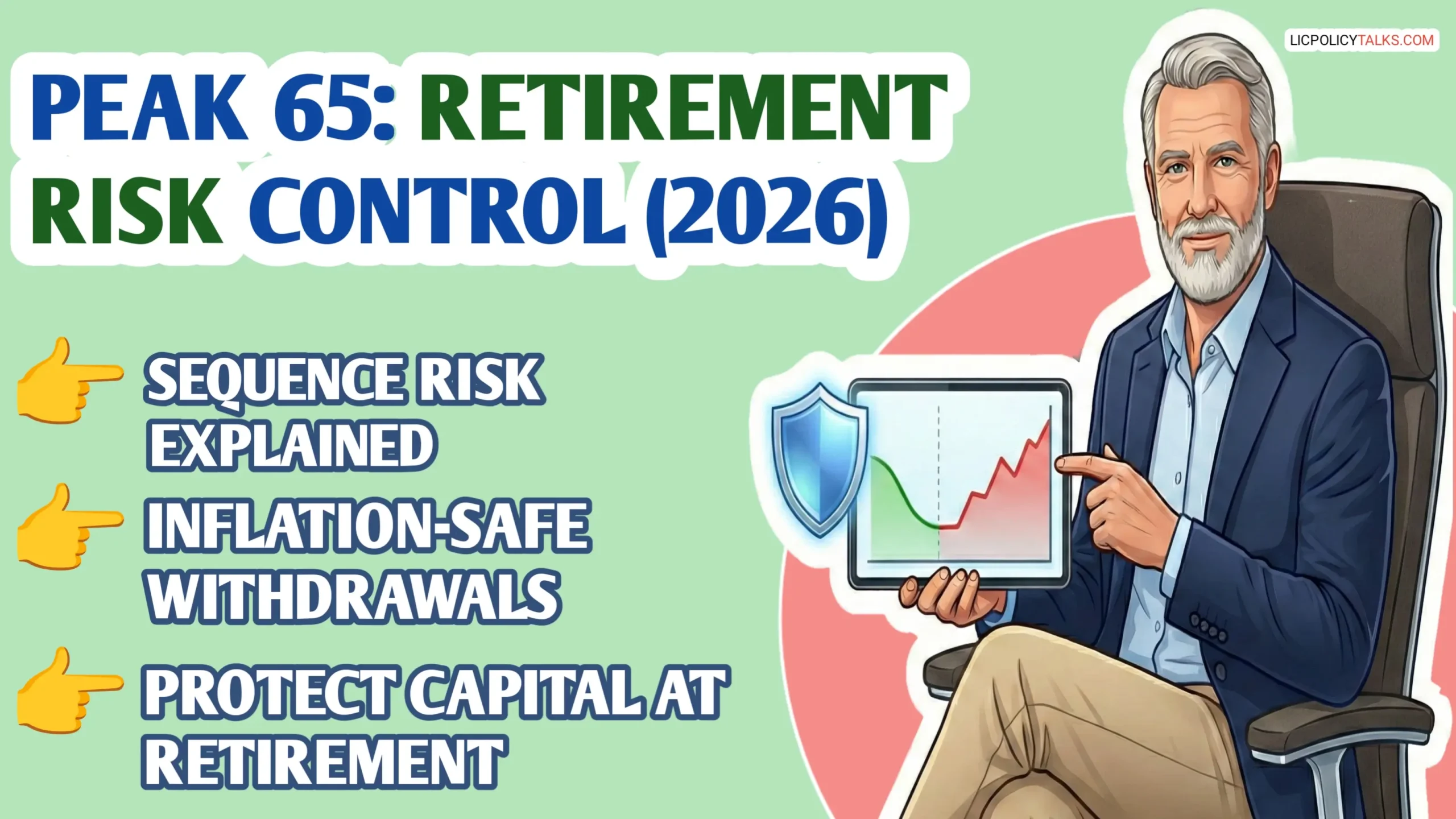

Hi friends! If you’re part of the huge wave hitting 65 soon or are already there, you know the stakes feel incredibly high right now. We’re facing a perfect storm—the largest retirement generation in history is meeting stubborn inflation. Honestly, it’s enough to keep anyone up at night. But you know what? Fear doesn’t have to be the headline of your story. In this guide, we’re going to cut through the noise and give you seven clear, powerful strategies designed specifically for the 2026 landscape. This isn’t just theory; it’s your action plan to protect the life you’ve worked so hard to build.
To navigate this, you need a solid Peak 65 Strategy. This means crafting a plan that’s not just about growing wealth, but strategically protecting it from the unique dangers of this moment, like sequence of returns risk and the pressures of high inflation retirement. Recent analysis underscores this pressure, pointing to the specific wealth needed to achieve a feeling of “financial safety” in 2026, highlighting how psychological and monetary pressures are intertwined [ChatGPT: Here’s How Much Wealth You Need To Feel ‘Financially Safe’ in 2026]. Your retirement planning 2026 must account for this reality.
The 2026 Retirement Perfect Storm: Peak 65 Meets High Inflation
We’re at a historic crossroads. “Peak 65” refers to the unprecedented number of Americans turning 65 this year and next—a demographic tidal wave. At the same time, the economic environment is marked by persistent inflation that erodes purchasing power. This combination creates a dangerous scenario for new retirees.
The core financial danger in this storm is called Sequence of Returns Risk (SORR). Simply put, it’s the danger of making withdrawals during a market downturn at the very start of retirement, which can permanently cripple your nest egg faster than you’d ever expect. Think of it like starting a long road trip with a flat tire and a leaky gas tank; the poor start makes finishing the journey nearly impossible, no matter how smooth the road gets later. This article provides 7 proven, actionable strategies tailored for the 2026 economic landscape to shield your retirement income from this exact threat.
Why Sequence Risk is Your #1 Retirement Enemy: A Visual Guide
Let’s break down the devastating math. Imagine two retirees, Alex and Sam. Both start retirement with a $1 million portfolio and plan to withdraw $40,000 per year, adjusted for inflation. Their long-term average return is identical. The only difference? The order of the market’s returns.
Alex gets lucky and has positive returns in the first few years. Sam, however, retires into a downturn and must sell assets at a loss to fund those same $40,000 withdrawals. High inflation worsens SORR dramatically by increasing the dollar amount you need to withdraw just to maintain your lifestyle, forcing you to sell more shares when they are cheap. Look at the chart below to see the shocking difference a bad sequence makes.
Your 2026 Battle Plan: 7 Strategies to Secure Your Retirement
Understanding the problem is half the battle. The other half is having a practical, multi-layered defense. The following seven strategies form a comprehensive Peak 65 Strategy designed to manage sequence of returns risk and inflation in 2026. Each includes a clear Action Step so you can move from insight to implementation immediately.
1. The Dynamic Withdrawal Shield: Ditch the Rigid 4% Rule
A static withdrawal rate, like the classic 4% rule, is dangerously inflexible in volatile, high-inflation times. It forces you to sell the same amount of assets regardless of whether the market is up 20% or down 20%. A dynamic approach links your withdrawals to market performance and inflation.
While the 4% rule is a starting point, as discussed in our simple guide to calculating retirement needs, you need more flexibility for 2026. Implement rules like: reduce your planned withdrawal by 10% in any year the market is down, or cap annual inflation increases at half the reported CPI rate. This protects your portfolio’s core during bad years.

Action Step: Calculate your flexible withdrawal floor. Determine the minimum annual income you need from your portfolio to cover absolute essentials (housing, food, medicine). This is the amount you will not go below, even in a terrible market year.
2. The 3-Bucket Time Machine: Segregate Your Income by Timeline
This is a classic and powerful retirement income planning strategy for a reason. You divide your assets into three “buckets” based on when you’ll need the money: 1) Cash Bucket (1-2 years of expenses in cash or equivalents), 2) Income/Capital Preservation Bucket (3-10 years in bonds, CDs, or stable assets), and 3) Growth Bucket (10+ years in stocks for long-term growth).
This structure is your insulation from a market downturn retirement. When stocks crash, you live off the Cash Bucket and don’t touch the Growth Bucket, allowing it time to recover. This directly neutralizes SORR. As highlighted in recent guidance, this bucket strategy is considered one of the top strategic moves for strengthening a retirement portfolio for the coming year [7 Smart Money Moves for 2026 Retirement Planning].
Action Step: Audit your portfolio today. Categorize every asset into one of the three buckets. Ask yourself critically: Is my Cash Bucket full enough to cover 18-24 months of essential expenses for 2026-2027?
3. The Inflation-Proof Income Ladder (Beyond TIPS)
Your retirement withdrawal strategy needs sources that automatically adjust for inflation. Think beyond your portfolio. Build a ladder of income with built-in cost-of-living adjustments (COLAs). This can include Series I Bonds (directly tied to inflation), certain annuities with COLA riders, dividend-growing stocks from resilient companies, or rental income with lease agreements that include periodic rent increases.
While Treasury Inflation-Protected Securities (TIPS) are an option, their real yields can be low, and they have tax quirks. Diversifying your inflation fighters across different asset types and income sources creates a more resilient safety net.
Action Step: Identify one non-portfolio income source you can develop or optimize in 2026 for inflation adjustment. For example, could you allocate a small portion of savings to I Bonds this year?
4. Tactical Asset Location: It’s Not Just About Allocation
You know about asset allocation (stocks vs. bonds), but asset *location* is a game-changer for tax efficiency. It’s about placing investments in the most advantageous account type: taxable (brokerage), tax-deferred (IRA/401k), or tax-free (Roth). The goal is to control your taxable income in retirement, keeping you in a lower tax bracket.
For instance, hold assets that generate high taxable income (like bonds) in tax-deferred accounts, and hold long-term growth stocks (which benefit from lower capital gains rates) in taxable accounts. [4 Money Moves To Make Now If You Want To Retire in 2026] rightly highlights proactive tax planning as a critical move. This preserves more of your capital when you make withdrawals.
Action Step: List your three largest holdings. Are they in the most tax-efficient account type? Book a consultation with a tax advisor to evaluate one potential relocation move.
5. The Strategic Work ‘Buffer’: Redefining Retirement
Let’s challenge the “cold turkey” retirement model. Part-time, consulting, or passion project income in the early retirement years is the ultimate SORR buffer. Even $10,000-$20,000 per year can drastically reduce your portfolio withdrawal rate during its most vulnerable first 3-5 years.
This isn’t about “never retiring”; it’s about creating a flexible glide path. This “buffer” income allows your portfolio more time to grow undisturbed, effectively changing the sequence of returns in your favor.
Action Step: Brainstorm one skill or hobby that could generate $10k-$20k annually, starting in 2026. Could it be freelance work, teaching a class, or turning a craft into a small business?
6. Proactive Liability Management: Lower Your ‘Necessary’ Withdrawal
The best way to protect your portfolio is to need less from it. Attack the expense side of the equation through proactive liability management. Consider downsizing your home, refinancing high-interest debt (if rates allow), or locking in future costs like long-term care insurance earlier.
Conduct a “lifestyle vs. liability” audit. As highlighted by recent news, external policy changes can also affect household budgets, encouraging us to be proactive in our own reviews [Budget Chops £154 Of Costs From Bills In April 2026]. Every dollar you don’t need to withdraw is a dollar that stays invested and compounds.
Action Step: Run a ‘bill audit’ this week. Identify one recurring subscription or service expense that can be reduced or eliminated before 2026.

7. The Annual ‘Sequence Risk’ Health Check
A static financial plan is a failing plan. Your retirement risk management needs an annual ritual. Each year, conduct a review focused solely on SORR metrics: your current withdrawal rate versus market valuations (like the CAPE ratio), the status of your Cash Bucket, and the inflation outlook for the year ahead.
This health check is the glue that holds all other strategies together. It forces you to make small, proactive adjustments rather than panicked, reactive ones. As experts suggest, having a structured review process is one of the most effective ways to alleviate the anxiety of running out of money [8 Tips to Stop Worrying About Running Out of Money in Retirement].
Action Step: Mark your calendar for a “Finance Day” in Q1 2026. Agenda: 1. Do I need to replenish my Cash Bucket? 2. Should I adjust my dynamic withdrawal rate? 3. Is it time to rebalance my growth bucket?
Your 2026 Peak 65 Action Matrix
To help you prioritize, here’s a quick-reference matrix. Choose based on your capacity for effort and the potential impact on your retirement risk management.
| Strategy | Key Action (2026) | Effort Level | SORR Protection Impact |
|---|---|---|---|
| Dynamic Withdrawal Shield | Set your annual withdrawal cap based on 6-month market performance | Low | High |
| 3-Bucket Time Machine | Fund Cash Bucket with 18 months of essential expenses | Medium | High |
| Inflation-Proof Income Ladder | Purchase $10k in Series I Bonds | Low | Medium |
| Tactical Asset Location | Consult a tax advisor on relocating one major holding | Medium | Medium |
| Strategic Work Buffer | Secure a consulting contract for 5 hours/week | High | Medium |
| Proactive Liability Management | Cancel 2 unused subscriptions & refinance one debt | Low | Medium |
| Annual ‘Sequence Risk’ Health Check | Schedule and complete your Q1 2026 Finance Day | Low | High |
FAQs: ‘retirement income planning’
Q: I’m retiring in 2026. Which of these 7 strategies is the MOST urgent for me?
Q: How does high inflation specifically make Sequence of Returns Risk worse?
Q: Is the ‘4% Rule’ completely useless now?
Q: Can I implement these strategies if I’m already 5 years into retirement?
Q: What’s the single biggest mistake Peak 65 retirees make regarding SORR?
Beyond Fear: Building Your Resilient 2026 Retirement Plan
Peak 65 and high inflation are significant challenges, but they are not insurmountable. The key is shifting from a passive saver to an active manager of your retirement income. The goal isn’t to predict the market’s every move—that’s impossible. The goal is to build a plan so resilient that it can withstand a run of bad luck in the early years.
You now have a clear, actionable Peak 65 Strategy. This multi-layered approach to retirement risk management ensures you’re protected from multiple angles, not relying on a single point of failure. Choose one strategy from the matrix to implement this month. The best time to fortify your retirement was yesterday; the next best time is today.