

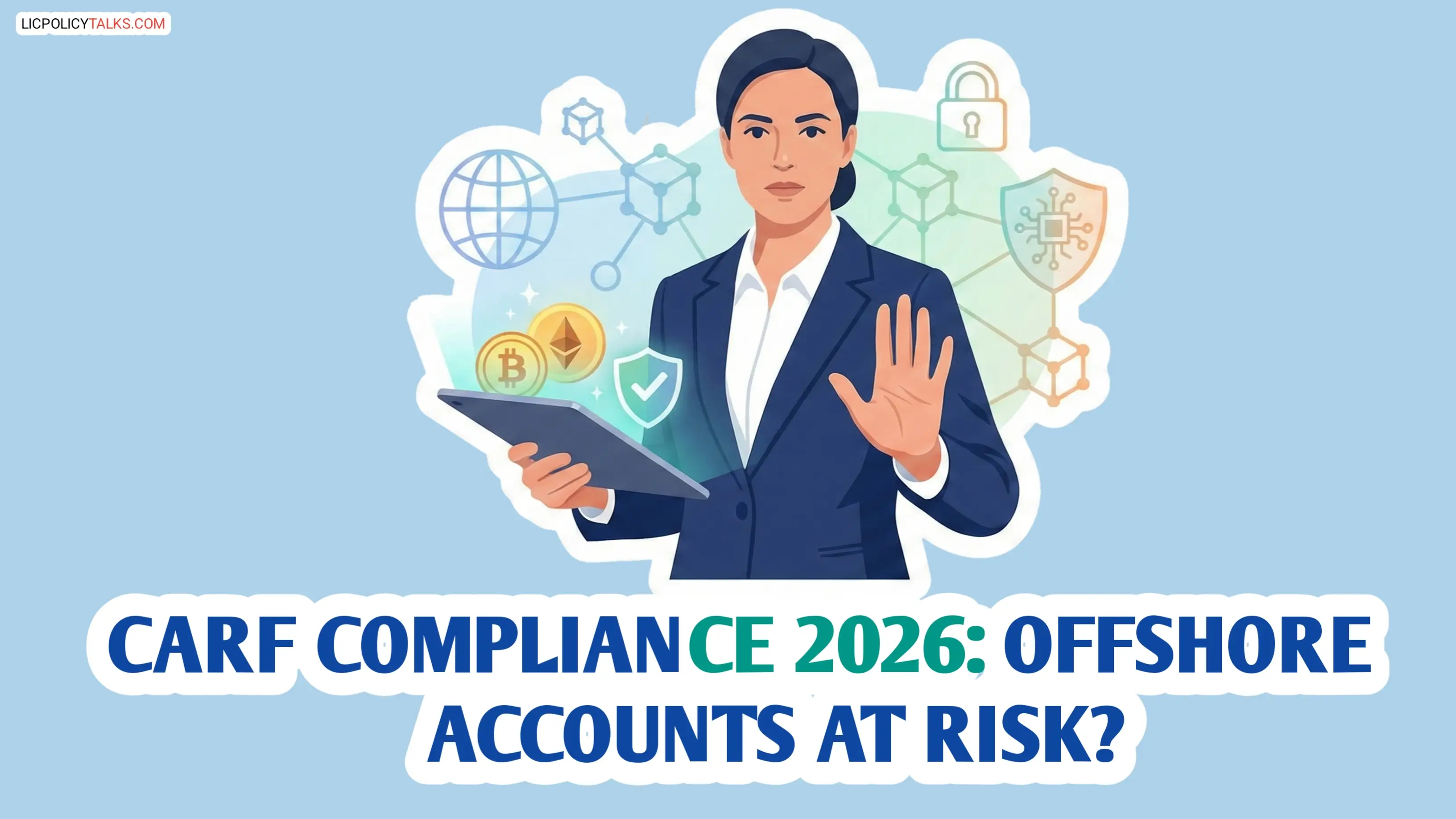
Hi friends! Picture this: you’re an expat, running your international business or investments through a tidy offshore holding company. You’ve followed the old playbook for tax efficiency, thinking you’re compliant. But honestly, a seismic shift in global tax rules is about to turn that playbook to dust. It’s called OECD Pillar Two, and its new Form P1 registration requirement, with a hard deadline of January 2026, is a game-changer. This isn’t just for tech giants; it directly targets professionals and business owners like you who use offshore structures. Let’s cut through the complexity together.
In this guide, we’ll break down exactly what the Pillar Two Form P1 means for your wallet and your company. We’ll translate the jargon, show you why your offshore setup is now under the microscope, and give you a clear, step-by-step survival roadmap. Consider this your first move to get ahead of the curve.
The Big Picture: Understanding OECD Pillar Two (It’s Not Just for Big Tech)
The 15% Global Minimum Tax: How It Works
At its heart, Pillar Two is about stopping the “race to the bottom” in corporate tax rates. Over 140 countries agreed to set a global minimum corporate tax rate of 15%. Think of it as a global tax floor. The key metric is the Effective Tax Rate (ETR)—simply, the actual tax your group pays on its profits in any given country.
The core rule is brutally simple: if your group’s ETR in a country falls below 15%, a “top-up tax” is triggered to bring it up to that minimum. This isn’t a suggestion; it’s a enforceable rule that is fundamentally altering the traditional benefits of parking profits in low-tax jurisdictions.
How the Top-Up Tax Works: A Simple Visual
GloBE Rules Demystified: IIR and UTPR
The engine driving this is the GloBE (Global Anti-Base Erosion) rules. These rules use a two-key system to decide who gets to collect the top-up tax. First, the Income Inclusion Rule (IIR) applies: the country where your group’s ultimate parent company is based can tax the low-taxed income of its foreign subsidiaries. If the IIR doesn’t catch it, the Undertaxed Profits Rule (UTPR) kicks in as a backstop, allowing other countries where you operate to deny deductions or apply an extra tax.
If you have a foreign parent company or operations in multiple countries, these rules determine exactly which tax authority comes knocking for the extra payment. This new framework adds to a growing list of global transparency initiatives. Understanding the landscape is crucial…

Why Expats Offshore Entities Are in the Crosshairs
The Offshore Entity Trap: When “Tax Efficiency” Becomes a Liability
Let’s get personal. Your structure might look like this: a holding company in the BVI or Cayman Islands owning your operating subsidiaries. Traditionally, this was smart planning. But under Pillar Two, these entities often have very low ETRs and frequently lack what’s called ‘substantial economic activity’—real business substance.
Here’s the trigger: Pillar Two looks at your entire group’s global footprint. A low-taxed offshore holding company that just owns shares and collects dividends (passive income) with no real employees or decision-makers is a prime target. It could easily pull your group’s ETR in that jurisdiction below 15%, triggering top-up tax liabilities under the IIR or UTPR rules we just discussed.
The old goal of minimizing tax in a holding company location is now a direct path to additional tax liability elsewhere. What was once an asset for your tax planning is now a potential compliance liability.
Understanding the GloBE Rules and Substance Requirements
So, what is ‘substance’? It’s not just a rented office. It’s about real, sustained economic activity: employees performing core income-generating functions, tangible assets, and where strategic management decisions are actually made. Contrast a ‘shell’ holding company (a mailbox with a nominee director) with a ‘substantial’ operating company with its own staff, office, and business operations.
The rules do offer a tiny buffer called a ‘substance-based income carve-out,’ which excludes a small amount of income linked to payroll and tangible assets. But for most pure holding, treasury, or intellectual property companies, this carve-out is negligible. The warning is clear: these structures are highly vulnerable.
What *Exactly* is Pillar Two Form P1? Your New Registration Burden
The Form P1 Registration Process: Data, Deadlines, and Disclosures
Form P1 is your mandatory notification to tax authorities that your group falls within the scope of the Pillar Two GloBE rules. It’s critical to understand: this is not the monstrously detailed GloBE Information Return (that comes later). P1 is the first, mandatory step to get on their radar.
Think of it as registering your presence. You’ll typically need to provide information like the group’s name, tax identification numbers, details of the ultimate parent entity, all relevant tax jurisdictions, and when you expect to file the full return. It’s about disclosing detailed information about the group’s structure and tax positions upfront.
The January 2026 Deadline: Why Procrastination is Costly
The deadline is non-negotiable: January 1, 2026, for first-time registrants. Missing this isn’t just about a potential fine. It can lead to significant penalties, put your group on a high-risk audit list, and may even block you from using simplified compliance procedures (safe harbors) later.
You know what? Gathering clean, consistent entity data, ownership charts, and financial statements across multiple borders and legal systems takes months. Starting now is not early; it’s prudent. Failure to comply by the January 2026 deadline can result in substantial penalties and unwanted scrutiny.
Your 3-Step Tax Compliance Roadmap (2024-2026)
Step 1: The Pillar Two Health Check (Do It Now in 2024)
Your first action is a preliminary scoping analysis. Ask yourself: Is my group’s consolidated revenue over €750 million? (Important: many countries are adopting rules for smaller groups, so don’t rely on this threshold alone). What are the ETRs in each country I operate? Do I have any offshore entities with low substance?
This is the perfect time to engage a tax advisor who specializes in international tax and Pillar Two. They can help you map your structure against the new rules and give you a clear “in scope” or “out of scope” verdict.
Step 2: Data Gathering & Structural Review (2025)
If you’re in scope, 2025 is for the heavy lifting. Start creating a master data inventory: financial statements, local tax returns, and detailed entity charts for every member of your group. This data is the foundation for all your future filings.
| Aspect | Old Tax Planning | New Pillar Two Reality |
|---|---|---|
| Offshore Holding Co. | Key asset for tax efficiency | Primary liability & compliance target |
| Substance | Optional, often minimal | Critical to avoid top-up tax |
| ETR Goal | As low as legally possible | At or above 15% in each jurisdiction |
| Compliance Focus | Local filing, often simple | Complex global calculation & disclosure |
Deep Dive: Re-evaluating Your Offshore Company Registration Strategy: Substance Over Shell. This is the moment to be brutally honest about your structure. Options include dissolving unnecessary entities, consolidating functions into operating companies, or injecting real, documented economic activity (like hiring local staff, holding board meetings) into offshore entities to meet substance requirements.
Step 3: Registration & Filing (Q4 2025 – Jan 2026)
With your data in order, finalize and submit Form P1. Identify the correct jurisdiction for filing—typically where your Ultimate Parent Entity is tax resident. This step gets you officially registered.
Then, prepare for the next phase: the comprehensive GloBE Information Return. Use this checklist to stay on track: • Completed Pillar Two scoping assessment. • Compiled financial and tax data for all entities. • Reviewed and potentially restructured for substance. • Identified filing jurisdiction and prepared Form P1. • Submitted Form P1 before January 1, 2026.
FAQs: ‘GloBE rules’
Q: My offshore company is just me and has revenue under €750M. Does Pillar Two Form P1 still apply to me?
Q: I’m an expat with a BVI company holding my investment portfolio. Is this ‘active’ enough to avoid top-up tax?
Q: Who actually files Form P1? Me personally, or my offshore company’s corporate secretary?
Q: What’s the difference between Form P1 and the CRS/FATCA reporting I already do?
Q: If I miss the January 2026 deadline, is there a grace period or can I file late?
Let’s be clear: Pillar Two and the Form P1 requirement are not a distant theory. For expats with offshore holdings, this is an imminent, concrete reality. The January 2026 deadline is a firm line in the sand that you cannot ignore.
Honestly, the action you take in 2024 and 2025 will determine whether 2026 is a year of compliance success or stressful failure. Use this moment not just to check a box, but to strategically future-proof your international business for an era defined by transparency and real economic substance. Start your health check, consult with specialized advisors, and turn this challenge into an opportunity for a stronger, more resilient structure.