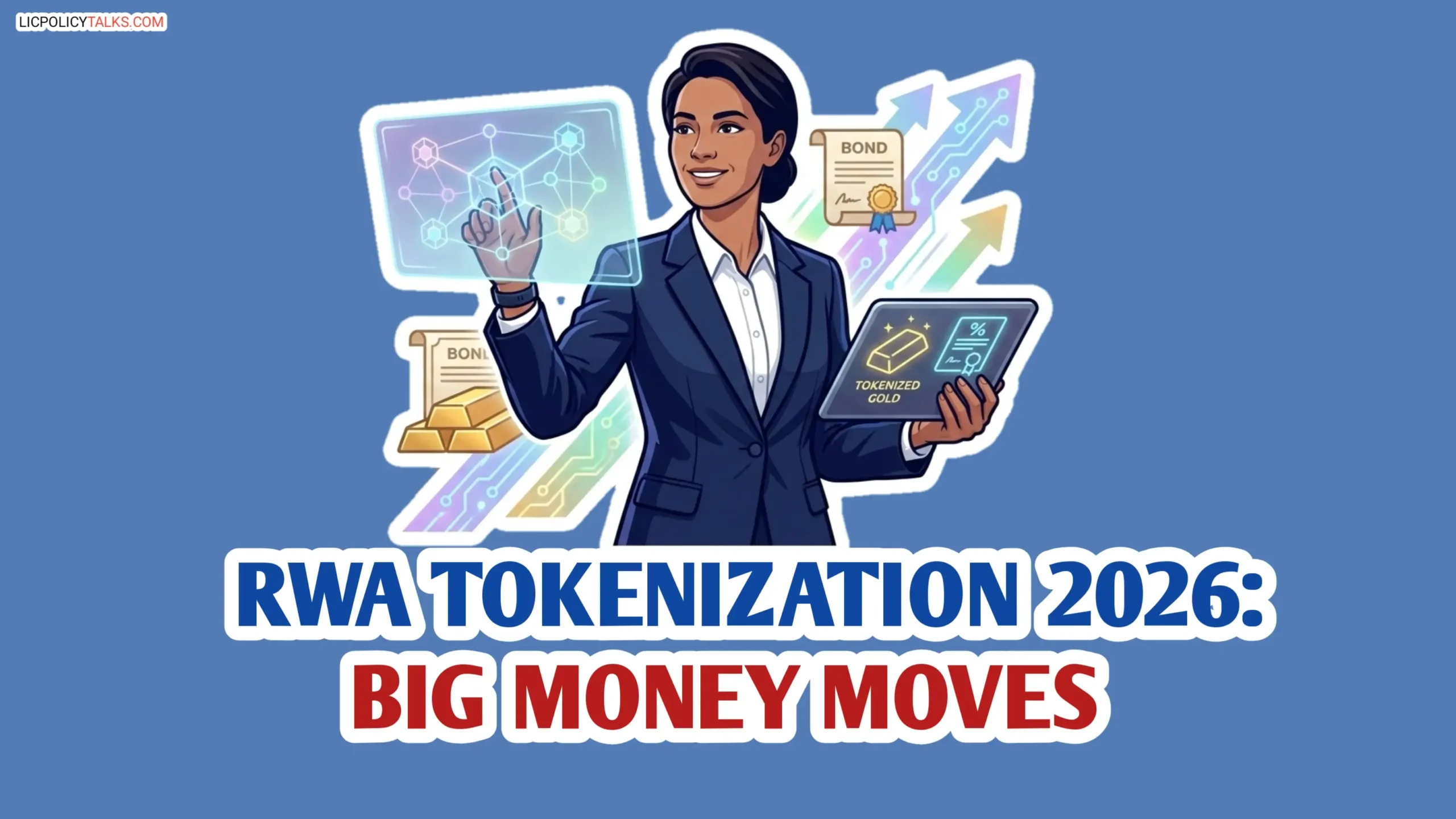
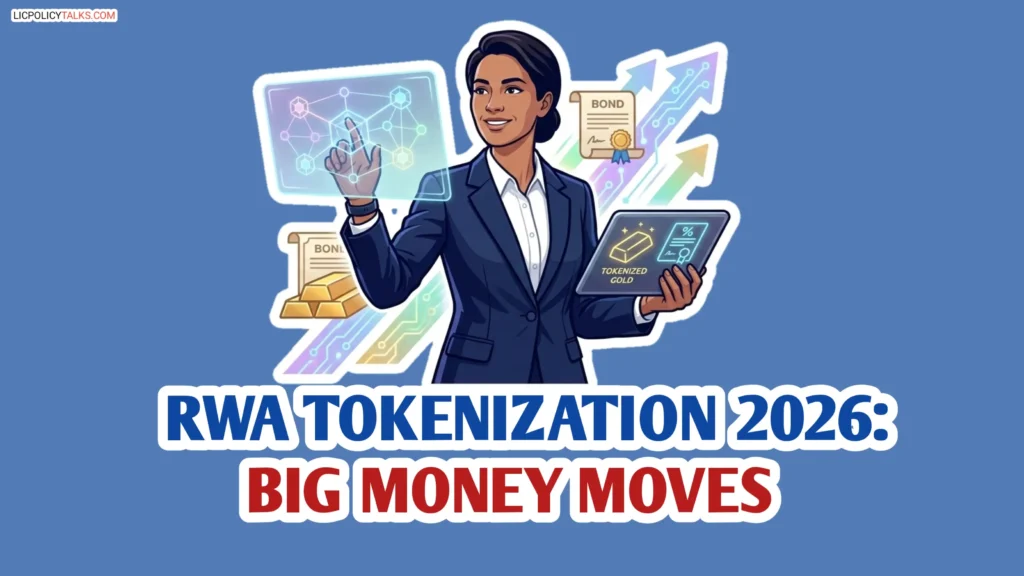
Hi friends! Let’s talk about something huge that’s happening right under our noses. While everyone’s watching Bitcoin’s price, the real financial revolution is much quieter. It’s about Wall Street’s biggest players finally moving trillions of dollars of their own stuff—real stuff like gold and government bonds—onto the blockchain. Today, we’re breaking down this $300 billion shift, why BlackRock is leading the charge, and what it means for your money by 2026.
This quiet surge in RWA Tokenization marks a pivotal turn where traditional finance embraces blockchain’s efficiency, fundamentally altering how we access and own the world’s most foundational assets.
The Quiet $300 Billion Revolution on the Blockchain
You know what’s fascinating? The loud, volatile world of crypto often steals the spotlight, but a far more monumental and quiet shift is building behind the scenes. It’s the sound of traditional finance—the gold, the bonds, the private funds—moving on-chain. The total value of tokenized real world assets is now approaching a staggering $300 billion as Wall Street “quietly floods on chain“.
The pioneers this time aren’t just crypto natives. They’re names like BlackRock and major global banks. What’s driving these titans to bet big on blockchain for old-school assets? Why are gold and bonds their primary targets? And what can we realistically expect by 2026? Let’s dive in. RWA tokenization isn’t a niche crypto trend; it’s the beginning of a fundamental re-architecture of global liquidity itself.
RWA Tokenization Demystified: Beyond the Jargon
First, let’s strip away the complexity. RWA Tokenization is simply the process of creating a digital twin of a physical or traditional financial asset on a blockchain. Think of it like a digital deed for a house or a digital share certificate for a bond. It’s a claim ticket, representing ownership of something real in the off-chain world.
So, why bother? The benefits are transformative. Imagine markets that never close: 24/7 trading for assets like Treasury bonds. Imagine fractional ownership, where you can own $10 of a gold bar or a piece of a million-dollar private equity fund. Settlement times crumble from days (T+2) to minutes. Compliance and dividend payments can be automated through smart contracts, and every transaction creates a transparent, immutable audit trail.
It’s crucial to contrast this with native crypto assets like Bitcoin. Bitcoin is the asset; its value is intrinsic to its own network. A tokenized gold coin, however, derives its value from the physical gold sitting in a vault. The blockchain simply provides a superior ledger and transfer mechanism for ownership of that real-world value. This whole process of blockchain tokenization is powered by smart contract platforms like Ethereum, Solana, and increasingly, chains built for institutions like Sei.
The Institutional Floodgates Open: BlackRock, Banks, and the Sei Network Move
This isn’t theoretical anymore. The floodgates have officially opened, and the proof is in specific, concrete actions. Take BlackRock: through a platform called KAIO, tokenized versions of BlackRock’s flagship money market fund and a fund from hedge fund giant Brevan Howard have gone live on the Sei blockchain. This means regulated, institutional-grade financial products are now accessible via a blockchain wallet.
The choice of the Sei network is itself a signal. Institutions aren’t just picking any chain; they’re choosing platforms that promise high speed, compliance-friendly features, and institutional-grade infrastructure. This move is part of a broader restructuring of global liquidity, similar to the shifts happening between major stock exchanges.

And BlackRock is far from alone. JPMorgan is executing live trades on its own blockchain, Goldman Sachs is exploring tokenization for private funds, and European banks are piloting bond issuance on-chain. The motivation is crystal clear: for institutions, this is a dual strategy of defense and offense—driving radical efficiency, slashing costs, and unlocking access to a new global pool of digital-native investors.
Why Gold & Bonds? The Twin Pillars of the Tokenized Revolution
While theoretically anything can be tokenized, gold and bonds are the undisputed leaders right now. They serve as the twin pillars for this revolution, each for powerful, yet distinct, strategic reasons.
| Asset Class | Why It’s Being Tokenized | Key Benefits | Leading Examples/Projects |
|---|---|---|---|
| Gold | Digitize the ultimate safe-haven asset; solve storage/access issues. | Fractional ownership, instant settlement, global 24/7 access, verifiable backing. | PAXG (Paxos), XAUt (Tether Gold) |
| Bonds/Treasuries | Bring trillions in yield-bearing debt on-chain for efficiency and new products. | Access to ‘risk-off’ yield, composability in DeFi, automated coupon payments. | Ondo Finance (OUSG), Matrixdock, Superstate |
Tokenized Gold: Digital Bullion for the Modern Age
Gold’s appeal is timeless: it’s the universal store of value. But owning physical gold has headaches—secure storage, costly verification, and it’s not easily divisible. Tokenized gold solves all of this. Each token, like PAXG or Tether Gold, is backed 1:1 by physical gold held in LBMA-approved, audited vaults. For you, it means owning a fraction of a bar, trading it 24/7 anywhere in the world, and even using it as collateral in DeFi protocols. It’s gold, supercharged for the digital age.
Tokenized Bonds & Treasuries: Yield Goes On-Chain
Bonds are the engine room of global finance—a multi-trillion-dollar debt market. Tokenization brings this massive, yield-bearing asset class on-chain. Projects like Ondo Finance are at the forefront, tokenizing ultra-safe US Treasury bills into tokens like OUSG (source). The killer app here is offering stablecoin holders and crypto portfolios a yield derived from the safest government debt, effectively bridging DeFi and TradFi. The scale is almost unimaginable; tokenizing even 1% of the global bond market would dwarf the entire current crypto market cap.
Navigating the 2026 Landscape: Predictions, Projects, and Pitfalls
So, where is this all headed by 2026? Let’s map out the trajectory. First, expect mainstream convergence. Tokenized RWAs won’t be a curiosity; they’ll be a standard offering in your mainstream brokerage or wealth management app. Second, regulatory clarity will arrive—but with potential friction. The EU, US, and UK will establish frameworks, baking compliance directly into the tokens themselves.
Third, watch for hybrid products. We’ll see structured products that blend tokenized bonds, gold, and crypto derivatives into single, programmable investment vehicles. Beyond the leaders, keep an eye on other innovative projects in the DeFi RWA space like Maple Finance (corporate credit) and Centrifuge (real estate/ invoices), which are expanding the asset classes on-chain.
This shift towards always-available digital assets aligns with a broader move in traditional markets towards 24/7 trading models.

But we must honestly address the pitfalls. The risks are real: regulatory whiplash, smart contract vulnerabilities, and the ever-present question of custodianship—is the gold really in the vault? Market fragmentation across different blockchains is also a challenge. The single biggest obstacle remains regulatory clarity, which will ultimately dictate the speed and shape of mainstream adoption.
RWA Tokenization: Your Questions Answered
Q: Is my investment in a tokenized gold coin actually safe? What if the company holding the physical gold goes bankrupt?
Q: How does RWA tokenization differ from just buying a gold ETF or a bond fund in my brokerage account?
Q: Why are institutions like BlackRock so interested in this now, after ignoring crypto for years?
Q: What’s the biggest obstacle preventing RWA tokenization from going mainstream tomorrow?
Q: As a retail investor, how can I realistically get exposure to RWA tokenization trends?
The Verdict: A New Financial Infrastructure is Being Built
Let’s be clear: the entry of BlackRock and the world’s major banks is the strongest validation signal RWA tokenization could ever receive. This isn’t speculative crypto hype; it’s a strategic migration of the world’s oldest and largest asset classes onto a new technological rail. We’re witnessing a dual trajectory: gold tokenization modernizes a timeless store of value, while bond tokenization builds entirely new financial plumbing for global yield.
By 2026, the conversation will have decisively shifted from “if” this happens to “how.” How will regulations shape it? How will different blockchains interoperate? How seamlessly will it integrate into our everyday financial apps? One thing is certain: the bridge between the physical and digital economies is under construction, and its foundational pillars are being laid today with tokenized gold and bonds.