हाय दोस्तों! Ever get that nagging feeling your money is just… disappearing? You’re not crazy. Honestly, you know what? We’ve all been there. You sign up for a service with the best intentions, life gets busy, and those small monthly charges fade into the background noise of your bank statement. This isn’t just about being forgetful—it’s a designed financial pitfall. Today, we’re going to shine a light on it and give you the exact tools to fight back.
This guide is your practical rescue mission to escape the modern subscription trap and reclaim hundreds, even thousands, of rupees you’re currently losing to the digital void.
The Silent Drain: How ₹1,250/Month Adds Up To ₹15,000/Year
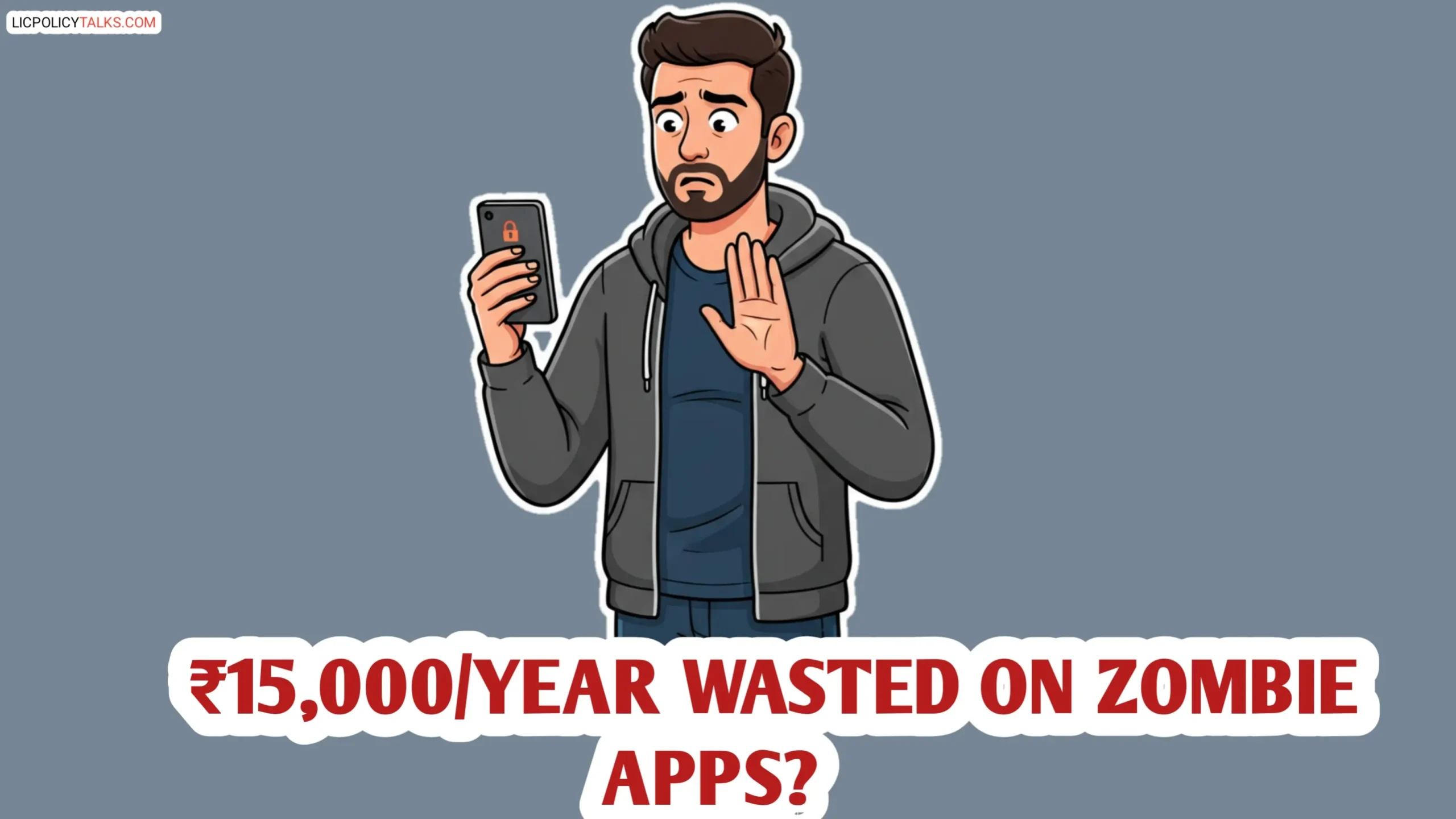
Let’s make this shockingly real. According to a 2026 analysis, the average person wastes over ₹15,000 annually on forgotten recurring payments. That’s not a one-time fee—it’s a slow, silent leak. Break it down: ₹1,250 every month, ₹288 each week, or ₹41 daily. Think about it: you might hesitate before buying a ₹41 samosa, but you’re likely letting that same amount vanish every single day for apps you never open.
We budget for coffee (the “latte factor”), but subscription charges are invisible. That ₹15,000 could be a domestic flight ticket, a solid contribution to your emergency fund, or groceries for a family for months. The true cost of these zombie subscriptions isn’t just the money lost, but the life experiences and financial security you’re sacrificing. This problem has exploded since 2020 with the “everything-as-a-service” model, turning our phones into monthly expense generators.
Annual Wasted Money on Subscriptions (2026)
Insight: Millennials waste the most on unused subscriptions, exceeding the national average by ₹1,500 annually.
What Exactly Is The ‘Subscription Trap’? (And Why You’re Already In It)
So, what is this subscription trap? It’s the vicious cycle of signing up for a “free” trial, forgetting about it, and then paying indefinitely for a service you don’t use. Those charges aren’t mistakes; they’re zombie subscriptions—dead to you but very much alive on your credit card.
Common triggers are everywhere: free trials that auto-renew into paid plans, the “set and forget” convenience of streaming, or bundled software suites where you only need one tool (like paying for all 20+ Adobe Creative Cloud apps just for Photoshop). The psychology is brutal: it’s an “out of sight, out of mind” effect, combined with “dark patterns”—design tricks that make cancellation confusing or emotionally difficult.
Escaping the subscription trap requires recognizing you’re in a designed system, not just dealing with personal forgetfulness. There’s also a hidden security risk. Unused accounts holding your personal data become vulnerable targets in data breaches. So, cutting unused app subscriptions isn’t just good for your wallet; it’s good for your digital safety.

The 45-Minute Subscription Audit: Your Step-By-Step Escape Plan
Ready to stop the bleed? Let’s do a financial “detox.” This subscription audit takes less than an hour and will change how you see your spending.
Step 1: The Statement Scavenger Hunt. Grab your last 3 months of bank and credit card statements (digital is fine). Search for keywords like “subscription,” “membership,” and look for vague merchant codes like “APL*” (Apple), “GOOGLE*”, “NTFLX”, etc. These are your clues.
Step 2: The Digital Footprint Check. Go directly to the source.
- iPhone/iPad: Settings → [Your Name] → Subscriptions.
- Android: Google Play Store → Profile → Payments & Subscriptions.
- Also check PayPal for “Automatic Payments” under Settings.
- iPhone/iPad: Go to the subscription in Settings (as shown in the audit) and tap “Cancel Subscription.”
- Android: Cancel via the Google Play Store subscription page.
- Web Services: Log into the service’s website directly, go to “Account” or “Billing,” and find the cancellation option.
- Bank/Card: As a last resort, you can contact your bank to stop automatic payments (a “stop payment” order), but it’s better to cancel at the source.
- Strategy 1: The Annual Payment Hack. For services you know you’ll use (like password managers), switch to annual billing. It’s often 15-20% cheaper. Data shows this simple switch can lead to significant savings.
- Strategy 2: The Calendar Block. The SECOND you sign up for a free trial, open your calendar and set a reminder for 2 days before it ends. “Decide on [App Name] Trial.”
- Strategy 3: The Designated ‘Subscription Card’. Use one specific credit or debit card ONLY for subscriptions. This makes tracking and managing all your recurring payments in one place incredibly simple.
- Strategy 4: Utilize Technology. Use your digital wallet’s card expiration alerts. Apps like Truecaller now have features to help track subscriptions. Let tech work for you.
- Strategy 5: The Mindful Sign-up Pause. Implement a 24-hour “cooling-off” rule before signing up for any trial. Ask, “Do I need this, or do I just want it right now?” This cultivates mindful spending.
Step 3: The Email Inbox Search. Search your email for “welcome to,” “your subscription,” “renewal,” “confirm your subscription,” and “invoice from.” This catches services you signed up for directly on a website.
Step 4: The ‘Value vs. Cost’ Evaluation. This is the most important part. For every subscription you find, ask: “When did I last use this?” and “Is this worth the monthly cost?” Use the scorecard below to decide. A quarterly subscription audit is your strongest defense against financial creep, a habit experts strongly recommend.
Subscription Audit Scorecard
| Subscription Name | Monthly Cost (₹) | Last Used | Rating (1-5) | Action |
|---|---|---|---|---|
| Streaming Service A | ₹699 | Yesterday | ⭐⭐⭐⭐⭐ | Keep |
| Cloud Storage 2TB | ₹660 | 3 months ago | ⭐⭐ | Downgrade |
| Meditation App | ₹299 | January 2025 | ⭐ | Cancel |
Insight: Immediately cancel any service you haven’t used in the last 30 days.
Cancelling Is Not Deleting: How to Actually Kill Zombie Subscriptions
Here’s the critical mistake most people make: deleting an app from your phone does NOT cancel the subscription. The payment keeps going. You must actively cancel. This principle is so important it has its own guide.
Platform Guide:
Always get a cancellation confirmation email—this is your proof if you’re wrongly charged later. Be ready for “retention offers.” If they offer a 50% discount to stay, ask yourself: “Would I pay even half for something I don’t use?” Probably not. Follow this checklist: 1) Cancel via the official channel, 2) Get email confirmation, 3) Check your next statement to ensure the charge has stopped.
The Proactive Defender’s Guide: Never Fall Into The Trap Again
Now, let’s build a system so you never have to do a major audit again. This is about smart subscription management.
These five strategies transform you from someone who reacts to charges into someone who controls their digital spending with intention.
Beyond Money: The Security & Mental Clutter You’re Also Saving
The benefits of escaping the subscription trap go far beyond your bank account. You’re also decluttering your digital life. Less digital clutter means fewer apps on your phone, less stress managing passwords, and a cleaner, quieter email inbox free of monthly invoices.
You’re also enhancing your security. Every active account is a potential entry point for data breaches. By closing unused accounts, you shrink your “attack surface.” Finally, there’s a profound psychological benefit: the peace of mind that comes from knowing exactly what you’re paying for and why. It’s financial clarity. It’s applying the principles of digital minimalism to your wallet, leading to a more intentional and less anxious relationship with your money.
FAQs: Your Subscription Trap Questions, Answered
Q: What’s the single fastest way to find all my active subscriptions right now?
Q: I cancelled a subscription but was still charged. What should I do?
Q: Are annual subscriptions always better than monthly?
Q: How often should I repeat this subscription audit?
Q: Can I get a refund for months I paid but didn’t use?
Let’s recap. The subscription trap is stealthy, but it’s completely beatable. You now have a clear, step-by-step plan: understand the drain, audit your commitments, cancel properly, and build proactive defenses. That ₹15,000 per year isn’t just a statistic; it’s your money, waiting to be reclaimed and put towards things that truly matter to you.
So, here’s your call to action: This week, schedule 45 minutes for your financial detox. Open your calendar right now and block the time. Take back control from the automated spending of the digital age. Your future self—and your wallet—will thank you for it.