
हाय दोस्तों! Picture this: you’re finally on that dream vacation. You’re at the gate, boarding pass in hand, and then… the dreaded announcement. Your flight is delayed. Not just an hour, but four. The frustration is real. But you think, “It’s okay, I have travel insurance.” Weeks later, after a mountain of paperwork, you get a denial letter citing some clause you never knew existed. Sound familiar? If you’ve ever felt that bait-and-switch feeling, you’re not alone. Today, we’re digging into a provocative question: is the old way of insuring against flight delays becoming completely useless? We’ll tear apart the traditional model, show you the automated alternative that’s defining 2026, and give you a clear strategy to protect your time and sanity.
This deep dive isn’t just about complaining; it’s about solutions. We’re going to dissect why standard travel insurance flight delays coverage often feels like a broken promise and introduce you to the “set-it-and-forget-it” model that’s changing the game. Let’s get to the truth.
The Anatomy of a Broken Promise: Why Traditional Flight Delay Coverage Fails
Your First Line of Defense: Airline Delay Compensation Rules (EC 261 & Similar)
Here’s something many travelers miss: before you even think about insurance, you might already have rights. Regulations like the EU’s EC 261/2004 mandate that airlines themselves compensate passengers for long delays, cancellations, or denied boarding on certain routes. This isn’t insurance; it’s a legal obligation. You can learn more about the specifics of these passenger rights from resources like this guide on airline delay coverage.
This airline compensation is often your best and first source of payout. However, it’s not a blanket solution. It has strict geographic and situational limits (e.g., typically applies to flights departing from the EU or arriving in the EU on an EU carrier). It also requires you to proactively file a claim with the airline, which can be its own bureaucratic battle. So, while powerful, it leaves significant gaps—which is where insurance was supposed to step in.
Where Traditional Insurance Is Supposed to Step In (But Often Stumbles)
In an ideal world, traditional travel insurance fills those gaps. Its role is to cover the costs that airline rules don’t: the extra meal during a three-hour wait, the unexpected hotel stay for an overnight delay, or situations where no regulatory compensation exists. Typically, these policies offer a payout structure like “$150 for every full 6-hour delay.” The problem isn’t the idea; it’s the execution. This coverage is usually a low-limit, tacked-on benefit buried within a larger policy, and its value is entirely dependent on a claims process that is famously fraught with friction.
The Fine Print Loopholes That Void Your Claim
This is where the promise breaks down. The devil is in the details, and traditional policies are full of them. The requirement for “official documentation on airline letterhead” is a classic—try getting that from a harried gate agent at midnight. Then there’s the labyrinth of definitions: a “mechanical delay” might be covered, but a “weather delay” might not. Did you check in exactly on time? If not, claim void. Does your delay threshold start from the original scheduled time or the time you were already at the airport? Many policies have exclusions for “air traffic control” delays, which are incredibly common.
Each of these is a trapdoor. You might have a valid delay, but one missed technicality gives the insurer a reason to deny. This systemic issue is why many experts are beginning to argue that for this specific use case, the traditional model is becoming traditional insurance worthless. The coverage seems to be designed more to limit payouts than to provide seamless protection.
The Real Cost: Time, Frustration, and Denied Claims
Let’s talk about the real user experience. The delay ends, your trip continues, but now you’re on the hook for the “claims process.” This means meticulously saving every receipt, filling out lengthy forms, writing statements, and then waiting. And waiting. Weeks later, you might get a payout, or you might get a denial letter pointing to a clause in section 4.2.B. The emotional and time cost is enormous—you’re essentially doing a part-time job to get what you were promised.
Data backs up this frustration. Studies and consumer reports consistently show high rates of confusion and denial for travel insurance claims, especially for seemingly straightforward issues like delays. This isn’t anecdotal; it’s a documented industry pain point, as highlighted in analyses of why insurance claim denied experiences are so common. When the process is so antagonistic and uncertain, the value proposition of the coverage erodes to near zero.
The 2026 Game-Changer: How Parametric Travel Insurance Actually Works
No Forms, No Fights: The Promise of Automation
Enter the antithesis to all that frustration: parametric travel insurance. Also called trigger-based or smart insurance, this model flips the script. Instead of paying you back for proven losses (indemnity), it pays a pre-agreed sum when a specific, verifiable event happens. Think of it like a vending machine: if the flight delay trigger is met (e.g., departure delay ≥ 3 hours), the payout drops automatically. No need to prove your picnic got soggy, just that it rained. This model relies on real-time data feeds (like flight tracking APIs) to monitor your trip. For a foundational look at this emerging model, sites dedicated to parametric travel insurance offer great insights.
The promise is pure simplicity and speed. It’s designed from the ground up for the digital age, aligning with the demand for real-time payout and smart travel protection. It acknowledges that in 2026, your time and peace of mind are the most valuable commodities.
The Core Mechanism: Trigger > Verification > Instant Payout
Let’s break down the magic into three simple, transparent steps. First, Trigger Defined: When you buy the policy, the trigger is crystal clear. “If my flight XXX is delayed at departure by 180 minutes or more.” No ambiguity.
Second, Automated Verification: When your flight date arrives, the insurer’s system automatically monitors it using trusted, independent data sources (like FlightStats or official airport databases). There’s no action required from you.
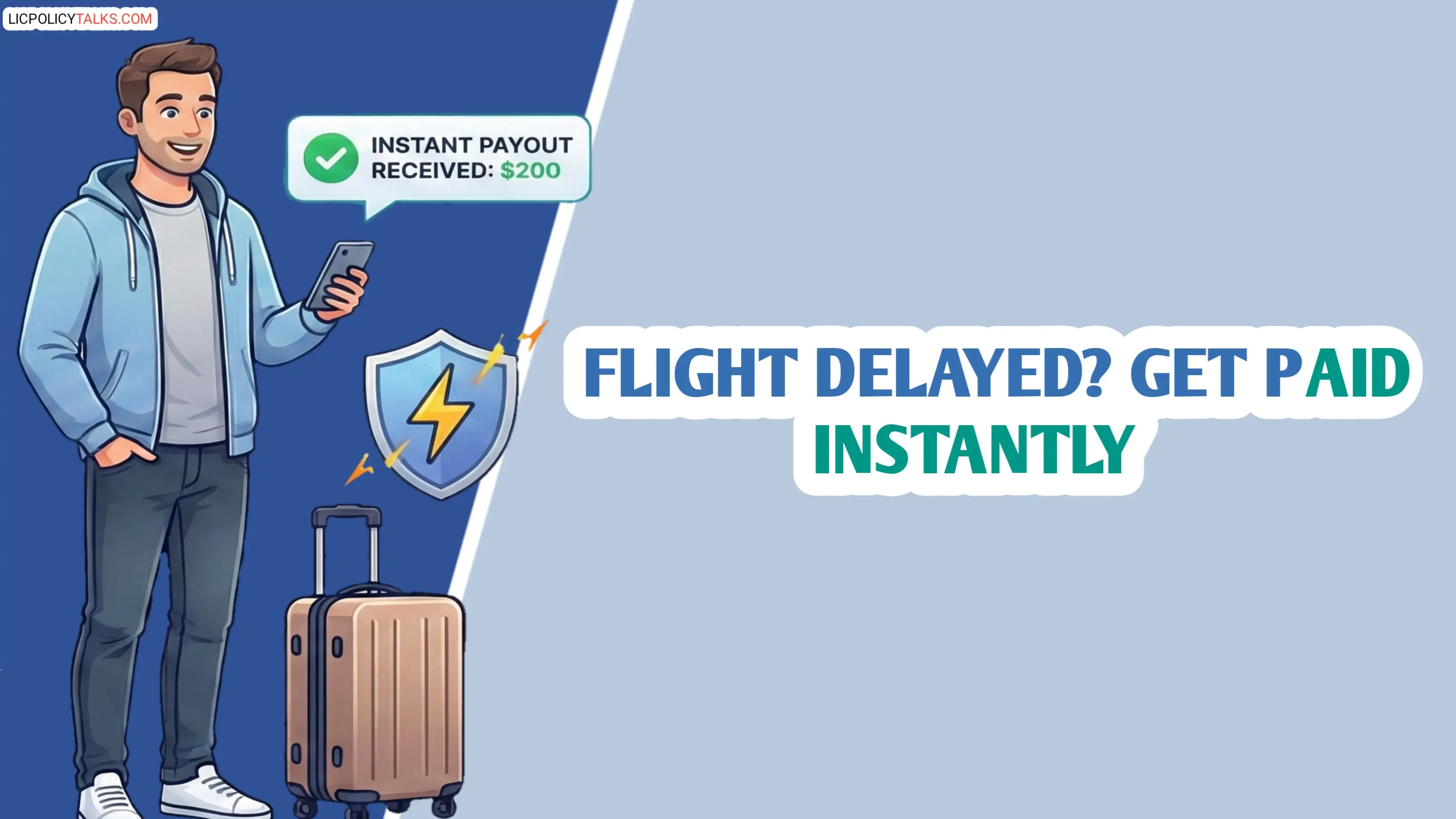
Third, Instant Payout: The moment the delay hits the 180-minute mark, the system validates it and initiates payment to your pre-linked debit card, digital wallet, or bank account. This often happens within 24-48 hours, sometimes even instantly. The entire process is devoid of human adjusters, claim forms, or subjective judgment.
The Claims Process: Night & Day Difference
Pros, Cons, and the Reality Check
Like any product, parametric insurance has its trade-offs, and being honest about them builds trust.
The Pros are transformative for delays: Blazing speed, total transparency (you know the exact trigger), zero claim hassle, and often a simpler, app-based purchase process. It directly solves the pain points we just detailed.
The Cons require a mindful approach: The payout is a fixed amount. If your extra costs are higher, you’re on the hook for the difference. Your protection is only as good as the trigger definition—”arrival delay” is different from “departure delay.” Finally, while growing fast, these products aren’t yet as ubiquitous as traditional policies.
| Aspect | Parametric (Smart) Insurance | Traditional Insurance |
|---|---|---|
| Payout Basis | Verifiable EVENT (e.g., 3-hr delay) | Proven FINANCIAL LOSS |
| Claim Process | Fully Automated, No Forms | Manual, Document-Intensive |
| Payout Speed | Within 24-48 Hours (Often Instant) | Weeks or Months |
| Certainty | High (If trigger hits, you get paid) | Low (Subject to adjuster & fine print) |
| Best For | Specific, time-sensitive inconveniences (Delays, Cancellations) | Large, complex losses (Medical, Evacuation, Trip Cancellation) |
The bottom line: For the specific, high-frequency problem of flight delays, parametric insurance isn’t just an alternative; it’s a superior solution. It aligns protection with actual consumer needs in 2026.
The 2026 Landscape: Why This Shift Is Accelerating
This move towards parametric protection isn’t a random fad; it’s the result of powerful converging trends. First, traveler demand has fundamentally changed. Post-pandemic, we value certainty and digital convenience more than ever. Waiting weeks for a claim feels archaic. Second, data proliferation has made it possible. Reliable, real-time flight tracking data is now a commodity, providing the perfect, objective trigger for these products.
Third, industry innovation is fueling it. InsurTech startups and even traditional insurers are now aggressively targeting this gap with user-friendly, app-based products. Finally, as these models gain consumer trust and prove their reliability, we can expect greater regulatory clarity to emerge around them. Analyst reports on 2026 travel trends consistently highlight the rise of hyper-personalized, on-demand, and automated travel protection as a key theme.
The expectation for a real-time payout is becoming standard in other financial services (like instant fraud resolution), and travel insurance is simply catching up. This creates a new category of smart travel protection that works for you in the background, turning a major travel pain point into a minor, quickly resolved inconvenience.
Your 2026 Travel Protection Strategy: A Practical Guide
The Hybrid Approach: Layering Your Coverage
So, what should you actually do? The smartest strategy is a hybrid, layered approach. Don’t think “either/or,” think “right tool for the job.” Step 1: Know Your Airline Rights. Always file for EC 261 or similar compensation first if applicable. It’s often the largest payout. Step 2: For Delay/Cancellation Speed, Go Parametric. Actively seek out a parametric or “smart” policy for 2026 trips. This is your fast-acting relief for the immediate hassle and costs. Step 3: For Catastrophic Risks, Keep Traditional. For serious, complex risks like medical emergencies, evacuation, or a major trip cancellation due to illness, a comprehensive traditional policy is still essential. The key is to buy each type intentionally for what it does best.
Your 2026 Protection Decision Flowchart
Fast Payouts
Parametric Insurance
Trip Interruption
Traditional Policy
Choosing a Parametric Policy: The 5-Point Checklist
Ready to shop for a parametric policy? Don’t just click “buy.” Use this checklist to ensure you’re getting a good product that fits the promise of smart travel protection.
| # | Checklist Item | What to Look For |
|---|---|---|
| 1 | Trigger Clarity | “Departure delay of ≥ 180 mins” is clear. Avoid vague terms like “significant delay.” |
| 2 | Data Source | Named, reputable provider (e.g., OAG, FlightStats, airport authority data). |
| 3 | Payout Speed & Method | Specific promise: “Within 24 hours to your debit card.” Not just “fast.” |
| 4 | Payout Amount | Is $250 enough for an airport meal/hotel? Match the sum to your likely needs. |
| 5 | Coverage Scope | Does it cover only delays, or also cancellations and missed connections? |
Doing this quick audit ensures you’re buying a transparent, effective product and not just a marketing gimmick. Your future, delayed-at-the-airport self will thank you.
FAQs: ‘insurance claim denied’
Q: If airlines already compensate for delays, why do I need any delay insurance at all?
Q: Does parametric travel insurance cover costs like extra meals and hotel stays, or is it just a cash payout?
Q: I have a premium credit card with travel insurance. Is that considered ‘traditional’ or ‘parametric’?
Q: Are parametric insurance payouts considered taxable income?
Q: What happens if the flight data source used by my parametric policy has an error and doesn’t register the delay?
So, is traditional travel insurance completely worthless? For comprehensive risks, absolutely not. But for travel insurance flight delays specifically? The writing is on the wall. Its value is crumbling under the weight of a terrible user experience—denials, delays, and fine-print fights.
The “shocking truth” is that a better way isn’t just coming; it’s already here and defining the 2026 travel trends standard. Parametric, automated insurance turns a major headache into a minor, quickly-resolved blip. As an informed traveler in 2026, your job is to be a strategic buyer. Scrutinize what each policy truly does, embrace models that align with a fast-paced, digital world, and layer your coverage intelligently. The technology to solve this old problem exists. It’s time your travel protection caught up.