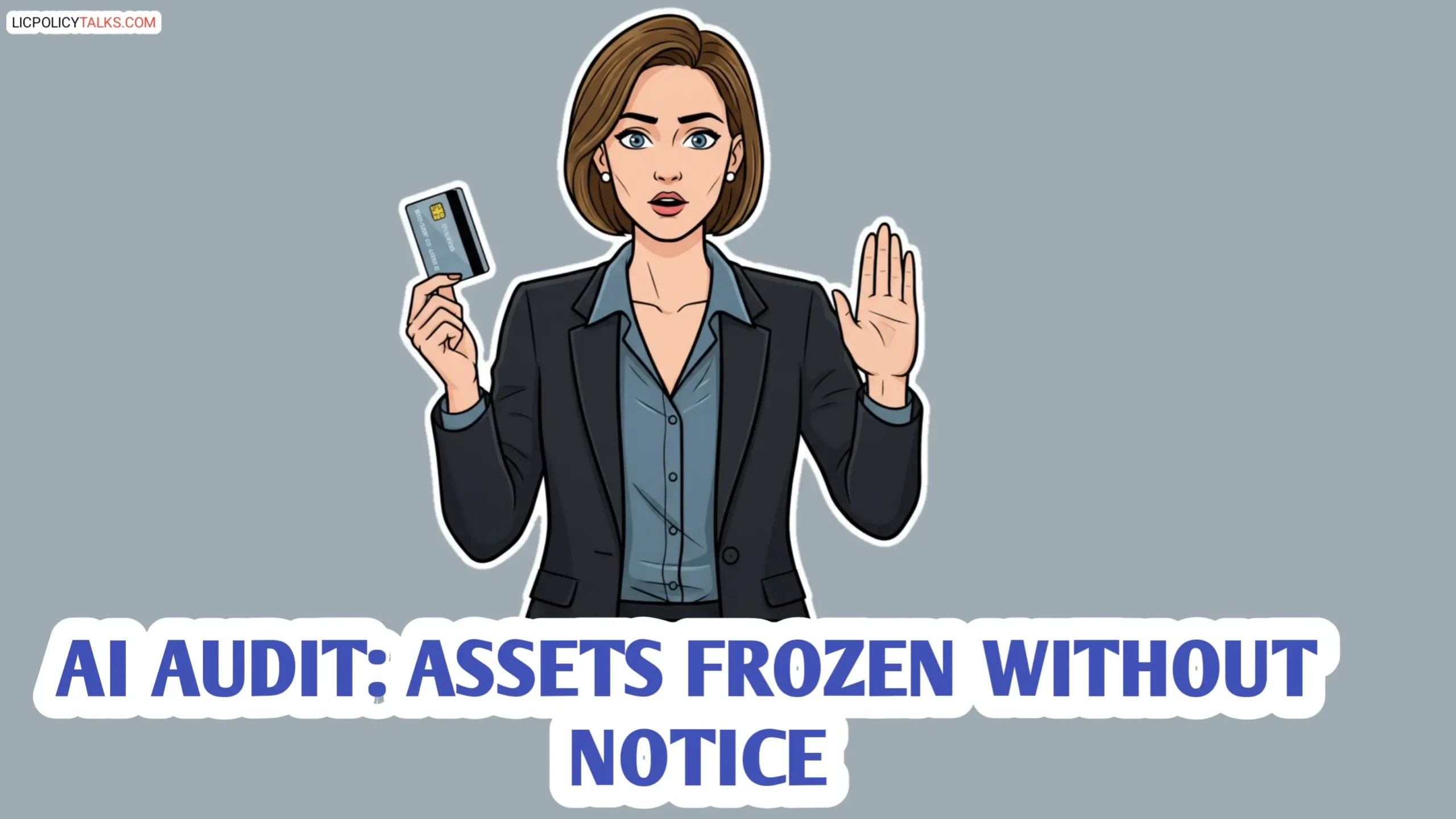
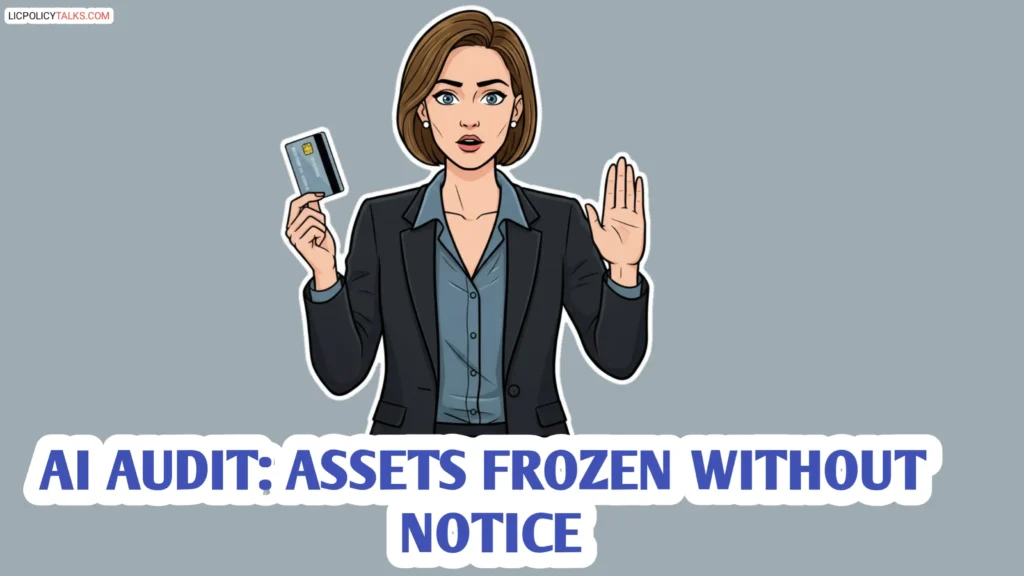
Hi friends! Picture this: you’ve finally bought that stunning villa in the Algarve or docked your new yacht in Marbella. Life is good. Then, out of nowhere, your cards stop working. Wire transfers bounce. You find a legal notice in your inbox: your assets are frozen. No call, no warning. Sounds like a nightmare, right? For a growing number of expats, this could become a startling reality by 2026. Today, we’re breaking down a looming financial enforcement shift that could turn your lifestyle into a liability. Let’s get into it.
This scenario is the core premise of the projected Unexplained Wealth Order 2026 (UWO 2026), the EU’s most aggressive tool yet, designed to use AI to link your spending to your income and freeze the difference. It’s a complete paradigm shift from investigating crime to investigating wealth itself.
Introduction: The Silent Alarm – Your Lifestyle Could Trigger an Asset Freeze
Imagine an expat in Spain finalizing a cash purchase for a luxury yacht. Weeks later, their bank accounts are inaccessible. The central, unsettling question is this: What if your wealth itself, not just its criminal source, becomes probable cause for seizure? This is the new world the Unexplained Wealth Order 2026 heralds.
We’re not talking about a single new law, but the powerful culmination of existing EU directives and bleeding-edge technology. The UWO 2026 represents a procedural revolution. Its core logic is simple but brutal: use continent-wide artificial intelligence to automatically flag when a person’s visible lifestyle and assets don’t match their declared income, then freeze the “unexplained” portion without prior notice. This moves us from manual investigation to automated suspicion.
The purpose of this guide is straightforward: to decode how this asset freeze mechanism will work, identify which high-spending expats are most at risk, and—most importantly—provide a concrete, actionable roadmap for proactive compliance. Knowledge isn’t just power here; it’s financial preservation.
What Exactly is the Unexplained Wealth Order 2026? Not a Law, But an Enforcement Revolution
First, let’s clarify: the “UWO 2026” is a projected evolution, not a statute currently on the books. It’s the anticipated result of trends like the 6th Anti-Money Laundering Directive (AMLD6) merging with full-scale AI audit capabilities. Think of it as a powerful new tool in the authorities’ kit, not a new rulebook.
At its heart, an Unexplained Wealth Order is a court order that forces an individual to explain the legitimate origin of specific assets that appear disproportionate to their known, lawful income. If the explanation is deemed unsatisfactory, authorities can freeze and eventually confiscate those assets.
Here’s the critical shift: a traditional audit requires authorities to find evidence of a crime. A UWO flips this. The burden of proof lands squarely on you, the asset owner, to prove the absence of crime in your wealth’s origin. This is a fundamental change in wealth investigation, with a much lower bar for authorities to clear to take action. As highlighted in analyses of similar mechanisms, the process can involve a ‘no notice’ freeze, where you’re tasked with proving innocence after your assets are already locked.
While the UK has had a UWO regime since 2018, the EU’s 2026 version is poised to be distinct in its sheer scale, deep automation, and seamless cross-border reach, making it a cornerstone of future EU regulations 2026 and financial compliance demands.
| Aspect | Traditional Audit | UWO 2026 (Projected) |
|---|---|---|
| Trigger | Discrepancy in filed returns | Lifestyle/Spending pattern flagged by AI |
| Burden of Proof | Largely on authorities | Shifts to the asset owner |
| Objective | Assess tax owed | Determine if *any* wealth is illicit |
| Notice Period | Weeks/Months | Potentially zero (‘No Warning’) |
| Primary Tool | Manual investigation | AI-driven data analysis & pattern recognition |
The Brain Behind the Freeze: How the EU’s AI-Audit System Will Work
The true game-changer is the EU AI audit system. This isn’t one program but a network of interconnected algorithms feeding data to national Financial Intelligence Units (FIUs). It automates the first and most crucial stage of wealth investigation: finding the suspect.
This AI’s “eyes” are everywhere. It ingests data from cross-border transaction platforms, property registries, luxury goods databases, corporate ownership records, and even analyses social media and travel data to gauge lifestyle. The goal is to build a holistic digital footprint, a capability detailed in explorations of AI-audit technical systems.
At its core, this system is about pattern recognition, not law. It creates a “financial profile” for you based on declared income and historical spending. Then, it scans for sustained, significant deviations. Think of a profile showing a €100,000 annual salary, suddenly linked to a €2 million property purchase. That’s an anomaly that screams for a closer look.
The process from red flag to freeze is chillingly efficient: 1) Anomaly Detection, 2) Automated Risk Scoring, 3) Referral to a human FIU lawyer, 4) Expedited court approval using the AI’s dossier as primary evidence, 5) A simultaneous, multi-jurisdiction asset freeze. This automated trigger process, as discussed in contexts like expatriate asset targeting, leaves little room for preemptive action.
The biggest challenge for the defense is the “black box” nature of AI decisions. How exactly did it score you? What weighted the decision? This opacity makes preparing a defense exceptionally difficult, as you’re arguing against a logic trail you can’t fully see.
The Target Profile: Is the High-Spending Expat the ‘Perfect Suspect’?
To the AI, a high-spending expat isn’t just someone with a high net worth. It’s an ideal data subject: a person with visible consumption, complex cross-border financial ties, and a life that creates rich “noise” perfect for algorithmic scrutiny. You’re not hiding, but your financial life isn’t simple, and that complexity is a risk factor.
Specific high-risk indicators include: 1) Large real estate purchases, especially in cash or via opaque international structures. 2) Sustained luxury spending on cars, boats, or art that doesn’t match declared professional income. 3) Frequent, large conversions from cryptocurrency to fiat currency. 4) Holding expatriate assets through layers of offshore or non-EU companies or trusts. 5) Having a declared profession with a known income ceiling (like “consultant” or “writer”) while maintaining a multi-millionaire lifestyle.
Expats are uniquely vulnerable. Their wealth is often generated outside the EU, making it harder for authorities to trace and verify—a key challenge noted in EU wealth investigation efforts. They may use tax-efficient structures that, while legal, appear deliberately opaque. Their financial history is often fragmented across multiple countries, making a cohesive “wealth story” harder to present quickly.
Here’s the empathetic truth many miss: A significant number of targets will be perfectly legal but poorly documented. The system’s inherent cruelty is its indifference to your intent; it flags discrepancies, not criminality.
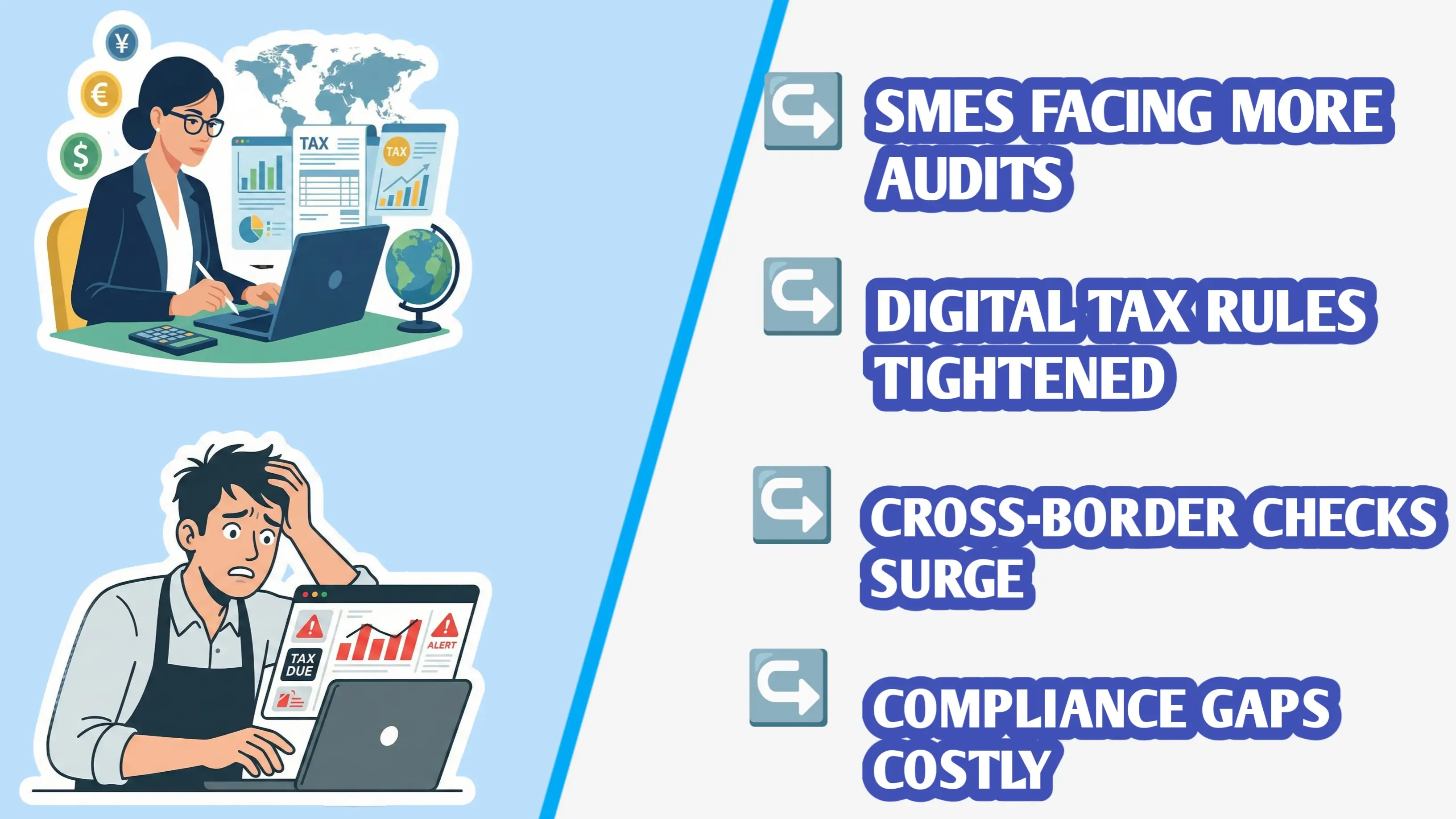
This AI-audit is part of a broader trend of automated enforcement, as seen in the spike of cross-border digital tax audits for SMEs.
Living in a ‘No Warning’ World: What an Asset Freeze Actually Looks Like
The moment of the freeze is where theory becomes brutal reality. It’s not a gradual process; it’s a digital guillotine. Your credit card is declined at a restaurant. A scheduled wire transfer to pay for a child’s tuition is rejected. An attempt to sell a property is halted by the land registry. All of this happens simultaneously and without a prior letter, email, or call. The operational and personal chaos is immediate and profound, a reality underscored by procedures described in ‘no warning’ freeze analyses.
Only after the freeze do you receive the formal UWO notice. This legal document demands a comprehensive, evidence-backed explanation for the origin of the specified assets. You’re typically given a tight deadline, such as 30 days, to respond. The clock starts ticking after your financial life has already been put on hold.
Challenging the order is legally possible but daunting. It requires a small army: specialized lawyers who understand UWOs, forensic accountants to trace decades-old transactions, and, most importantly, a mountain of documented evidence. Think original business sale contracts from 15 years ago, court-audited inheritance documents, gift deeds, and digitized bank statements from closed accounts. The cost can be astronomical, and victory is never guaranteed, highlighting why proactive financial compliance is essential.
Even if you win and the asset freeze is lifted, you face a “reputation freeze.” Your name has been flagged in banking systems as a high-risk client, leading to permanent, heightened scrutiny and potentially closed accounts.
Your 2024-2026 Action Plan: Building an AI-Proof Wealth Narrative
Now, let’s shift from the problem to your solution. This is about “compliance by design”—building a transparent, defensible story for your wealth before any algorithm gets curious. The time to act is now, as emphasized by the urgency in 2026 compliance planning.
Strategy 1: The Pre-Emptive Audit. Don’t wait for the state to audit you. Hire a specialist firm now to conduct a “UWO stress test” on your portfolio. Can you document the legitimate source of every major asset? This audit will identify gaps in your paper trail that you can proactively fill.
Strategy 2: Document, Document, Document. This is your single most powerful shield. Digitize and securely store every piece of proof: final sale agreements for businesses, inheritance wills with court stamps, decades-old bank statements showing seed capital, gift tax returns. Create a chronological, organized “wealth story” dossier that you could hand to a lawyer at a moment’s notice.
Strategy 3: Simplify Structures Where Possible. Tax efficiency is important, but weigh it against opacity risk. Does owning a Paris apartment via a Company in Cyprus held by a Trust in Jersey make sense if it becomes indefensible in a 30-day UWO response? Consider consolidating holdings for clarity and ease of explanation.
Strategy 4: Align Spending with Declared Income Streams. If you have substantial, legitimate capital from an old business sold abroad that wasn’t declared in the EU, consider formalizing its declaration. The key is to avoid the most glaring red flag: funding a multi-million euro lifestyle solely from a modest declared EU salary.
Strategy 5: Engage a Proactive Advisor. Your lawyer or accountant must understand UWO risks and wealth investigation tactics, not just local tax law. Their role should evolve to help you build and maintain a defensible financial profile, turning financial compliance into a strategic advantage.

Proactive documentation is critical because it will feed into systems like the EU’s planned Global Asset Register, a comprehensive tracker for crypto and property.
FAQs: ‘expatriate assets’
Q: If my assets are frozen under a UWO, can I access funds for basic living or legal fees?
Q: I’m a non-EU citizen (e.g., American, British) living in the EU. Does this apply to me?
Q: How far back in time do I need to document my wealth? Is there a statute of limitations?
Q: Will this AI target small inconsistencies or only major wealth disparities?
Q: Can I voluntarily disclose and explain my wealth structure to authorities now to avoid future issues?
Conclusion: Beyond 2026 – The End of Financial Opacity?
Let’s recap. The projected Unexplained Wealth Order 2026, supercharged by continent-wide AI, signifies a fundamental shift. We’re moving from a system that investigates specific crimes to one that investigates the very fact of significant wealth, with expatriates living complex financial lives squarely in the crosshairs.
The ultimate takeaway is this: the challenge isn’t merely regulatory; it’s technological. The future of financial safety belongs to those with a transparent, documented, and easily understandable financial history. Opacity is no longer a shield; in the eyes of an algorithm, it’s a target.
So, don’t wait for the freeze to force you into action. Use the window between now and 2026 to audit your holdings, document every major transaction, and strategize with proactive advisors. Your wealth’s greatest vulnerability may no longer be market volatility, but its inability to tell its own legitimate story to a machine that’s always watching.