
Hi friends! Let’s talk about a massive shift happening right under our feet. Remember the 2010s dream? Buying a sunny condo in Florida or a villa on Spain’s Costa del Sol was the ultimate smart-money move. Fast forward to today, and that same asset class is staring down a terrifying reality. This isn’t a market correction; it’s a fundamental rewiring of what makes property valuable. Today, we’re going to break down exactly why certain coastal properties are transforming from blue-chip assets into financial liabilities, and what you can do about it. You’ll get a clear diagnosis, a sobering 2026 forecast, and, most importantly, actionable strategies to protect your portfolio.
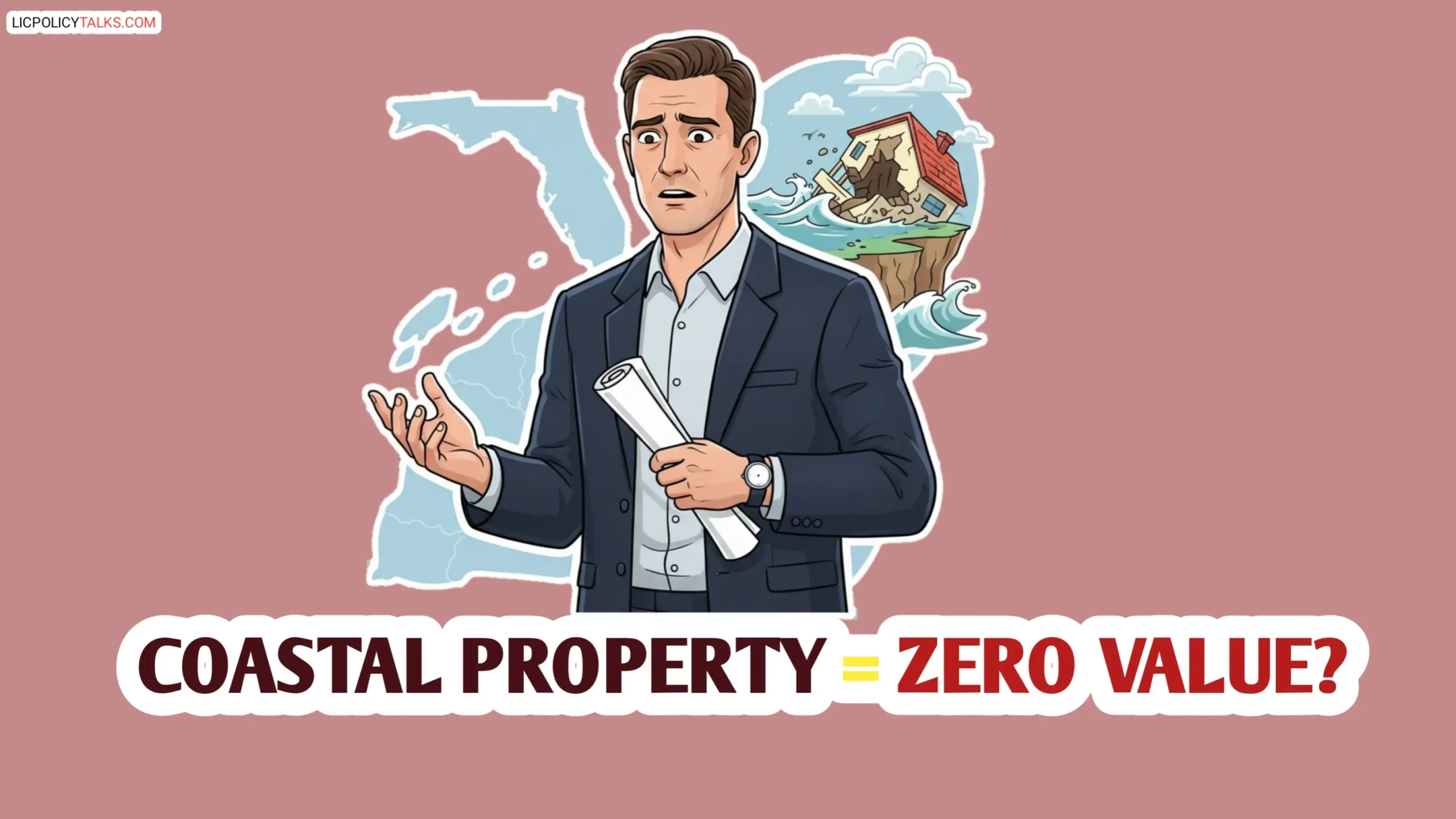
Here’s the core thesis: Due to converging climate and insurance market failures, specific coastal properties are transitioning from assets to liabilities, approaching ‘zero-value’ status for rational investors by 2026. We’ll explore two stark case studies: the market-driven insurance market collapse in Florida and the regulatory time bomb ticking under Spain’s tourist economy. The goal is to understand why an uninsurable coastal property is becoming a real threat and how to navigate it. As experts now warn, climate change is the property market’s most significant threat, forcing a complete reassessment of risk.
The Anatomy of an Uninsurable Asset: It’s More Than Just Floods
The Three-Legged Stool of Property Value (And Why One Leg is Shattering)
Think of traditional real estate value as a three-legged stool. First, you have Utility/Desirability (the view, the lifestyle). Second, Financiability (can someone get a mortgage for it?). Third, and most critically, Insurability. For decades, we took that third leg for granted. Without insurability, the entire stool collapses. Banks simply will not issue a mortgage without property insurance. When mortgages disappear, the pool of potential buyers shrinks to cash-only speculators who will demand massive discounts. We need to be clear: “uninsurable” doesn’t just mean expensive. It means coverage is literally unavailable at any price from the private market, forcing owners onto unstable, state-backed pools of last resort. This turns a high-risk property into a ticking time bomb for your investor asset protection strategy.
The Domino Effect: How Insurance Collapse Triggers Financial Devaluation
Let’s map the terrifying domino chain. Insurance carriers suffer massive climate-related losses. Their response: spike premiums and non-renew policies. Mortgage lenders see this and panic, imposing stricter lending rules (or pulling out entirely). The buyer pool shrinks dramatically. Prices stagnate, then fall. As the local tax base erodes, municipal services get cut, making the area less desirable and triggering further property value decline. This isn’t a theory; it’s a process already in motion. Sophisticated institutional funds are now pricing in a permanent “climate risk insurance discount.” As financial analysts are starting to warn, this systemic vulnerability could act as the catalyst for the next major financial crisis.
Case Study 1: Florida – The Free Market’s Canary in the Coal Mine
The Great Withdrawal: Why Top Insurers Are Fleeing the Sunshine State
The Florida insurance crisis is the clearest preview of this future. Since 2022, major carriers like Farmers, AAA, and Bankers Insurance have significantly reduced exposure or left the state entirely. The reasons are a perfect storm: catastrophic loss models rendered obsolete by stronger, wetter storms; rampant litigation costs from “assignment of benefits” scams; and punishing spikes in reinsurance prices (what insurers pay to insure themselves). The result? A staggering reliance on Citizens Property Insurance, the state’s insurer of last resort. Citizens is now the largest insurer in Florida, but it’s not designed for this—it’s undercapitalized and poses a massive, latent risk to every taxpayer in the state.
Visualizing the Crisis: The Florida Premium Death Spiral
This ‘death spiral’ prices out middle-class owners, leaving only cash buyers who demand steep discounts, collapsing the market.
Case Study 2: Spain’s Costa del Sol – A Tourism Paradise Facing a Financial Desert
The Regulatory Time Bomb: EU Directives and Bank Stress Tests
The driver in Europe is different but just as potent: regulation. EU-wide directives are forcing banks and insurers to rigorously stress-test their assets for climate risk under frameworks from the European Central Bank. Spanish banks, which hold huge portfolios of coastal mortgages, are starting to quietly devalue these assets on their books. This makes refinancing or selling a major headache. Furthermore, there’s growing talk of mandatory climate risk disclosure in property sales—imagine a “climate risk” section right next to the square footage. For a market heavily reliant on Northern European buyers seeking safe sun, this could be a profound chill on demand, threatening the very model of Spain coastal investment and turning it into a climate change real estate liability.
Side-by-Side: Florida vs. Spain Crisis Drivers
| Factor | Florida (USA) | Costa del Sol (Spain) |
|---|---|---|
| Primary Driver | Market Collapse (Insurer Withdrawal) | Regulatory/Economic Pressure |
| Speed of Crisis | Rapid (Years) | Gradual (Decade+) |
| State Backstop | Citizens Property Insurance (Unstable) | Consorcio de Compensación (More Stable) |
| Impact on Foreign Buyers | High (Financing Lock-out) | Very High (Demand Chill + Financing) |
| 2026 Outlook | Severe Price Stagnation/Collapse | Liquidity Freeze, Value Erosion |
While traditional coastal havens face existential threats, savvy investors are looking to emerging markets with stable legal frameworks and long-term growth potential.

The 2026 Forecast: Four Scenarios for Coastal Zombie Assets
Based on current trends, analysts outline several potential scenarios for how markets and societies might respond to this un-insurability crisis. First, Managed Retreat: governments buy out homeowners to abandon the riskiest zones. Second, Fortress Islands: only the ultra-wealthy who can self-insure remain, creating isolated enclaves. Third, Market Collapse: liquidity simply vanishes, and prices plummet with no buyers. Fourth, Regulatory Bailout: unsustainable, taxpayer-funded subsidies try to prop up the market. For Florida, a messy mix of Market Collapse and Regulatory Bailout seems likely. Spain may lean towards Managed Retreat and Fortress Islands. This leads us to a crucial term: the “zombie asset.” This is a property you can’t profitably sell or insure, but it still demands taxes and maintenance, slowly bleeding the owner dry. Our 2026 property forecast suggests a significant portion of at-risk coastal property will fall into this category.
The defining feature of the 2026 coastal market will be a stark divide between insurable, resilient assets and uninsurable, stranded liabilities.
Honestly, waiting to see which scenario plays out is not a strategy. It’s gambling with a depreciating asset. The physical and financial realities are aligning too powerfully. The successful investor will be the one who reads this data and acts in 2024-2025, not the one reacting to headlines in 2027.
The Investor’s Playbook: How to Protect Your Portfolio Before 2026
Exit Strategy Audit: Questions for Every Coastal Holding
It’s time for a brutally honest audit. For every coastal property in your portfolio, ask: When does my insurance policy come up for renewal? What is my insurer’s financial stability rating (look for A.M. Best ratings)? Has my bank or mortgage servicer inquired about updated climate risk assessments? Most critically, what is the year-over-year percentage change in my premium versus the property’s appreciation? If costs are rising 3x faster than value, you have your answer.
Divesting from high-risk coastal property requires identifying high-potential, lower-risk opportunities. One surprising market attracting strategic capital is…

Beyond the Coast: Reallocating Capital for Resilience
The new mantra is no longer “location, location, location” but “resilience, liquidity, fundamentals.” Consider reallocating capital into real asset classes that benefit from these trends: inland or secondary cities in stable regions, climate-resilient infrastructure projects, agricultural land with secure water rights, or markets with strong demographic growth and favorable visa policies (like the one linked above). This is about proactive investor asset protection and finding the next wave of coastal real estate investment stability, which may be far from any coast.
FAQs: ‘climate change real estate’
Q: My Florida/Spain property has doubled in value since I bought it. Isn’t this crisis overblown?
Q: Can’t I just go without insurance if it’s too expensive?
Q: Will the government ultimately bail out coastal homeowners?
Q: Are *all* coastal properties in Florida and Spain bad investments?
Q: What is the single most important metric to watch right now?
Facing the Inevitable: From Speculation to Stewardship
The crisis of the uninsurable coastal property isn’t a temporary blip or a cycle to wait out. It’s a permanent regime shift driven by undeniable physical and financial realities. The data from Florida and Spain are not outliers; they are leading indicators. The conversation around climate change real estate is moving from the theoretical to the brutally practical.
The successful investor of 2026 will not be the one who held onto a sunny dream from 2010. They will be the one who saw this data in 2024 and had the courage to move capital from legacy liabilities to future-proof assets. This is the moment to transition from passive speculation to active stewardship of your wealth. It’s time to build a portfolio that can weather the storm, literally and financially.