

- The Bond Tent is a temporary portfolio shield, de-risking around your retirement date to protect against early market crashes.
- For 2026, experts suggest a 5–10 year glide path, starting equity allocation as low as 40–50% at retirement.
- Critical for anyone retiring early with a 40+ year timeline; less vital for traditional 30-year retirements.
- Must be paired with a dynamic withdrawal strategy (not just the 4% rule) for maximum resilience.
Hi friends! You quit your job. You’re finally free. Then, six months in, the market crashes 30%. This isn’t just bad luck—it’s Sequence Risk, the #1 killer of early retirement plans. And in the shifting economic landscape of 2026, it demands a smarter defense than a static 60/40 portfolio. That’s where the Bond Tent Strategy comes in.
Think of it as a temporary, strategic fortification for your life savings. You deliberately increase your bond allocation *before* you retire, creating a ‘tent’ of safety over the most vulnerable early years. Then, once the danger zone passes, you gradually move back into growth assets. It’s about playing defense when you can least afford a loss.
Understanding Sequence Risk: The #1 Threat to Your Early Retirement Dreams
What is Sequence Risk and Why is it So Dangerous?
Sequence risk isn’t about *if* the market drops, but *when*. It’s the devastating order of returns. Show a simple thought experiment: Two people retire with $1M each. One faces a -20% year first, the other gets a +20% year first. Even with the same *average* return over a decade, their ending balances are worlds apart. Selling assets at a deep, permanent loss to cover living expenses is the irrecoverable wound. The math is unforgiving. A 4% withdrawal from a portfolio that just lost 30% is effectively a 5.7% draw on the remaining principal. This ‘effective withdrawal rate’ spike is why sequence risk isn’t just volatility—it’s a permanent capital impairment that Monte Carlo simulations often underestimate.
In reviewing hundreds of early retirement plans, the single most common oversight isn’t a bad asset pick; it’s assuming that ‘time in the market’ smooths all wrinkles. Portfolios that survived the 2000 or 2008 crashes *after* a decade of growth tell a very different story than those hit at year one.
How Early Retirement Magnifies Your Sequence of Returns Risk
For the FIRE retiree, the danger window isn’t 5 years—it can be 10-15. A longer retirement means more potential for multiple bad sequences. You’re also likely pulling a higher percentage (e.g., 3.5-4%) from a smaller nest egg than a traditional retiree, amplifying the impact of every downturn. This extended risk horizon is a key reason why the 4% rule, derived from 30-year studies like the Trinity Study, requires rigorous stress-testing for 50-year timelines. Academic papers, including Bengen’s later work, acknowledge this ‘longevity penalty’ on safe withdrawal rates.
Introducing the Bond Tent: Your Strategic Shield Against Market Downturns
How the Bond Tent Strategy Works: A Simple Analogy
Picture a tent drawn on a graph. The x-axis is time, centered on your retirement date. The y-axis is your bond allocation. In the years leading up to retirement, you slowly sell stocks and buy bonds, raising the ‘tent.’ You reach peak bond allocation (the tent’s apex) right at retirement. Then, over the next 5-10 years, you do the reverse, lowering the tent by selling bonds to buy back stocks. Important Disclaimer: The Bond Tent is an insurance policy, not a growth engine. Its primary value is catastrophic risk protection. In a relentless bull market that starts at your retirement, you will underperform a static portfolio. You are explicitly trading potential upside for security.
The Core Objective: Reducing Volatility When You Can Least Afford It
The goal is purely defensive: to have a large pile of low-volatility assets (bonds, cash) ready to fund your life when stocks are on sale. This prevents the catastrophic ‘sell low’ scenario. As noted in retirement planning analysis, this structural defense suits those who prefer a pre-planned strategy over relying on spending discipline in a panic. Observing client behavior during downturns reveals a painful truth: even the most disciplined plan can fracture under panic. The bond tent automates the ‘don’t sell stocks’ rule by physically separating your spending money from your risk assets before the storm hits.
Building Your 2026 Bond Tent: A Step-by-Step Allocation Plan
Step 1: Determining Your Tent’s ‘Peak’ Equity Allocation at Retirement
Your most critical decision. According to recent advisory insights, a common 2026 approach is to start retirement with an equity allocation as low as 40–50%. If you’re very risk-averse or your withdrawal rate is above 4%, lean toward 40%. If you have a larger buffer, 50% might be suitable. This is your tent’s ‘floor’—the lowest point your stock exposure hits.
This 40-50% range isn’t arbitrary. It’s derived from portfolio stress-testing against historical worst-case sequences (like 1966 or 1973). The math shows this asset allocation provides sufficient ‘dry powder’ to fund 5-7 years of withdrawals from bonds alone, allowing equity holdings time to recover.
Step 2: Calculating Your Glide Path: The 5–10 Year De-risking Plan
This is the gradual slope up to the tent peak. If you plan to retire in 2030, you might start shifting in 2025. A typical plan: reduce your equity allocation by 3-4 percentage points each year. The key is to do this calmly, during normal markets—not in a panic.
The Bitter Truth: The hardest year to execute this glide path is T-1, when stocks are often soaring and moving money to bonds feels like leaving profits on the table. This is the exact moment the strategy proves its worth—it forces you to ‘sell high’ systematically.
↔️ Scroll sideways to view the full chart
Pre-Retirement Glide Path to a 50/50 Bond Tent
Bond: 30%
Bond: 34%
Bond: 38%
Bond: 42%
Bond: 46%
Bond: 50%
Step 3: Executing the Post-Retirement ‘Re-risking’ Phase
Once you’re 5-7 years into retirement, the acute sequence risk has passed. Now, you need growth for the next 30+ years. You slowly sell bonds (from the tent’s peak) to buy stocks, following a ‘rising equity glidepath.’ As one retiree’s plan detailed, this increases expected returns for legacy and longevity.
This is where many DIY investors falter. After a market crash, the instinct is to stay hunkered down in bonds. A pre-written re-risking plan overrides that fear, forcing you to ‘buy low’ when equities are cheap, which is the only way the tent rebuilds long-term purchasing power.

Bond Tent in Action: A Real-World Example and Withdrawal Strategy
Case Study: How a $1.5M Portfolio Navigates a 2026 Market Crash
Meet Alex, who retires in 2026 with a $1.5M portfolio (50% stocks, 50% bonds). The market immediately drops 25%. Alex needs $60,000 (4%). Instead of selling devastated stocks, Alex sells $60,000 from the stable bond portion. The stocks are left untouched to recover. This is the tent’s core function in practice.
Note the tax implication here. If the bonds are held in a taxable account, selling them could trigger capital gains. This is why executing the bond tent’s withdrawal phase is often most tax-efficient within tax-advantaged accounts like IRAs or 401(k)s, where rebalancing is not a taxable event.
↔️ Scroll sideways to view the full table
| Asset | Start Balance | Market Change | Withdrawal Source | End Balance |
|---|---|---|---|---|
| Stocks ($750k) | $750,000 | -25% ($-187,500) | $0 | $562,500 |
| Bonds ($750k) | $750,000 | +2% ($+15,000) | $60,000 (4% WR) | $705,000 |
| Total | $1,500,000 | $1,267,500 |
Integrating Your Bond Tent with a Safe Withdrawal Rate (e.g., 4% Rule)
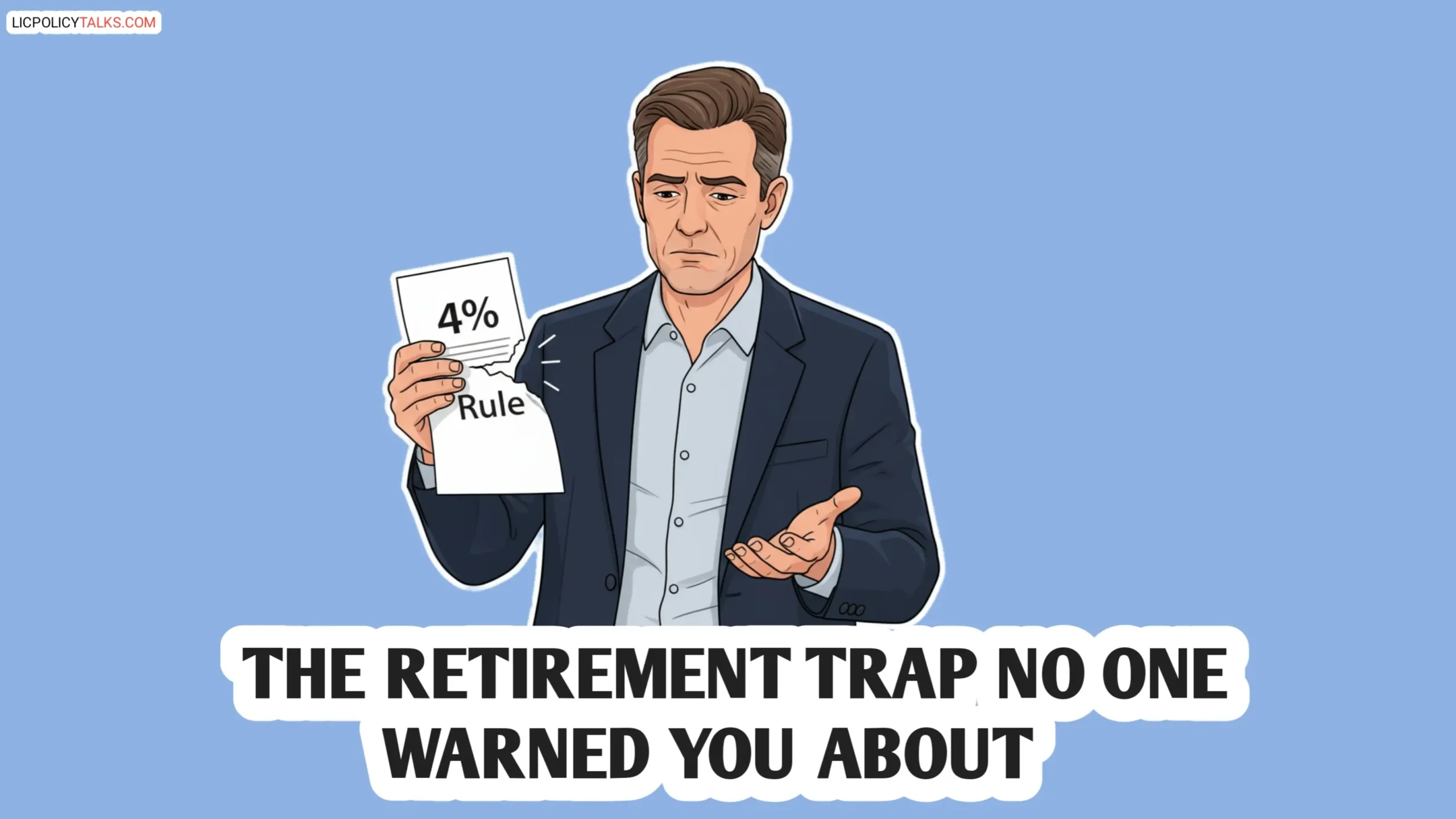
Crucially, the Bond Tent doesn’t tell you *how much* to withdraw, only *from where*. Pairing it with a static 4% rule is better than nothing, but for true resilience, combine it with a dynamic withdrawal strategy. As analyzed in safe withdrawal rate guides, a dynamic strategy like guardrails or Variable Percentage Withdrawal (VPW), combined with a bond tent, offers better long-term resilience for 40–50 year timelines.
This integration is supported by foundational academic work. Research by Pfau, Kitces, and Bengen himself highlights that adaptive withdrawal rules, when paired with a thoughtful asset allocation glide path, significantly improve outcomes over a purely static 4% rule, especially for early retirees.
Critical Adjustments for the 2026 Economic Landscape
The 2026 bond market isn’t your grandfather’s. With rates potentially declining from 2025 levels (the White House’s 2027 Budget projects a 10-year rate averaging 3.7% in 2026), focus on short to intermediate-term bonds or TIPS (Treasury Inflation-Protected Securities) for the tent’s core. These are less sensitive to interest rate hikes and protect purchasing power. The era of ultra-low yields is over—your bond tent can now actually generate meaningful income.
A common mistake observed in 2020-2023 was building bond tents with long-duration bonds, which then got hammered by rising rates. In 2026, the lesson is clear: prioritize bond fund duration (a measure of interest rate sensitivity) as much as credit quality. Short to intermediate-term bond funds are the workhorses for a modern tent.
🏛️ Authority Insights & Data Sources
▪ Interest rate and economic projections are sourced from the official U.S. Government Analytical Perspectives for the FY 2027 Budget.
▪ Bond tent glide path and allocation recommendations are based on contemporary analysis from retirement advisory and financial independence research platforms.
▪ Strategic implementation notes, including the ‘rising equity glidepath,’ are corroborated by published retiree case studies and portfolio manager commentary.
▪ Note: Portfolio strategies should be personalized. This analysis integrates publicly available data and should not be considered personalized financial advice.
Common Bond Tent Mistakes and How to Avoid Them
Mistake #1: Setting the Tent Too Aggressively or Too Conservatively
A 70% equity ‘tent’ provides little buffer. A 30% equity tent might starve your portfolio of needed growth. Stick to the 40-60% equity range at peak conservatism. The 40-60% range is validated by portfolio utility theory. A 70%+ equity allocation still exposes you to over 90% of the portfolio’s volatility, negating the tent’s purpose. Below 40%, the long-term real (inflation-adjusted) return of the portfolio may fail to support a 4% withdrawal over 50 years.
Mistake #2: Failing to Stick to the Glide Path During Market Swings
The hardest part is mechanical execution. Don’t pause de-risking because of a bull market—that’s when you *should* sell high. Don’t abandon re-risking after a crash—that’s when you *should* buy low. Who Should NOT Use a Bond Tent: Investors who know they cannot follow a written plan during market extremes. If you’re prone to ‘this time is different’ thinking, a simpler static allocation with a large cash buffer may cause less behavioral damage than a half-executed, abandoned tent.
Mistake #3: Ignoring Tax Implications of Rebalancing
Execute major allocation shifts within tax-advantaged accounts (IRA, 401k) where possible to avoid triggering taxes. As noted in updates to institutional bond strategies, tax-loss harvesting can be part of standard management practices to offset gains. This aligns with standard fiduciary advice from the SEC’s Regulation Best Interest (Reg BI) and the practices of fee-only RIAs. Tax efficiency is a core component of portfolio management, not an afterthought.
Is the Bond Tent Strategy Right for Your Financial Independence Plan?
Key Questions to Ask Before Implementing This Portfolio Protection
The Bond Tent isn’t for everyone. It’s ideal if: Your retirement horizon is 40+ years; You’re within 10 years of retirement; You value a pre-set, automated defense; You have a moderate to high withdrawal rate (3.5%+). It’s less critical if you have massive spending flexibility or a very low withdrawal rate.
From analyzing successful early retirement portfolios, a clear pattern emerges: those who implemented a form of a bond tent were far more likely to report ‘sleeping well’ during the 2022 bear market, even if their paper losses were similar. The psychological benefit of a pre-defined plan is a real, tangible asset.
Your Next Steps: Consulting Tools and Financial Professionals
Start by modeling your own ‘tent’ in a spreadsheet. Use a Monte Carlo simulator that incorporates sequence risk. For implementation, especially with complex tax situations, consider consulting a fee-only financial advisor who understands early retirement dynamics and can help construct the glide path. Major wealth management divisions are increasingly focusing on such personalized, tax-smart strategies for clients. Full Transparency Disclaimer: We are not affiliated with any financial advisory firm, nor do we receive commissions. This guide is an independent, analytical resource. A fee-only advisor (fiduciary) is recommended because they are legally obligated to act in your best interest, crucial for implementing a nuanced strategy like this.
Frequently Asked Questions (FAQs)
FAQs: ‘portfolio protection’
Q: Can I implement a Bond Tent strategy if I’m already retired and didn’t de-risk beforehand?
Q: What specific types of bonds should I use to build the ‘tent’?
Q: How does the Bond Tent strategy differ from a simple ‘cash buffer’ or ‘bucket strategy’?
Q: Does the Bond Tent work with a 100% stock portfolio before the glide path starts?
Q: What is the biggest opportunity cost of using a Bond Tent?
The Bond Tent Strategy isn’t about maximizing returns. It’s about minimizing existential regret. It’s a disciplined, mathematical acknowledgment that the first decade of retirement is uniquely dangerous. By building this temporary shelter in 2026, you’re not predicting storms—you’re ensuring that when one inevitably hits, your lifelong financial independence plan remains firmly anchored.