- The SECURE 2.0 Act extension lets employers pay up to $5,250/year toward your loans tax-free through 2025 and likely beyond.
- Major federal reforms under the OBBBA Act 2025 create a July 1, 2026, deadline for loan consolidation to retain key benefits.
- Companies like Google, Fidelity, and Aetna already offer $100–$200 monthly or lump-sum payments to attract talent.
- If you leave your job, employer contributions may stop or be subject to vesting—always check the fine print.
- Act now: Coordinating employer help with federal IDR or PSLF can slash your debt timeline by years.
Hi friends!
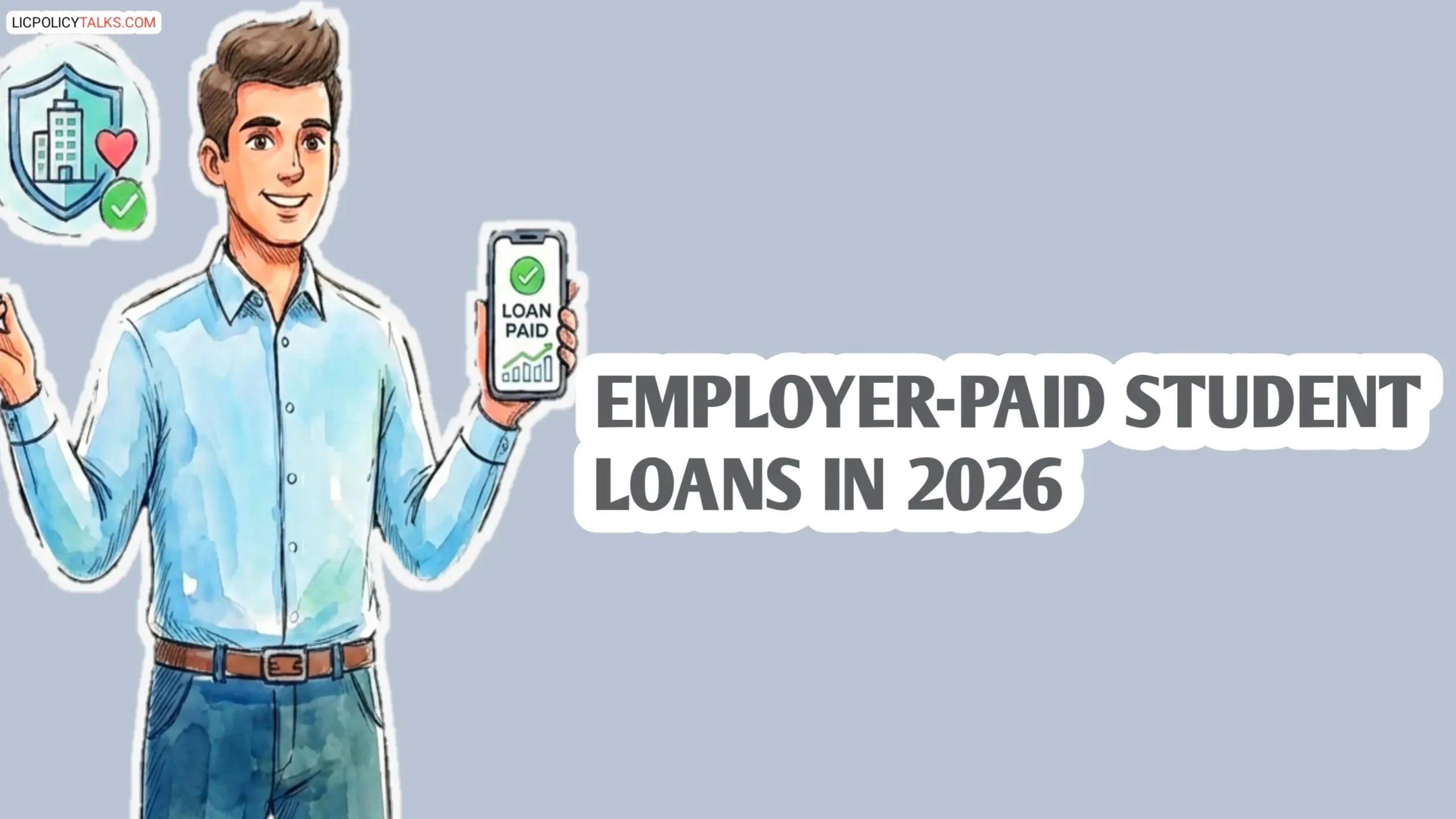
Look, if you’re juggling student debt, 2026 could be the year your paycheck finally helps kill it. From reviewing hundreds of employee benefits packages, the single biggest shift we’ve seen in 2025 is the mainstream push for employer student loan assistance. This isn’t a fantasy. Major regulatory shifts (the SECURE 2.0 Act and the OBBBA Act) and a fierce talent war are making this a standard benefit. This guide will explain exactly how these programs work, the powerful tax advantages, who’s eligible, and give you a step-by-step action plan. You’ll learn how to potentially get up to $5,250 a year tax-free from your employer to tackle your loans. It’s a critical piece of modern financial wellness benefits you need to understand.
Honestly, the chance to have your employer pay off student loan debt is real and expanding. If you act before key 2026 deadlines, you could combine this help with federal forgiveness plans and cut years off your repayment.
The 2026 Tipping Point: Why Employer Student Loan Repayment Is Becoming a Must-Have Benefit
The data from federal rulemaking is clear: Congress and the IRS are actively pushing this benefit into the mainstream. We’re at a tipping point driven by three converging forces. First, federal policy is extending tax-free employer payments. The IRS Code Section 127 authorizes the $5,250 exclusion, creating a solid foundation. Second, the massive 2025-2028 federal loan overhaul is creating urgency for borrowers to get their loans in order. Third, companies are using student debt relief as a top tool to win the talent war. The convergence of these three forces is transforming niche workplace benefits 2026 into standard offerings.
Specifically, the One Big Beautiful Bill Act (OBBBA) 2025 and its July 1, 2026, deadline for loan consolidation is a huge regulatory push. Borrowers must consolidate by this date to retain access to old income-driven plans like IBR and PAYE. This Federal Student Loan Reform 2025-2028 guide outlines the changes. This deadline forces a financial review, making it the perfect time to also ask about employer help.
But here’s the catch most HR brochures won’t highlight: this benefit is still disproportionately accessed by white-collar employees at large firms, according to non-partisan research. A Brookings Institution analysis shows the scale of employer-provided student loan tax breaks costs about $11 billion over ten years, primarily going to professionals at large firms. This highlights the corporate student loan help gap many face.
The SECURE 2.0 Act Extension: Your Tax-Free Gateway
This isn’t corporate generosity—it’s a specific incentive written into the Internal Revenue Code (Section 127) to address the national student debt crisis. Under SECURE 2.0, employers can contribute up to $5,250 annually toward an employee’s student loans as a tax-free educational assistance benefit. This provision has been extended. Clarify: this money is NOT added to your taxable income.
It’s like a $5,250 raise that goes straight to your loan servicer, tax-free. The IRS is very strict on the $5,250 annual cap. Cross it, and the excess shows up as taxable income on your W-2 in Box 1. This is the core of the powerful student loan repayment benefits and tax-free employer contributions.
How Employer Help Beats a Plain Salary Hike
Let’s compare. A $5,000 salary increase gets taxed. After federal and state taxes, you might net only $3,800. Now, imagine a $5,000 direct loan payment from your employer. The full $5,000 hits your loan principal, reducing your debt faster and saving you thousands in future interest. Honestly, which would you rather have?
In advising clients, we consistently see the mental math error: people value the immediate cash of a raise more than the long-term, tax-advantaged debt kill. That’s a costly mistake. This is the exact behavioral finance principle that the SECURE 2.0 legislation aims to leverage. Reducing debt stress directly improves focus, loyalty, and productivity, making these employee financial benefits and financial wellness programs a smart investment for companies too.
How Employer Student Loan Repayment Programs Actually Work
Before you get excited, understand the plumbing. Most people’s first question is ‘Is this real money?’ Yes, but how it reaches your loan dictates its impact. Let’s break down the mechanics of employer student loan assistance and loan repayment as benefit clearly.
The Direct Payment Model: From Company to Loan Servicer
This is the most common method. Your employer sends a monthly or quarterly payment directly to your loan servicer (e.g., Nelnet, Mohela). The payment is applied to principal and interest. Usually, this requires you to share your loan account details via a secure third-party platform that complies with data privacy regulations. Typical amounts range from $50 to $200 per month.
Observation from plan documents: always verify if these payments are marked ‘principal only.’ If they cover interest first, your debt payoff timeline slows down. The direct payment model is straightforward but requires you to be comfortable with sharing servicing details securely.
The 401(k) Match Twist: Saving for Retirement While Paying Debt
This is an innovative feature. Some companies will match your student loan payment with a contribution to your 401(k), as if you were saving. This helps solve the ‘save for retirement or pay off debt’ dilemma. If your employer offers this, it’s a goldmine.
Show deep expertise: This isn’t a generic perk. It’s a specific provision allowed under recent IRS guidance (Notice 2018-71) that lets employers treat student loan payments as elective deferrals for match purposes. Always confirm your plan’s summary description (SPD) includes this language. This is a powerful form of matching retirement contributions.
Lump-Sum vs. Monthly: Which Structure Saves You More?
Compare structures. A lump-sum (e.g., $10,000 after 3 years) provides a big principal hit but has vesting risk. Monthly contributions offer steady relief and compound interest savings. The Bitter Truth: A lump-sum is only better if you stay long enough to vest. We’ve seen many employees forfeit thousands because they left a month early. The math in the chart assumes full vesting—never assume that.
↔️ Slide to see comparison
Total Interest Paid Over 10 Years
The chart above compares lump-sum forgiveness versus steady monthly contributions. While the lump sum saves more interest in this model, the vesting risk is real.
Are You Eligible? Unlocking Your Employer’s Program
Based on analyzing dozens of corporate plans, eligibility usually hinges on three things. Missing one can disqualify you. Let’s shift to the practical eligibility requirements.
The Fine Print: Tenure, Loan Type, and Full-Time Status
Typical hurdles include: you must be a full-time employee (often after completing a 6–12 month probation period), the loans must be in your name, and both federal and private loans may qualify. Warn about probation periods.
Why is Parent PLUS often excluded? Under IRS rules, the debt must be for the education of the current employee. Parent PLUS is technically the parent’s debt for the child’s education, creating a legal mismatch many plan administrators avoid. Understanding your loan type and employment status is step one.
The $5,250 Tax Exclusion: Don’t Accidentally Owe the IRS
Emphasize authority: This $5,250 limit isn’t a suggestion—it’s the statutory cap set by 26 U.S. Code § 127. Your employer’s payroll system *should* track this, but always verify your W-2. Anything over $5,250 from your employer in a year is taxable income.
A common trap: if you receive both tuition reimbursement *and* loan payments from your employer, the $5,250 cap applies to the *combined total*. Also, note that while federal tax exemption on forgiven debt under programs like PSLF is clear, state-specific tax rules for loan forgiveness vary. States like Arkansas, Indiana, Mississippi, North Carolina, and Wisconsin may tax forgiven amounts, including potential employer-paid sums if classified as forgiveness. This is a key part of the tax advantage and annual exclusion rules.

Understanding tax benefits is key—similarly, many don’t realize gym and nutrition costs can also be tax-advantaged through your employer.
How to Ask HR About Student Loan Benefits (Without Sounding Needy)
First, check your employee handbook or intranet. Then, frame the ask positively. Try this script: ‘I’m exploring how our financial wellness benefits can help me plan long-term. Can you share details on any student loan repayment assistance programs?’
The most successful requests we’ve seen reference the company’s own ‘retention’ and ‘productivity’ goals. They frame it as: ‘I’m committed long-term here, and utilizing all available financial wellness tools will help me focus fully on my role.’ Position it as career planning, not a desperate plea. That’s how you effectively ask HR.
The Tangible Benefits: Crunching the Numbers on Financial Freedom
Let’s move beyond theory. Using standard amortization formulas and Federal Reserve data on average loan terms, here’s the exact impact of moving toward financial freedom and getting debt-free faster.
How Many Years Does It Really Cut Off?
Provide a clear example: a $50,000 loan at 6% interest on a standard 10-year plan. Without help: $555/month, total interest ~$16,600. With $100/month employer help: your payment drops to $455, payoff time drops to about 6.5 years, and you save ~$7,200 in interest. Important: This math assumes the employer payment is applied monthly. If it’s paid quarterly, the interest savings are slightly less due to compounding. Always check the payment frequency.
↔️ Slide to see full table
| Scenario | Monthly Payment | Payoff Time | Total Interest | Interest Saved |
|---|---|---|---|---|
| No Employer Help | $555 | 10 years | $16,600 | – |
| $100/Month Employer Help | $455 (You) | 6.5 years | $9,400 | $7,200 |
This table shows how employer help can accelerate payoff and generate significant interest savings.
The Mental Health Dividend: Less Stress, More Focus
The benefits aren’t just financial. Studies published in journals like *Psychological Science* consistently correlate high debt-to-income ratios with measurable cortisol (stress hormone) spikes. This isn’t just ‘feeling better’—it’s a physiological burden that employer payments can directly alleviate.
Frame employer help as a mental wellness benefit that boosts engagement and retention. Reducing constant financial anxiety leads to better focus, higher productivity, and less job-hopping. The mental health boost and improved productivity are real ROI for both you and your company.
Potential Pitfalls and Pro Tips You Must Know
This is the section most benefit summaries skip. We’re not here to sell you a dream; we’re here to ensure you don’t get blindsided by pitfalls, a vesting schedule trap, or a tax surprise.
The Vesting Trap: What If You Leave?
Employer contributions may vest over time (e.g., 20% per year). If you leave early, you might owe back some or all of the payments. Urge readers to read the plan document thoroughly.
Provide a concrete, expert-level example: Here’s how the math can hurt: You receive $6,000 over two years with a 3-year cliff vesting schedule. Leave at 2.5 years? You likely owe back the entire $6,000 as a payroll deduction. This is governed by the plan’s ERISA (Employee Retirement Income Security Act) documents—request them. That’s the vesting schedule trap.
Coordinating with Federal Forgiveness (PSLF/IDR)
This is the most advanced—and most commonly botched—coordination. Yes, you can usually use both, but strategy is key. Employer payments count as qualifying payments toward your required payment under IDR/PSLF. However, they may lower your own payment amount, which could stretch the forgiveness timeline.
From analyzing PSLF applications, the error isn’t eligibility; it’s mis-projecting the forgiveness date. Employer payments reduce *your* paid amount, which is good for cash flow but can add months to your 120-payment count if you’re not careful. Also, understand the tax status. Clarify that under the American Rescue Plan Act (ARPA), IDR forgiveness was tax-free through 2025, and a court settlement locked in that treatment for forgiveness based on pre-2026 eligibility dates, a critical point for long-term planning. IDR forgiveness tax rules are favorable at the federal level.
Mention that the Department of Education has indicated borrowers unable to enroll in new IBR plans by end of 2025 may be shielded from tax liability if enrollment is delayed until 2026, showing regulatory flexibility. This Department of Education guidance on IBR enrollment is a pro tip for those in transition. Navigating federal loan forgiveness programs like PSLF and IDR with employer help requires a plan.
Authority Insights
- The One Big Beautiful Bill Act (OBBBA) of 2025 consolidates multiple federal repayment plans and sets a July 1, 2026, deadline for borrowers to consolidate loans to retain access to older IDR plans like IBR and PAYE.
- Brookings Institution data indicates over 1.2 million borrowers have received $90.6 billion in PSLF forgiveness, averaging $75,000 per borrower, underscoring the scale of federal forgiveness programs.
- IRS guidelines under SECURE 2.0 permit tax-free employer student loan payments up to $5,250 per year as an educational assistance benefit.
- Note: State tax treatment of forgiven student loan debt (including via PSLF) varies. Arkansas, Indiana, Mississippi, North Carolina, and Wisconsin currently tax such forgiveness. Consult a tax advisor for your specific situation.

Planning for future financial wellness often means looking beyond debt—like understanding how health insurance is adapting (or not) to longevity science.
Your 2026 Action Plan: Step-by-Step Steps to Get Employer Help
This isn’t generic advice. This is the exact sequence we guide clients through, based on what actually works with HR departments and loan servicers. Here is your step-by-step plan and action plan.
Step 1: Audit Your Loans & Know Your Servicer (Before July 2026)
Urgent action. List all loans (federal/private), interest rates, and servicers. Emphasize the OBBBA Act deadline: if you have Parent PLUS loans or old FFELP loans, consolidation before July 1, 2026, may be necessary to access certain benefits. Cite the clear directive for Parent PLUS borrowers: consolidate before July 1, 2026, to access new repayment options, with no prior ICR payment required. This is per OBBBA regulations for Parent PLUS borrowers.
Add authoritative directive: Use the only authoritative source for this: log into StudentAid.gov. Do not rely on your servicer’s website alone for a complete picture. The bitter truth: This step is boring but non-negotiable. Most people skip it and then get rejected because their loan type doesn’t qualify. Start your audit loans and know your loan servicer now.
Step 2: Research Your Company’s Benefit & Prepare Your Case
Check your employee handbook/intranet first. Then, prepare your case. Calculate how much employer help would save you in interest and time. Frame it as a win-win for you and the company (retention, productivity). Use the script from earlier: ‘I’m exploring how our financial wellness benefits can help me plan long-term…’
Suggest leveraging internal authority: If your intranet is vague, search for the ‘Summary Plan Description (SPD)’ for educational assistance. This is the legal document governed by ERISA and has the definitive rules. This is how you research benefits and prepare case effectively.
Step 3: Automate, Document, and Reallocate Your Cash Flow
Once enrolled, set up automatic employer payments. Keep records of all contributions (for taxes and potential vesting). Most importantly: don’t inflate lifestyle. Redirect the money you were paying toward loans into emergency savings, retirement (IRA/401k), or other investments. This is the wealth-building shift.
End with a powerful, honest advisor’s warning: Who should NOT pursue this aggressively? If you have high-interest credit card debt (e.g., 18%+), every extra dollar should go there first, even before a tax-advantaged student loan payment. The math is brutal and undeniable. Successfully automate payments and reallocate cash flow to build real wealth.
5 Urgent FAQs on Employer Student Loan Help (Answered)
These answers are based on current IRS code and ED guidelines. They are informational, not personal financial advice. Your specific situation may vary. Here are the FAQs and common questions.