
- OECD’s 2026 “Side-by-Side” package and over 60 countries enacting Pillar Two are creating a perfect storm for SME audits.
- China’s tax authority has signaled a major shift to data-driven, risk-based enforcement starting 2026, targeting cross-border e-commerce.
- Your digital footprint—SaaS sales, platform revenue, remote clients—is now the primary audit trail for tax authorities.
- Immediate action: Conduct a digital tax risk assessment and map all cross-border data flows before 2025 year-end.
Hi friends! Picture this: your small business gets an official audit notice. The reason? Those “insignificant” digital sales to customers in Germany or Australia. Shocking, right? Looking at recent client cases, we’ve seen a pattern: SMEs are shocked when a notice arrives for what they considered trivial foreign sales. The common thread? They treated their digital footprint as invisible to tax authorities.
Honestly, 2026 is different. It’s a perfect storm. New global rules, AI-powered audits, and governments desperate for revenue are converging. This isn’t speculation. The drive is rooted in the OECD’s BEPS 2.0 framework becoming operational, a technical change with massive practical fallout. If you’re in e-commerce, SaaS, consulting, or have any digital cross-border revenue, this is for you. Our analysis is grounded in the OECD’s official 2026 Administrative Guidance and national implementation notices. Let’s be clear: We’re not tax advisors. This is an independent analysis of the regulatory landscape to help you ask the right questions. Always consult a qualified professional for your specific situation.
This guide will cut through the complexity. We’ll explain the three key drivers behind the spike in cross-border tax audits, decode the jargon of Pillar One and Two, and give you a straightforward, four-step action plan to prepare. The goal is to turn fear into a strategic action plan.
The Global Tax Crackdown: Why 2026 Changes Everything for SMEs
Look, the audit spike isn’t random. It’s a calculated, global shift. Three powerful drivers are creating unprecedented scrutiny for smaller businesses. In practice, we see these three drivers converging. It’s not one rule, but their combined effect that’s catching SMEs off-guard.
Driver 1: The OECD BEPS 2.0 Framework Going Live. This is the big one. For years, the OECD’s Base Erosion and Profit Shifting (BEPS) project was a set of proposals. Now, it’s law. The January 2026 date isn’t arbitrary. It’s the formal start date for the ‘Side-by-Side’ package as per the OECD’s Inclusive Framework agreement, making guidance legally actionable. Driver 1 isn’t just a new law; it’s the activation of the GloBE (Global Anti-Base Erosion) rules, which introduce a complex calculation for effective tax rates that authorities are now mandated to check. This package, including the OECD’s January 2026 ‘Side-by-Side Package’, provides the safe harbours and detailed guidance tax authorities need to start enforcement in earnest.
Driver 2: Closing the Digital Economy Loophole. Rules meant for tech giants are now a net for SMEs. Concepts like “significant economic presence” and digital service taxes are being applied broadly. The biggest trap for SMEs is thinking ‘this is for big tech.’ The definitions of ‘digital service’ in local laws are often broader than the OECD’s, expressly designed to net smaller players. Crucially, new reporting rules like the OECD CARF reporting standards and the EU’s DAC8, effective from January 2026, force platforms (Amazon, Stripe, Shopify) to report your income directly to global tax authorities. Your sales data is no longer private.
Driver 3: Government Pressure for Revenue & AI Tools. Post-pandemic deficits are real. Tax authorities are under pressure to collect, and they now have the tools. Beyond data sharing, they are deploying sophisticated AI-driven audit systems that can analyze millions of transactions to flag discrepancies instantly. The efficiency of targeting has changed. An SME with complex cross-border flows that would have been overlooked a few years ago is now a low-hanging, high-return target for automated systems.
Decoding the New Rules: Pillar One, Pillar Two, and the SME Trap
Pillar One (Profit Reallocation): Are You a ‘In-Scope’ Digital Business?
Pillar One officially targets multinational enterprises with global revenue over €20 billion. So, you’re safe, right? Not exactly. Most consultants we speak to assume the €20B revenue threshold lets them off the hook. The reality? National tax authorities are applying the ‘significant economic presence’ concept from Pillar One unilaterally, at much lower revenue levels. This trickle-down effect is rooted in the OECD’s ‘Unified Approach’ under Pillar One, which many countries are adapting into domestic law with lower thresholds.
If you sell SaaS subscriptions, online advertising, digital content, or even certain consultancy services delivered remotely, you could be caught. Authorities are scrutinizing where value is created and where profits are reported. A mismatch triggers an audit. The principles of these digital tax rules are trickling down into national laws, directly impacting SMEs with foreign digital customers.
Pillar Two (Global Minimum Tax): The 15% Floor and Its Audit Triggers
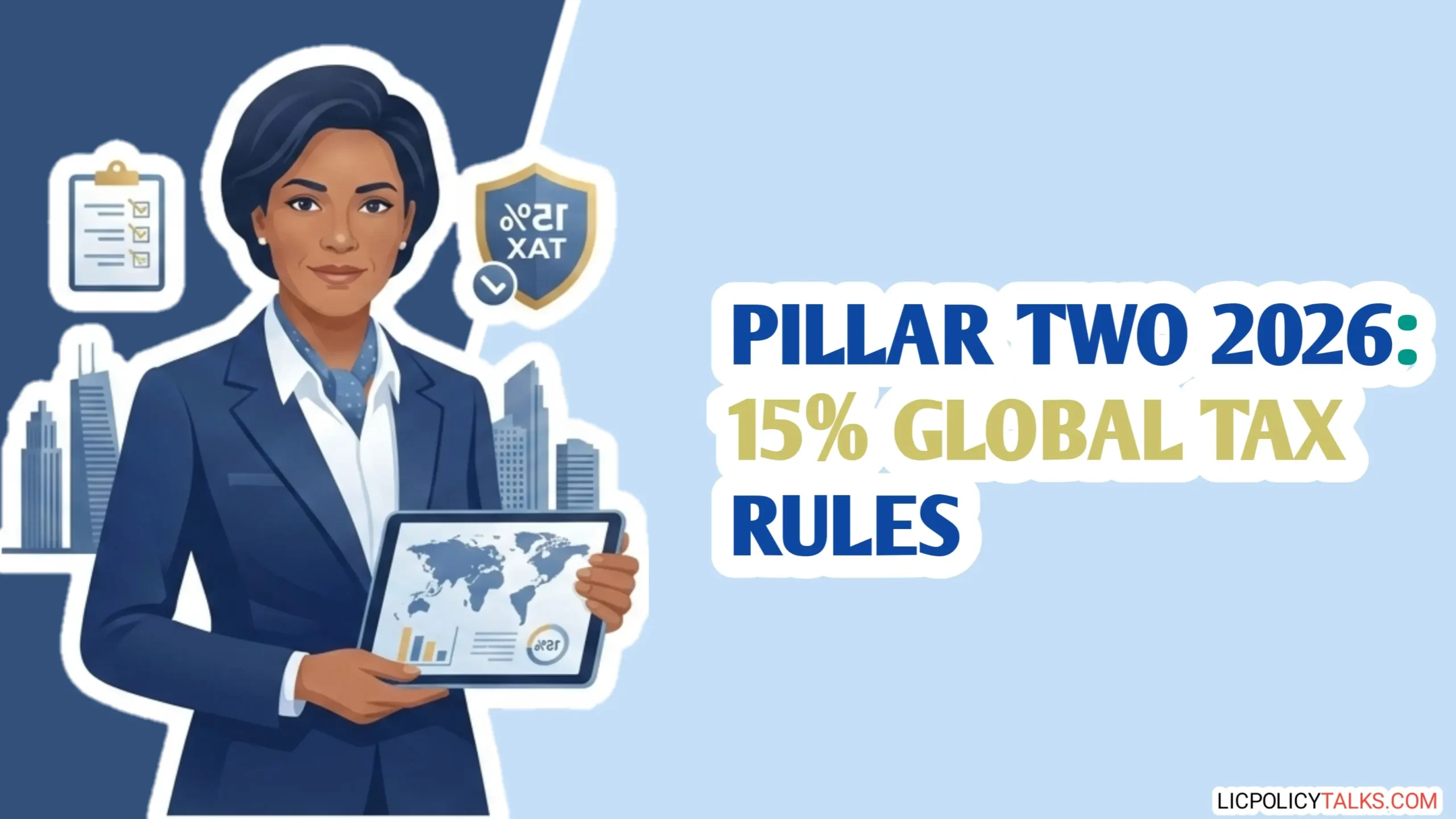
Pillar Two has a high threshold—€750 million in consolidated global revenue. Again, most SMEs breathe a sigh of relief. Here’s the bitter truth: If you have a subsidiary in a country that has implemented a QDMTT, that local entity’s tax calculation will be scrutinized under the 15% global minimum tax rules, regardless of your group’s global turnover. This is catching many small holding structures. With over 60 countries enacting Pillar Two, the network is dense.
The audit trigger isn’t your size. It’s being part of a multinational group’s consolidated financials for Country-by-Country Reporting (CbCR), or having transactions that fall under local anti-avoidance rules inspired by Pillar Two’s Income Inclusion Rule (IIR). PwC’s global Pillar Two tracker confirms this widespread adoption. Simply having a holding company in a low-tax jurisdiction, even for a small group, is now a major red flag for international tax enforcement.
CARF, DAC8, and Platform Reporting: The Expanding Digital Net
This is where visibility becomes absolute. CARF (Crypto-Asset Reporting Framework) and DAC8 (EU’s 8th Directive on Administrative Cooperation) aren’t just acronyms. They are legally binding reporting schemas that platforms must comply with, creating a standardized digital audit trail. From the tax authority’s desk, it looks like this: a report from Amazon arrives, auto-matching it to your tax return becomes trivial. Discrepancies are no longer discovered; they are automatically flagged.
For you, it means every dollar earned on platforms like Amazon, Etsy, the App Store, or through payment processors is reported to tax authorities. These aren’t proposed laws. Jurisdictions like Jersey have officially legislated CARF with a 2026 effective date. Your platform income is now on a government database before you even file your return.
Increased reporting also means heightened scrutiny on corporate structures and ownership, a topic covered in depth in our analysis of the upcoming BOI reporting rules.

Your 2024-2025 Action Plan: 4 Critical Steps to Take Now
Step 1: Conduct a Digital Tax Risk Assessment
Do this before 2024 year-end. It’s not complicated. Create a simple spreadsheet. Map all your revenue streams by country. Define what is a “digital service.” List your use of remote contractors and where your IP is owned. In our reviews, the #1 gap is not mapping ‘marketing presence’—like localized social media ads or a .de website—which some EU states now consider a taxable nexus. Frame your assessment using the OECD’s own risk indicators for BEPS, focusing on misalignment between value creation and profit attribution. This is the foundation of your tax audit preparation.
Step 2: Map Your Digital Footprint and Data Flows
Your “footprint” isn’t just sales. It’s where you collect customer data, host your servers, and run customer support from. Document every platform you use (Shopify, AWS, Zoom) and note which jurisdictions they report to under CARF/DAC8. This is essentially creating your ‘Data Source Map’ as defined under the OECD’s Model Rules for digital reporting. Knowing where your data sits is half the compliance battle. Why is this critical? Because if the IRS or HMRC requests this map during an audit and you don’t have it, the assumption of opacity (and potential evasion) works against you.
Step 3: Audit-Proof Your Transaction Documentation
This step is non-negotiable for any cross-border dealings, even within your own group. Looking at dispute cases, the lack of *contemporaneous* documentation is what leads to penalties. A study created after the audit notice is often dismissed. Focus on transfer pricing for management fees, royalties, or cost-sharing. The standard authorities expect is the OECD BEPS Action 13’s three-tier framework (Master File, Local File, CbCR). Don’t just create documents; follow the precise structure of the Local File as per OECD guidelines—it must include a functional analysis, economic analysis, and selection of comparables. As we detailed in our guide on CbCR thresholds, this documentation forms the backbone of your defense.
Step 4: Engage a Specialist (When and How)
You need a specialist if you have nexus in 3+ countries, complex IP, or revenue over $10M. A true specialist won’t just promise compliance. They should first conduct a diagnostic review, clearly explain the cost/benefit of various structures under Pillar Two, and have a track record of defending clients in Mutual Agreement Procedures (MAPs). Look for advisors who actively work with the OECD’s ‘International Compliance Assurance Programme (ICAP)’ or similar advanced ruling regimes—it signals deep procedural knowledge. This investment is crucial for robust SME tax compliance.
The Cross-Border Audit Process: What to Expect When the Letter Arrives
The Digital Trail: What Authorities Will Request
Five years ago, they asked for invoices. Now, the first request is often for ‘admin access’ to your Shopify backend or Stripe dashboard to verify the platform-reported data themselves. Expect requests for: cloud accounting logs, platform API data, server access logs, emails with foreign clients, and crypto transaction records. This broad request power is typically granted under domestic tax procedure laws, like Section 133A of the UK’s Finance Act, which allows for inspection of digital records. Your digital books are an open ledger.
Common SME Red Flags That Trigger Audits
Authorities use data profiles. The most overlooked red flag? Your public footprint. Authorities monitor LinkedIn for announcements of ‘new regional hubs’ or press releases about overseas clients, then cross-check your tax filings for declared nexus. Key triggers include: high digital revenue in a low-tax country; deductions paid to related parties in no-tax jurisdictions; mismatched VAT and income reporting; and rapid foreign growth without proportional profit. The ‘profit misalignment’ trigger isn’t subjective. Tax authorities run a simple ratio: Foreign Digital Revenue Growth / Overall Profit Growth. A ratio significantly above 1.0 instantly flags for review. Common audit triggers identified by tax authorities include specific transaction types and industry focus. A bitter truth: Using popular ‘tax-efficient’ jurisdictions like Singapore or UAE for holding digital IP, without substantive local staff, is now a top-tier red flag under BEPS standards.
Your Rights and Timelines During an Investigation
You have rights: clarity on the audit scope, professional representation, and confidentiality. Do not respond directly to a foreign authority without local counsel. The Mutual Agreement Procedure (MAP) is a key tool. The MAP is not a courtesy; it’s a procedure mandated under Article 25 of the OECD Model Tax Convention, which most modern tax treaties incorporate. It lets two countries’ tax authorities resolve disputes to avoid double taxation. As seen in the latest UK-Portugal treaty analysis, the trend is towards mandatory binding arbitration procedure to prevent disputes from dragging on for years, a crucial protection for SMEs.
Understanding the mechanics of global minimum tax is crucial, as it forms the bedrock of many new enforcement priorities. For a detailed breakdown, see our essential guide.
Case Studies: Real-World SME Audit Scenarios
The SaaS Company with ‘Insignificant’ Foreign Sales
Scenario: A US-based SaaS company with 15% of revenue from EU customers. No office or employees in Europe.
Problem: German tax authority deemed it had a “significant digital presence” due to local user data and EU-based servers.
Outcome: Assessment for German corporate tax and VAT, plus penalties.
Solution: The company’s error was assuming ‘no office, no tax.’ German authorities applied the ‘significant digital presence’ test from their unilateral implementation of Pillar One concepts. The solution involved registering for the EU’s One-Stop Shop (OSS) for VAT and conducting a transfer pricing study to document profit allocation.
The E-commerce Seller Using Multiple Marketplace Platforms
Scenario: An Indian seller on Amazon US, eBay UK, and Etsy.
Problem: Platform data reported to US IRS and UK HMRC showed slight discrepancies in income figures.
Outcome: Simultaneous audit notices from both authorities for underreported income.
Solution: The core issue was a mismatch in ‘platform seller identifiers’ across different reports. Under DAC8, each platform reports using their own ID. The seller had to create a consolidated digital income report, reconcile all platform IDs, and provide a Certificate of Tax Residency. This scenario is a direct result of the EU’s DAC8, which mandates platforms to report seller data.
The Consulting Firm with Remote Digital Service Clients
Scenario: A Singapore consulting firm serving Australian clients remotely via a long-term Australian contractor.
Problem: Australian Taxation Office (ATO) argued the contractor was a “dependent agent,” creating a Permanent Establishment (PE).
Outcome: Tax assessed on apportioned profits in Australia.
Solution: This ‘dependent agent PE’ risk has exploded with remote work. The ATO’s position was based on the contractor’s ‘habitual conclusion of contracts.’ The firm revised all contractor agreements to explicitly deny authority to sign contracts and sought an advanced PE ruling. The bitter truth here? The cost of an Advanced Pricing Agreement (APA) upfront was a fraction of the tax assessment and penalties imposed after the fact.
🏛️ Authority Insights & Data Sources
▪ The analysis of 2026 enforcement trends integrates primary regulatory updates from the OECD’s January 2026 Administrative Guidance on Pillar Two and the global implementation status tracked by PwC’s Pillar Two Country Tracker.
▪ Sector-specific enforcement risk data and audit trigger patterns are derived from KPMG’s global digital tax developments summary (2026) and transfer pricing enforcement reports from North American authorities.
▪ The practical compliance steps align with the three-tier documentation framework (Master File, Local File, CbCR) established under OECD BEPS Action 13, which forms the global standard for tax authorities.
▪ Note: This article synthesizes current regulatory announcements and professional analysis. Tax laws are complex and rapidly evolving. Consult a qualified tax advisor for advice specific to your business structure and jurisdictions.
The audit spike is driven by clear rules, not bad luck. Preparation is a strategic business advantage, not just a compliance cost. The businesses that navigate this smoothly won’t be the luckiest, but the ones that stopped seeing tax as a back-office function and started treating their global digital footprint as a core strategic asset. Our role is to demystify the landscape so you can have informed, cost-effective conversations with your advisors. The goal isn’t fear, it’s preparedness. Start with Step 1—your Digital Tax Risk Assessment—within the next quarter. In the digital age, proactive tax compliance is a non-negotiable part of your business strategy.