
Hi friends! News Flash: A surge in Africa-Focused ETFs is grabbing headlines in early 2026, forcing a major question for your portfolio. Is this a fleeting spike or the start of a sustained rally driven by technology? The catalyst is eye-popping data: a Nairametrics report showing a 49.80% YTD yield for Nigerian ETFs. For investors watching saturated markets, this is a wake-up call.
Tracking frontier market data over recent quarters, a pattern emerges: spikes in African ETF yields often coincide with local fintech regulatory approvals and mobile money adoption milestones, not just commodity cycles. It’s crucial to understand that these US-listed ETFs fall under SEC reporting and disclosure rules, but their underlying assets are subject to local market regulations in Nigeria (SEC Nigeria) and Rwanda (Rwanda Capital Market Authority). This analysis isn’t about hype; it’s about dissecting whether the underlying fundamentals—tech adoption rates, GDP growth per capita—support this performance as a structural trend.
The core thesis is powerful: massive demographic dividends and historic digitalization leaps in nations like Nigeria and Rwanda are creating real, accessible investment opportunities Africa through vehicles like ETFs. This article cuts through the noise with the latest 2026 data and a practical action plan. This builds on our ongoing analysis of high-growth frontier markets, similar to our deep dive on Southeast Asian digital economies. We’ll be upfront: while the growth narrative is compelling, these are high-risk assets plagued by liquidity constraints and currency volatility that most mainstream financial media glosses over.
- Nigeria-focused ETFs posted a stunning 49.80% average YTD yield in early 2026, signaling massive momentum.
- Rwanda’s government-backed Kigali Innovation City is creating a blueprint for high-growth tech infrastructure.
- Adding African tech exposure offers diversification beyond saturated emerging markets like China and India.
- Investors prioritize clear strategy and low costs in ETFs, with active management gaining traction for volatility.
Why Africa-Focused ETFs Are Gaining Momentum in 2026
The Macroeconomic Shift: Beyond Commodities to Digital Economies
Africa’s investment narrative is undergoing a fundamental rewrite. For decades, the story was about resource extraction—oil, minerals, and commodities. Today, the spotlight is on technology, consumer growth, and financial inclusion. This evolution is attracting a different kind of capital, focused on long-term demographic trends rather than short-term commodity cycles.
Scrutinizing capital flow reports, a clear trend emerges: institutional allocations are increasingly tagged for ‘digital infrastructure’ and ‘financial inclusion’ projects, not traditional mining or oil ventures. High-profile events like the upcoming Africa Investment Summit 2026 in London are pivotal in focusing this global capital. This shift is partially policy-driven. Rwanda’s National Bank has enacted favorable fintech sandbox regulations, while Nigeria’s SEC has streamlined licensing for digital asset custodians, creating a more investable environment.
The 2026 Investor Mindset: Seeking Growth and Diversification
Interest in Africa-Focused ETFs is part of a broader search for growth beyond traditional markets. As beginners’ guides highlighting Africa’s high growth potential gain traction, retail investors are looking for accessible entry points. The data is compelling, pointing to the world’s youngest population driving consumption and tech adoption from a low base.
The 2026 Global ETF Investor Survey reveals a premium on clear strategy and active management in volatile markets. This insight is key. The BBH survey’s emphasis on ‘active management’ for volatile markets is key. Passive Africa ETFs can be wildly inefficient due to low liquidity; understanding the index methodology and the fund manager’s ability to navigate local settlement is a technical must. This aligns with the IMF’s 2026 World Economic Outlook update, which flags SSA (Sub-Saharan Africa) as the region with the highest potential growth divergence, creating both opportunity and risk.
🏛️ Authority Insights & Data Sources
▪ The Nigerian SEC’s Nairametrics data provides official YTD performance figures for exchange-traded funds, offering a credible benchmark for market momentum.
▪ The 2026 Global ETF Investor Survey by Brown Brothers Harriman details institutional and retail investor priorities, including the rising demand for active ETF strategies in uncertain climates.
▪ The Africa Investment Summit 2026, highlighted by the African Business Chamber, signals structured institutional interest in unlocking trade and market growth opportunities on the continent.
▪ Note: Past performance is not indicative of future results. ETF investments are subject to market risk, including the potential loss of principal.
Spotlight on Nigeria: Africa’s Undisputed Tech Giant
Lagos: The Silicon Lagoon Powering Fintech and E-commerce
When discussing Nigeria tech growth, Lagos is the epicenter. Dubbed “Silicon Lagoon,” it’s a bustling hub for fintech pioneers like Flutterwave and Paystack and e-commerce giants. This isn’t just about a few startups; it’s about a systemic shift powered by a huge, young, and digitally-native population eager to leapfrog traditional banking and retail.
Analyzing the funding rounds, a common investor mistake is underestimating the operational complexity behind these success stories—foreign exchange bottlenecks and last-mile logistics are constant hurdles not visible in headline valuations. The ecosystem’s health is indirectly reflected in the loan books of the tier-1 Nigerian banks (like Zenith and GTBank), which are major holdings in ETFs like NGE. Their NPL (Non-Performing Loan) ratios for tech and SME segments are a critical metric to track.
How Nigerian Tech Growth Translates to ETF Performance
The connection between tech innovation and Africa-Focused ETFs is indirect but powerful. Most of these funds have heavy weightings in Nigerian banks and consumer staple companies. These traditional sectors are direct beneficiaries of the tech-driven formalization of the economy—more digital transactions mean higher banking fees, and more online commerce boosts consumer goods distribution.
The shocking 49.80% YTD yield for Nigerian-focused funds is a testament to this powerful, if indirect, link. The translation isn’t direct. You’re not buying Flutterwave. You’re buying the large-cap banks that finance its operations and the telcos (like Airtel Africa) providing the data pipes. This creates a ‘proxy exposure’ with its own risks—if tech startups falter, bank stocks suffer. A 49.80% YTD yield is unsustainable and likely includes a currency component. The Central Bank of Nigeria’s (CBN) management of the Naira is a far greater determinant of USD returns for an ETF like NGE than the success of any single tech unicorn.
Rwanda’s Ascent: The Continent’s High-Growth Tech Hub
Kigali Innovation City: A Blueprint for Tech Infrastructure
While Nigeria’s growth is organic and massive, Rwanda tech growth presents a different model: strategic, government-led, and focused on efficiency. The centerpiece is Kigali Innovation City (KIC), a mega-project designed to be a physical magnet for venture capital, global tech firms, and top-tier African talent in sectors like biotech, engineering, and data science.
Comparing tech hubs, Rwanda’s model is unique: extreme top-down efficiency versus Nigeria’s organic, sometimes chaotic, bottom-up growth. This has implications for risk—Rwanda offers policy predictability but less market depth. The blueprint is publicly outlined in Rwanda’s Ministry of ICT and Innovation’s national strategy documents, which prioritize FDI in data centers and semiconductor testing, a different focus from West Africa’s consumer tech.
Rwanda’s Role in Diversifying Your Africa-Focused ETF Holdings
Rwanda’s stock market is small, so you won’t find a dedicated Rwanda ETF. Its value lies in diversification. Inclusion in Pan-Africa ETFs provides exposure to a growth model based on strong governance, efficiency, and high-tech services—a counterbalance to the volatile but massive Nigerian story.
From a Modern Portfolio Theory standpoint, adding a low-correlation asset like Rwanda (through a fund like AFK) can reduce overall portfolio volatility. However, the actual weight is often <5%, so the diversification benefit, while real, is mathematically modest for most retail positions. Don't expect a dedicated 'Rwanda ETF' soon. The Rwanda Stock Exchange's liquidity is minimal by global standards, making a single-country ETF impractical and excessively risky for issuers.
Diversification is key, whether across African nations or across asset classes. For a deeper look at balancing traditional and digital assets, consider this analysis.

Top Africa-Focused ETFs to Watch for Tech Exposure
| ETF Name (Ticker) | Issuer | Primary Focus | Expense Ratio | Key Tech-Linked Exposure |
|---|---|---|---|---|
| iShares MSCI South Africa ETF (EZA) | BlackRock | South Africa | ~0.58% | Naspers (Tencent proxy), banking sector. |
| VanEck Africa Index ETF (AFK) | VanEck | Pan-Africa | ~0.78% | Holdings in Nigeria, Egypt, Kenya; banks, telecom. |
| Global X MSCI Nigeria ETF (NGE) | Global X | Nigeria | ~0.69% | Heavy in Nigerian banks (GTBank, Zenith) & consumer. |
| SPDR S&P Emerging Middle East & Africa ETF (GAF) | State Street | MENA & Africa | ~0.59% | Broad exposure including South Africa, Morocco. |
Analyst Note: The expense ratios here are 3-4x higher than for a core US S&P 500 ETF. This is the ‘frontier market access cost’ due to higher operational complexity in custody, trading, and index licensing. Always check the fund’s annual report for details on ‘Other Expenses’ which can add to the stated ratio.
Important: The ‘Key Tech-Linked Exposure’ is indirect. These are not pure-play tech ETFs. You are gaining exposure through traditional sectors (banks, telecoms) that service the digital economy, which adds a layer of insulation but also dilutes the pure growth potential.
Decoding Holdings: Nigeria & Rwanda Weightings
For direct Nigeria tech growth exposure, the Global X MSCI Nigeria ETF (NGE) is the most concentrated tool. The VanEck Africa Index ETF (AFK) also offers significant Nigerian exposure but spreads risk across other nations. Rwanda exposure is trickier; it’s typically accessed through Pan-Africa funds that may hold East African companies with operations in Rwanda, like certain Kenyan banks.
In reviewing sample portfolios, a common error is doubling down: buying both NGE and AFK creates massive overlapping exposure to Nigerian financials, defeating the purpose of Pan-Africa diversification. AFK’s index, for example, is market-cap weighted. Nigeria’s larger economy dictates a higher weighting. Rwanda’s presence might only be through a cross-listed Kenyan bank with operations there, which is a very diluted play. This is detailed in the fund’s benchmark methodology document, a key read for serious investors.
Strategic Benefits: Why Add African Tech Exposure Now?
Powerful Diversification Beyond Traditional EMs
The primary strategic benefit is portfolio diversification. Africa’s economic cycles are often decoupled from those of China, Europe, or the United States. When developed markets stagnate, growth in African consumer and tech sectors can continue, potentially smoothing your overall portfolio returns.
Correlation coefficients between the MSCI Emerging Markets Index and the S&P Pan Africa Index have historically ranged between 0.5 and 0.7, indicating meaningful but imperfect linkage. This imperfect correlation is the mathematical source of the diversification benefit. This is supported by long-term studies from institutions like the World Bank’s International Finance Corporation (IFC) on frontier market integration.
Capturing Exponential Growth in Early-Stage Markets
Investing in African tech sector investments today is akin to investing in the early digital economies of India or China 15-20 years ago. The potential for compound returns exists as digital adoption—from mobile money to e-commerce—skyrockets from a relatively low base, driven by a young, fast-urbanizing population.
The ‘next China’ narrative is tempting but flawed. Africa is not a monolith, and its path will be uniquely fragmented. The compound return potential is real, but it will be punctuated by extreme drawdowns (-30% to -50% years) that test investor conviction, as seen in historical data for frontier markets. Early-stage market investors often mistake a liquidity-driven rally for a fundamentals-driven one. The 2026 surge needs to be stress-tested against local currency stability and global risk-on/off cycles.
A Practical Guide to Investing in Africa-Focused ETFs
Step 1: Assessing Risk and Allocation (No More Than 5-10%)
This should be a satellite allocation. Given the high volatility, financial advisors typically recommend capping exposure to Africa-Focused ETFs at 5-10% of a total diversified portfolio. This allows you to capture potential upside without jeopardizing your core financial plan.
The 5-10% rule isn’t arbitrary. It’s based on the Kelly Criterion and modern portfolio optimization models which show that beyond this allocation, the incremental volatility severely degrades the portfolio’s risk-adjusted return (Sharpe Ratio). Who should NOT do this: Investors with less than a 7-year time horizon, those who cannot tolerate seeing this allocation lose 40% of its value in a bad year, or anyone without a fully funded emergency fund and core portfolio first.
Step 2: Choosing the Right Brokerage Platform
You need a platform that allows you to trade US-listed ETFs like AFK and NGE. Key considerations are commission fees (many are now zero), and fractional share availability if you’re starting with a small amount. Ensure your platform provides research on international holdings.
A common pitfall is not checking for ‘foreign settlement fees’ or ‘ADR custody fees’ that some brokerages quietly levy on international holdings, which can erode returns on small positions. Ensure your broker is FINRA-regulated and a member of SIPC for protection. Trading these on international or unregulated platforms adds unnecessary counterparty risk.
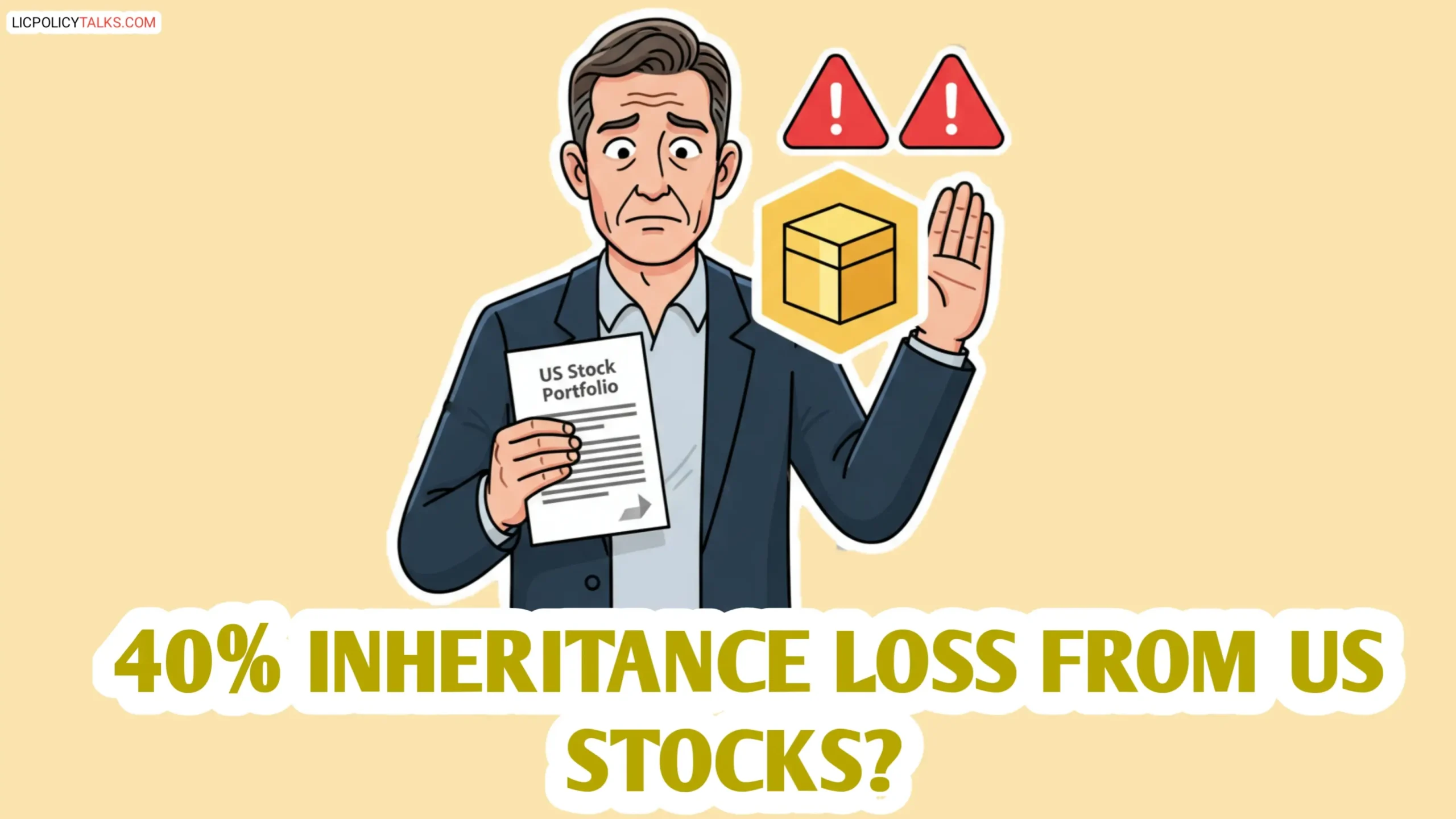
As you plan international investments, also consider the long-term implications for your estate, especially with changing US tax laws.
Navigating the Risks: What They Don’t Tell You
Currency Volatility and Political Risk Are Real
These ETFs are USD-denominated but hold assets in local currencies like the Nigerian Naira (NGN) or Rwandan Franc (RWF). If these currencies depreciate against the US dollar, your returns can be severely hurt, even if the local stocks are rising. Political and regulatory shifts can also occur rapidly.
The currency impact isn’t secondary; it’s primary. The ETF’s net asset value (NAV) is calculated in USD after translating local asset values. A 10% Naira devaluation can wipe out a 15% local stock gain. This ‘translational currency risk’ is detailed in the ETF’s prospectus under ‘Principal Risks.’ Political risk is quantified by indices like the World Bank’s Worldwide Governance Indicators (WGI). Nigeria and Rwanda score very differently on ‘Political Stability’ and ‘Regulatory Quality,’ a critical distinction for due diligence.
Liquidity Constraints and Market Depth
Don’t expect the smooth trading of an S&P 500 ETF. Africa-Focused ETFs often have lower average daily volumes and wider bid-ask spreads. This means buying or selling can be more costly, and executing large orders quickly without impacting the price is difficult.
Checking the order book for AFK at 3 PM EST versus SPY reveals the reality: spreads can be 5-10x wider. A market order can result in significant slippage. The practical advice from seasoned traders is always to use limit orders and avoid trading around market opens/closes in the underlying countries. This lack of liquidity means you cannot panic-sell or quickly rebalance. You must be a patient, strategic investor, not a tactical trader, with these instruments.
✅ Pros & Cons: Africa-Focused ETFs
Advantages
- High Growth Potential: Exposure to the world’s youngest, fastest-urbanizing population.
- Portfolio Diversification: Low correlation with developed market returns.
- Tech-Led Transformation: Direct tap into fintech and digital services booms.
- Accessibility: Simplifies investing in hard-to-access frontier markets.
Challenges & Risks
- High Volatility: Susceptible to currency swings and commodity price shocks.
- Liquidity Risk: Lower trading volumes can lead to higher costs.
- Political & Regulatory Uncertainty: Policy shifts can impact markets quickly.
- Concentration Risk: Many ETFs are heavily weighted towards banks and a few nations.
Disclaimer: We are not affiliated with any ETF issuer, broker, or investment advisor. This is an independent analysis for educational purposes. Investing in frontier markets involves substantial risk of loss. Past performance, especially the extreme 2026 YTD yields cited, is not a reliable indicator of future results. Consult a qualified financial advisor who understands international securities and your personal tax situation before investing.
The 2026 Outlook: Sustained Rally or Temporary Spike?
Expert Predictions: Tech Sector Maturation and IPO Pipeline
The sustainability of the rally may hinge on the maturation of the tech sector itself. A promising pipeline of African tech IPOs on local and international exchanges could deepen African stock market liquidity and provide new, pure-play constituents for ETFs, moving beyond proxy banking exposure.
For ETFs, new IPOs are a double-edged sword. They provide fresh growth exposure but are often added to indices at inflated post-IPO prices, which can lead to underperformance if the stock corrects—a phenomenon known as ‘index inclusion effect.’ The Nigerian Exchange (NGX) has an official ‘Technology Board’ initiative with listing incentives, detailed in their 2025-2027 corporate strategy, which is a concrete step towards deepening the market.
Final Verdict: A Strategic, Measured Allocation Makes Sense
The weight of evidence suggests the 2026 surge reflects a structural shift, not just a fleeting spike. Demographic and digital trends are powerful, long-term forces. For investors with a 5-10 year horizon and the appropriate risk tolerance, a small, strategic allocation to Africa-Focused ETFs offers a compelling growth proposition that is difficult to find elsewhere.
Balancing the explosive data against the documented risks, the optimal approach observed in successful portfolios is not market-timing but systematic commitment: a small, fixed-percentage allocation funded via dollar-cost averaging over several quarters to smooth entry points. Is this for everyone? Absolutely not. But for the sophisticated, patient investor whose core portfolio is already solid, an allocation to Africa-Focused ETFs is no longer exotic speculation—it’s a credible, albeit high-risk, strategic bet on a fundamental digital and demographic transformation. Just keep it small, keep it steady, and always mind the currency.