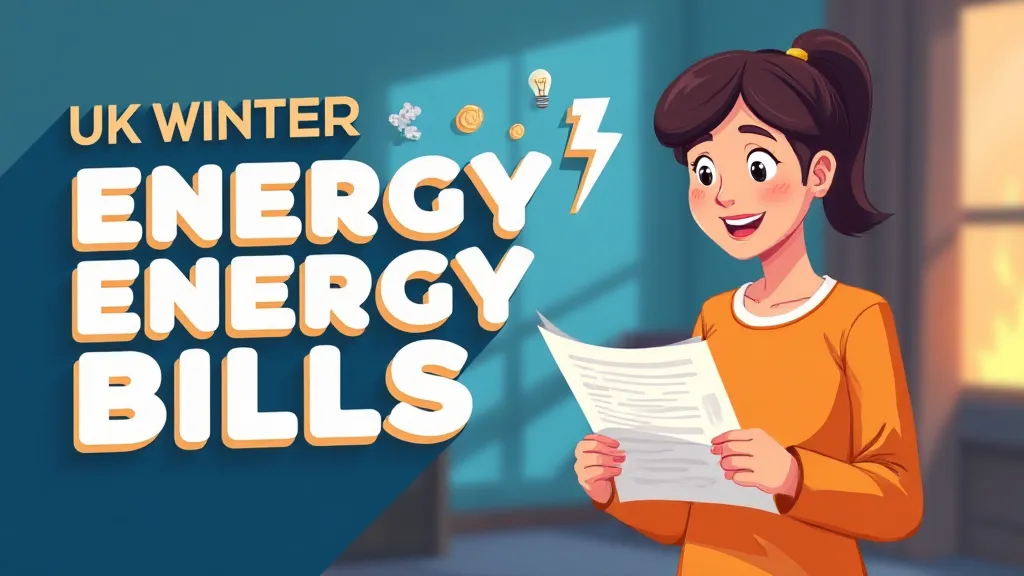
- Ofgem’s price cap falls £117 to £1,641 from April 2026, but council tax rises an average of 5%.
- Check eligibility for the £150 Warm Home Discount, £250 March 2026 Cost of Living Payment, and Council Tax Support.
- Immediate action: Review your council tax band, claim the WFH tax relief, and consider a water meter.
- Long-term savings hinge on insulation, boiler efficiency, and understanding tariff choices before winter.
Hi friends! Let’s talk about your budget for the coming year. March 2026 is shaping up to be a financial cliff edge for many UK households. The lag of winter’s high energy bills hits bank accounts just as annual council tax, broadband, and mobile hikes are announced. It’s a perfect storm of old debts and new bills.
You’re getting conflicting signals: the official energy price cap is falling, yet your overall cost of living feels heavier. This guide cuts through the noise. We’ll give you a clear path to navigate every rebate you’re owed and implement proven savings to protect your wallet from winter 2026 onwards. The goal is simple: more money back in your pocket, less stress in your life.
The 2026 Energy Bill Outlook: What You Need to Know Now
The financial landscape for 2026 is a mixed picture. To make smart decisions, you need to understand both the headline relief and the underlying pressures squeezing your monthly budget.
The Current Energy Price Cap & Future Predictions for 2026
There’s some genuine good news. Regulator Ofgem has confirmed a reduction in its price cap. From 1 April 2026, the average annual bill for a typical household on a standard variable tariff and paying by direct debit will fall by £117, from £1,758 to £1,641. This Ofgem’s price cap adjustment is driven primarily by a continued fall in wholesale gas and electricity prices.
It’s crucial to remember this cap sets a maximum unit price and standing charge, not a total bill. Your actual cost depends entirely on how much you use. Furthermore, predictions for Winter 2026/27 remain uncertain, tied to global energy markets. While the direction is positive for now, this volatility is why a proactive strategy is non-negotiable.
How Council Tax Rises and the Cost of Living Crisis Shape Your Budget
Now for the broader squeeze. Even as one bill falls, another significant one is rising. Analysis indicates that over three-quarters of councils in England are planning to implement the maximum allowable council tax increases averaging 5% without a referendum. For a typical Band D property, this could mean an annual rise from around £2,280 to approximately £2,394.
This creates the March 2026 pinch point: final winter energy payments coincide with these higher council tax demands. The enduring cost of living crisis means every pound counts. The silver lining is that significant support mechanisms exist to counter these rises, but you must know how to access them.
🏛️ Authority Insights & Data Sources
▪ The £117 reduction in the Ofgem price cap to £1,641 from April 2026 is based on the regulator’s confirmed quarterly adjustment, as reported by major news outlets analysing Ofgem publications.
▪ Council tax increases averaging 5% are drawn from surveys of local authority budgets, notably the Local Government Chronicle, indicating widespread use of the maximum allowable rise without a referendum.
▪ Eligibility rules for the Warm Home Discount, Winter Fuel Payment, and £250 March 2026 payment are based on current government policy papers and DWP guidance documents outlining the schemes’ extension and parameters.
▪ Note: Benefit eligibility and payment dates are subject to final confirmation by the DWP and relevant devolved administrations. Always refer to official GOV.UK channels for the most current personal application details.
Your Action Plan: Quick-Start Guide to Immediate Savings & Rebates
Knowledge is power, but action creates savings. Think of this as your personal checklist. Your mission has two pillars: first, claiming every penny of financial support you’re entitled to; second, implementing quick, low-effort behavioural changes that add up.
Summary of Key Government Support: From Council Tax Rebates to Winter Fuel Payments
Don’t leave free money on the table. The UK government energy support landscape includes several key schemes. Understanding them is your first line of defence.
Here is a breakdown of the main schemes for 2026/27:
| Support Scheme | Amount (2026/27) | Key Eligibility | Action Required |
|---|---|---|---|
| Warm Home Discount | £150 | Pension Credit (Guarantee) or means-tested benefits | Mostly automatic; check with supplier in Scotland |
| March 2026 Cost of Living Payment | £250 | Qualifying benefit recipient during set period | Automatic |
| Winter Fuel Payment | £100 – £300 | Born before 22 Sept 1959 | Automatic for most |
| Council Tax Single Person Discount | 25% off bill | Sole adult occupant | Must apply to local council |
1. **Warm Home Discount (WHD):** A £150 rebate applied to your electricity bill for winter 2026/27. If you’re on Pension Credit (Guarantee element), you’re in the ‘Core Group’ and should get it automatically. Others on qualifying means-tested benefits may be eligible under the ‘Core Group 2’ scheme. It’s vital to understand the Warm Home Discount scheme rules for your region.
2. **£250 Cost of Living Payment (March 2026):** A one-off payment for those receiving eligible benefits like Universal Credit or Pension Credit during a specific qualifying period. It’s paid automatically by the DWP. News confirms this £250 March 2026 payment is part of the extended support framework.
3. **Winter Fuel Payment:** An annual tax-free payment of £100 to £300 for those born on or before 22 September 1959. For most eligible people, this is paid automatically between November and December.
4. **Council Tax Support & Discounts:** This includes the 25% Single Person Discount, student/carer disregards, and local Council Tax Support (also known as Council Tax Reduction) which is means-tested and can cover up to 100% of your bill.
5. **Cold Weather Payment:** £25 for each 7-day period of very cold weather (average temperature at or below 0°C) if you’re on certain benefits.
6. **Household Support Fund:** Discretionary help distributed by local councils for essentials like energy, food, and water.
The 7 Most Effective Energy Saving Tips at a Glance
Beyond claiming support, your own actions drive the biggest energy bill savings. These seven strategies form your core playbook. We’ll expand on each one later.
1. Optimise Your Heating System & Thermostat. 2. Seal Draughts and Upgrade Insulation. 3. Master Smart Meter & Off-Peak Usage. 4. Upgrade to LED Lighting & Efficient Appliances. 5. Claim Your Working From Home Tax Relief. 6. Review Your Water Bill & Consider a Meter. 7. Conduct an Annual Energy Supplier/Tariff Review.
Managing your overall tax position is just as crucial as cutting bills. For a broader look at post-Budget savings, review this checklist.
How to Claim Your Council Tax Rebate and Winter Fuel Payment
Let’s demystify the process for the two most commonly searched-for supports. Practical, step-by-step guidance is what turns eligibility into money in your account.
Eligibility Criteria for the 2026 Council Tax Energy Rebate Scheme
First, a key clarification. The term “council tax rebate UK” often refers to the broader ecosystem of discounts and support, not a single new 2026 scheme. The main discounts to investigate are: the Single Person Discount (25% off), Disregards (for full-time students, carers, those with a severe mental impairment), and local Council Tax Support (an income-based reduction).
Household composition changes are a major trigger for missed discounts. If an adult child has moved to university, or a partner has passed away, your eligibility may have changed. A critical piece of insight from case reviews is that many councils will backdate successful discount applications, sometimes for several years, providing a valuable lump-sum refund.
Step-by-Step Application Process for Government Energy Support
For Council Tax discounts, the process is council-specific but follows a general pattern. First, contact your local council’s revenues or council tax department. You can usually find the correct online form or phone number on their website. Second, clearly inform them of the change in your circumstance (e.g., “I am now the only adult living at this property”). Third, provide any requested evidence, such as a student certificate or proof of benefits.
For the winter fuel payment, the process is simpler for most. If you’re of State Pension age and receive other benefits, payment should be automatic. If you’re eligible but don’t get it automatically, you must make a claim. This is done via the dedicated Winter Fuel Payment section on GOV.UK or by calling the Winter Fuel Payment Centre. For the Warm Home Discount, if you’re in the Core Group in England or Wales, you do not need to apply—it’s automatic. In Scotland, you may need to apply directly to your electricity supplier as schemes are limited.
Deep Dive: 7 Proven Strategies to Slash Your Winter Energy Bills
Now, let’s expand on those seven core strategies. The focus here is on return on investment and actionable steps you can take, starting today.
1. Heating System Optimisation: Smart Thermostats and Boiler Efficiency
Your heating is your biggest winter cost. A fundamental truth in heating costs reduction is that lowering your room thermostat by just 1°C can save around £100 a year on your bill. That’s significant for a minor adjustment. Don’t crank the thermostat up high to heat a room faster; it doesn’t work that way.
Investing in a programmable or smart thermostat allows you to heat your home only when needed. Scheduling the heating to come on 30 minutes before you wake up and turn off when you leave can eliminate waste. Also, an annual boiler service isn’t just for safety; it ensures your boiler runs at peak efficiency, using less fuel for the same heat. For the long term, consider a heat pump, especially if you’re replacing an old system.
2. The Home Insulation Overhaul: Where to Invest for Maximum Return
Heat escapes constantly. Your job is to slow it down. Start with the cheap wins: draught-proofing windows and external doors. DIY draught excluder strips can save between £50 and £100 annually. Don’t forget less obvious spots like letterboxes, keyholes, and loft hatches.
The next big ticket item is loft insulation. If you have less than 270mm (about 27cm), topping it up to the recommended level is one of the most cost-effective measures, with potential savings of over £300 a year. Cavity wall insulation can offer similar savings, but it’s essential to get a professional survey to ensure your property is suitable, as incorrect installation can cause damp issues.
3. Behavioural Changes That Lead to Significant Energy Bill Savings
Small habits create big totals. Turn appliances off at the wall instead of leaving them on standby. Wash clothes at 30°C—modern detergents work perfectly at this temperature. Reducing shower time by just one minute can save a typical household around £75 a year. Use lids on pans when cooking to trap heat, and only boil the amount of water you need in the kettle. Use your smart meter’s in-home display to identify your high-usage periods and adjust accordingly.
4. Appliance and Lighting Upgrades for Long-Term Cost Reduction
Replace every halogen and incandescent bulb with an LED equivalent. An LED bulb uses about 90% less energy and lasts years longer. When replacing large appliances like fridges, washing machines, or dishwashers, check the energy label. Aim for A+++ ratings where possible. Always use the eco or economy mode on your dishwasher and washing machine—these cycles are designed to use less energy and water while still cleaning effectively.
5. Claim Your Working From Home Tax Relief
This is an often-overlooked direct saving. If your employer requires you to work from home, you can claim tax relief on £6 per week (£312 per year) without needing to provide receipts. You simply claim via HMRC’s online portal for tax relief for employment expenses. The process, as detailed in Working From Home tax relief guides, takes under 10 minutes. For a basic rate taxpayer, that’s £62.40 back per year. For a higher rate taxpayer, it’s £124.80. If you’ve been working from home for previous tax years, you can backdate your claim.
6. Review Your Water Bill & Consider a Meter
If you’re on an unmetered water bill (based on your home’s rateable value), you might be overpaying. A simple rule of thumb: if you have more bedrooms than people in your household, a meter could save you money. Industry analysis, such as that found in resources on water meter savings, suggests a couple in a 4-bed house could save £250 or more annually. Most water companies offer a free trial period where you can switch to a meter and revert if you’re not better off.
7. Conduct an Annual Energy Supplier/Tariff Review
Set a calendar reminder to check energy comparison sites once a year, ideally just before winter. While the price cap provides a ceiling, some fixed tariffs may offer rates below the cap’s unit charges, giving you budget certainty. Weigh the pros and cons: a fixed tariff protects against price rises but may have exit fees if you want to leave early, while the standard variable tariff moves with the cap.
For high-net-worth individuals, strategic financial planning extends far beyond utility bills, especially with looming tax changes.

Navigating the Energy Market: Tariffs, Suppliers, and the Price Cap
Understanding your supply contract is key to avoiding overpayment. The market offers different types of tariffs, each with its own risk and reward profile.
Understanding Your Energy Tariff Options Ahead of Winter 2026
You typically have three main choices. The Standard Variable Tariff (SVT) is your supplier’s default rate. It fluctuates in line with Ofgem’s price cap, going up and down every three months. A Fixed Tariff locks in the unit rate and standing charge for a set period, usually 12 or 24 months, giving you price certainty. A Tracker Tariff follows the daily wholesale price closely, which can be cheaper when prices fall but riskier if they spike.
The current market trend, following a period of high volatility, is towards more stable wholesale prices. This has led to the return of competitive fixed deals. However, suppliers are cautious, and many fixed tariffs may still sit close to or just below the predicted price cap path.
Should You Fix Your Energy Bill? A Risk-Benefit Analysis
The decision to fix your energy tariff hinges on your appetite for risk versus your need for budget certainty. Let’s break down the pros and cons clearly. The main pro of a fixed tariff is budget certainty; you know exactly what you’ll pay per unit for the duration, protecting you if wholesale prices rise sharply. A potential secondary pro is securing a rate slightly below the current price cap.
The cons are equally important. Most fixed tariffs have exit fees (often around £50-£75 per fuel) if you leave early. You also risk missing out if the price cap falls significantly during your fixed period. Before fixing, always calculate the proposed tariff’s unit rate and standing charge and compare it directly to your current SVT rates.
Common Mistakes That Inflate Winter Energy Bills (And How to Avoid Them)
Avoiding costly errors is as important as implementing good practices. Here are the pitfalls that consistently drain household budgets.
Thermostat Missteps and Peak-Time Usage Errors
A classic mistake is turning the thermostat up to 25°C because you’re cold, thinking the room will heat faster. It won’t. Your boiler works at a constant rate; setting a higher temperature just means it runs longer, wasting energy and money. The solution is to ‘set and forget’ a comfortable temperature, like 18-20°C.
Another common error is running high-energy appliances like tumble dryers, dishwashers, and washing machines during the peak evening hours (4 pm to 8 pm) when electricity demand and unit costs are often highest. The simple solution is to use the delay timer function to run these appliances overnight or during the middle of the day.
Overlooking Draughts and Wasting Heat Through Poor Maintenance
Many people meticulously insulate their windows but ignore smaller draughts from letterboxes, keyholes, cat flaps, and unused chimneys. A simple chimney balloon or letterbox draught excluder can make a noticeable difference. The most expensive mistake is skipping the annual boiler service. A poorly maintained boiler can be 10-20% less efficient, silently adding hundreds of pounds to your annual bill. Regular maintenance pays for itself.
FAQs: ‘government energy support’
Q: I’m on a low income but don’t get Pension Credit. Can I get the Warm Home Discount in 2026/27?
Q: How exactly do I claim the £6/week Working From Home tax relief from HMRC?
Q: My council tax is going up 5%. Can I spread the payments to make it more manageable?
Q: Is the £250 Cost of Living Payment in March 2026 going to affect my existing benefits?
Q: With the energy price cap falling, should I still bother switching suppliers or fixing my tariff?
The key mindset for 2026 is that proactive management beats reactive panic. Build your household’s financial resilience on three pillars: claim all support (rebates, discounts), implement behavioural and low-cost efficiency measures, and make informed market choices about tariffs and suppliers. By taking these steps, you insulate yourself not just from the cold, but from the volatility of energy markets, building a buffer that gives you control and peace of mind for winters to come.