Germany 2026 Market Outlook: Top 3 ‘Buy’ Sectors for Explosive Growth (Defense & Green Energy Revealed)

Updated on: December 19, 2025 9:38 AM
Follow Us:
Germany 2026 Market Outlook: Top 3 'Buy' Sectors for Explosive Growth (Defense & Green Energy Revealed)
Follow
Share
Socials
Add us on 
Germany 2026 Market Outlook: Top 3 'Buy' Sectors for Explosive Growth (Defense & Green Energy Revealed)

हाय दोस्तों! Let’s be honest, reading the economic headlines about Germany can be confusing lately. One day it’s all doom and gloom, and the next, there’s talk of massive industrial transformation. It’s enough to make any investor’s head spin. But here’s the good news: within this complexity lies incredible opportunity. This guide cuts through the noise. We’re going to break down the real data, look past the short-term jitters, and pinpoint exactly where the smart money is flowing for Germany 2026 Market Outlook. Think of it as your map to finding growth, even when the overall landscape looks challenging.

This analysis provides a data-driven look at three high-conviction sectors poised for significant growth by 2026, translating complex geopolitical and policy trends into clear, actionable investment insights.

The 2026 Canvas: Understanding Germany’s Economic Crossroads

The story starts with a stark reality check. The recent sharp decline in the December Ifo Business Climate Index sent a clear signal: German businesses are feeling the pinch of near-term headwinds, with dampened confidence in manufacturing and services. This isn’t just a blip; it reflects real challenges like energy cost pressures and global demand uncertainty.

Yet, zooming out reveals a more resilient picture. Despite the cyclical slowdown, Germany is projected to remain firmly among the world’s top 10 global economies in 2026. Its fundamental strengths—a skilled workforce, deep industrial base, and central role in Europe—haven’t vanished. The continent itself is in a mode of reinvention, actively searching for strategic autonomy and renewed competitiveness on the global stage.

This sets the stage for the German market forecast. Analysts point to 2026 as a year defined by moderating inflation and a intense focus on durable business models, innovation, and pricing power. This environment creates a classic stock-picker’s market where broad indexes may lag, but targeted, high-quality sectors with clear secular tailwinds are positioned to thrive.

Sector 1: National Defense & Security – A Paradigm Shift

For decades, the Germany defense sector 2026 was an afterthought in global portfolios. The “Zeitenwende” (turning point) changed everything. This isn’t a temporary budget hike; it’s a fundamental, decades-long policy shift. With a 100-billion-euro special fund and a commitment to sustainably meet NATO’s 2% GDP spending target, Germany has launched a multi-year procurement super-cycle.

The Zeitenwende in Action: From Pacifism to Pillar

The era of pacifism is over. Defense is now a pillar of national and European strategy. This commitment provides unprecedented visibility for companies, with order backlogs stretching years into the future, insulating them from short-term economic cycles.

Key Growth Drivers & Sub-Sectors

  • Air & Missile Defense: Sky-high demand for systems like the IRIS-T SLM to protect critical infrastructure.
  • Cybersecurity: Digital protection for military networks, government agencies, and industrial bases.
  • Modernization of Bundeswehr: A comprehensive upgrade of land, sea, and air platforms is long overdue.
  • European Collaboration: Mega-projects like the FCAS/SCAF fighter jet and MGCS tank program are creating pan-European champions.
German Defense Sector: Key Players & Focus
CompanyPrimary Focus2026 Growth Catalyst
RheinmetallArmored Vehicles, Ammunition, Air DefenseOrder backlog from special fund, Lynx KF41 exports
HensoldtSensors, Radars, Electronic WarfareMajor contracts for Eurofighter & naval radars
Airbus (Defence & Space)Military Aircraft, Space SystemsFCAS program ramp-up, A400M deliveries
MTU Aero EnginesMilitary Aircraft EnginesEurofighter EJ200 engine maintenance & upgrade cycles

How to Invest: Public Companies & ETFs

For direct exposure, look at pure-play champions like Rheinmetall (vehicles, ammunition) and Hensoldt (sensors). Diversified giants like Airbus and MTU Aero Engines offer a stake through their defense divisions. For broader, simpler exposure, a thematic ETF like the iShares STOXX Europe 600 Aerospace & Defense (EXV6) can be an excellent starting point for building a position in defense industry stocks.

Read Also
Green Investment Opportunities in Germany: How to Profit from the 2025 Energy Transition Plan
LIC TALKS! • Analysis

Sector 2: Green Energy Infrastructure – Wiring the Future

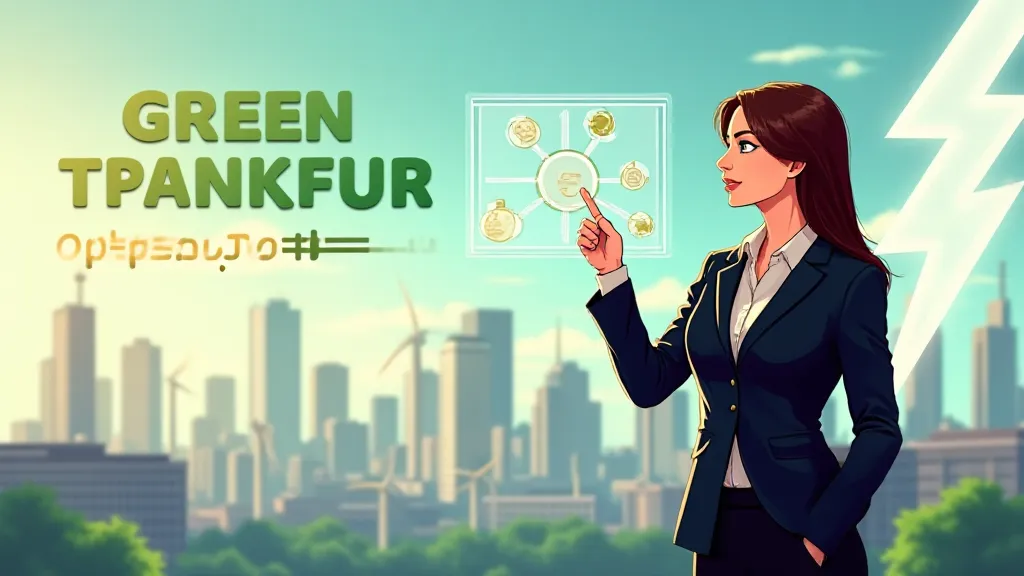
If defense is about protecting the nation, green energy infrastructure Germany is about powering its future. This isn’t just about climate goals anymore; it’s a hard-nosed energy security imperative. The 2025 Energy Transition Plan targets 80% renewable power by 2030. Hitting that goal requires a trillion-euro build-out of physical assets: thousands of new wind turbines (especially offshore), vast solar parks, a hydrogen backbone, and a massively expanded national grid.

Beyond Targets: The Trillion-Euro Build-Out

The scale is almost unimaginable. We’re talking about rewiring an industrial nation. This creates a multi-decade investment runway for companies that manufacture, build, and operate this new energy backbone.

Investment Hotspots: Generation, Grids, and Storage

  • Renewable Developers & IPPs: Companies like RWE and Encavis that own and operate wind and solar farms.
  • Grid Operators & Technology: Firms like Siemens Energy providing crucial grid solutions, switchgear, and transformers.
  • Energy Storage: Batteries and hydrogen storage facilities are essential to manage renewable intermittency.
  • Industrial Decarbonization: This is a huge driver. The chemical industry’s 2026 pivot towards sustainability and circular economy principles is creating massive demand for green hydrogen and power, making ESG investing Germany a tangible industrial strategy.

Navigating the Opportunity: Stocks and Infrastructure Funds

Investors can access this through utility giants transitioning their portfolios (RWE), pure-play renewable operators, or companies enabling the grid. Listed infrastructure funds that own solar and wind parks offer a stable, income-generating route. The key for sustainable energy stocks in this sector is policy stability and faster permitting, which are the main catalysts (or risks) to watch.

Sector 3: AI & Enabling Technology – The Productivity Engine

While the US leads in flashy AI chatbots, Germany’s opportunity is more profound and tailored to its strengths. Analysts unanimously identify artificial intelligence as a critical growth engine for capital markets. For Germany, AI is the indispensable “industrial copilot” that can optimize complex manufacturing (Industry 4.0), revolutionize supply chains, and accelerate R&D in its world-class auto, pharma, and chemical sectors—directly boosting margins and competitiveness.

The “Picks and Shovels” Advantage

Germany likely won’t produce the next ChatGPT. Its winning bet is in the “picks and shovels”—the essential tools that make AI work in the real world. Focus on: 1) Industrial AI/Software (SAP’s business AI, Siemens’ Xcelerator suite for digital twins), and 2) Semiconductor & Hardware Enablers (companies involved in specialized chips, sensors, and the data center infrastructure needed to run AI locally in factories).

Investment Avenues: From Pure Plays to Diversified Giants

You can target smaller, agile pure-play tech firms, or invest through the technology divisions of industrial behemoths like Siemens AG, where AI is embedded into their high-margin software and automation solutions. Thematic ETFs focused on European technology or semiconductors provide a diversified entry into this crucial layer of the top investment sectors Germany has to offer.

Read Also
Beat Inflation in Germany 2025: Top 7 ETFs & Stocks for Passive Income
LIC TALKS! • Analysis

Building Your 2026 Germany Portfolio: Synthesis & Strategy

Now, let’s synthesize these ideas into a coherent strategy. Each sector offers a different risk/return profile and time horizon. Defense has high policy-driven visibility, Green Energy is a long-term infrastructure play, and AI Tech offers rapid innovation potential with more market-driven risks.

Comparative Analysis: Sector Snapshot

Defense & Security: High growth, high policy dependence, medium-term maturity (5-7 years). Green Energy Infra: High growth, very high policy dependence, long-term maturity (10+ years). AI & Enabling Tech: Very high growth, lower policy dependence, near-to-medium term maturity (2-5 years).

Germany 2026: Top Sectors at a Glance

Scale: 1 (Low) to 10 (High). Higher “Time to Maturity” score = faster payoff.

Defense & Security Growth: 9/10
Policy Dependence: 8/10 | Time to Maturity: 7/10
Green Energy Infra Growth: 8/10
Policy Dependence: 9/10 | Time to Maturity: 5/10
AI & Enabling Tech Growth: 9/10
Policy Dependence: 5/10 | Time to Maturity: 8/10

Key Risks to Monitor

Stay vigilant. The biggest risks are policy U-turns (defense/energy subsidies), slow European coordination, a deep recession hurting tech budgets, and execution issues like supply chain snags or permitting delays for energy projects.

Actionable Steps for Investors

  • For Retail Investors: Start with thematic ETFs for diversification, then add 1-2 leading stocks from each sector you believe in most.
  • For Accredited/Institutional Investors: Explore direct infrastructure funds or private equity vehicles focused on renewable assets or mid-stage tech.
  • The Core-Satellite Approach: Build a resilient core with a broad Germany/EU ETF. Then, use these three high-conviction sectors as “satellite” positions to drive growth.

FAQs: ‘Germany 2026 Market Outlook’

Q: What are the biggest risks to investing in these German sectors for 2026?
A: Key risks include major policy reversals on spending or subsidies, slow EU coordination, a deep recession hurting tech budgets, and persistent supply chain bottlenecks for critical parts.
Q: I’m a small retail investor. What’s the easiest way to start?
A: Focus on thematic ETFs for European Defense, Clean Energy, or Technology. This gives you instant diversification across many companies, reducing your risk with a single purchase.
Q: How does the weak Ifo Index affect these growth sectors?
A: It shows why sector selection is key. Defense and green energy are driven by law and long-term needs, not short-term confidence. AI is an efficiency investment companies make anyway.
Q: Are there German ETFs that combine these three themes?
A: No single ETF combines only these three. Build your own basket with a core German ETF, plus smaller allocations to separate Defense, Clean Energy, and Tech thematic ETFs.
Q: Why focus on AI ‘enablers’ instead of German AI software?
A: Germany excels in engineering and hardware. Providing the essential chips, sensors, and factory software for AI plays to its historic strengths for more durable business models.

So, what’s the final take? Germany’s Germany 2026 Market Outlook is truly a tale of two economies. The macro climate is challenging, with weak business sentiment and structural adjustments. But beneath that surface, powerful secular trends are reshaping entire industries.

The Defense, Green Energy, and AI sectors offer structural growth stories that are either insulated from these challenges or directly fueled by them. Success in 2026 won’t be about betting on Germany as a whole, but about selective, research-driven investing in the pockets of its economy that are being reinvented for a new era.

How useful was this post?

Click on a star to rate it!

Average rating 0 / 5. Vote count: 0

No votes so far! Be the first to rate this post.

Author Avatar

Sanya Deshmukh

Global Correspondent • Cross-Border Finance • International Policy

Sanya Deshmukh leads the Global Desk at Policy Pulse. She covers macroeconomic shifts across the USA, UK, Canada, and Germany—translating global policy changes, central bank decisions, and cross-border taxation into clear and practical insights. Her writing helps readers understand how world events and global markets shape their personal financial decisions.

Leave a Comment

Reviews
×