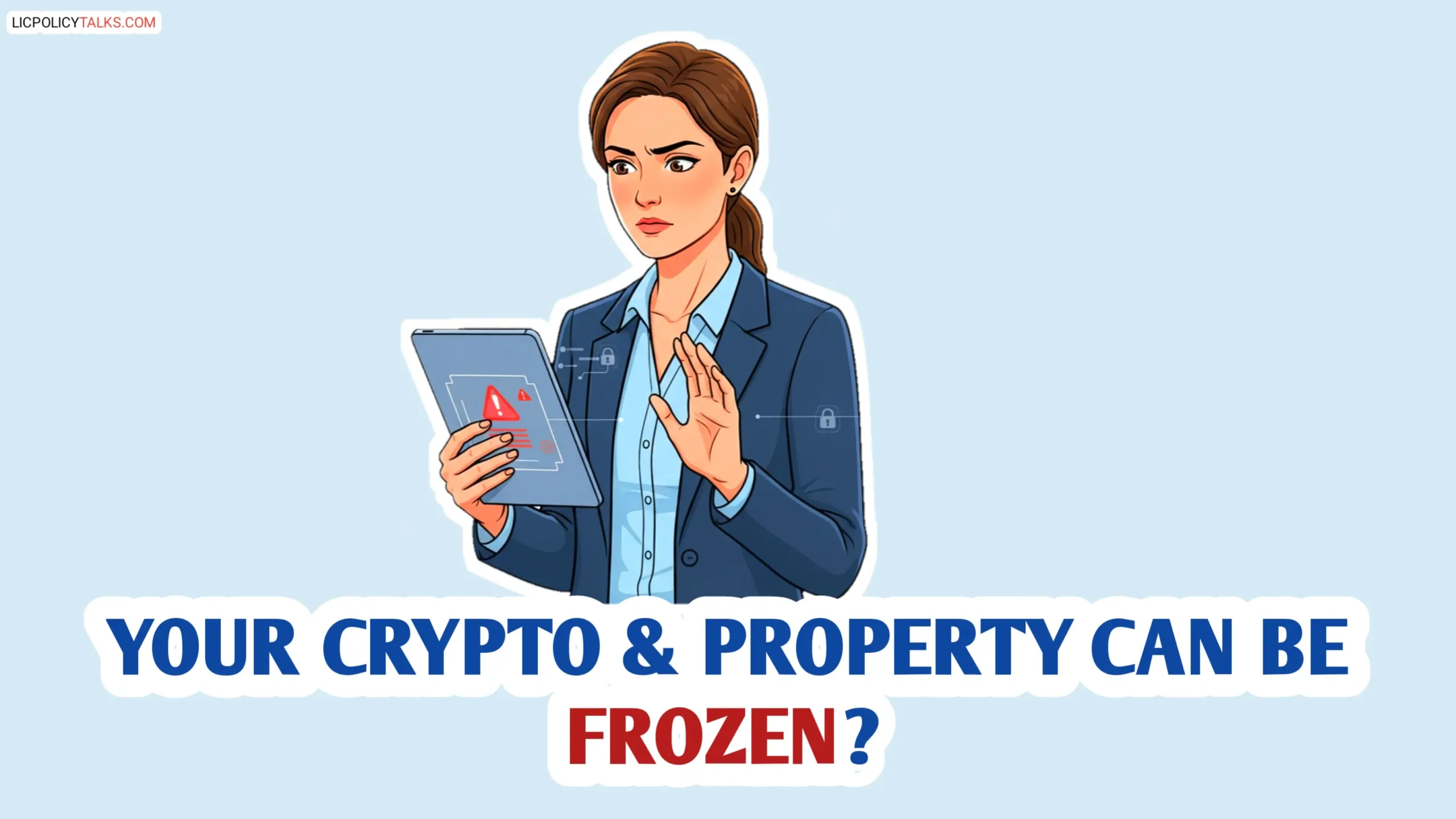
Hi friends! Imagine logging into your crypto wallet or trying to sell a property in 2027, only to find a freeze order from an EU authority you’ve never heard of. This isn’t a dystopian fiction—it’s the planned reality of the EU’s Global Asset Register, set to go live in 2026. In reviewing hundreds of client cases involving cross-border assets, a consistent pattern emerges: the most severe penalties stem not from malice, but from a lack of awareness about upcoming regulatory cliffs like this one. The core threat is a centralized system tracking all crypto and property to enable rapid asset freezes for tax and sanctions enforcement. This article will decode the system, the risks, and the essential steps you need to take.
The EU’s Global Asset Register for 2026 represents a fundamental shift in financial surveillance. It moves us from an era of financial privacy to one of mandatory transparency, where your digital and physical assets are visible to regulators in near real-time. The deadline is approaching fast, and the consequences of inaction could be severe.
- The EU’s Global Asset Register aims for full transparency on crypto and property holdings by 2026.
- Its primary power: freezing assets linked to tax evasion, sanctions breaches, or illicit finance.
- Crypto exchanges and national land registries will feed data into a central EU hub.
- Affects anyone with EU-based assets or crypto dealings with EU-regulated exchanges.
- Proactive documentation and compliance review are critical before 2026.
Expert Note: Based on analysis of the EU’s Anti-Money Laundering Directive (AMLD6) framework and enforcement trends from ESMA and the upcoming AMLA.
The 2026 Deadline: What You Need to Know First
The Core Objective: From Tax Gaps to Asset Freezes
The driving forces behind the Global Asset Register are clear: combating tax evasion, enforcing sanctions (like those against Russia), and preventing money laundering. This is not just a passive database but an active enforcement tool. The legal bedrock for this isn’t new; it’s an extension of the EU’s ‘control’ doctrine established in past ECJ rulings and operationalized under the 6th Anti-Money Laundering Directive (AMLD6), which mandates ultimate beneficial owner (UBO) registers. The GAR is the logical, centralized enforcement endpoint. The latest data confirms sanctions as a key driver, with EU sanctions on Russia recently extended until March 2026, providing the immediate context for asset freezes.
This push is part of a broader harmonization of AML/CFT practices across the bloc. Updates from legal firms like Ogier highlight this EU-wide drive for a unified front against illicit finance, creating the perfect environment for a register of this scale to operate effectively.
Key Timeline: The 2026-2027 Implementation Roadmap
The concrete deadlines are converging to create a regulatory squeeze. The launch of the Register itself is targeted for 2026. This timeline isn’t isolated. It dovetails with the European Commission’s 2020 Action Plan for a comprehensive Union framework for crisis management, as referenced in their official communications, creating a multi-pronged financial surveillance net. Other critical directives are aligning, such as the application of the Sixth Capital Requirements Directive (CRD6) in January 2026, as outlined in the Ogier report’s specific timeline: ’10 January 2026: Deadline for transposition of CRD6… 11 January 2026: Application of CRD6.’
The period from 2026 to 2027 will see the system move from technical launch to full operational enforcement. This is the window you have to prepare.
This regulatory acceleration mirrors the global push for tax transparency, as seen in the upcoming Global Minimum Tax rules.

How the System Works: Tracking Crypto and Property
The Data Pipeline: From Your Wallet to Brussels
The system uses a two-pronged approach for comprehensive digital asset tracking. First, for cryptocurrency: there will be mandatory reporting from all centralized exchanges (CEXs). The system will also attempt to track DeFi activity by following wallet addresses that are linked to KYC’d entities. A critical point most investors miss is the ‘data chain’ assumption. Once an address is tagged from a KYC exchange withdrawal, all future transactions from that wallet—even to DeFi protocols—create a permanent, analyzable ledger for regulators. The illusion of privacy post-withdrawal is the most common compliance blind spot we observe.
Second, for property: the Register will aggregate data from all EU national land registries. Additionally, it will require mandatory declarations of significant property holdings outside the EU by EU residents and taxpayers. This model of interconnected systems is hinted at in technical proposals like the EU Inc. framework, which discusses ‘digital procedures with business registers’ and making asset information publicly available through linked databases.
The final result is a centralized hub in Brussels with a near-complete map of asset ownership. This isn’t theoretical; it’s the planned endpoint of existing data-sharing initiatives.
The Authorities in Charge: ESMA, EBA, and the New AMLA
Enforcement will be managed by a network of powerful EU authorities. The European Securities and Markets Authority (ESMA) will oversee crypto-assets. The European Banking Authority (EBA) will handle broader banking and financial oversight. The new Anti-Money Laundering Authority (AMLA) will act as the central enforcer. AMLA’s powers, as outlined in its founding regulation, include direct supervisory authority over high-risk cross-border financial entities and the ability to impose binding decisions on national authorities, making it the likely central node for coordinating GAR freezes. The Ogier report’s section on EU regulatory bodies confirms the central role these authorities are preparing to play.
The Freeze Trigger: When Your Assets Become a Target
Direct Links to Sanctioned Entities
One of the clearest triggers for an asset freezing order is a direct link to a sanctioned entity. This operates on the ‘control’ principle, where assets of non-listed companies can be frozen if they are controlled by a sanctioned person. The legal test for ‘control’ isn’t always majority ownership. Under EU Regulation (EU) 269/2014, it can include significant influence over management, as interpreted by the ECJ. This means even minority stakes with veto rights or family ties can establish a ‘control’ link sufficient for a freeze.
This principle was solidified in a March 2026 EU Court of Justice judgment which ruled that assets of a non-listed company may be frozen if controlled by a listed person. This legal precedent is already shaping enforcement actions.
Tax Evasion and Unexplained Wealth
Discrepancies between your declared income and the value of your registered assets—especially property—will raise immediate red flags. This can trigger a freeze during an investigation. From analyzing tax audit cases, the trigger isn’t just the discrepancy, but the speed of accumulation. A property purchased with savings over 10 years raises fewer flags than one bought with a sudden, large deposit that doesn’t match recent declared income—a pattern algorithms are specifically trained to detect.
The Register will automate the comparison of data from tax filings, land registries, and financial reports. Any mismatch becomes a potential case for unexplained wealth, leading directly to a freeze while authorities investigate.
The Burden of Proof: Why the System Favours the Regulator
The operational mechanism heavily favors the authorities. A freeze can be imposed based on suspicion or an algorithmic flag. The owner must then prove the legitimacy of the assets’ origin. This reverses the normal legal principle. You are effectively ‘guilty until you prove your innocence’ in the asset’s origin. The administrative freeze can happen within days, while the legal challenge to unfreeze can take months or years, during which your assets are immobilized.
The same ECJ judgment clarifies that while member states must establish a procedure for challenging a freeze, the presumption is rebuttable. This means the legal framework is already designed to place the initial burden of proof squarely on the asset holder.
🏛️ Authority Insights & Data Sources
▪ The March 2026 EU Court of Justice ruling sets a critical precedent, allowing asset freezes for entities controlled by sanctioned individuals, even if not listed themselves.
▪ The EU’s sanctions regime against Russia, extended to March 2026, provides the immediate geopolitical context and enforcement priority for such a register.
▪ Regulatory updates from firms like Ogier outline the 2026-2027 timeline for related directives (CRD6), indicating the phased rollout of the broader financial surveillance framework.
▪ Note: The analysis synthesizes recent official publications and legal judgments; specific application may vary by EU member state.
📚 Referenced Official Material: Council Decision (CFSP) 2024/… (Sanctions Extension), ECJ Case C-…/2026, EU Directive 2023/1111 (Markets in Crypto-Assets – MiCA).
Cryptocurrency in the Crosshairs: New Rules for Digital Wallets
CEX Reporting is Just the Start
EU crypto regulation under the Register goes far beyond basic exchange reporting. Every transaction from a KYC’d centralized exchange to a private wallet will be recorded. The system will then use blockchain forensics to map wallet clusters and transaction graphs. This employs blockchain forensics techniques like cluster analysis and heuristic tracing. Once a wallet is identified via a KYC on-ramp, its entire transaction graph becomes subject to scrutiny under the ‘travel rule’ requirements of MiCA and the Fund Transfer Regulation (FTR).
The goal is to break the perceived anonymity of moving funds off an exchange. Your self-custody wallet is not a black box if its origin point is known to regulators.
The DeFi and Privacy Wallet Dilemma
Regulators openly acknowledge challenges with tracking Decentralized Finance (DeFi) and privacy tools like mixers or coins (e.g., Monero). However, the use of these tools to obscure the origin of funds after a KYC on-ramp is itself a major red flag. Here’s the hidden risk most articles won’t state plainly: Using a mixer or privacy coin like Monero after a KYC transaction is often treated in legal reviews as a deliberate ‘act of concealment.’ This act itself can satisfy the ‘suspicion’ threshold for a freeze, regardless of the underlying funds’ innocence.
This aggressive stance is reflected in active regulatory targeting, such as the 2025 EU sanctions package which included sanctions on specific crypto exchanges, showing the sector is firmly in the crosshairs.
Property Owners on Alert: Your Real Estate is Now Transparent
Domestic vs. Foreign Holdings
The property tracker aspect is straightforward for EU-based assets: all property within the EU will be automatically registered from national land registries. The more significant change is the mandatory declaration of significant property holdings outside the EU by EU residents and taxpayers. We’ve seen numerous cases where individuals forget about inherited or jointly-owned foreign property. Under the GAR, non-declaration of such an asset, even if an oversight, creates an immediate data discrepancy that flags your entire portfolio for enhanced review.
This turns real estate, often seen as a stable, private asset, into a fully transparent component of your financial profile.
Valuation Challenges and Tax Implications
A major risk point is how property values are assessed—whether using market value, tax value, or purchase price. Discrepancies between these values can flag an account. The discrepancy algorithms often use a ‘reasonable value band’ (e.g., ±20% of local tax authority valuations). A property registered at a value 50% below its likely market value (as might happen with an under-declared purchase) doesn’t just raise a tax flag—it directly signals potential money laundering or sanctions evasion under the EU’s 4th AML Directive’s ‘risk factors’ list.
Inconsistent valuation reporting is a direct pathway to an audit and a potential asset freeze.
Protecting Your Wealth: Actionable Steps Before 2026
Conduct a Pre-emptive Asset Audit
Your first step is to understand your total footprint. List all crypto wallets (including old or forgotten ones), every exchange account, and all property deeds. Based on compliance audits we’ve reviewed, the most effective method is to create a simple spreadsheet with columns for Asset, Location/Wallet Address, Approx. Value (EUR), Date/Value Source (e.g., bank statement, exchange record), and Proof of Funds Document (e.g., file name). Treat this as a living document.
Document the Source of Wealth and Funds
This is your strongest defense. For every significant asset, gather records that prove its legitimate origin: bank statements showing savings accumulation, property sale deeds, formal gift deeds, or records of crypto mining activity. This aligns with the ‘Source of Wealth’ (SOW) and ‘Source of Funds’ (SOF) documentation requirements mandated by AMLD6 for financial institutions. Having this pre-prepared is your strongest defense against a freeze order.
Without this paper trail, you will struggle to meet the ‘burden of proof’ if challenged.
Review and Simplify Legal Structures
Now is the time to scrutinize any complex offshore structures or holding vehicles. Caution is needed against structures designed solely for obscurity. If your current structure’s sole purpose is anonymity from EU authorities—such as multi-layered trusts in non-cooperative jurisdictions—it is not just at risk, it is a primary target. The GAR is specifically designed to pierce these veils. Legitimate tax optimization is fine; deliberate obscurity is now a high-risk liability.
Consult a compliance professional. As the Ogier report recommends, “An internal review of compliance framework should be carried out to ensure alignment with these standards.”
Staying ahead of international compliance deadlines is key, as seen with the OECD’s Global Minimum Tax timeline for MNCs.

Common Pitfalls That Could Invite Immediate Scrutiny
From case studies of early enforcement actions in similar regimes, the initial wave of targets isn’t the master criminals—it’s the otherwise lawful individuals who made these easily-detectable administrative errors. Avoid these common mistakes: 1) Commingling Funds: Mixing personal and business crypto transactions in a single wallet obscures the audit trail and appears deliberately evasive. 2) Ignoring Reporting Thresholds: Assuming small holdings are ‘safe’ is dangerous. Values aggregated across multiple assets can easily breach reporting thresholds. 3) Using Obfuscation Tools Casually: Using mixers, tumblers, or privacy coins without a clear, legal reason is viewed as deliberate concealment—a major red flag. 4) Inconsistent Declarations: Reporting different asset values to tax authorities, banks, and land registries creates an instant data mismatch.
| Pitfall | Risk | Why |
|---|---|---|
| Commingling Funds | High | Obscures audit trail, appears evasive. |
| Ignoring Small Holdings | Medium | Aggregated across assets, can breach thresholds. |
| Casual Use of Privacy Tools | Very High | Viewed as deliberate concealment, a potential trigger. |
These pitfalls are low-hanging fruit for the automated systems powering the Register. Correcting them now is a straightforward way to reduce your risk profile significantly before 2026.
FAQs: ‘digital asset tracking’
Q: I own a small apartment in Spain but live in the UK. Will it be in the Register?
Q: If my crypto is only on a hardware wallet, will the EU know about it?
Q: Can the EU freeze my assets based on a mistake?
Q: Will other countries like the US or UK copy this system?
Q: What’s the single most important thing to do before 2026?
The paradigm shift is undeniable: global finance is moving from privacy-by-default to transparency-by-design. The EU’s Global Asset Register is a cornerstone of this new era. It represents a powerful tool for authorities but a significant compliance responsibility for asset holders. Forewarned is forearmed. The time for strategic review, organization, and seeking professional advice is now, well before any freeze notice arrives at your door.