

Hi friends! Let’s talk about something that isn’t getting enough airtime. We’re all dazzled by AI’s potential—agents that can code, create, and think. But honestly, have you stopped to think about what’s actually powering this revolution? It’s not just lines of code; it’s massive warehouses filled with supercomputers guzzling electricity. Today, we’re going to pull back the curtain on the single biggest risk to the AI boom that Wall Street is largely ignoring. You’ll learn why the global power grid is the Achilles’ heel of this trillion-dollar industry and what it means for your investments.
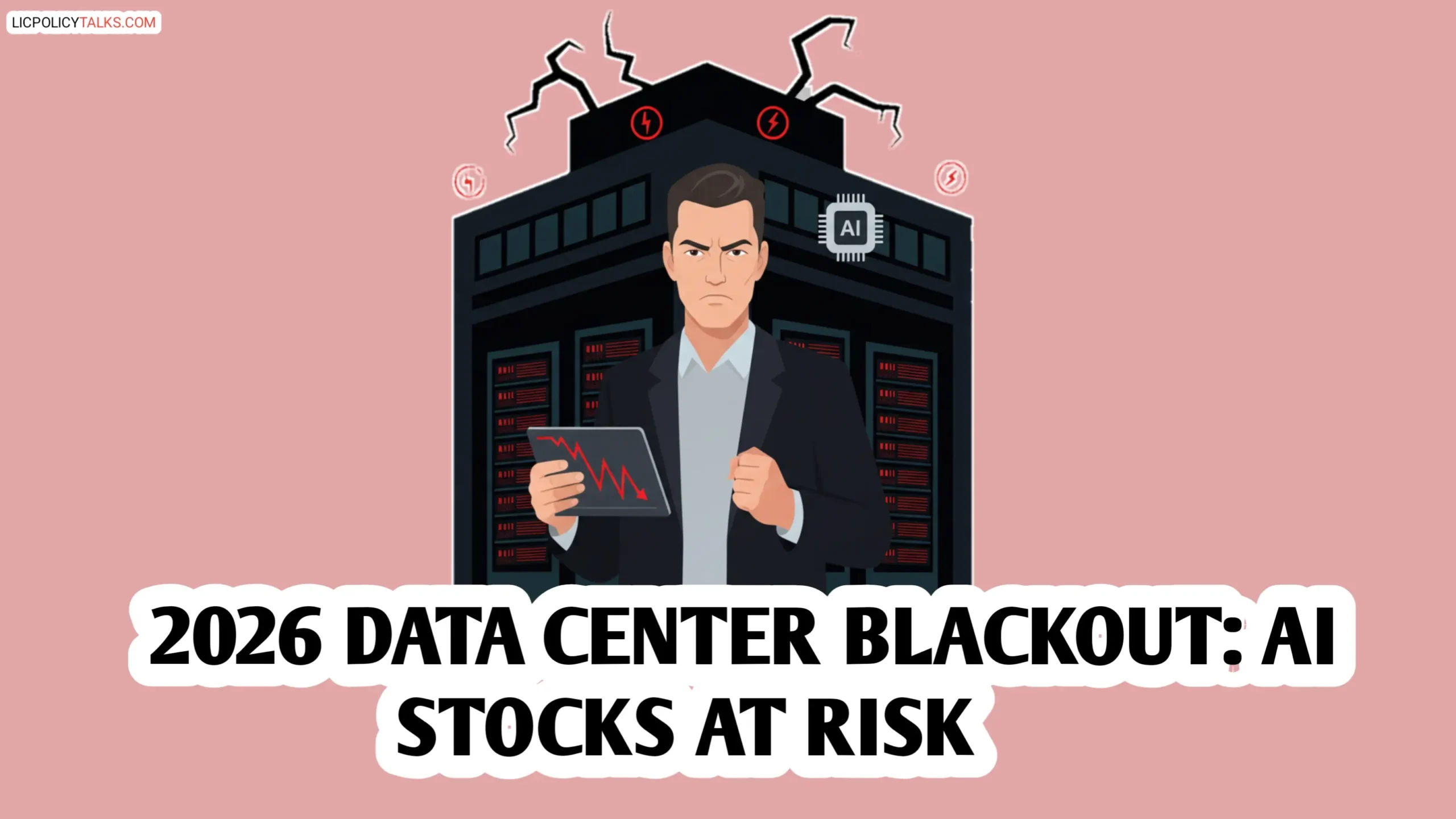
This isn’t a distant sci-fi problem. By 2026, the collision of AI’s exponential growth with our aging global power grid failure infrastructure could trigger a real-world data center blackout, sending shockwaves through markets. It’s a systemic risk cited among the top global risks for 2026.
Introduction: The AI Boom’s Achilles’ Heel
Think about your last hour. You probably asked a chatbot a question, scrolled through AI-recommended videos, or used a tool powered by machine learning. Our digital lives are becoming inseparable from artificial intelligence. It promises limitless intelligence, a future of abundance. But here’s the brutal paradox: this digital marvel is built on a shockingly finite physical resource—electricity.
The core thesis is this: by 2026, the collision of AI’s exponential growth with lagging, aging grid infrastructure will become the single biggest unaccounted-for risk in tech valuations. We’re not just talking about higher bills; we’re talking about a fundamental constraint that could halt growth and vaporize trillions in market cap almost overnight.
The Insatiable Appetite: How AI is Overloading the Grid
To understand the scale, let’s break down the physics. A traditional Google search uses about 0.3 watt-hours of energy. A single complex query to a large AI model can consume over 10 times that. Why? Because AI doesn’t just fetch data; it runs billions of calculations across thousands of specialized chips to generate an answer.
The GPU Power Gulpers
The heart of this demand is the Graphics Processing Unit (GPU) cluster. Training a model like GPT-4 required tens of thousands of these chips running flat-out for months. But the real, permanent load comes from *inference*—every time you use ChatGPT or an AI assistant, it fires up those GPUs. This isn’t a one-time computational sprint; it’s a perpetual, global marathon of processing.
This dynamic is fundamentally reshaping global energy markets. Data centers are moving from being significant energy users to dominant, baseload consumers that rival small countries.
Beyond Bitcoin: A Permanent, Growing Load
People often compare this to Bitcoin mining’s energy use, but that’s a flawed analogy. Cryptocurrency mining demand can fluctuate with price. AI’s data center power demand is different—it’s tied to product adoption and usage that is only going up. Every new AI feature in your phone, car, or workplace adds to a permanent, cumulative load on the grid. Efficiency gains, measured by Power Usage Effectiveness (PUE), are being quickly outstripped by sheer volume growth.
Why 2026? The Perfect Storm of Grid Vulnerabilities
So why is 2026 the inflection point? It’s not just about AI’s hunger; it’s about a perfect storm of converging weaknesses in our global energy system.
Aging Infrastructure Meets Exponential Demand
Much of the developed world’s electrical grid is decades old, designed for a different era of consumption. Upgrading transformers, transmission lines, and substations is slow, expensive, and mired in regulation. Meanwhile, AI demand is growing at an exponential, tech-industry pace. This mismatch creates severe bottlenecks where new data centers can’t even get connected because the local grid lacks capacity.
The Intermittency Problem
The push for renewables adds another layer of complexity. Solar and wind are fantastic, but they are intermittent. The sun doesn’t always shine, and the wind doesn’t always blow. AI data centers, however, need 24/7, rock-solid power. This creates a “dunkelflaute” problem—periods of calm, dark weather where renewables underproduce, forcing reliance on aging fossil-fuel plants or, worse, leading to shortages.
Compounding this is the broader electrification of transport and heating. This additive strain is as foreshadowed by warnings of a 2025 power crisis fueled by AI data centers and electric vehicles. The grid is being pulled in too many directions at once.
Geopolitical instability further strains energy supply chains for fuels and critical grid components. By 2026, these threads—lagging modernization, renewable intermittency, competing electrification, and geopolitical risk—pull taut simultaneously.
The 2026 Risk Confluence
Projected increase in pressure on the global power grid (2024-2026)
Case Study: Taiwan’s Silicon Shield is Also a Power Target
Serious questions are being asked about whether Taiwan can keep the lights on for its vital AI and chip fabs. This island is the world’s forge for advanced semiconductors, producing the very GPUs and chips that power the AI revolution. It’s also a geopolitical flashpoint and suffers from an energy-poor, isolated grid heavily reliant on imported liquefied natural gas.
Taiwan’s grid is already under stress. Major outages have occurred in recent years due to human error and equipment failure. Its transition to renewables is slow. Now, add the power demands of its own world-leading chip fabrication plants (fabs), which are themselves essential for AI. A typhoon, a geopolitical incident, or a simple technical failure that triggers a major blackout in Taiwan wouldn’t just be a local event.
It would be a heart attack for the global AI supply chain. Production of advanced chips would halt instantly. This physical infrastructure vulnerability translates directly into financial investment risk AI, as the valuations of chipmakers and their customers are predicated on uninterrupted output.
The fragility of the AI hardware supply chain is just one layer of risk. The next layer involves the software and agents themselves…

The Domino Effect: From Grid Stress to Market Crash
Let’s map out how a physical grid problem becomes a financial crisis. It’s a domino chain with clear, terrifying steps.
Phase 1: Curtailment and Contingency
When grid demand threatens to outstrip supply, operators issue curtailment orders. They legally force the largest consumers—like data center campuses—to power down or switch to backup diesel generators (which are expensive, polluting, and finite). This immediately disrupts AI cloud services from AWS, Azure, and Google Cloud.
Phase 2: The Guidance Guillotine
AI-first companies, from SaaS platforms to autonomous vehicle fleets, see their services degrade or go offline. They cannot meet customer SLAs (Service Level Agreements). Within a single earnings cycle, CEOs are forced to slash revenue guidance, citing “unexpected infrastructure reliability issues.” The first whispers of an AI stocks crash begin.
Phase 3: Multiple Compression
The market’s valuation of AI stocks is based on sky-high growth expectations. Slashed guidance reveals that growth is not just slowed but physically constrained. The price-to-earnings multiples of the “Magnificent Seven” tech giants, whose valuations are pinned to AI leadership, violently contract. Panic selling ensues as investors realize this isn’t a software problem but a hard, physical limit.
The contagion spreads from pure AI plays to the broader tech sector and then to markets globally, as confidence in the engine of future economic growth shatters.
AI/Cloud Giant Exposure & Contingency Plans
| Company | Est. % of Cost from Energy | Publicized Grid Resilience Plan | Recent Capex on Energy Infrastructure |
|---|---|---|---|
| NVIDIA | Low (Primarily a chip designer) | Indirect, via partner data centers | Minimal (R&D focus on chip efficiency) |
| Microsoft (Azure) | High & Rising | Aggressive. PPAs, backing advanced nuclear, data center generators. | $10B+ in renewable and nuclear deals |
| Amazon (AWS) | Very High | Massive global PPA portfolio, on-site solar/battery pilots. | Largest corporate buyer of renewable energy globally |
| Google Cloud | Very High | Aiming for 24/7 carbon-free energy by 2030, investing in geothermal. | Multi-billion $ in clean energy projects & grid upgrades |
| Meta | High | Supporting new wind/solar to match operations, grid interconnection advocacy. | Significant investments in new renewable generation |
Highlighted rows indicate companies with high direct energy costs actively building resilience.
Who’s Building the Ark? The Race for Grid Resilience
Not every player is just hoping the grid holds. A strategic race is underway to build energy resilience, separating future winners from the vulnerable.
The GCC’s Petro-Powered AI Play
Nations like Saudi Arabia and the UAE see a historic opportunity. They possess vast hydrocarbon reserves (and the capital from them) and abundant solar potential. They are strategically moving to build a dedicated GCC AI stack, using their energy sovereignty to power data centers and attract AI companies fleeing grid-constrained regions. They’re turning an old-economy advantage into a new-economy moat.
Hyperscalers Become Utilities
The big cloud companies aren’t waiting either. Microsoft is investing in advanced nuclear reactor companies. Google is pioneering geothermal projects. Amazon is the world’s largest corporate buyer of renewable energy. They are building their own power grids in all but name, signing massive Power Purchase Agreements (PPAs) and even funding grid modernization efforts. This aligns with the 2026 Power and Utilities Industry Outlook calling for urgent modernization.
The differentiation is clear: companies that are mere consumers of grid power face existential energy crisis 2026 risks. Those building sovereign, resilient energy supply chains are constructing the arks that will survive the coming storm.
Just as the power grid is a vulnerability, so too are the material supply chains for the energy transition itself…

Investment Implications: Navigating the Blackout Risk
For investors, this isn’t a signal to abandon AI, but to invest with a radically new filter. The old metrics are insufficient.
Screening for Resilience
Add “energy due diligence” to your checklist. Prioritize companies with: 1) Long-term Power Purchase Agreements (PPAs) locking in price and supply, 2) Investments in on-site generation (solar, batteries, maybe nuclear), and 3) Geographic diversification of data centers away from the most congested grids (e.g., Virginia’s “Data Center Alley”). Be wary of AI software companies whose business model depends on cheap, abundant cloud compute they don’t control.
The Barbell Strategy for 2026-2030
Consider a barbell approach. On one end: selective exposure to the AI giants (like Microsoft, Google) that are most aggressively building their own energy arks. They are turning a systemic risk into a competitive moat. On the other end: direct investments in the *enablers* of grid resilience—companies making advanced grid software, next-generation nuclear technology, long-duration energy storage, and high-voltage transmission equipment.
This strategy balances exposure to the AI growth story with a hedge against its primary physical constraint.
Conclusion: Power is the New Metric
The era of treating computing power as an abstract, infinitely scalable resource is over. We’ve hit a physical wall. The cost, reliability, and sovereignty of electrons will be the primary constraint and the new moat for the next phase of AI.
The coming data center blackout risk is a clarion call. For builders, it’s a challenge to innovate in energy. For investors, it’s a mandate to look under the hood. The companies that solve the power problem will define the next decade, while those that ignore it may not survive the next AI stocks crash. This crisis, while daunting, could ultimately drive the biggest wave of energy innovation since the industrial revolution.