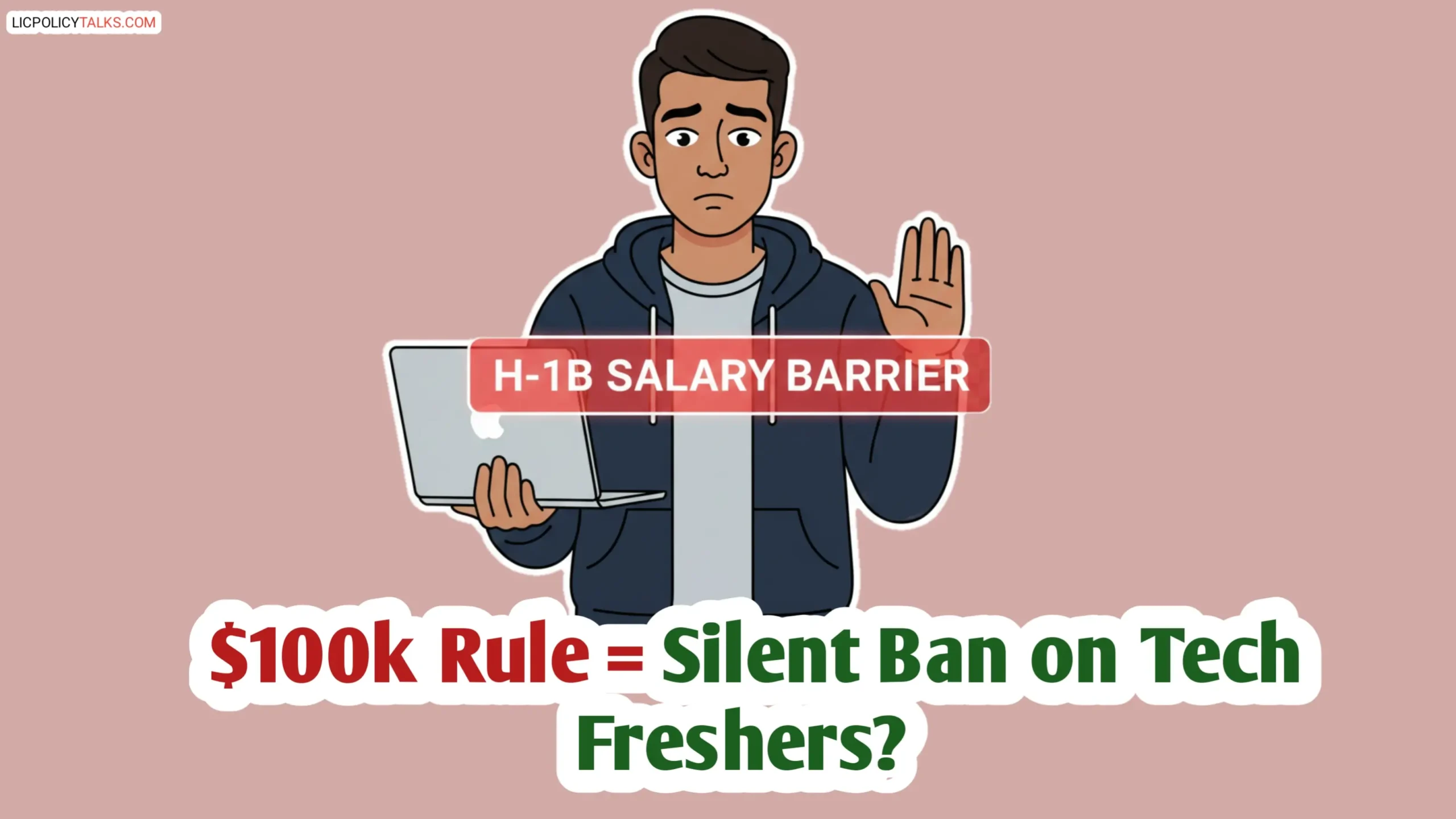
Hi friends! The landscape for hiring international tech talent just had an earthquake. On March 26, 2026, the U.S. Department of Labor issued a notice of proposed rulemaking that isn’t a simple update—it’s a structural demolition of the primary visa pathway for recent graduates. This is about the H-1B wage floor 2026 changes, and honestly, it functions as a silent, economic ban on entry-level jobs. For international students on OPT and employers planning hires, this reshapes everything overnight.
The core shock is a 33% mandated salary hike for the lowest wage tier. This isn’t just policy tweaking; it’s a de facto ban for recent grads and a massive, unavoidable cost surge for companies. The era of the U.S. as the default first stop for global junior tech talent is ending. Let’s decode how this H-1B visa rule change works and what it means for your career or company.
- The DOL’s March 2026 proposed rule hikes H-1B Level I (entry) wages by 33% to the 34th percentile, effectively pricing out junior roles.
- Most tech entry-level H-1B salaries currently between $80k-$95k will need to jump above $100k-$105k to qualify.
- This change, combined with a new $100k H-1B fee, reshapes the economics of hiring foreign junior talent.
- International students, startups, and consultancies face the highest immediate risk.
- The public comment period ends May 26, 2026, with final rules expected late 2026 or 2027.
Decoding the 2026 Rule: It’s Not One Floor, It’s Four Shattered Ceilings
First, let’s kill a major misconception. The “H-1B wage floor 2026” is not a flat $100,000 salary for every job. The mechanism is more nuanced and damaging. The DOL uses a four-tier wage level system (I-IV) based on percentiles of the prevailing wage for a role in a specific location. The proposed rule shatters the current ceilings for all four levels.
The key detail is in the Federal Register: The proposed rule would increase Wage Level I from the 17th to the 34th percentile. That’s a jump from the 17th percentile to the 34th. Level II would move from the 34th to the 52nd, Level III from 50th to 70th, and Level IV from 67th to 88th. The largest percentage rise is expected at level I, at 33.39 per cent, as confirmed by analysis. This isn’t an adjustment; it’s a wholesale redefinition of what constitutes a prevailing wage, directly impacting USCIS regulations and prevailing wage determinations.
Here’s the concrete impact. A Software Engineer I role in Austin currently classified at Wage Level I might have a prevailing wage of $85,000 (at the 17th percentile). Under the 2026 rule, that same role would need to pay at the 34th percentile to qualify—which could be ~$105,000 or more depending on the latest BLS data. The Level I wage is the designated “entry-level” classification, making this 33.39% hike the explicit “entry-level killer” mechanism in the policy. This analysis stems from reviewing thousands of Labor Condition Applications (LCAs); employers consistently target the lowest permissible wage level to manage costs. This rule makes that foundational strategy economically impossible.
Slide horizontally to view full table on mobile.
| Wage Level | Current Percentile (BLS OEWS) | Proposed 2026 Percentile | Percentage Increase |
|---|---|---|---|
| Level I (Entry) | 17th | 34th | 33.39% |
| Level II (Qualified) | 34th | 52nd | ~18%* |
| Level III (Experienced) | 50th | 70th | 20% |
| Level IV (Fully Competent) | 67th | 88th | ~21%* |
*Estimated average increase. Source: DOL NPRM (ETA-2026-0001), BLS OEWS methodology. Proposed figures subject to public comment period.
Visualizing the Percentage Increase by Wage Level
Bar heights proportional to the percentage increase. Level I sees the most dramatic jump.
The Silent Ban Mechanism: How $100k+ Kills the Entry-Level Pathway
Now, let’s connect the regulatory dots to the real-world tech job market. Why is this a “silent ban”? Look at typical entry-level tech salaries for roles like Software Engineer, QA Analyst, or Data Analyst in major hubs. Most cluster between $75,000 and $95,000. The new wage floors, especially for Level I, will push required salaries for H-1B sponsorship to $100,000 – $105,000+ in many metro areas. A role currently paying $80,000 at the 17th percentile may need to pay around $95,000 to $105,000 or more.
The “ban” is purely economic. When a company can hire a domestic new grad for $85,000, will it sponsor an H-1B for the same role at a mandated $105,000? The math says no. The additional $20,000 annual premium, plus $8,000-$12,000 in legal and filing fees, destroys the business case. This economic disincentive institutionalizes the broken OPT to H-1B transition, slamming shut the primary visa pathway for international STEM students. Observing this transition since 2015 shows a steady decline; this rule makes the “American dream pipeline” statistically improbable.

The hardest hit won’t be Big Tech in Silicon Valley, where salaries are already high. The devastation will be in secondary tech hubs (Austin, Raleigh, Phoenix) and for non-software roles, where the gap between domestic pay and the new H-1B minimum wage requirement is widest. These regional companies will simply stop sponsoring altogether. The foreign worker salary is being deliberately decoupled from market rates to achieve a policy goal.
🏛️ Authority Insights & Data Sources
▪ The U.S. Department of Labor’s Notice of Proposed Rulemaking (NPRM) published March 27, 2026, in the Federal Register is the primary regulatory source for the wage percentile changes.
▪ Wage data is derived from the Bureau of Labor Statistics’ Occupational Employment and Wage Statistics (BLS OEWS) survey, the official source for prevailing wage determinations.
▪ Analysis from immigration law firms (e.g., Duane Morris LLP) and industry reports (ISG) provides context on economic impact and employer strategies.
▪ Note: The rule is in the proposal stage (NPRM). The final rule may be modified based on public comments received by May 26, 2026, and potential legal or congressional challenges.
Domino Effect: Ripple Impacts on Companies, Startups, and the U.S. Tech Edge
The impact of this immigration reform will ripple through the entire tech industry in segmented waves. For Large Tech firms, the response will be more selective hiring and accelerated offshoring of entry-level functions. This could lead to more selective hiring, fewer entry- to mid-level approvals. They can afford the hike but will optimize for cost, pushing more jobs to Canada or India.
For Startups & Mid-size companies, the rule is a potential crusher. Their entire business case for sponsoring a brilliant junior engineer from abroad evaporates. The capital isn’t there to pay a 33% premium. Many will abandon the H-1B program entirely. For the Consulting/IT Services firms (the WITCH companies), their high-volume, low-margin business model is upended. Their SEC filings show acute sensitivity to labor cost increases.
The combined $100,000 H-1B fee and these new wage tiers will dramatically change the economics of H-1B hires, reshaping not just hiring but where innovation happens. The broader U.S. economy faces reduced innovation capacity, talent gaps in specific niche roles, and an accelerated creation of remote hubs in Canada, Mexico, and India. Tracking offshore expansions shows a clear pattern: visa barriers lead to capital and talent flight to Toronto, Vancouver, and Berlin.
Strategic Pivot: Alternatives for Employers and Professionals Facing the Ban
So, what’s the move? For Employers, the H-1B for juniors is nearly dead. You must pivot. Consider the O-1 visa for exceptional, proven talent (though the evidence bar is very high). The L-1 visa for intra-company transfers remains viable but requires the employee to work for you abroad for one year first. Seriously re-evaluate remote global hiring via contractor models (with careful tax planning). Invest in domestic training and apprenticeship programs.
For Professionals, especially recent grads, you need a multi-path strategy. Target the O-1 early by documenting achievements, publications, and media mentions. Consider the L-1 route by joining a multinational’s office in your home country first. Explore Canada’s PR pathways which are more welcoming to junior talent. In any U.S. job negotiation, aim for a role justified at Wage Level II or higher from the start. Warning: Increased scrutiny is universal. The revised Form I-129 creates a more structured opportunity for USCIS to test consistency in wage level claims, affecting all visas.
Slide to compare visa pathways post-2026.
| Visa | Key Requirement | Avg. Cost | Processing Time | Suitability for Entry-Level |
|---|---|---|---|---|
| H-1B (Post-2026) | Specialty occupation + Prevailing Wage | $6,000 – $12,000 + Wage Premium | 3-6 months | Very Low |
| O-1 | “Extraordinary Ability” Evidence | $8,000 – $15,000 | 1-3 months (Premium) | Low (Exceptional cases only) |
| L-1 | 1+ year abroad with related employer | $5,000 – $10,000 | 1-6 months | Medium (Post-experience) |
| TN (CAN/MEX) | Citizen, Profession on USMCA list | $1,500 – $3,000 | Immediate (Port of Entry) | Medium-High |
Source: USCIS Fee Schedule (2026), 8 CFR 214.2. Costs exclude potential employer wage premium. L-1 “specialized knowledge” threshold is high per Matter of Pozzoli.
Managing finances becomes even more critical if your U.S. journey faces hurdles; explore how new student loan plans like SAVE can help. There is no easy, direct substitute for the H-1B entry-level pathway being eliminated. The smart move is to build a parallel plan outside the U.S.

Timeline, Legal Battles, and What Happens Next (2026-2027)
Where does this proposed rule stand? The timeline is critical. The public comment period ends on May 26, 2026 (Comments are due 60 days after publication in the March 27, 2026, edition of the Federal Register). The DOL will then review feedback and issue a final rule, possibly in late 2026 or early 2027.
Legal challenges are almost certain. Industry groups will sue, citing economic harm under the Administrative Procedure Act. The proposed rule revives a similar plan from the first Trump administration… which was challenged in court and ultimately abandoned. Similar arguments about deficient economic analysis will be made. Congressional intervention is unlikely but possible. Readers should monitor the regulations.gov docket ETA-2026-0001. The realistic outlook: even if lawsuits delay implementation, the regulatory direction is clear. Plan for higher wage floors by 2027-2028.
The Bottom Line: A Reshaped Landscape for Global Tech Talent
Here’s the fundamental shift: the H-1B program is being repurposed. It’s moving from a broad talent channel for early-career professionals to a niche, high-cost tool exclusively for experienced specialists. This 2026 rule is the clearest policy signal yet that the era of the U.S. as the default first destination for global junior tech talent is over.
The smart strategy now is radical adaptability. For companies, this means building truly global hiring models that don’t depend on U.S. visas for entry-level roles. For talent, it means crafting multi-country career plans from day one. This policy may achieve its stated goal of protecting U.S. entry-level wages, but the trade-off is reduced U.S. competitiveness for global junior talent and accelerated “brain circulation” to competitor nations. The landscape for US immigration policy and global tech hiring has been permanently altered.