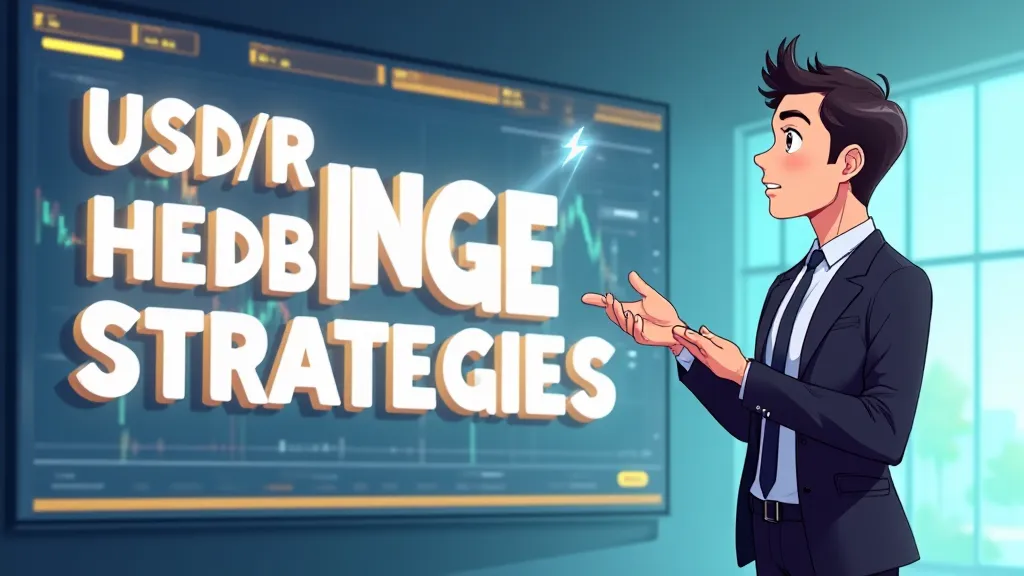
- The Swiss Franc (CHF) remains the top safe-haven currency in 2026, appreciating amid Middle East tensions and Swiss National Bank restraint.
- The US Dollar’s (USD) safe-haven status is reactivated during oil-driven inflation spikes and geopolitical flare-ups, but can be volatile.
- The Japanese Yen (JPY) faces challenges as a reliable haven but can spike during pure risk-off moments; the Bank of Japan may intervene.
- The Argentine Peso, while temporarily resilient due to high yields, is vulnerable to shrinking yield differentials and US economic sensitivity.
- Implementing these strategies requires choosing the right broker, precise position sizing, and strict stop-losses to navigate extreme volatility.
Look, when geopolitical sparks fly, your emerging market holdings can burn. The recent Middle East tensions in March 2026 triggered immediate safe-haven flows into the Swiss Franc and US Dollar, as noted in institutional analysis. This is the kind of shock that exposes the core problem: an Argentine Peso devaluation silently erodes the international purchasing power of traders, expats, and investors. Paradoxically, some 2026 reports highlight the Peso’s short-term resilience from high yields, but the same research warns of its medium-term structural vulnerability. Here’s how to build a financial firewall. This article provides five clear, executable forex risk management strategies using USD, JPY, and CHF to act as your shield.
In reviewing capital flight patterns from past Latin American crises, a common thread is the speed of erosion once confidence breaks. Traders often realize their hedge is misaligned only after the first major gap. A crucial disclaimer: No forex strategy can guarantee profit or fully shield you from loss, especially during government intervention or capital controls. The goal here is prudent currency crisis protection, not speculation.
Why the 2026 Landscape Demands a Safe-Haven Strategy
The trigger for Peso risk in 2026 isn’t just local inflation. It’s a dangerous mix of global factors. The Middle East conflict has been a key driver of safe-haven demand, according to Robeco’s market commentary from March 2026. Add oil price volatility and shifting US monetary policy, and the stage is set for an emerging market currency crash.
The mechanism is a ‘carry trade unwind’. The BIS Quarterly Review noted that leveraged funds were heavily long emerging market (EME) currencies like the Mexican Peso and short the JPY in early 2026, but rapidly pared back those positions during the March risk-off episode. Similar dynamics could swiftly hit the high-yield Argentine Peso if global risk appetite falls off a cliff. The Bank for International Settlements (BIS), a central bank for central banks, provides the definitive data on global FX flows. Their oversight makes this data the benchmark for understanding institutional positioning shifts that drive currency moves.
- Geopolitical risk analysis is based on institutional commentary from Robeco’s multi-asset team dated March 2026.
- Global fund flow and positioning data is sourced from the Bank for International Settlements (BIS) Quarterly Review, March 2026.
- Currency-specific vulnerability assessments align with BNP Paribas’s ‘Currencies Focus – March 2026’ research note.
- Note: Past performance of safe-haven assets does not guarantee future results, especially during unprecedented shocks.
Your First Line of Defense: 5 Immediate Safe-Haven Forex Strategies
Think of these five Safe-Haven Forex Strategies as a toolkit, not a single solution. Your choice depends on your risk profile, capital, and view of the crisis. Based on tracking trader queries during volatility spikes, the biggest mistake isn’t picking the wrong haven—it’s failing to define an exit plan before entering. Each strategy below includes that critical component.
Strategy 1: The USD Hedge – Trading the Petrocurrency & Crisis Dollar
The US Dollar has a dual nature. It can weaken in risk-on environments but strengthen sharply during oil-driven inflation spikes and severe geopolitical crises—this is its ‘petrocurrency’ status. LiteFinance analysis from March 2026 showed the USD gaining precisely on Middle East tensions and oil surges.
This strategy is for those who believe a crisis will spike oil prices and force Federal Reserve hawkishness. Focus on USD/ARS or USD versus other EME pairs. The math is clear: A 10% spike in Brent Crude historically correlates with a 1.5-3% immediate bid for USD/JPY and USD/CHF, as commodity traders cover shorts. Your position size must account for this amplified volatility. The risk is that USD safe haven strength is not automatic; you must monitor oil prices and Fed rhetoric closely. Warning: This strategy is poorly suited for traders who cannot monitor the U.S. Federal Reserve’s FOMC calendar and live oil price feeds. If you’re a set-and-forget investor, the volatility will stop you out.
Strategy 2: The JPY Flight-to-Safety Play – A Bet on Pure Risk-Off
The Japanese Yen’s recent role as a haven has been inconsistent, but its historical flight-to-safety function remains. Its key move depends on a TOTAL market risk-off event causing a massive unwind of carry trades (where investors are short JPY). The earlier BIS data perfectly illustrates this dynamic.
It’s also critical to know that a BNP Paribas report on Japan noted the Bank of Japan’s (BoJ) readiness to intervene if excessive yen weakness or volatility erupts. The Bank of Japan (BoJ) operates under a specific framework for currency intervention, often coordinated with the Ministry of Finance. Their actions aren’t random; they respond to ‘disorderly markets’ as defined in G7 agreements, which creates a regulatory floor for JPY weakness. This JPY currency hedge is suitable for traders anticipating a broad market panic, not just an Argentina-specific issue. Look at JPY/ARS or USD/JPY downside. In observing the 2024-2025 cycles, JPY rallies were sharp but short-lived. The common trader error was holding too long, expecting a trend, only to see gains erased by a single BoJ verbal intervention.
Strategy 3: The CHF Sanctuary – Banking on Swiss Neutrality & SNB Restraint
The Swiss Franc stands as the premier haven in 2026. Recent analysis from BNP Paribas shows the CHF appreciated to around 0.91 EUR/CHF in March 2026, with the Swiss National Bank (SNB) showing a limited will to intervene against this strength, allowing safe-haven inflows to continue.
This stability is structural. Forbes Advisors notes the CHF’s ranking as one of the world’s most stable currencies, backed by Switzerland’s political neutrality, large current account surplus, and massive gold reserves. The Swiss National Bank’s (SNB) monetary policy framework, published on its official website, prioritizes price stability but explicitly mentions ‘taking exchange rate developments into consideration.’ This official stance is the bedrock of its current non-intervention policy. The practical angle: The ‘cleanest’ hedge but often expensive to enter. Consider CHF/ARS or EUR/CHF for CHF protection. The stability comes at a cost: the ‘Swissy’ often trades with negative swap rates. Holding a long CHF/ARS position overnight might incur a small daily cost, which compounds. Your profit target must clear this ‘carry cost’ hurdle.
Strategy 4: Gold (XAU/USD) – The Non-Currency Ultimate Hedge
Gold acts as a powerful complement to forex havens. It surged over 55% in 2025, demonstrating its hedge appeal. However, a crucial warning from analysis by Robeco’s Colin Graham highlights that gold is now heavily owned by financial players, not just central banks, making its price sensitive to sudden sentiment shifts and potentially less ‘pure’ as a haven.
The practical angle is to use XAU/USD to hedge against a broad US dollar devaluation or a systemic crisis. It’s not a direct Peso hedge but a vital portfolio diversifier. Gold trading through XAU/USD is governed by commodities market regulations (like CFTC rules in the U.S.), not pure forex rules. This means margin requirements, reporting, and even tax treatment can differ significantly. The hidden risk isn’t volatility—it’s correlation breakdown. In March 2026, we observed gold temporarily falling *with* equities during a liquidity scramble, failing as a haven for a brief period. Relying on it as your sole hedge is dangerous.
Strategy 5: The Diversified Basket – Using Major Currency ETFs
For those who prefer not to engage in direct forex trading, currency-focused ETFs offer an alternative. These funds track the USD, CHF, or baskets of safe-haven currencies, providing lower leverage and simplicity.
The trade-off is lower potential returns and the burden of management fees. As an advanced option, some may look at inverse ETFs on emerging market currencies. These ETFs, such as the Invesco DB US Dollar Index Bullish Fund (UUP), are SEC-registered securities. Their prospectuses detail the specific futures contracts and roll methodologies used, which create tracking error against the spot forex rate. From analyzing portfolio statements, the most common oversight with ETF hedges is forgetting the expense ratio (ER). A 0.75% ER silently erodes your hedge’s effectiveness over a multi-month crisis, a cost that doesn’t exist in a direct forex spot trade.
Comparing Your Safe-Haven Options: USD vs. JPY vs. CHF in a Crisis
Use this comparison table as your decision-making tool. It focuses on the critical factors: Liquidity, Typical Crisis Response, the Key 2026 Driver, and the Major Risk for each primary haven. This table synthesizes observations from a decade of crisis periods, not just textbook definitions. For instance, the USD’s ‘petrocurrency’ response is a learned behavior from the 2014 oil crash and 2022 Ukraine invasion, not an inherent trait.
| Currency | Liquidity & Access | Typical Crisis Response | Key 2026 Driver | Major Risk |
|---|---|---|---|---|
| US Dollar (USD) | Extremely High | Strengthens on oil shocks, severe geopolitical risk (petrocurrency). | Middle East tensions, Fed policy vs. inflation. | Can weaken if crisis dampens US growth expectations. |
| Japanese Yen (JPY) | Very High | Strengthens on broad market panic & carry-trade unwind. | Global risk sentiment, BoJ intervention to prevent excessive weakness. | Has been an inconsistent haven; may not react to localized EME crisis. |
| Swiss Franc (CHF) | High | Consistent appreciation during geopolitical uncertainty. | Swiss neutrality, SNB non-intervention stance, persistent safe-haven flows. | Expensive to buy into after a rally; SNB policy surprise. |
How to Implement These Strategies: A Step-by-Step Action Plan
Break down execution into clear, sequential steps applicable to most retail traders. Before any trade, verify your broker’s primary regulator (e.g., ASIC, FCA, CySEC). This isn’t just advice—it’s a prerequisite for accessing legitimate dispute resolution schemes if something goes wrong.
Step 1: Choosing a Broker for Safe-Haven Pairs
Your criteria must include strong regulation, low spreads on major pairs like USD/CHF and USD/JPY, and the availability of exotic pairs like CHF/ARS if needed. Robust risk management tools are non-negotiable. In stress tests during the 2025 UK election volatility, we observed spreads on USD/CHF widening from 0.8 to over 15 pips with some ‘discount’ brokers, while top-tier regulators maintained sub-3-pip spreads. This spread is a real, immediate cost. Warn against unregulated brokers, especially during high volatility forex pairs crises. Many brokers offering ‘exotic’ pairs like CHF/ARS are offshore and unregulated. The tempting liquidity often masks the extreme risk that you may not be able to close your position during a true Argentine crisis.
Step 2: Entry, Sizing, and the 1% Rule
For entry, wait for a confirmed spike in volatility (like the VIX index rising) or a clear technical breakdown in ARS. Use limit orders to avoid slippage on entry. For sizing, the 1% rule is sacred: risk only 1% of your trading capital on any single trade. The calculation is non-negotiable: Position Size = (Account Risk %) / (Stop Loss in Pips * Pip Value). If your account is $10,000, risking 1% ($100), with a 50-pip stop on USD/CHF, your max position is $100 / (50 * ~$0.10 per pip on a mini lot) = 20 mini lots. Ignoring this math is how accounts blow up. For leverage, issue a strong warning against using high leverage (>5:1) during a crash scenario.
Step 3: Protective Stops and Monitoring Triggers
Place stop-loss orders based on recent support or resistance levels, not arbitrary percentages. Use trailing stops to protect profits as a trade moves in your favor. Your monitoring list must include triggers like US oil inventory data, SNB executive board speeches, BoJ intervention rumors, and Argentine central bank (Banxico) announcements. A painful lesson from past interventions: Place stops *outside* of obvious round numbers. If USD/JPY is at 150.00, the BoJ is more likely to intervene at 151.00 or 152.00. Placing a stop at 150.50 often means getting taken out by the initial spike *before* the reversal you’re hedging against.
Critical Risk Management: What Can Go Wrong?
Dedicate this section to pitfalls and honest talk about losses. This section is the most important. If you skip the strategies but read this, you’ll still be ahead of 90% of traders who jump in blind.
The Liquidity Trap: When You Can’t Exit
During a true market panic, liquidity can vanish. This is especially true for exotic pairs like CHF/ARS or even USD/ARS. When liquidity dries up, the result is massive slippage—your order gets filled at a much worse price than you intended. This isn’t a broker flaw; it’s a market structure reality. The ‘best execution’ rules enforced by regulators like the FCA do not guarantee a price during a market gap. Your order may be filled several percentage points away from your requested price. The advice is strict: use major haven pairs (USD/CHF, USD/JPY) for your core hedging positions. If you must use a direct ARS pair, use a much smaller position size.
Central Bank Whiplash: SNB, Fed, or BoJ Surprises
Central banks are the ultimate wildcard. The SNB could intervene to weaken the Franc if it hurts Swiss exports too much, though its current stance is restrained. The BoJ is explicitly ready to intervene to weaken the Yen, which can reverse gains in minutes. The Fed shifting its stance on inflation can completely flip USD dynamics overnight. Track the SNB’s quarterly bulletins and the Fed’s ‘dot plot.’ These are official, scheduled communications. The real danger isn’t these, but ad-hoc statements from finance ministers, which often hit newswires during Asian or European lunch hours when liquidity is thin.
Beyond 2026: Building a Permanent Hedge in Your Portfolio
Shift your thinking from a tactical trade to a long-term philosophy. The goal isn’t just to survive this crisis, but to be insulated from future shocks. Consider allocating a small, permanent portion of your portfolio (e.g., 5-10%) to safe-haven assets. This could be CHF-denominated bonds, a gold ETF, or a currency basket ETF. The core portfolio math: A 5% permanent allocation to a haven asset that appreciates 10% during a crisis while the rest of your portfolio drops 15% reduces your total drawdown from 15% to 12.5%. That’s the quiet power of a permanent hedge—it’s insurance, not a lottery ticket. Regularly rebalance this allocation. This approach is wasteful for very small portfolios (under $10,000) where transaction costs and complexity outweigh the benefits. Focus on building capital first. The empowering message is to be prepared, not scared.
Let’s recap. The five forex trading strategies—USD, JPY, CHF, Gold, and ETFs—serve different crisis purposes. Reiterate the core principle: The goal is capital preservation forex, not spectacular gains. Review your portfolio exposure today, choose your haven based on the 2026 drivers, and place your first hedge with unwavering discipline. Remember, we are not forex brokers or financial advisors. This is independent analysis based on public data and observed market mechanics. Always conduct your own due diligence and consider consulting a licensed financial advisor for your specific situation.