Quick Highlights:
- Tax thresholds frozen until 2031
- 920,000 more workers pulled into higher rate by 2029/30
- Average earner paying £130 extra due to freeze
- Key strategies: ISA, pension contributions, salary sacrifice
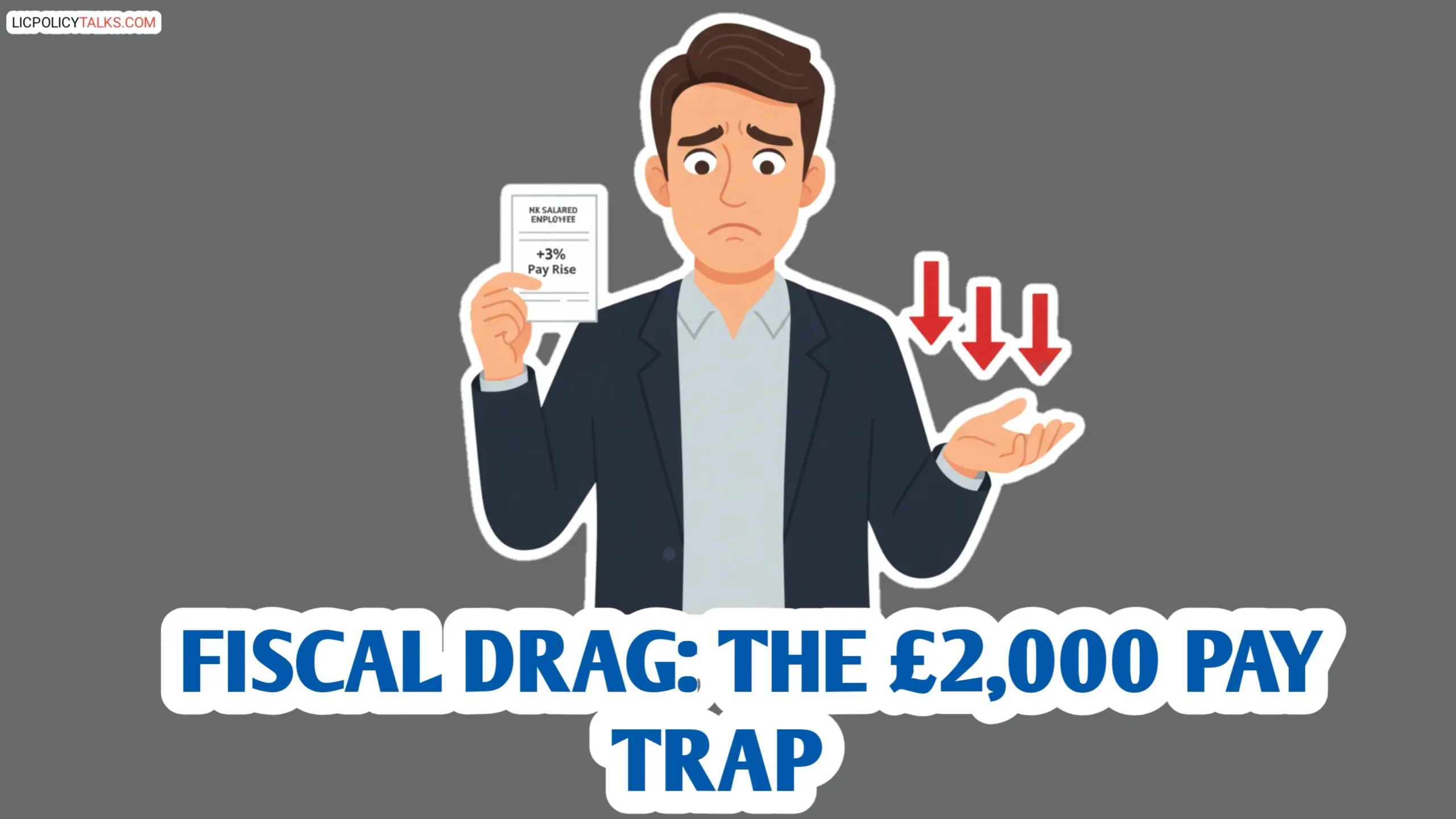
April 2026 marked the fifth year of the tax threshold freeze—and it’s hitting your take-home pay harder than last year. This stealth tax keeps thresholds at £12,570 (personal allowance) and £50,270 (higher rate) while wages rise, silently dragging more income into higher tax bands. The Office for Budget Responsibility estimates the freeze will raise an additional £8.3 billion by 2029/30. According to a Resolution Foundation analysis, someone working 35 hours a week on the National Living Wage is paying £130 a year more than they would if thresholds had risen with inflation. So what can you do? The good news: you don’t have to sit back and pay more.
What Is Fiscal Drag and Why Does It Matter in 2026?
When tax thresholds don’t rise with inflation, more of your income gets taxed at higher rates. That’s fiscal drag. The Commons Library fiscal drag explainer (CBP-9687) highlights three factors: where thresholds are set, inflation, and earnings growth. For example, Sally earned £32,785 in 2000—exactly the higher rate threshold. Over 25 years, her wages rose with average earnings to £76,337, but the higher rate threshold barely moved. In 2026, she pays 40% tax on 34% of her income (Fidelity data). Meanwhile, since 2000, average wages have more than doubled, yet the higher rate threshold has risen by just 53%. By 2030-31, a high earner whose wage kept pace could see 42% of their income taxed at the higher rate, costing an extra £7,392 each year due to the freeze. The freeze now extends to April 2031.
| Band | Taxable Income | Tax Rate |
|---|---|---|
| Personal Allowance | Up to £12,570 | 0% |
| Basic rate | £12,571 – £50,270 | 20% |
| Higher rate | £50,271 – £125,140 | 40% |
| Additional rate | Over £125,140 | 45% |
→ Slide table horizontally to see full data ←
How Much Extra Are You Paying? The Real Numbers
The Liberal Democrats’ analysis reveals that the average taxpayer is £160 to £220 worse off in 2026/27. Across the UK, 600,000 more people will start paying basic-rate tax, and 580,000 more are being dragged into the higher rate. In London alone, 110,000 middle earners are pulled into the 40% band. An AJ Bell tax freeze cost analysis shows that a £75,000 earner will pay £17,400 in income tax if thresholds remain frozen, compared to £12,600 if they had risen with inflation—a gap of £4,800. By 2030/31, that gap grows to nearly £4,800 a year.
| Income Level | Tax Paid (Frozen) | Tax Paid (Indexed) | Extra Cost |
|---|---|---|---|
| £25,000 (NLW earner) | £2,486 | £2,356 | £130 |
| £50,270 (threshold) | £7,540 | £7,540 | £0 |
| £60,000 | £11,540 | £11,056 | £484 |
| £75,000 | £17,400 | £12,600 | £4,800 |
| £80,000 | £19,400 | £14,400 | £5,000 |
Extra tax due to freeze (2026/27 estimates based on AJ Bell and Fidelity data)
Key Takeaway: If you earn £75,000, the freeze is costing you nearly £4,800 a year by 2030/31.
Data Sources & Validation:
- Resolution Foundation – independent think tank
- OBR – official fiscal watchdog
- HMRC – government tax authority
- Lib Dems analysis – political party analysis, cross-checked with HMRC
- AJ Bell – regulated investment platform
- Fidelity – major investment firm
4 Strategies to Protect Your Income from the Freeze
1. Maximise Your Pension Contributions
Pension contributions reduce your taxable income, effectively lowering the amount subject to higher rates. The annual allowance is £60,000, but high earners face a taper. By contributing more, you can stay below the £50,270 threshold and save 40% tax on the excess.
2. Use Your ISA Allowance (£20,000)
ISAs shield your savings and investments from income tax and capital gains tax. With the dividend allowance cut to just £500 (see the Artifin breakdown of dividend changes), ISAs are more valuable than ever. You can shelter up to £20,000 per year tax-free.
3. Salary Sacrifice Schemes
Schemes like cycle-to-work, childcare vouchers, and electric car leases let you swap salary for non-cash benefits, reducing your taxable earnings. You also save National Insurance contributions.
4. Marriage Allowance and Other Reliefs
If one partner earns less than £12,570, you can transfer £1,260 of personal allowance to the other, saving up to £252 in tax. Older couples may also claim Married Couple’s Allowance.
If you’re paying off student loans alongside these strategies, recent changes to the SAVE Plan could further reduce your payments.

Case Study: How Fiscal Drag Affects a Middle-Income Earner
Ravi, a 42-year-old software project manager in Manchester, earns £62,000 in 2026. His salary rose 3% in 2025, but because the higher-rate threshold is frozen at £50,270, he now pays 40% on £11,730 of his income. If thresholds had risen with inflation, his taxable income at the higher rate would be far smaller.
| Scenario | Taxable Income at Higher Rate | Higher-Rate Tax Paid |
|---|---|---|
| 2025/26 (threshold indexed) | £9,000 | £3,600 |
| 2026/27 (frozen) | £11,730 | £4,692 |
By contributing £10,000 to his pension, Ravi brings his taxable income below £50,270—saving £4,000 in higher-rate tax. His effective tax bill drops significantly. For a deeper dive, read the Fidelity high earner analysis showing the long-term impact.
The Bigger Picture: Why the Freeze Hurts Low Earners Too
The freeze doesn’t just hit higher earners. The Joseph Rowntree Foundation’s JRF report on weak income growth shows that the poorest fifth spend 5% of their income on council tax, compared to just 1% for the richest. With council tax rising 5% in most areas, low earners are squeezed from both sides: entering the tax net for the first time while facing higher bills. Fiscal drag pulls low incomes into taxation where they previously weren’t liable.
Looking Ahead: What Changes Could Be Coming?
Labour has not ruled out adjusting thresholds, but the OBR projects no changes before 2031. The Liberal Democrats have proposed raising the personal allowance to £18,000, as reported in Express coverage of Lib Dem proposal. However, political proposals are not guaranteed. For now, the freeze remains in place through 2031.
Common Mistakes to Avoid When Planning for 2026-27
- Ignoring the dividend allowance cut to £500 – even small dividends are now taxable.
- Not reviewing your PAYE code – incorrect codes can mean under- or overpayment.
- Forgetting to use Marriage Allowance if one partner earns below £12,570 – it’s a simple transfer of £1,260.
- Overlooking the capital gains tax annual exempt amount (now £3,000).
Conclusion
Fiscal drag is a silent tax increase, but smart planning can offset a significant portion. Review your tax code, maximise your allowances, and consider professional advice to stay ahead. For those also investing in property, understanding broader market risks—like the Canadian housing correction—can help you diversify tax-efficiently.