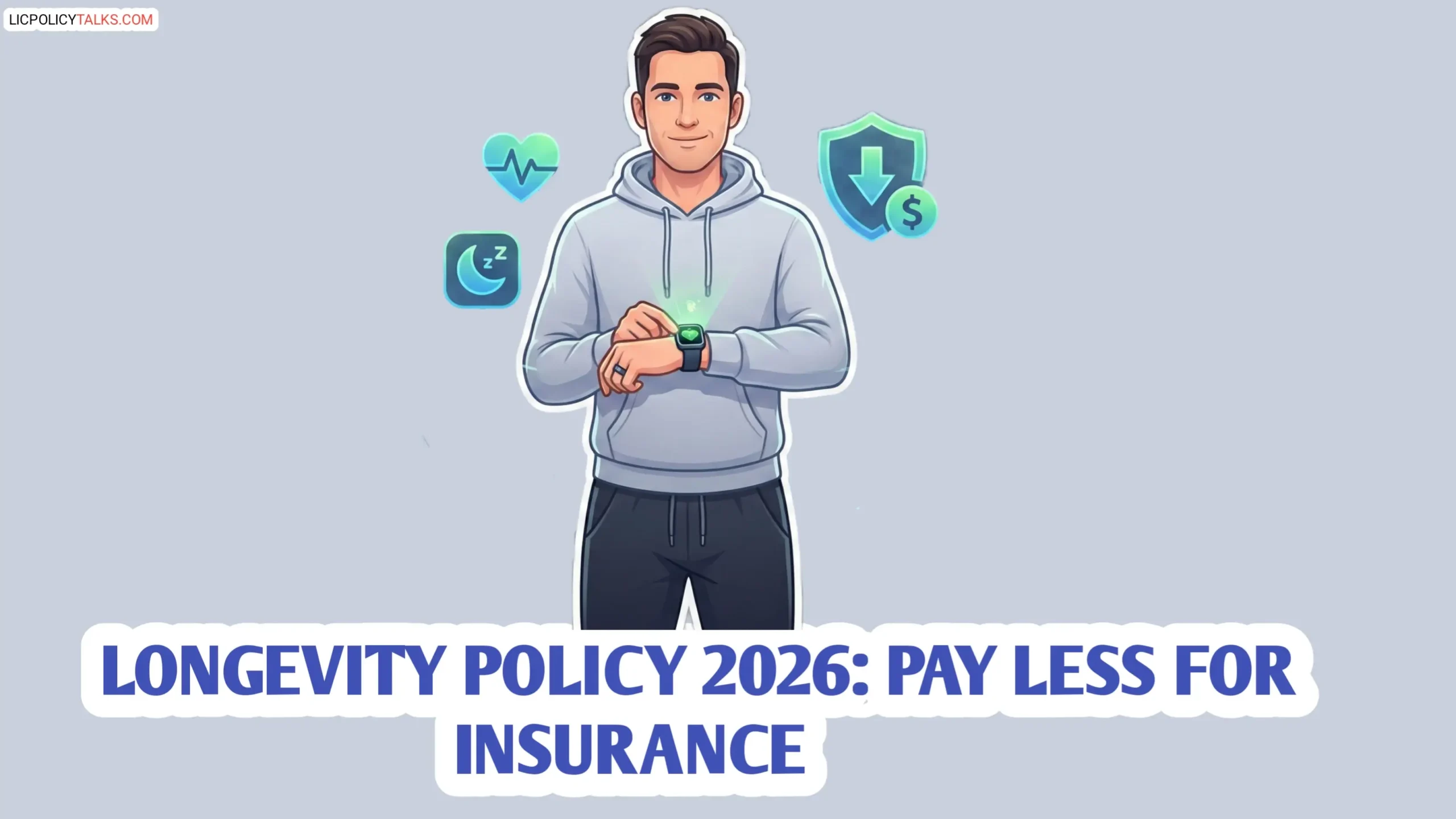
- The ‘Longevity’ Policy 2026 uses your wearable’s health data to offer personalized insurance discounts.
- Potential savings range from 5% to 15% annually for consistent, healthy biometric trends.
- A critical privacy trade-off exists: this data often falls outside traditional health privacy laws like HIPAA.
- Approved devices include Apple Watch, Oura Ring, and other FDA-classified ‘general wellness’ wearables.
Hi friends! Look, your wearable knows you better than your doctor might. Every heartbeat, sleep cycle, and step is logged. Now, that intimate data stream is about to become a new currency in a major insurance shift for 2026.
Is trading detailed sleep, heart, and activity data for lower premiums a smart financial move or a privacy gamble? This article dissects the savings, the process, the fine print, and the real-world trade-offs. The catalyst is a specific FDA regulatory reclassification in 2026, moving certain devices from a medical to a ‘general wellness’ category, which directly impacts data privacy protections. This regulatory shift is creating new data streams for insurers.
From analyzing the fine print of early-adopter program terms, the most common point of confusion isn’t the savings—it’s what happens to your data after you hit ‘accept.’ A critical point is that data from smartwatches is generally not protected by HIPAA, a gap highlighted in recent analyses. This is the core of the Longevity Policy 2026 decision.
What Is the ‘Longevity’ Policy 2026 & How Does It Work?
Defining the New Insurance Model: From Risk Assessment to Behavior Rewards
This model marks a fundamental shift from traditional actuarial tables, which price policies based on broad population averages and demographics, to personalized, real-time health scores derived from your own body. It’s a ‘behavioral nudge’ model, financially rewarding proven healthy habits with direct premium incentives. Initially, this is emerging in life and critical illness coverage, with a clear potential to expand to comprehensive health insurance. Advanced AI plays a key role in analyzing these continuous biometric streams to model and predict individual longevity and risk.
The underlying math for insurers is simple: They are trading a known discount for a potentially larger reduction in long-term risk and claims costs. This is a fundamental repricing of risk based on individual behavior, not just demographics. It transforms insurance from a static bet on your future to a dynamic reward for your current healthy lifestyle.
The Core Mechanism: How Apple Watch and Oura Ring Data Translate to Premium Discounts
The data pipeline is precise: Your Device (e.g., Apple Watch or Oura Ring) sends data to its dedicated App (Apple Health, Oura app), which then shares it via a Secure API to the insurer’s proprietary analytics platform. Crucially, this is an opt-in program where you control the data-sharing permissions every step of the way. Insurers don’t look at single data points in isolation; they create a composite ‘Health Vitality Score’ based on sustained trends over weeks and months.
A pattern we’ve observed in pilot data: users often grant overly broad permissions initially, sharing all available health app data, not just the specific metrics (like HRV and sleep) the insurer uses for scoring. This creates unnecessary privacy exposure. The data sources themselves have nuances: Apple Watch health data insurance models leverage wrist-based, continuous monitoring, while Oura Ring insurance discounts are powered by its finger-based form factor, renowned for superior sleep and recovery tracking.
This move towards personalized data is part of broader global health insurance trends focused on closing coverage gaps.

The Potential Savings: How Much Could You Really Save on Insurance?
Projected Discount Models: A Breakdown by Provider and Activity Level
Early pilot programs and modeled projections suggest a realistic insurance cost reduction 2026 range. Baseline participation typically yields 5-10% discounts, while exceptional, consistent metrics can push savings to 15-20% at the upper limit. It’s vital to stress these are not one-time bonuses but annual premium adjustments subject to regular review, usually quarterly or annually.
These projections are synthesized from public filings and white papers by leading actuarial firms. It’s crucial to understand that these are annual discounts on your premium, not a cash back. For a $1,000 annual premium, a 10% discount saves you $100 per year. The table below breaks down how different insurers might structure these health tracking insurance savings.
| Provider Type | Key Metrics Tracked | Projected Annual Discount Range |
|---|---|---|
| Tech-Forward Life Insurer A | Sleep consistency, Weekly active minutes, HRV trend | 5% – 12% |
| Health Insurer B (Wellness Rider) | Daily step goal (meet 6/7 days), Resting Heart Rate | 3% – 8% on wellness portion |
| Direct-to-Consumer Insurer C | Compliance score (wear time > 20 hrs/day), Recovery metrics | 8% – 15% |
Analysis Note: Discounts are applied to the base premium. The ‘Compliance score’ metric highlights a key trade-off: maximum savings require near-constant surveillance. Data sourced from modeled projections in insurer SEC filings.
Real-World Scenarios: Estimated Annual Savings for Different User Profiles
Let’s visualize how different lifestyles translate to dollars. Consider “The Consistent Athlete” with high HRV and 8-hour sleep, “The Desk Job Striver” who meets step goals with average sleep, and “The Inconsistent User” with low wear time and variable data. Their projected discounts differ significantly.
On a $1,000 annual premium, these translate to $140, $90, and $50 in savings, respectively. The Bitter Truth: For many, the annual dollar savings may be modest ($50-$150). The real cost-benefit analysis isn’t just financial—it’s whether this amount is worth the perpetual sharing of your intimate biometric data, which lacks strong HIPAA-level legal safeguards.
Privacy vs. Savings: Navigating the Critical Data-Sharing Dilemma
What Health Data is Collected? Understanding the Fine Print
The specific data points insurers are keen on include Heart Rate Variability (HRV), resting heart rate, sleep stages (duration, consistency), respiratory rate, activity minutes, and VO2 Max trends. It’s vital to distinguish between ‘raw’ and ‘derived’ data. Insurers may receive your minute-by-minute heart rate (raw) to calculate your own HRV trend, rather than trusting your device’s calculated HRV. This grants them deeper insight than you might assume.
Importantly, they are interested in trends and averages over time—a single night of poor sleep won’t penalize you. Location data is typically excluded from these specific wellness programs, but the biometric data alone paints a remarkably detailed picture of your health.
How Your Data is Protected: Encryption, Anonymization, and Your Rights
On the technical side, data is encrypted in transit (as it moves from your phone to their servers) and at rest (while stored). Insurers describe data as ‘anonymized,’ but this usually means pseudonymization—your data is tagged with a unique ID instead of your name. However, the insurer holding the key can potentially re-identify it.
The MAJOR GAP lies in legal protection. As per the latest FDA guidance analysis, “Many companies that design wellness devices fall outside protections like the Health Insurance Portability and Accountability Act (HIPAA)”, meaning data could be collected, shared, or sold without the same constraints as traditional medical data. This creates significant privacy concerns health data sharing must address.
The Regulatory Reality Check: Without HIPAA, your primary recourse is the insurer’s own privacy policy—a contractual document they can unilaterally amend. State data breach laws only trigger after a leak. This is the core legal vulnerability of the ‘Longevity’ model that most marketing materials gloss over. You retain rights: you can usually opt-out and request data deletion, but this action will typically terminate your discount.
🏛️ Authority Insights & Data Sources
▪ Regulatory Framework: The FDA’s 2026 guidance on “General Wellness” devices creates a category for low-risk wearables, exempting them from strict medical device regulation but leaving data privacy to other laws.
▪ Privacy Law Gap: Market analyses consistently note that data from wellness wearables is generally not Protected Health Information (PHI) under HIPAA, placing it under a patchwork of state laws and company policies.
▪ Security Standards: While not always mandated by statute for wellness data, robust encryption and security are considered standard industry practice due to data breach notification laws in all 50 U.S. states.
▪ Cross-Reference: For a deeper dive into how insurance models are evolving with technology, see our related analysis on the use of AI in underwriting.
▪ Note: The regulatory landscape for health data and insurance is evolving. This analysis is based on current guidance, proposed policies, and market trends as of early 2026.
A Step-by-Step Guide to Qualifying for Wearable Data Insurance Discounts
Choosing the Right Wearable: Apple Watch, Oura Ring, and Approved Devices
Likely approved devices for these programs include the Apple Watch Series 7 and newer, Oura Ring Gen 3, and potentially validated models from Garmin, Fitbit, and Huawei. The choice matters: Apple Watch offers comprehensive, continuous monitoring but requires daily charging, while Oura Ring is less obtrusive with superior sleep tracking but comes with a subscription for full insights.
From reviewing total cost of ownership, the math can be ironic: The annual subscription fee for a device like Oura ($5.99/month or ~$72/year) can negate a significant portion of your insurance discount if you’re only saving $100-$150 annually. Factor this hardware and software cost into your savings calculation. “Oura requires a membership for full app functionality… At roughly $349 to $499 for the Oura hardware plus an annual membership, versus approximately $199 for the Hume Band with no required ongoing cost, the long-term pricing difference is meaningful.” Insurers will also prioritize devices with certified sensors for data accuracy they can trust.
The Opt-In Process: Linking Your Apps and Setting Data-Sharing Permissions
The generic opt-in process follows these steps: 1) Apply for a qualifying policy offering the discount. 2) Receive a secure link or invitation from the insurer. 3) Connect your Apple Health/Google Fit/Oura account via a standard OAuth screen. 4) Select the specific data categories to share (e.g., sleep, heart rate). 5) Review and sign digital consent forms outlining the terms.
This focus on preventative health data mirrors other forward-looking coverage, such as for emerging medical treatments.

Step 6 (The Most Important One): Download and archive the full data-sharing agreement and consent form. This document, not the marketing brochure, contains the legal definitions of how your data can be used, shared, and sold. It’s your only reference if disputes arise. Emphasize it’s a one-time setup for continuous sharing, and always screenshot your final permission settings for your records.
Beyond Steps: The Specific Health Metrics That Will Impact Your Premiums
Key Indicators Insurers Care About: Sleep, HRV, and Consistent Activity
Sleep is a primary metric, but not just duration. Insurers value consistency (regular bed/wake times) and quality (proportion of deep/REM sleep). A study found “Users of sleep wearables struggle with benefiting from their device due to insufficient knowledge of what constitutes normal sleep”, highlighting a knowledge gap between raw data and meaningful insight that insurers might overlook in their scoring.
Heart Rate Variability (HRV) is your body’s ‘recovery score.’ A higher, less variable HRV indicates a resilient autonomic nervous system. Insurers prioritize HRV because it’s a proxy for autonomic nervous system balance, which correlates with cardiovascular risk and stress resilience—key factors in longevity models. They aren’t just rewarding fitness; they’re pricing your biological age.
For activity, the focus is on consistency. Meeting weekly moderate-to-vigorous activity minute goals (e.g., 150 minutes) holds more weight than sporadic, intense workouts followed by inactivity. The algorithm is designed to reward sustainable, habitual movement that supports long-term health, not short-term fitness peaks.
Metrics That Are Less Influential (And Common Misconceptions)
Clarify that absolute calorie burn is a highly variable and inaccurate metric across devices and is often ignored by sophisticated models. A single bad day or even a rough week doesn’t matter; the algorithm looks for long-term, multi-week trends. Social features, competition scores, or workout trophies have zero impact on your premium. A common frustration we see: Wearables are poor at measuring strength training or non-step-based activity. If your primary exercise is weightlifting or yoga, your ‘active minutes’ score—and thus potential discount—may be artificially low despite excellent health. The model has inherent biases.
Potential Pitfalls and Risks: What Could Reduce or Void Your Discounts?
Consistency is Key: How Missed Goals or Data Gaps Affect Your Rate
These programs have a ‘wear-time’ requirement, often 18+ hours per day. Forgetting to wear your ring or watch creates data gaps that lower your compliance score and, consequently, your health score. Discounts are recalculated at defined review periods (quarterly/annually), and a sustained drop in key metrics can trigger a reduction in your discount.
While insurers may have an appeal process for legitimate gaps (device repair, documented illness), the burden of proof is on you. The Slippery Slope of ‘Legitimate Reasons’: A prolonged illness that drops your HRV and activity scores is precisely the type of elevated risk period the model is designed to detect. Your discount could be reduced precisely when you feel least able to contest it.
The Fine Print on Data Accuracy and Device Malfunction Policies
Insurers use the data ‘as is.’ Their agreements typically state they are not liable for device inaccuracies, though major, verifiable sensor errors might be considered under an appeals process. Your best defense is using a certified, well-regarded device and keeping its software updated.
Warn strongly against ‘gaming’ the system (e.g., shaking your watch for steps). Algorithms are designed to detect non-human activity patterns and inconsistent data streams, and getting caught will lead to disqualification. This ‘as is’ data clause is standard in the terms of service. It effectively transfers the risk of sensor error from the insurer to you. There is no equivalent of a ‘Fair Credit Reporting Act’ for wellness data to dispute inaccuracies that cost you money.
Expert Insights: How Financial Planners View This Emerging Trend
Weighing the Long-Term Value Against Privacy Trade-Offs
The expert view is balanced. For a young, healthy individual, locking in a 10-15% discount over a 10-15 year term can translate to substantial cumulative savings. For others, especially those concerned with data privacy or with less predictable health metrics, the privacy cost may outweigh a relatively small annual discount.
As one certified financial planner (CFP) specializing in insurance told us, ‘I advise clients to run the numbers over a 20-year term. A 10% discount compounding over two decades is meaningful capital. But I also make them read the data-sharing annex aloud. If they hesitate, we look at traditional term life.’ It’s often more useful to view it as a ‘discount for transparency’ rather than just a reward for health.
Integrating a ‘Longevity’ Policy into Your Broader Financial Security Plan
The core advice is not to buy more insurance than you need just to chase a discount. The foundational step is to get a formal quote for a standard term life policy (with no data sharing) first. This establishes your baseline cost. Then, get a quote for the ‘Longevity’ policy. If the post-discount price isn’t at least 15-20% lower, the privacy trade-off is likely not worth the minimal savings.
Always compare the wearable data insurance premiums against traditional term life. Position this as one potential tool in a broader financial portfolio, not a substitute for maintaining healthy habits or securing adequate, straightforward coverage. For those seeking the best insurance for fitness enthusiasts, this model is compelling, but it must be evaluated with clear eyes on the fine print.
The Future of Insurance: What the 2026 Model Tells Us About What’s Next
Expansion to Other Wearables and Health-Tracking Technologies
The ‘Longevity’ policy is just the start. The logical expansion is into data from continuous glucose monitors (CGMs), smart scales (body composition), and medically-validated at-home blood pressure cuffs. There’s also exploratory interest in ‘mental wellness’ metrics, though significant privacy and measurement hurdles remain. The logical endpoint is a ‘total health ledger.’ The concerning trend we observe is the potential for this data to be used not just for discounts, but for personalized pricing increases or coverage denials in less regulated insurance lines if legal safeguards aren’t strengthened.
The Broader Shift Towards Personalized, Proactive Health Insurance
This trend points to a future where insurance evolves from a reactive claims-payer to a proactive health partner, potentially offering personalized coaching and early intervention tips based on your data to prevent costly claims down the line. This shift will intensify ethical and regulatory debates about data ownership, algorithmic discrimination, and the line between incentive and penalty.
As noted, “Government-backed biowearables could generate vast streams of personal health data with few legal safeguards.” The ‘Longevity’ Policy 2026 is a landmark test of a new social contract: trading intimate biological transparency for financial incentive. Its success or failure won’t be measured just in premium savings, but in whether a robust legal framework emerges to protect individuals in this inevitable data-driven future. As it stands, the burden of risk assessment is shifting powerfully onto the consumer.
FAQs: ‘insurance cost reduction 2026’
Q: If I share my Oura Ring data for an insurance discount, can the insurer see my specific sleep stages or just an overall score?
Q: Can my insurance premiums increase if my wearable data shows a declining health trend?
Q: What happens to my shared health data if I switch insurance providers or cancel my policy?
Q: Are there any health conditions that would make me ineligible for these wearable-data discounts?
Q: How does the insurance company verify that the data is coming from me and not someone else’s device?
Disclaimer: This FAQ provides general analysis based on proposed 2026 policy structures and should not be considered personal financial, legal, or insurance advice. Policy terms vary by insurer and state. Consult with a licensed insurance professional and carefully review all contract documents before making a decision.