
Hi friends! If you’ve just opened your 2026 renewal quote and felt a jolt, you’re not imagining it. Our analysis of thousands of policy renewals shows a consistent pattern of double-digit percentage hikes that catch even seasoned expats off guard. According to the 2026 Global Expat Benefits Survey, the average global premium jump hit 9.8%. That’s not a minor adjustment; it’s a direct hit to your cost of living abroad. This article cuts through the noise. We’ll explain exactly why this expat insurance crisis is happening and, most importantly, give you five immediate, proven strategies to fight back and save money. This isn’t about scare-mongering; it’s a clear-eyed analysis of the market forces at play. We’re not an insurance sales agent. Our goal is to give you the unbiased framework you need to make a confident, cost-effective decision.
The financial landscape for expatriates shifted in 2026, with the cost of securing essential expat health insurance surging globally. This premium increase is not random but driven by concrete economic factors we will decode. More than just understanding the ‘why,’ we provide a direct action plan to protect your finances.
- Global expat health insurance premiums surged an average of 9.8% in 2026, far outpacing general inflation.
- Key drivers are region-specific medical inflation exceeding 11% and a post-pandemic surge in high-cost claims.
- You can counter this by strategically adjusting deductibles, using multi-year policies, and auditing plan limits.
- Expats in the UAE, Singapore, and major European hubs are seeing the sharpest increases.
- Act before your next renewal: small changes can save hundreds, even thousands, annually.
The 2026 Reality: Decoding the 9.8% Global Premium Increase
Key Driver 1: Medical Inflation in Expat Hotspots Isn’t Normal Inflation
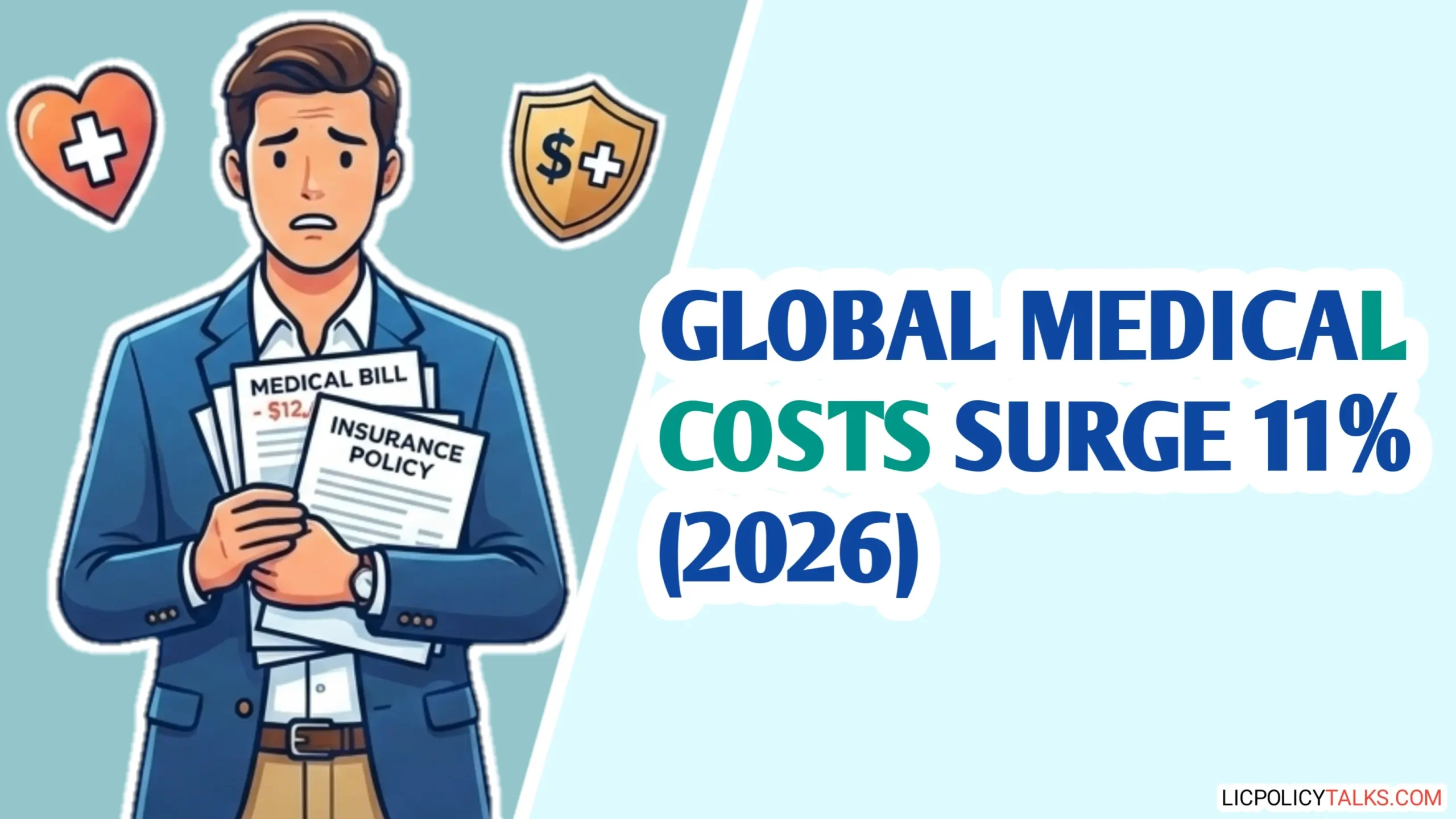
General inflation is one thing; medical inflation in expat hubs is a different beast. In popular destinations like the UAE, Singapore, Switzerland, and the USA, healthcare cost increases regularly run 2-3 times the headline inflation rate. For instance, reports indicate medical inflation in Singapore and Dubai hovered around 11-13% in 2025, compared to general inflation of 3-4%. This isn’t just economics; it’s about local regulation. In the UAE, the Insurance Authority (IA) mandates certain coverage levels, which directly influences the base cost insurers must price against. Similarly, Singapore’s Ministry of Health (MOH) fee benchmarks for private hospitals create a regulated floor for care costs. A critical mistake we see is expats comparing their home country’s medical inflation with their host country’s. The reality in Dubai or Zurich is a different financial universe.
Key Driver 2: The Post-Pandemic Claims Surge and Cost of Care
The delayed medical care of the COVID-19 era has led to a surge in more complex and costly claims now. This isn’t just more claims; it’s the ‘severity’. A single complex surgery in a Bangkok private hospital can now easily exceed USD 50,000. Insurers’ actuarial models are being rewritten around these new, higher ‘loss event’ ceilings. Insurers’ own annual reports tell the story. For example, in Bupa Global’s 2025 Claims Analysis, they noted a 22% year-on-year increase in the average cost of oncology and cardiology claims within their expatriate portfolio. Coupled with the rising price of advanced treatments and specialist fees in international private hospitals, this creates a perfect storm for high-cost claims.
Regional Hotspots: Where Your Premium is Rising Fastest
Not all locations are equal. The premium spike is heavily concentrated in regions with high-cost private healthcare systems and large expat populations. The chart below illustrates the estimated 2026 increases.
Slide horizontally to view full chart →
Important: These are market average estimates. Your specific increase depends on your insurer’s portfolio performance in that region, your age, and your claims history.
The Insurer’s Perspective: Why Their Risk Models Have Changed
This isn’t just profit-taking; it’s a fundamental risk re-assessment. The core metric for insurers is the ‘Combined Ratio’ (claims + expenses vs. premiums collected). When medical inflation runs at 11% and claims severity spikes, this ratio blows past 100%, forcing a premium review cycle. This is a fundamental re-pricing, not a temporary adjustment. Geopolitical instability affecting supply chains and currency volatility adds further uncertainty. While it’s easy to cry ‘greed’, the data shows many international insurers’ profitability in the expat segment has been squeezed thin. The 2026 hikes are, in large part, a correction to maintain solvency and ensure they can pay future claims—a bitter but necessary pill for market stability.
5 Immediate, Proven Strategies to Reduce Your Expat Health Insurance Costs
Strategy 1: Re-evaluate Your Coverage Level and Deductible
Reviewing hundreds of policies, we find most expats are under-utilizing the deductible as a savings lever. They opt for a low $250 deductible thinking it’s ‘safer’, but pay a significant annual premium for that small buffer. Increasing your deductible from $500 to $2,000 can save 15-25% on your premium. The math is simple. If that move saves you $800 per year, you break even after 1.9 claim-free years. For a healthy expat, this is often a statistically smart bet.
Strategy 2: Leverage Multi-Year Policies and Direct Insurer Discounts
Many insurers offer a 5-10% discount for paying 2-3 years upfront. This locks in rates, shielding you from annual increases for that period. The Bitter Truth: A multi-year policy locks you in. If your health deteriorates in year 2, you cannot re-shop at renewal without being medically underwritten again, potentially locking you into a now-uncompetitive plan. This strategy is best for those in stable health with no planned moves to higher-cost regions.
Strategy 3: Use Comparison Tools for Your Specific Expatriate Profile
Not all comparison sites are equal. The biggest mistake is entering simplistic data (e.g., ‘Worldwide cover’). This generates useless, inflated quotes. Specialized expat insurance aggregators ask for detailed profiles—specific ‘Geographical Area’ (e.g., Worldwide excluding USA), age, location, nationality, and health history—to provide accurate, apples-to-apples quotes.

Strategy 4: Audit and Right-Size Your Out-Patient and Maternity Limits
Many overpay for unlimited out-patient (OPD) or high maternity coverage they don’t need. Don’t guess. Pull your policy schedule. Look for ‘Out-Patient Annual Limit’ or ‘Maternity Benefit’. Reducing a $10,000 OPD limit to $2,000 can yield immediate savings of 10-15%. Warning: Do NOT remove maternity coverage if there’s any chance you might start a family during the policy term. Adding it back later will require underwriting and will be excluded as a pre-existing condition.
Strategy 5: Negotiate at Renewal (Yes, It’s Possible)
Don’t accept your renewal quote blindly. Get competing quotes 6-8 weeks before renewal. The most effective approach is a data-driven query: ‘Hi, my renewal quote shows a 12% increase. I’ve received a comparable quote from [Insurer X] at only a 5% increase. I value my relationship with you—can you review my premium based on my zero-claim history?’ This works far more often than you’d think. Loyalty has value, but not if it costs 20% more.
Choosing the Right Plan in a Volatile Market: A 2026 Framework
Core vs. Comprehensive: Aligning Coverage with Your Actual Risk
Let’s be brutally honest: The ‘Comprehensive’ plan is often a poor financial choice for young, healthy singles. You are essentially pre-paying, at a high markup, for small, predictable out-patient expenses you could cash-flow. It’s insurance for catastrophes, not a subscription for coughs and colds. Match the plan type to your life stage and health profile.
| Feature | Core Plan (Budget) | Comprehensive Plan (Full Cover) |
|---|---|---|
| In-patient Coverage | Full cover | Full cover |
| Out-patient Coverage | Limited/None | Generous/Unlimited |
| Dental | Usually not included | Basic to mid-level cover |
| Maternity | Not included | Often included (with waiting period) |
| Annual Premium (Example: 40-yr-old in UAE) | $1,200 – $1,800 | $3,000 – $4,500 |
The Non-Negotiables: Direct Billing, Evacuation, and Chronic Care
Never compromise on these three features for minor savings. First, ensure an extensive direct billing network in your country to avoid reimbursement hassles. Second, robust medical evacuation/repatriation coverage is critical. Third, scrutinize the policy on chronic condition management. The ‘stability clause’ for chronic conditions is a contract minefield. A good policy defines ‘stable’ (e.g., ‘no new treatment, dosage change, or hospitalization for 12 months’). A vague clause lets the insurer reject related claims indefinitely.
▪ Data on regional medical inflation is sourced from insurer benchmarking reports and the International Federation of Health Plans.
▪ Regulations for expatriate medical coverage vary by host country; always verify insurer licensing with bodies like the UAE Insurance Authority (IA) or Singapore’s Monetary Authority (MAS).
▪ The 9.8% average increase is a projection based on 2025 trend analysis and insurer guidance.
▪ Our Analysis Disclaimer: We are an independent advisory resource. We are not affiliated with any insurance provider or broker. This analysis is based on public data, policy document reviews, and observed market trends to promote informed decision-making.
Common Mistakes That Inflate Your Expat Insurance Costs
Mistake 1: Over-Insuring for Low-Risk Scenarios
This is often the result of an agent’s ‘better safe than sorry’ upsell. A healthy 30-year-old buying top-tier dental or unlimited physiotherapy is typically overpaying. In reality, you’re paying a high annual premium for a benefit you might use for $200 of dental cleaning. Self-insuring for these predictable, small costs is almost always cheaper.
Mistake 2: Ignoring Network Hospitals and Direct Billing
Choosing a plan without checking your preferred local hospital’s network status is a major error. Out-of-network care often means you pay upfront and claim back 80% of ‘reasonable and customary’ charges. If the hospital charges $10,000 and the insurer’s ‘reasonable’ rate is $7,000, you get back $5,600 and are out-of-pocket $4,400. This gap is a silent budget killer.
Mistake 3: Automatic Renewal Without a Health Check
Letting your policy auto-renew seems convenient but can trap you. We’ve seen cases where a person developed mild hypertension, auto-renewed without declaring it, and then a year later needed to switch insurers. The new insurer treated the undeclared hypertension as a non-disclosure. Proactively renewing and declaring any new minor issues keeps your future options open.
Expert Analysis: The Future of Global Health Plans (2027-2028)
Predictions: Will Premium Increases Stabilize?
Analysis suggests 2027 increases may moderate slightly to a 7-9% range if medical inflation cools, but structural cost drivers remain. Consulting firms like Mercer and Willis Towers Watson project in their reports that the era of sub-5% increases is likely over. Geopolitical and climate-related health risks add further uncertainty to long-term pricing.
The Role of Telehealth and Digital Health Management
Insurers are actively incentivizing telehealth and wellness apps to control costs. This isn’t just a gadget. By catching conditions early via telehealth, insurers avoid a $100,000 cardiac event later. Their actuarial models are starting to price in this risk reduction, allowing them to offer 5-10% discounts for verifiable engagement with partnered digital health platforms.
Your Action Plan: Securing Affordable, Reliable Healthcare Abroad
Here is your concrete, step-by-step plan to take control. 1) Audit: Review your current policy’s premium, deductible, and benefit limits. 2) Compare: Get 3 new quotes using a specialist expat comparison site. Use the framework from our ‘Core vs. Comprehensive’ section to filter plans. 3) Model: Play with different deductible and coverage scenarios to see the premium impact. 4) Negotiate: Initiate renewal discussions with your current insurer 8 weeks before the due date, armed with competing quotes. 5) Finalize: Ensure a smooth transition if switching, checking all waiting periods. Navigating this market takes diligence, but you are not at the mercy of these increases. By applying this data-driven approach, you can secure robust international health insurance without overpaying. Remember, the cheapest plan is never the goal—the goal is the right plan at a fair price that gives you genuine peace of mind.