The Peak 65 Strategy 2026: 7 Proven Ways to Beat Sequence of Returns Risk in High Inflation

Updated on: April 3, 2026 12:06 PM
Follow Us:
The Peak 65 Strategy 2026: 7 Proven Ways to Beat Sequence of Returns Risk in High Inflation
Follow
Share
Socials
Add us on 
⚡ Quick Highlights
  • 2026 is Peak 65: A record 4.18 million Americans turned 65 in 2025, with elevated rates through 2027.
  • Double Threat: This demographic wave coincides with persistent inflation, magnifying sequence of returns risk for new retirees.
  • Core Solution: The Peak 65 Strategy moves beyond the rigid 4% rule to adaptive withdrawal and income planning.
  • Immediate Action: Building a 2–3 year cash reserve is the top priority for anyone retiring in 2026.

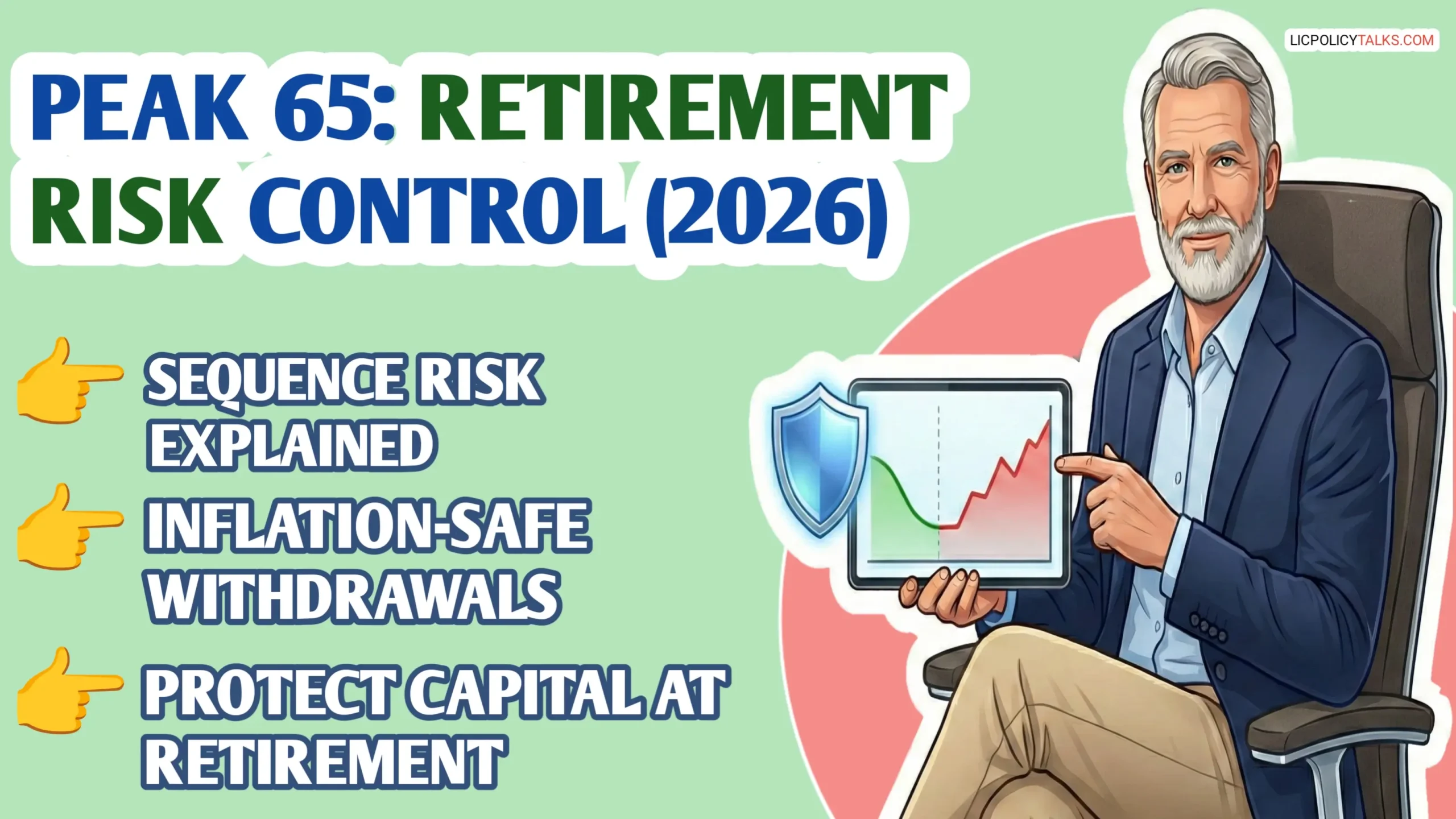
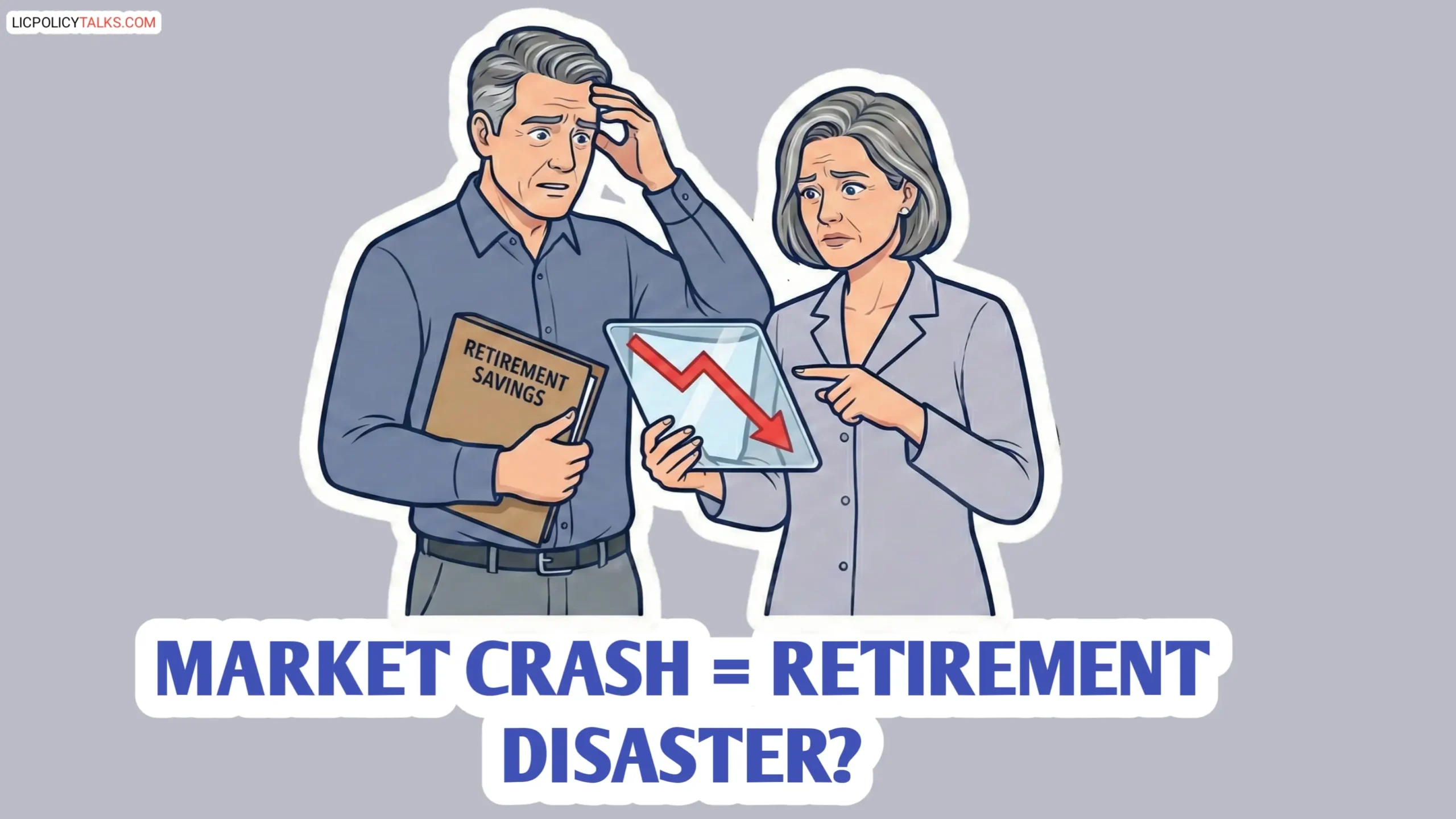
Hi friends! Picture this, based on countless client reviews we’ve analyzed: You retire in 2026. You finally have time for travel, family, and hobbies. Then, six months later, the stock market drops 25%. To pay your bills, you’re forced to sell investments at a huge loss. This isn’t just a bad year; it can permanently wreck your retirement dreams. This scary story is about to become reality for millions. A perfect storm is brewing for anyone turning 65 around 2026.

Why? Two massive forces are colliding. First, the largest-ever wave of Americans is hitting retirement age. In 2025, an average of 11,200 Americans turned 65 every single day. That’s 4.18 million people reaching traditional retirement age in a single year — the highest number ever recorded, according to sustainable retirement income research. Second, we’re living in a world of stubbornly high inflation. This combination magnifies a silent killer called sequence of returns risk.

But here’s the good news: you are not powerless. This article delivers a concrete, 7-step action plan—the Peak 65 Strategy—specifically designed to navigate this perfect storm. We’ll cut through the complexity and give you clear, actionable methods to protect your life’s savings.

Why 2026 Isn’t Just Another Year: The Perfect Storm

In our tracking of economic pressures, we see two engines driving this risk for 2026 retirees. It’s not just one issue; it’s how they work together that creates unique danger for your retirement portfolio.

The first engine is demographic. The second is economic: persistent high inflation. This double-whammy stresses the systems retirees rely on and directly attacks the purchasing power of fixed income. Furthermore, this mass exodus from the workforce is reshaping the economy itself. Analysis by the SBAM shows that retirement accounts for roughly 52% of all nonparticipants, or about 48.6 million people, based on Bureau of Labor Statistics data analyzed by SBAM.

The Looming “Peak 65” Demographic Wave

“Peak 65” simply means the year when the largest number of people from the Baby Boomer generation turn 65. This isn’t a future theory; it’s the data we’re seeing play out in real time across advisory firms. With a record 4.18 million hitting 65 in 2025, and numbers staying historically high through 2027, this wave is unprecedented. It puts immense pressure on systems like Social Security and Medicare. For you, the individual retiree, it means a crowded landscape where economic policies and market responses will be shaped by the needs and actions of millions of your peers.

How High Inflation Turns a Market Dip Into a Disaster

What retirees often miss in their planning is the math of inflation during a crash. High inflation has a dual bite. First, it erodes the purchasing power of any fixed income you have. Second, and more dangerously, it forces you to take larger nominal withdrawals from your portfolio just to maintain the same standard of living. If your portfolio is down 20% and prices are up 5%, you must sell more shares at their lowest value to get the same amount of cash. This is the hidden accelerator that drains portfolios faster than most models assume. It’s the direct setup for severe sequence of returns risk.

Understanding the Real Enemy: Sequence of Returns Risk, Simplified

From analyzing portfolio failure cases, the common thread isn’t poor average returns, it’s terrible timing. Sequence of returns risk is the danger that the order of your investment returns will be bad, especially right at the start of retirement. Think of it this way: if you fall into a deep hole at the beginning of a journey, climbing out uses all your energy, leaving little for the rest of the trip. It doesn’t matter if the path later is smooth. The order matters more than the average.

The risk is unavoidable, but it is manageable. For another deep dive on a specialized strategy to combat this risk early in retirement, explore the Bond Tent Strategy.

Read Also
The Bond Tent Strategy 2026: Your Ultimate Guide to Defeating Sequence Risk in Early Retirement
LIC TALKS • Analysis

The Math That Sinks Retirement Dreams: A Simple Example

Let’s make it tangible with a common simulation we run in portfolio stress tests. Imagine two friends, Alex and Sam. Both have a $1 million portfolio and plan to withdraw $50,000 (5%) each year, adjusted for inflation. Alex retires at the end of 2007, just before the financial crisis. Sam retires one year later, at the end of 2008, after the market has crashed. They experience the same average market returns over the long run, but in a different order. Alex suffers terrible losses right when they start taking money out. Sam’s portfolio gets to recover first. After 10 years, the difference is staggering.

The Sequence Risk Impact: Portfolio Value After 10 Years
$650K
Retired in 2008
(Bad Sequence)
$1.1M
Retired in 2009
(Good Sequence)
Assumes identical $1M portfolio, 5% annual withdrawal, simulated returns.

The Peak 65 Strategy: Your 2026 Adaptive Action Plan

Pulling from the most resilient retiree plans we’ve analyzed, a common framework emerges. The Peak 65 Strategy is not a single rule. It’s a philosophical shift from rigid rules to flexible, principles-based planning designed for today’s volatile, inflationary climate. It acknowledges that the future is uncertain and builds adaptability into your plan from day one.

This contrasts sharply with the traditional 4% rule, which originated from the Trinity Study in the 1990s. That rule is a useful starting point, but it assumed certain market conditions and a long time horizon. In the face of the 2026 “perfect storm,” relying on it alone is like using a 1990s road map for a 2026 cross-country trip. The Peak 65 Strategy is your updated GPS, ready to reroute.

7 Proven Methods to Implement the Peak 65 Strategy

These methods aren’t theoretical. They are drawn from implementation checklists used by fiduciary advisors. Think of them as tools in your retirement planning toolkit. You may not need every single one, but together they form a comprehensive defense against sequence of returns risk.

1. Dynamic Withdrawal Rates: The Inflation-Sensitive Safety Valve

The retirees who successfully navigated 2008-2009 were often those who instinctively cut spending by 5-10%. A dynamic withdrawal strategy formalizes this instinct. Instead of taking the same inflation-adjusted amount every year no matter what, you adjust based on portfolio performance. For example, a common guardrail rule is: if your portfolio value falls 20% below its inflation-adjusted starting point, reduce your withdrawal by 10%.

This approach is grounded in research by financial planners like Jonathan Guyton and William Bengen. It provides a clear, rules-based way to protect your portfolio during downturns. The key is having a rule written down before you need it, so emotion doesn’t derail your plan.

2. The Bucket Strategy: Time-Segmenting for Peace of Mind

This strategy is a staple in financial planning software for a reason—it works. You divide your portfolio into “buckets” based on when you’ll need the money. A simple three-bucket system works well: Bucket 1 holds 2-3 years of living expenses in cash. Bucket 2 holds 5-7 years’ worth in conservative, income-producing assets like short-term bonds. Bucket 3 holds the remainder for long-term growth in stocks.

The psychological benefit is huge. During a market crash, you spend from Bucket 1, leaving your growth assets (Bucket 3) untouched to recover. It physically separates your money to weather sequence risk. It connects to the core institutional principle of liability-driven investing. The trade-off? It can lead to slightly lower long-term returns due to higher cash holdings. It’s a trade-off for sleep and security.

3. Guaranteed Income Floor: Using Annuities as a Shield

For clients terrified of running out of money, allocating a portion to a simple annuity is often the most effective psychological fix. The goal is to “buy certainty” for your essential expenses. Use products like a Single Premium Immediate Annuity (SPIA) to cover your baseline needs—housing, food, utilities. This frees the rest of your portfolio for growth, as you won’t be forced to sell during downturns to pay these critical bills.

Your first and best “annuity” is Social Security. According to SSA data, the average retired worker benefit in 2026 is approximately $1,976 per month. Optimal claiming is complex and depends on health, marital status, and other income, not just “wait until 70,” as detailed in Income Lab’s Social Security analysis. Warning: Only consider simple, low-fee annuities (SPIAs). Avoid complex products with high commissions and surrender charges.

4. Tactical Cash Reserves: Your First Line of Defense

This is the single most frequent recommendation we make to clients within 5 years of retirement. Holding 2-3 years of essential expenses in cash or cash equivalents (like money market funds or Treasury bills) is your financial airbag. It allows you to avoid selling depreciated assets during a downturn. Given today’s climate, recent analysis suggests you may want to give yourself two to three years’ worth of living expenses if you’re retiring this year, as noted in this recent analysis on retiring in 2026.

Calculate this based on essential expenses (housing, food, utilities, insurance), not your full lifestyle budget. For a couple with $60,000 in annual essentials, that means a target of $120,000 to $180,000 in a high-yield savings account or similar safe haven. This cash reserve is non-negotiable for 2026 retirees.

5. Flexible Spending: The “Needs vs. Wants” Lifeline

The most successful retirees don’t have one budget; they have three—for good years, okay years, and bad years. Create a tiered budget: Essential expenses (needs), Important expenses (values), and Discretionary expenses (wants). This is the practical execution of Method 1 (Dynamic Withdrawals).

In a bad market year, you temporarily cut back on travel, dining out, or hobby expenses. Your lifestyle’s core remains intact. This is the hardest method emotionally because it feels like a step back. But it’s a temporary lever, not a failure. It gives your portfolio the breathing room it needs to recover.

6. Tax-Efficient Withdrawal Order: Keeping More of What You Have

We often see retirees draining their Roth IRAs first because it’s ‘tax-free,’ which is a strategic mistake. A smarter order preserves wealth. Generally, spend in this sequence: 1. Taxable Investment Accounts, 2. Tax-Deferred Accounts (like 401(k)s, Traditional IRAs), 3. Tax-Free Accounts (Roth IRAs).

The rationale? Let tax-deferred and tax-free money grow as long as possible. Draining taxable accounts first can keep your taxable income lower, potentially reducing taxes on Social Security and keeping Medicare IRMAA surcharges at bay. This is a general rule. Your order must be personalized based on your exact account balances, tax brackets, and estate goals. Consult a tax professional.

7. Part-Time “Buffer” Income: Reducing Portfolio Strain Early On

A growing percentage of ‘retirees’ are choosing this path—it’s redefining what retirement means. Consider part-time work, consulting, or turning a hobby into income for the first 3-5 years. Earning even $20,000 a year can reduce your portfolio withdrawal need by 20-30%, dramatically improving its survival rate.

This isn’t about needing money; it’s about *wanting* to give your life’s savings the best possible chance. Reducing withdrawals in the early, high-risk years allows your portfolio more time to compound. To supercharge the growth of the savings you’re not touching, explore these powerful compound interest strategies.

Read Also
7 Powerful Compound Interest Strategies to Retire Early (Proven Tips!)
LIC TALKS • Analysis

Building Your 2026-Ready Portfolio: Asset Allocation for an Inflationary World

Once your income plan is set, your portfolio’s job changes. It shifts from a pure “accumulation portfolio” focused on growth to a “retirement income portfolio” focused on resilience, income, and inflation protection. The right asset allocation supports your chosen strategies from the 7 methods above.

There is no single ‘Peak 65’ portfolio. The right mix of stocks, bonds, and other assets depends entirely on your other strategies (like your cash bucket size and guaranteed income floor). Modern portfolio theory and updates to the Trinity Study still guide us, but with a new emphasis on assets that can withstand rising prices.

Inflation-Resistant Assets to Consider Now

In today’s environment, we’re adjusting client portfolios to include specific instruments that fight inflation. Consider small, deliberate allocations to these:
TIPS (Treasury Inflation-Protected Securities): The principal value adjusts with the CPI. You get a guaranteed real return.
I-Bonds: A direct gift from the Treasury. They earn a composite rate based on a fixed rate plus inflation. Purchase limit is $10,000 per person per year.
Selected Equities: Stocks of companies with pricing power, in sectors like infrastructure, or real estate via REITs (which own physical property).

Give clear cautions: TIPS can be volatile when interest rates change. Commodities are highly speculative and not recommended for most. REITs are sensitive to interest rates. Use these as tools, not the foundation of your plan.

Rethinking Bonds: Not Just a Safety Net Anymore

The 60/40 portfolio took a hit in 2022, teaching a painful lesson about bonds in a new regime of rising rates. The traditional role of bonds as a stable, negatively-correlated anchor has been challenged. Bonds today primarily provide income and diversification, not the strong negative correlation to stocks we once relied on. Focus on shorter-duration, high-quality bonds (like short/intermediate-term Treasuries) which are less sensitive to rate hikes. They provide stability and income for your bucket strategy, not explosive growth.

Common Pitfalls That Can Sink Your Peak 65 Strategy

Even with a great plan, implementation errors can cause failure. Here are the most frequent mistakes we see.

Overlooking Healthcare Cost Inflation

This is the #1 expense surprise that derails retirement budgets. Healthcare costs historically rise much faster than general inflation. Your general 3% inflation assumption is not enough for healthcare. Model it separately. Plan for Medicare Part B & D premiums to rise 5-7% annually, on average, and budget for out-of-pocket costs, deductibles, and potential long-term care. Don’t forget IRMAA surcharges on Medicare premiums if your income is higher.

The “Set and Forget” Withdrawal Rate Mistake

The ‘set it and forget it’ mentality is the single greatest threat to the Peak 65 Strategy. It is the direct opposite of “adaptive planning.” If you’re not willing to do an annual check-up, none of the other strategies will work long-term. Schedule a formal ‘Retirement Plan Review’ every 12 months, without fail. Check your withdrawal rate against your portfolio value, reassess spending, and rebalance if needed.

🏛️ Authority Insights & Data Sources

Demographic Data: The “Peak 65” analysis and record retirement figures are drawn from research by the Alliance for Lifetime Income and sustainable retirement income studies.

Labor Market Impact: Retirement’s role as the primary driver of non-participation is supported by analysis of Bureau of Labor Statistics data.

Social Security Strategy: Insights on claiming strategies, average benefit amounts, and portfolio impacts are informed by financial modeling tools and analyses from Income Lab.

Retirement Readiness Benchmarks: Regional savings targets and generational confidence levels reference studies from GoBankingRates, Fidelity, and Northwestern Mutual’s 2026 Planning & Progress Study.

Note: This content is for educational purposes. The strategies discussed may not be suitable for all individuals. It is strongly recommended to consult with a qualified, fiduciary financial advisor to develop a plan tailored to your specific circumstances, risk tolerance, and goals.

Your Next Steps: How to Implement Before 2026

The retirees who feel most confident are those who break this down into small, manageable tasks. Start with Step 1 this week. You don’t need to do it all at once.

Step 1: The Comprehensive Portfolio & Expense Review

This is exactly what a professional would do in a first meeting with you. List every single asset (accounts, property). Calculate your current planned withdrawal rate: (Annual Planned Withdrawals) / (Total Portfolio Value). Then, categorize your monthly expenses into three lists: Essential (needs), Important (values), and Discretionary (wants). Don’t judge, just list. Accuracy here is everything.

Step 2: Draft Your Personalized Withdrawal Policy Statement

This one-page document separates the amateurs from the serious planners. It creates accountability. Write down your chosen rules: “My Cash Reserve Target is 2 years of essential expenses ($X). My Dynamic Withdrawal Rule is to cut spending by 10% if my portfolio falls 20% below its inflation-adjusted starting point. My Tax Withdrawal Order is: 1. Taxable, 2. 401(k), 3. Roth IRA.” Put it on paper.

Retirement planning in 2026 faces a perfect storm. The cost of comfort varies wildly—from $735,284 in Oklahoma to over $2.2 million in Hawaii, as highlighted in Kiplinger’s 2026 retirement savings analysis. Your plan must be yours alone. Start building it now.

FAQs: The Peak 65 Strategy

Q: I’m retiring in 2026. Is the classic 4% rule completely useless now?
A: Not useless, but dangerously incomplete. The Peak 65 Strategy uses it as a baseline but adds dynamic adjustments, cash reserves, and other layers for 2026’s inflation and volatility.
Q: How much cash reserve is ‘enough’ if I have a $1.5 million portfolio?
A: Calculate based on expenses, not portfolio size. For $60k in annual essentials, target $120k-$180k (2-3 years). This is a significant but critical drag on early returns for safety.
Q: Should I delay Social Security to 70 as part of this strategy?
A: It depends. The 8% delay credit is valuable, but claiming earlier can preserve your portfolio during high-risk years. Complex modeling (see Income Lab analysis) is needed for your case.
Q: Can the Peak 65 Strategy work with a smaller portfolio (under $500k)?
A: Yes, but flexibility becomes critical. Emphasize buffer income, strict spending cuts, and using more of the portfolio to secure a guaranteed income floor for essentials.
Q: How often should I review and adjust my Peak 65 Strategy?
A: Do a formal annual review of withdrawals, spending, and allocation. Also check ad-hoc if the market drops sharply (over 15%) or your personal situation changes.

The retirees who thrive are not the luckiest, but the most prepared. 2026 presents real challenges, but having a proactive, adaptive plan like the Peak 65 Strategy puts control back in your hands. You can’t control the markets or inflation, but you can control your plan. Start building yours today. Begin with Step 1: The Comprehensive Portfolio & Expense Review, this very week.

How useful was this post?

Click on a star to rate it!

Average rating 0 / 5. Vote count: 0

No votes so far! Be the first to rate this post.

Author Avatar

Riya Khandelwal

Market Analyst • Global Indices • Mutual Funds & SIPs

Riya Khandelwal is a data-driven Market Analyst tracking the pulse of Dalal Street and Wall Street. She specialises in global indices, IPO trends, and mutual fund performance. With a sharp eye for numbers and charts, Riya converts complex market movements into actionable, practical insights that help investors make smarter, more confident decisions.

Leave a Comment

Reviews
×