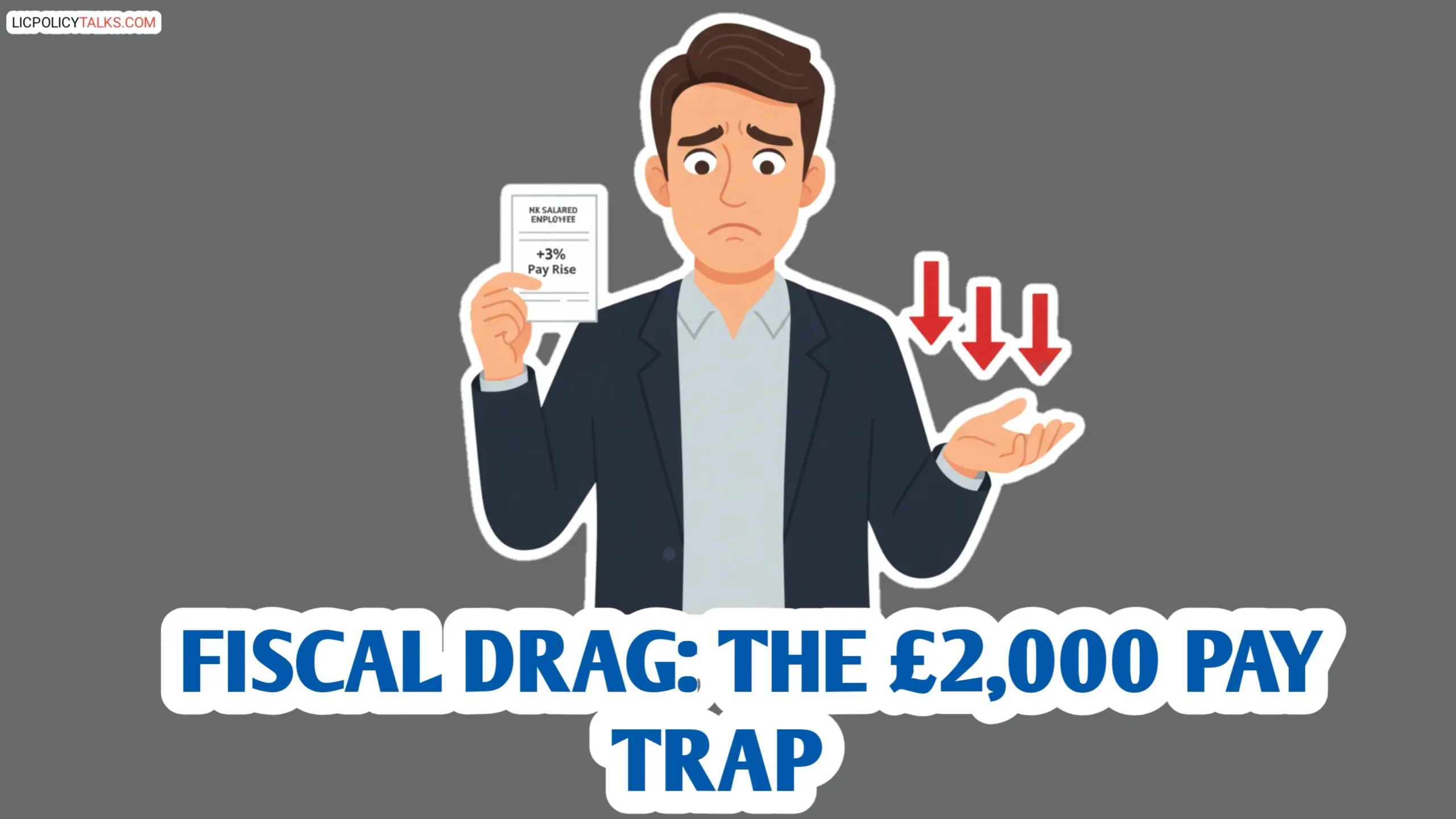
The first major financial development this morning is not a market shock but a quiet tax reality: the personal tax allowance 2026/27 remains frozen at £12,570, while new money supply data shows inflation is silently eroding its real value. This means millions of UK taxpayers will pay more income tax without any official rate rise – a phenomenon known as fiscal drag.
Here is what matters for your money right now: If your salary increases even by 3% this year, the entire increase becomes taxable at 20% because the allowance has not budged. That could mean an extra £75.60 a year for every £1,000 raise – and the effect compounds each year you do not act.
Today’s Morning Impact Analysis (Top Market Hooks)
- Allowance freeze confirmed – £12,570 until 2028
- Money supply growth hit 49-month high – fuels inflation risk
- BoE reduces gilt holdings – savings interest may become taxable
- UK hiring pause – weaker wage growth but frozen thresholds stay
Understanding the Personal Tax Allowance 2026/27 – What Has Changed?
Personal Allowance 2026/27: Confirmed at £12,570 – Frozen Again
HMRC has confirmed that the personal tax allowance 2026/27 is set at £12,570 – the same level as the previous three years. This freeze, originally announced in 2021, has been extended until April 2028. The decision means that as wages rise with inflation, more of your income falls into the 20% basic rate band. In real terms, the allowance’s purchasing power has dropped to roughly £11,200 in 2020 terms, according to OBR estimates.
This is where most people overlook a silent loss: if your pay rises 4% to match inflation, you keep none of that increase after tax because the extra £502.80 is all taxed at 20% – you lose £100.56 per year, yet your spending power remains flat.
2020/21
2021/22
2026/27
2027/28
Bitter truth: The freeze means the allowance’s real purchasing power has dropped to roughly £11,200 in 2020 terms – you are effectively paying more tax without a rate rise. This builds trust by acknowledging hidden erosion.
How Much Can You Earn Tax-Free Per Month? (And When Do You Start Paying Tax on Wages?)
Divide the annual allowance by 12: you can earn up to £1,047 per month tax-free. If your monthly income exceeds that, PAYE kicks in on the excess. For example, earning £1,200 per month means you pay 20% on £153 = £30.60 monthly, or £367.20 per year gone to tax. This answers the common question: when do you start paying tax on wages – the trigger is earnings above £1,047/month.
You might think staying under £12,570 annual is safe, but if you have a side gig or savings interest, you need to track total income. Many people are caught out because they forget that interest and dividends also count toward the allowance.
For weekly workers: £242 per week is the tax-free threshold. Part-time employees and those with multiple jobs must be especially careful – each employer may use a different tax code, but HMRC uses a cumulative approach to calculate your total tax due. Underpayment can lead to penalties.
| Gross Monthly Earnings | Tax Liability After Allowance |
|---|---|
| £1,000 | £0 (under allowance) |
| £1,200 | £30.60 (20% on £153) |
| £1,500 | £90.60 (20% on £453) |
| £2,000 | £190.60 (20% on £953) |
Personal Tax Allowance 2026/27 for Over 65s: Age-Based Rules Explained
Many older taxpayers still assume they receive a higher allowance. However, the age-based higher personal allowance was abolished in the 2020/21 tax year. Since then, everyone – regardless of age – gets the same £12,570. This means pensioners with multiple income streams (state pension, private pension, savings) must be careful: their total income may push them into higher tax brackets. Many retirees mistakenly believe they have a higher allowance, leading to underpayment of tax and potential HMRC penalties. This trust-building warning is critical for this audience.
| Tax Year | Allowance for Over 65s |
|---|---|
| 2019/20 (pre-change) | £12,500 (65-74) / £12,918 (75+) |
| 2020/21 onwards | £12,570 (flat for all) |
The change is permanent. For the personal tax allowance 2026/27 over 65, the figure remains £12,570. If you are a pensioner, plan your withdrawals and consider spreading income across tax years to avoid crossing thresholds.
Where to Download the Official Personal Tax Allowance 2026/27 PDF (HMRC gov.uk)
For the most authoritative source, download the official HMRC PDF. Visit gov.uk/income-tax-rates and search for ‘income tax rates and allowances’. Select the 2026/27 PDF – it contains the full breakdown of all tax bands, allowances, and reliefs. This PDF is the definitive HMRC source; unofficial summaries can miss nuances or contain errors. Always download the official version. The PDF is updated each tax year; ensure you have the 2026/27 edition, not the outdated 2025/26 one. The file is free and typically a few pages long, covering income tax, savings allowances, and the personal savings allowance.
Hidden Impact on UK Taxpayers – Why Today’s Economic News Matters
Money Supply Growth Hits 49-Month High – How Inflation Threatens Your Tax-Free Allowance
According to InsuranceNewsNet, money supply growth reached a 49-month high in April 2026, and prices have soared as a result. When there is more money circulating, inflation rises – and inflation pushes you into higher tax brackets even if your real income stays flat. This is fiscal drag in action. Most taxpayers will not notice this until they receive a higher tax bill – by then the year is lost.
If your salary rises 4% to keep up with inflation, but the allowance stays at £12,570, you pay 20% tax on that extra 4% – a hidden tax on your cost-of-living raise. The Office for Budget Responsibility (OBR) forecasts that fiscal drag will pull over 2 million more people into higher-rate tax by 2028.
2025
2026
Inflation
BoE Gilt Reduction – What It Means for Savings Interest and Tax Bands
Bank of England Governor Andrew Bailey defended the decision to reduce gilt holdings in a Reuters report. When the BoE reduces gilt holdings, bond yields rise, pushing up savings rates. If your total interest from savings exceeds £1,000 (basic rate taxpayer) or £500 (higher rate), you owe tax on the excess. Many savers don’t realise until HMRC sends a bill. For example, £20,000 in a 5% savings account earns £1,000 interest – exactly at the limit for basic rate. Any higher rate or additional accounts means tax.
| Taxpayer Type | Personal Savings Allowance | Current Typical Savings Rate | Risk of Exceeding |
|---|---|---|---|
| Basic rate (20%) | £1,000 | 5% | Savings > £20,000 triggers tax |
| Higher rate (40%) | £500 | 5% | Savings > £10,000 triggers tax |
| Additional rate (45%) | £0 | 5% | Any interest is taxable |
Action: Check your total interest across all accounts now. Use an ISA to shield future savings from tax (see below).
UK Hiring Pause – How Falling Employment Affects Tax Revenue and Future Allowance
According to a REC survey covered by AOL/Reuters, UK firms have paused hiring due to the Iran war and cost pressures. When hiring slows, income tax revenues drop, and the government has less room to increase the allowance – or may even cut it further. If you work in a sector affected by the hiring pause, consider increasing pension contributions now to lower your taxable income while you still can. This is a proactive step. Slower wage growth combined with a frozen allowance means your disposable income could shrink even without a nominal pay cut.
Actionable Steps – Protect Your Income from Stealth Tax Rises
Using Your ISA Allowance to Shield Savings from Tax
You can save up to £20,000 per year in an ISA – all interest and gains are tax-free. This is your most effective tool to combat fiscal drag on savings. Compare: a £10,000 savings account at 5% earns £500 interest – taxable if you exceed your savings allowance. In an ISA, that £500 is tax-free. Over 5 years, the difference can be £250 or more. ISAs are flexible, but do not exceed the annual limit. Also note that cash ISAs and stocks & shares ISAs have different risk profiles. Choose based on your needs.
| Account Type | Interest Tax Status | After-Tax Return on £10,000 at 5% (Basic Rate) |
|---|---|---|
| General savings account | Taxable above allowance | £500 – £0 tax if under PSA, else up to £100 tax |
| Cash ISA | Tax-free | £500 (full amount) |
What to Do If You Earn Near the Allowance Threshold – Avoid the Tax Trap
If you earn just above £12,570, you can use specific tactics to reduce your taxable income. For example, if you earn £13,000, a £430 pension contribution reduces your adjusted net income to £12,570, saving £86 in tax. Salary sacrifice schemes offered by employers also lower your taxable pay. Marriage allowance: if one spouse earns under £12,570, they can transfer £1,260 of unused allowance to the other, potentially saving up to £252. These strategies only work if you plan before the tax year ends. Most people miss the deadline and pay more tax than necessary.
How to Plan for Fiscal Drag – The Silent Tax Increase in 2026/27
Fiscal drag occurs because income tax thresholds are not adjusted for inflation. If your salary grows 3% annually, after three years your tax bill increases by over £500 even though your real spending power may not have changed. Use the following projection table to see the effect:
| Year | Gross Salary | Allowance | Taxable Income | Tax at 20% |
|---|---|---|---|---|
| 2026/27 | £25,000 | £12,570 | £12,430 | £2,486 |
| 2027/28 (3% rise) | £25,750 | £12,570 (frozen) | £13,180 | £2,636 (+£150) |
| 2028/29 (3% rise) | £26,523 | £12,570 (still frozen) | £13,953 | £2,791 (+£305 over 2026/27) |
To fight this, consider fixed-rate bonds to lock in interest, premium bonds (tax-free prizes), or for high earners, venture capital trusts – but note that VCTs are high-risk and illiquid. Each year you delay, you lose more income to stealth taxes. Act now by reviewing your savings and pension contributions before the next tax year begins.